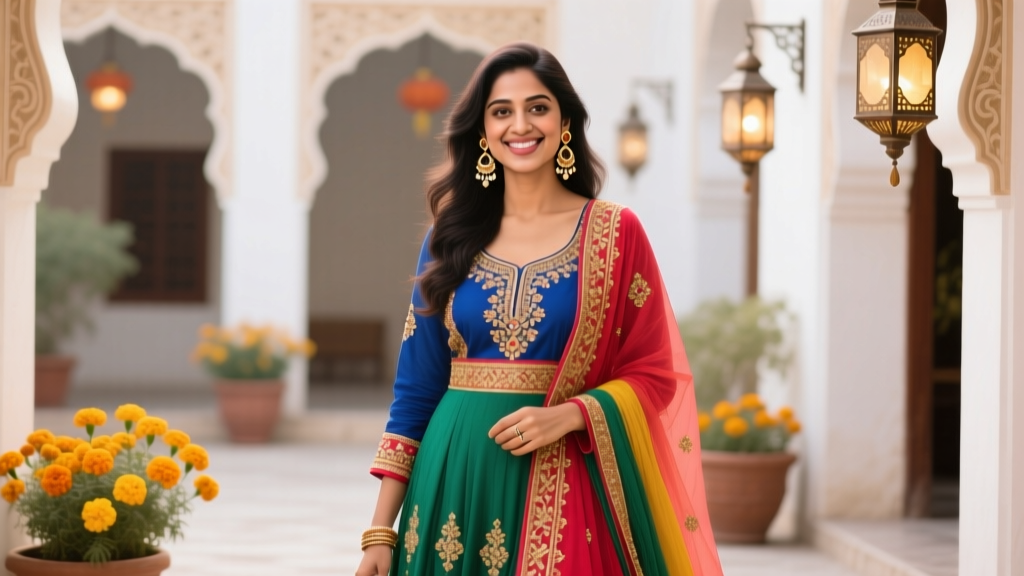
Punjabi Wedding Dress Code: Stress-Free 2026 Guide
Why Getting Your Outfit Right for a Punjabi Wedding Matters More Than You Think
If you've ever scrolled through Instagram stories from a Punjabi wedding—vibrant phulkari dupattas swirling, gold jhumkas catching the light, men in crisp sherwanis with embroidered pocket squares—you know it’s not just a celebration. It’s a living tapestry of history, hospitality, and unapologetic joy. And your outfit? It’s your first silent introduction—not just to the couple, but to their entire extended family, community, and cultural ethos. That’s why what to wear to a punjabi wedding isn’t about fashion alone; it’s about respect, intentionality, and belonging. Missteps—like wearing white (a mourning color in many Sikh and Hindu Punjabi traditions) or underdressing for a sangeet night—can unintentionally signal disengagement or cultural unawareness. But here’s the good news: with clear, context-aware guidance—and zero guesswork—you can step into any Punjabi wedding feeling radiant, respectful, and completely at ease.
Your Punjabi Wedding Attire Blueprint: Culture First, Trends Second
Punjabi weddings aren’t monolithic. A wedding in Amritsar follows different visual codes than one in Brampton, London, or Fremont—and yet core principles hold true across geography. At its heart, Punjabi wedding attire honors three pillars: color symbolism, cultural hierarchy of events, and modesty as reverence. Forget ‘black-tie optional’—this is ‘gold-embroidered-optional-but-highly-recommended’ territory.
Let’s start with color. Red and maroon dominate bridalwear—but as a guest, you’re encouraged (even expected) to wear bold hues: fuchsia, emerald green, burnt orange, royal blue, and deep plum. Why? Because Punjabi culture associates vibrant color with auspiciousness, energy, and celebration. White, cream, beige, and pastel grey are generally avoided—not because they’re ‘banned,’ but because they carry solemn connotations in Sikh and many North Indian Hindu communities (white is traditionally worn during mourning or religious austerity). One Toronto-based Punjabi wedding planner told us: ‘When a guest shows up in ivory, elders often pause—then quietly ask if someone passed away recently. It’s not judgment—it’s concern.’
Fabrics matter just as much. Cotton and linen are ideal for daytime ceremonies (mehendi, haldi) in warm climates—but avoid sheer synthetics that lack structure or breathability. For evening events (sangeet, baraat, reception), opt for richer textiles: georgette, chiffon, silk blends, or hand-block-printed cottons. Real talk: A $45 polyester lehenga may photograph well—but after two hours of dancing bhangra under hot lights? You’ll be fanning yourself with your own dupatta. Invest in breathable, drape-friendly fabrics—even if it means renting or borrowing.
The Event-by-Event Dress Code Decoder (With Real Guest Examples)
Unlike Western weddings where ‘cocktail attire’ covers everything from 3 p.m. to midnight, Punjabi weddings unfold across 3–5 distinct events—each with its own sartorial language. Here’s how to dress smartly, event by event:
- Mehendi & Haldi: Think joyful chaos—turmeric stains, laughter, and barefoot dancing. Women wear bright, easy-to-move-in outfits: cotton kurtas with palazzos or churidar sets in lemon yellow, mango orange, or lime green. Men wear kurta-pajamas or short kurtas with chinos—no heavy embroidery needed. Pro tip: Skip delicate jewelry—haldi paste stains metal and fabric alike.
- Sangeet: This is the ‘main stage’ for glam. Guests go all out: sequined anarkalis, mirror-work shararas, or modern Indo-western jumpsuits. Men wear bandhgalas, embroidered kurtas with tailored trousers, or even fusion blazers over kurta sets. Footwear? Embellished juttis or block heels—nothing that will sink into grass or slip on marble.
- Baraat: The groom’s procession is high-energy and photo-heavy. As a guest, wear something that photographs brilliantly in motion—think flowing dupattas, metallic thread work, or bold prints. Avoid long trailing dupattas unless you’re prepared to hold them mid-dance. Bonus: Carry a small foldable fan—it’s 90°F and humid, and no one judges hydration.
- Wedding Ceremony (Nikah/Kanyadaan): This is the most sacred moment. Modesty is paramount. Women should cover shoulders and midriff—avoid backless or off-shoulder styles unless paired with a structured jacket or dupatta draped deliberately. Men wear full-length kurtas or sherwanis—never sleeveless or cropped. Neutral tones like ivory, charcoal, or deep navy are acceptable here—if richly textured.
- Reception: Go maximalist. This is where guests often wear their ‘wow’ piece—the heirloom phulkari dupatta, the vintage jadau necklace, the custom-made lehenga. If you’re unsure, lean into elegance over extravagance: a well-cut chanderi sari, a silk dhoti-kurta set, or a structured crop-top-and-skirt combo with traditional embroidery.
Gender-Neutral & Inclusive Considerations: Beyond Binary Dress Codes
Modern Punjabi weddings increasingly embrace gender diversity—and so should your attire advice. Many non-binary, trans, and gender-expansive guests ask: ‘Do I *have* to wear a lehenga or sherwani?’ Short answer: No. Long answer: Your comfort, identity, and safety come first—while honoring the spirit of celebration.
We spoke with Arjun K., a queer Punjabi wedding photographer based in Surrey, BC, who’s documented over 80 weddings since 2019. He shared: ‘I’ve seen guests wear tailored tuxedos with phulkari lapel pins, sarees styled with sneakers and chain necklaces, and genderfluid ensembles blending jutti embroidery with deconstructed silhouettes. What matters isn’t conformity—it’s intention. If your outfit says “I celebrate this love,” it belongs.’
Practical tips for inclusive dressing:
- Choose silhouettes that affirm your identity—not prescribed gender roles. A dhoti-style pant with a structured kurta reads powerfully for anyone.
- Use accessories to signal cultural connection: a small kara (steel bangle), a miniature kirpan pendant, or a dupatta pinned with a vintage brooch.
- If you’re unsure about fit or modesty expectations, reach out to the couple or a close family member. Most appreciate the question—and will happily share guidance.
Punjabi Wedding Attire: Fabric, Fit & Function Comparison Table
| Event | Best Fabrics | Avoid | Fit Priority | Real-World Example |
|---|---|---|---|---|
| Mehendi / Haldi | Cotton, Linen, Khadi, Rayon-blend | Polyester, Satin, Heavy Silk | Breathability & Ease of Movement | Riya (Vancouver) wore a hand-block printed cotton kurta + palazzo set in turmeric-yellow—no sweat stains, zero discomfort during 90-min mehendi application. |
| Sangeet | Georgette, Chiffon, Velvet, Silk-blend | Thin Nylon, Unstructured Polyester | Drape & Photogenic Texture | Dev (Chicago) chose a navy bandhgala with gold-thread jaal embroidery—held shape all night, caught every spotlight, and survived 3 rounds of bhangra. |
| Baraat | Cotton-silk, Tussar, Crepe, Light-weight Brocade | Heavy Zari, Stiff Organza, Long Trains | Wind-resistance & Mobility | Aisha (London) wore a coral anarkali with side slits and a detachable dupatta—danced barefoot on grass without tripping once. |
| Wedding Ceremony | Chanderi, Maheshwari, Wool-blend (winter), Fine Cotton | Sheer Mesh, Backless Cuts, Low-rise Pants | Modesty & Structure | Samir (Toronto) wore a charcoal-grey sherwani with subtle silver zari—covered arms and neckline, yet looked regal beside the groom. |
| Reception | Raw Silk, Banarasi, Jamawar, Embroidered Net | Wrinkle-prone Fabrics, Overly Casual Denim | Statement Impact & Comfort Balance | Neha (Sydney) wore her grandmother’s 40-year-old phulkari dupatta over a modern black lehenga—honored heritage while feeling utterly contemporary. |
Frequently Asked Questions
Can I wear black to a Punjabi wedding?
Yes—but with nuance. While black is not taboo like white, it’s rarely worn as a head-to-toe statement (e.g., black lehenga or full sherwani) at daytime or spiritual events. In urban, diaspora weddings, black is increasingly accepted—especially when balanced with rich embroidery, metallic accents, or a vibrant dupatta. If in doubt, choose charcoal, navy, or deep wine instead. One Mumbai-based stylist notes: ‘Black reads as chic in Bandra, but in Ludhiana? Elders might assume you’re in mourning. When in Punjab, lean colorful.’
Do I need to wear traditional Indian clothing—or is Western attire okay?
You’re welcome to wear Western clothing—but it must be elevated, intentional, and culturally aware. A floor-length sequined gown is fine for the reception. A tailored blazer-and-trouser set with juttis works beautifully for the sangeet. What’s discouraged: jeans, T-shirts, flip-flops, or anything overly casual (e.g., sundresses without layers, sleeveless tops without coverage). The key is aligning your outfit’s formality and respect-level with the event’s significance—not replicating tradition, but honoring its gravity.
How much should I spend on an outfit for a Punjabi wedding?
There’s no fixed number—but budget smartly. Renting is now mainstream: platforms like Flyrobe, Occasionz, and local boutiques offer premium lehengas and sherwanis from ₹3,500–₹12,000 ($45–$150 USD) for 4-day rentals. Buying secondhand via Facebook groups (‘Punjabi Wedding Outfit Swap’) or Etsy sellers can yield authentic pieces for 30–60% less. Prioritize spending on fabric quality and fit—not brand names. A ₹6,000 hand-embroidered cotton anarkali will outperform a ₹25,000 machine-made polyester version in comfort, longevity, and cultural resonance.
Is it okay to wear my outfit to more than one wedding?
Absolutely—and encouraged! Punjabi culture values reuse and sustainability. In fact, many families pass down phulkari dupattas, jhumkas, and even sherwanis across generations. To refresh an outfit: swap dupattas, change jewelry, add a contrasting belt, or style hair differently. One bride’s mother in Mississauga wore the same red lehenga to 4 weddings over 2 years—each time with new embroidery details added by her tailor. Her mantra: ‘Joy multiplies when beauty is shared, not discarded.’
What footwear should I wear—and how do I avoid blisters?
Juttis are iconic—but not all are created equal. Look for cushioned insoles, flexible soles (not stiff leather), and ankle support if dancing is involved. Break them in 3–4 days before the wedding—wear them around the house with thick socks. Alternatives: embellished block heels (2–3 inches max), Kolhapuri sandals with ankle straps, or even stylish sneakers (yes, really)—if the couple has specified ‘casual-chic’ or ‘bhangra-ready.’ Pro tip: Pack blister bandaids, foot powder, and a compact foldable stool for quick shoe-removal relief.
Debunking 2 Common Myths About Punjabi Wedding Attire
- Myth #1: “Only South Asians can wear traditional Punjabi clothing.” Truth: Cultural appreciation—not appropriation—is the goal. Non-South Asian guests regularly wear lehengas, sherwanis, and turbans with deep respect—often after consulting with the couple, learning basic terms (e.g., ‘dupatta’ means scarf, ‘kara’ is a steel bangle), and avoiding sacred symbols (like the Khanda or Ik Onkar on apparel unless invited to do so). One Jewish guest in New Jersey wore a custom ivory-and-gold lehenga to her friend’s wedding—and was gifted a matching kara by the groom’s grandmother.
- Myth #2: “You must wear gold jewelry to fit in.” Truth: Jewelry is personal—not prescriptive. Many younger guests wear oxidized silver, minimalist chains, or even meaningful non-metal pieces (wooden bangles, ceramic earrings). What matters is intention—not weight. A single handcrafted jhumka tells more story than ten mass-produced gold studs. As Delhi-based jeweler Priya Mehta says: ‘Gold shines. But meaning glows.’
Final Thoughts: Dress Like You Belong—Because You Do
At its core, what to wear to a punjabi wedding is really about showing up—with care, curiosity, and courage. It’s not about perfection. It’s about choosing an outfit that lets you laugh freely during the haldi, dance without restraint at the sangeet, stand tall during the vows, and hug the grandparents without worrying your dupatta will slip. You don’t need to master every nuance overnight. Start small: pick one event, choose one color, learn one term. Then build from there. Your presence—authentic, joyful, and respectfully attired—is the greatest gift you can bring. So grab our free Punjabi Wedding Attire Checklist (PDF download link below), tag a friend who’s RSVP’d ‘yes’ next month, and get ready to celebrate love—loudly, colorfully, and unforgettably.
More Articles
 How to Donate Your Wedding Dress (2026)
 Letter to My Groom: 7 Simple Steps (2026)
 Real DIY Essentials: Tools, Materials, and Practices That Actually Work
 Men’s Wedding Bands: Top 7 Ethical Sources (2026)
 Wedding Planner Cost in India (2026): ₹15k–₹12L+
 A-Line Lace Wedding Dress Long Sleeve Fitting Guide
 RSVP No Rate Formula for Weddings (2026)
 How Long Should Your Wedding Dance Be? (2026)
 Wedding Catering for 50: 2026 Pricing & Cost-Saving Tips
 Amazon Wedding Registry: Add Items in 2026 (7 Steps)