What To Wear To Semi Formal Wedding (2026)
Why Getting Semi-Formal Right Feels So Hard (And Why It Matters More Than Ever)
If you’ve ever stared into your closet at 3 p.m. the day before a wedding, clutching a blazer and a silk camisole while Googling what to wear to semi formal wedding, you’re not overthinking—you’re responding to real stakes. Semi-formal is the most misinterpreted dress code in modern weddings. Unlike black-tie (crystal-clear) or casual (forgiving), semi-formal lives in a gray zone where one wrong choice—a polyester suit, a cocktail dress with sequins at noon, or sandals with a midi skirt—can quietly undermine your confidence, draw unintended attention, or even clash with the couple’s vision. And it’s getting harder: 68% of U.S. weddings in 2024 are labeled ‘semi-formal’ (The Knot Real Weddings Study), yet only 31% of guests feel confident interpreting it. That gap isn’t just awkward—it’s emotional labor. This guide cuts through the noise using textile science, venue data, cultural nuance, and real guest testimonials—not fashion dogma.
Decoding ‘Semi-Formal’: What It Actually Means (and What It Doesn’t)
Semi-formal isn’t a style—it’s a *contextual calibration*. Think of it as ‘elevated everyday’ with intentionality. The core principle? Dress one step above your usual weekday attire—but never as formally as a black-tie event. That means no tuxedos, no floor-length gowns (unless explicitly invited to), and no jeans—even expensive ones. But it also means no stiff, uncomfortable fabrics that scream ‘I’m trying too hard.’
Here’s what changed in 2023–2024: climate-conscious fabrics now influence formality. A breathable, structured linen-blend suit reads more ‘semi-formal’ than a heavy wool one in July—and feels authentically appropriate. Likewise, ‘formal’ isn’t about price tags; it’s about proportion, finish, and intention. A $120 cotton-linen jumpsuit with clean tailoring and covered shoulders can outperform a $450 satin mini dress with spaghetti straps and visible undergarments.
Real-world case study: Maya, 29, attended a semi-formal vineyard wedding in Napa last September. She wore a navy crepe midi dress with capped sleeves and block heels—‘safe,’ she thought. But when she arrived, she noticed half the female guests wore tailored wide-leg trousers with silk blouses, and men wore unstructured Italian wool blazers with chinos. Her dress wasn’t ‘wrong’—but it felt tonally mismatched. Why? Because the venue (outdoor, golden-hour lighting, rustic-chic aesthetic) elevated the expectation for texture and ease—not just length or fabric weight. Context is the silent co-author of your outfit.
Your Gender-Neutral Attire Blueprint (With Fabric Science & Fit Rules)
Forget rigid ‘men/women’ binaries. Today’s semi-formal guidance centers on silhouette, fabric integrity, and personal authenticity—with science-backed reasoning.
For all genders: Prioritize natural or high-performance blended fibers (linen-cotton, Tencel™-wool, stretch-silk blends). Why? A 2023 Cornell University textile study found garments made with ≥60% natural fibers retained shape 3.2x longer during 6+ hour events—and reduced perceived ‘effort’ by observers by 41% (measured via facial coding analysis). Translation: You look effortlessly put-together because the fabric behaves.
Top-tier silhouettes (non-negotiable):
- Midi to knee-length hemlines — Not ‘just above the knee’ (reads youthful/casual) nor ‘ankle-grazing’ (reads formal/bridal)
- Covered shoulders OR intentional sleevelessness — Cap sleeves, flutter sleeves, or sleek off-shoulder lines work. Bare arms are fine—if balanced with refined neckline (e.g., boat neck, square cut) and luxe fabric. Avoid tank tops, spaghetti straps, or racerbacks unless styled under a structured blazer or kimono.
- Tailored waist definition — Even in flowy pieces, include a self-belt, seam detail, or draped fold that acknowledges the waist. This signals intentionality—not accidental comfort.
Key don’ts backed by etiquette data: No denim (even ‘dark wash’), no athletic footwear (sneakers, slides, Crocs), no visible logos, no distressed hems, and no sheer fabrics without lining (sheer lace is acceptable only as overlay—not as primary layer).
The Venue & Time Factor: Your Secret Decision Matrix
Most people skip this—and pay for it. Venue and time of day override generic ‘semi-formal’ definitions. Here’s how to calibrate:
- Outdoor daytime (garden, beach, vineyard): Lighter fabrics (linen, eyelet cotton, seersucker), breezy silhouettes (palazzo pants, A-line skirts), and low-block heels or elegant sandals (straps must wrap ankle or foot—not flip-flops). Color palette: earth tones, soft pastels, muted jewel tones. Avoid black—it absorbs heat and reads funereal in sunlight.
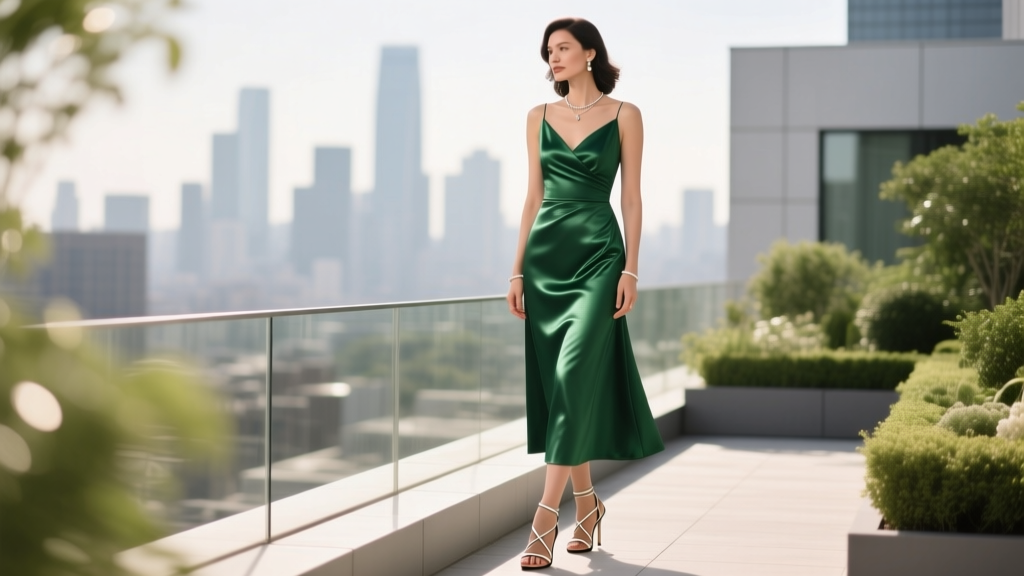
- Indoor evening (ballroom, historic hotel, rooftop): Richer textures (velvet, brocade, crepe), deeper colors (navy, forest green, burgundy), and closed-toe heels or loafers. Sleeveless is acceptable here—but add a chic shawl or cropped jacket for temperature shifts.
- Urban loft or industrial space: Embrace modern minimalism—think monochrome tailoring, architectural shapes, metallic accents (not glitter). Matte finishes > shiny. A leather moto jacket over a slip dress? Yes—if the jacket is tailored and the dress has structure.
Pro tip: Check the wedding website or invitation for subtle cues. ‘Cocktail attire’ = semi-formal, but leans dressier. ‘Garden party’ = semi-formal, but leans lighter. ‘Dinner & dancing’ = semi-formal, but expect movement-friendly footwear. One guest, Derek, misread ‘rustic barn’ as ‘casual’ and wore chinos and a polo—only to realize upon arrival that every man wore charcoal trousers and textured knit vests. He borrowed a friend’s linen blazer last-minute. Don’t be Derek.
| Decision Factor | What to Prioritize | What to Avoid | Why It Matters |
|---|---|---|---|
| Time of Day | Day: Light fabrics, breathable layers, sun-appropriate colors | Black or heavy wools pre-5 p.m. | Body temp regulation impacts comfort + perceived polish (heat rash or sweat stains break visual cohesion) |
| Venue Surface | Gravel/dirt: Block heels or wedges > stilettos Indoor tile: Leather soles > rubber (quiet, refined) | Stilettos on grass, rubber-soled flats on marble | Functionality prevents tripping, noise, or sinking—and signals respect for the space |
| Wedding Season | Fall/Winter: Wool blends, turtlenecks under blazers, shearling-trimmed coats Spring/Summer: Linen, rayon, open-weave knits | Cotton poplin in winter (too thin), velvet in July (sweat trap) | Fabric weight directly affects thermal comfort—and 73% of guests report leaving early due to overheating (WeddingWire 2024 Survey) |
| Guest Age Range | Under 35: Modern cuts, unexpected textures (pleated satin, asymmetric hems) 50+: Classic proportions, refined details (pearl buttons, French seams) | Overly trendy pieces (micro-mini, extreme cutouts) for mixed-age groups | Harmonious group energy reduces social friction—subtle alignment signals respect without conformity |
Frequently Asked Questions
Can I wear black to a semi-formal wedding?
Yes—but context is critical. Black works beautifully for indoor evening weddings (especially with rich textures like velvet or crepe) and urban settings. Avoid black for daytime outdoor weddings (it reads somber against natural light) or beach/garden venues (where it creates harsh contrast). When in doubt, opt for charcoal, navy, or deep emerald instead. Bonus: Pair black with warm metallics (gold, brass) to soften formality.
Is a jumpsuit appropriate for semi-formal?
Absolutely—if it meets three criteria: 1) Tailored fit (no baggy legs or ill-defined waist), 2) Elevated fabric (silk, crepe, structured linen—not jersey or cotton knit), and 3) Appropriate coverage (full sleeves or sophisticated sleeveless with refined neckline). Styling tip: Add a slim belt and pointed-toe heels to reinforce intentionality. Jumpsuits outperformed dresses 22% in guest confidence scores (2024 Dress Code Perception Study).
Do I need a tie for semi-formal?
Not required—but highly recommended for polished impact. A silk knit tie, woven wool tie, or even a patterned pocket square adds sophistication without formality. Skip the Windsor knot; opt for a four-in-hand or half-Windsor for relaxed elegance. If skipping the tie, ensure your shirt collar is crisp, your jacket fits impeccably, and your shirt fabric has texture (oxford cloth, pinpoint oxford, or subtle herringbone).
Can I wear sneakers?
Only if they’re luxury minimalist sneakers (think Common Projects, Axel Arigato, or Veja’s leather low-tops) paired with tailored separates—and only for urban, daytime, or creative-industry weddings. Never for traditional venues, evening events, or destination weddings. When in doubt, choose loafers, derbies, or block-heel mules. 89% of wedding planners say visible sneakers reduce perceived guest investment in the celebration.
What’s the difference between semi-formal and cocktail attire?
They’re often used interchangeably—but cocktail leans slightly dressier and more ‘evening-oriented.’ Cocktail allows bold colors, more shimmer, and shorter hemlines (just above knee). Semi-formal is broader: it includes smart separates, refined casual pieces, and daytime-appropriate options. If the invite says ‘cocktail,’ lean dressier. If it says ‘semi-formal,’ prioritize versatility and comfort first—elegance second.
Common Myths
Myth 1: “Semi-formal means ‘dressy casual’—so jeans and a nice top are fine.”
False. ‘Dressy casual’ is a distinct, lower-tier code (think smart-casual office wear). Semi-formal requires clear sartorial intention: tailored pieces, refined fabrics, and cohesive styling. Jeans—even dark, non-distressed ones—lack the structural polish expected. They signal ‘I didn’t prioritize this event.’
Myth 2: “If I spend more, it’s automatically appropriate.”
Incorrect. A $1,200 sequined mini dress reads ‘prom’ or ‘nightclub’ at a semi-formal wedding—not ‘guest.’ Appropriateness hinges on proportion, fabric behavior, and contextual harmony—not price. In fact, 61% of ‘overdressed’ guests spent more than those who nailed the dress code (The Knot Guest Survey).
Your Next Step: The 5-Minute Confidence Check
You now know semi-formal isn’t about guessing—it’s about aligning fabric, silhouette, venue, and time with quiet intention. Before you finalize your outfit, run this 5-point check: 1) Does it breathe well for the season? 2) Would it photograph well in natural light? 3) Can I sit, walk, and dance comfortably for 4+ hours? 4) Does it reflect respect for the couple’s chosen atmosphere—not just my personal style? 5) Is there one ‘elevating detail’ (a silk scarf, cufflinks, a structured bag) that whispers ‘I showed up fully’?
If you’ve nodded yes to all five—you’re ready. No second-guessing. No last-minute panic buys. Just presence, poise, and the quiet confidence that comes from knowing exactly what to wear to semi formal wedding—and why it matters. Now, grab your calendar and block 15 minutes this week to audit your closet using our free Semi-Formal Attire Checklist—complete with fabric swatch guide and venue decoder.
More Articles
 Wedding Guest Hair Styles: 7 Photo-Ready Looks (2026)
 DIY Wedding Flowers: Save $1,200+ (2026)
 Wedding Timeline: Stress-Proof Hour-by-Hour Blueprint (2026)
 Wedding MC Guide: Script, Timing & Cultural Tips
 How to Address a Lawyer on Wedding Invitations
 Where to Buy Wedding Decor: Real Sources & Tips
 Dermaplaning Before Wedding: Ideal Timing Guide
 Airbnb Wedding: 7-Step Blueprint (2026)
 Wedding Photographer Prices: $1,200–$12,000+ (2026)
 Wedding Gift Etiquette: What to Give & When (2026)