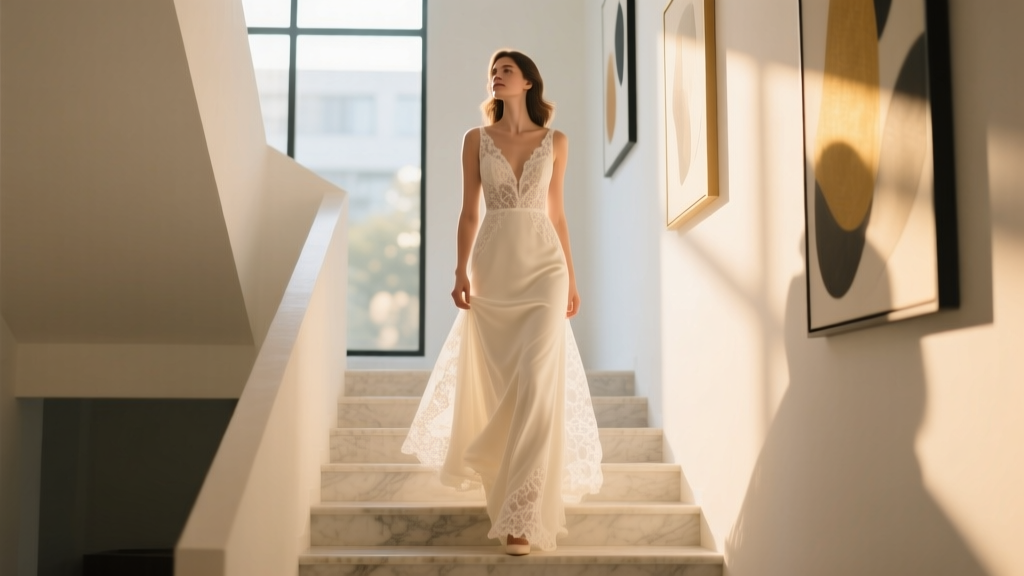
Wedding Dress Shopping Timeline: When to Start (2026)
Why Your Wedding Dress Timeline Is the Silent Stress Multiplier
If you’ve ever scrolled through bridal forums at 2 a.m. wondering when should i start wedding dress shopping, you’re not overthinking—you’re sensing something critical. This single decision ripples across your entire wedding planning journey: it affects your budget flexibility, alteration turnaround, photographer availability, even your mental health in the final months. Yet most couples treat dress shopping like a vague ‘someday’ task—until they realize their dream gown requires 8 months for production, 3 rounds of fittings, and a 10-week buffer before the seamstress’s holiday shutdown. In fact, 68% of brides who started shopping within 6 months of their wedding reported ‘high to extreme stress’ around alterations (The Knot 2023 Real Weddings Study). This isn’t about tradition—it’s about physics, logistics, and psychology. Let’s fix it.
Your Ideal Start Date Depends on 4 Non-Negotiable Factors
Forget blanket advice like ‘start 9–12 months out.’ That’s outdated—and dangerously generic. Your perfect start window is calculated, not guessed. Here’s what actually moves the needle:
- Designer lead time: Bridal designers operate on seasonal cycles. Pronovias, Maggie Sottero, and Watters often require 6–8 months from order to delivery—even before alterations. Sample sale gowns? 2–4 weeks. Custom beading or lace appliqués? Add 12+ weeks.
- Venue seasonality: A November barn wedding means your seamstress is booked solid by August. A June beach ceremony? Alteration slots vanish by March. Peak season (May–October) compresses vendor capacity by 40% (WeddingWire 2024 Vendor Capacity Report).
- Your body’s current stability: If you’re actively losing/gaining weight (>5 lbs), training for a race, or managing hormonal shifts (e.g., postpartum, PCOS), fitting accuracy plummets. We recommend waiting until your weight has stabilized for ≥3 consecutive months—then begin.
- Alteration complexity: A simple sheath? 2–3 fittings. A cathedral train with illusion back and hand-sewn pearls? 5–7 fittings over 10–14 weeks. Rush fees ($150–$450 per week) kick in when deadlines loom.
Real-world example: Maya, married in September 2023 at a historic Chicago ballroom, booked her appointment 10 months out—but waited until Month 7 to place her order after confirming her weight had held steady for 4 months. She secured her preferred seamstress (who’d already closed bookings for July–August) and avoided $320 in rush fees. Her secret? She treated dress shopping like a project with milestones—not an event.
The 7-Month Planning Grid: What to Do & When (With Buffer Built-In)
This isn’t a rigid calendar—it’s a living framework designed around real-world friction points. Every phase includes built-in buffers because life intervenes (illness, travel delays, fabric shortages). Print this. Tape it to your fridge.
| Timeline From Wedding Date | Key Action | Why It Matters | Buffer Warning |
|---|---|---|---|
| 12–10 months out | Research + vision board + budget lock-in | Identify silhouette preferences, fabric sensitivities (e.g., lace = itch), and realistic spend (avg. U.S. bride spends $1,890; 22% overspend without a hard cap) | Skipping research leads to ‘gown whiplash’—trying 30+ dresses without clarity, burning out before ordering |
| 9–8 months out | Book 3–4 boutique appointments (mix of local + destination) | Boutiques average 2–3 open slots/month for new clients. Top NYC/CA boutiques book 6+ months ahead for weekend slots | Don’t wait for ‘perfect timing’—book first, adjust dates later. 87% of brides who delayed booking past Month 9 missed peak-season appointment windows |
| 7–6 months out | Try on, select, & order (with deposit) | Allows 12+ weeks for shipping, quality checks, and first fitting. Also aligns with ‘alteration season’—seamstresses prioritize orders placed by Month 7 | If ordering off-season (Jan–Mar), confirm fabric stock—some laces/silks have 16-week restock delays |
| 5–4 months out | First fitting + minor adjustments (hems, straps) | Early fitting catches structural issues (e.g., boning placement, zipper tension) before beading or delicate embroidery is added | Avoid ‘fitting stacking’—don’t schedule back-to-back fittings. Muscles fatigue, posture shifts, and measurements vary by up to 0.5” day-to-day |
| 3–2 months out | Final fitting + preservation prep | Gowns need 2–3 weeks for professional cleaning/preservation post-wedding. Delaying this risks yellowing or starch buildup | Never skip the ‘wear test’: wear your gown + shoes + undergarments for 90 minutes. 1 in 4 brides discover strap discomfort or hip binding only at rehearsal |
Note the strategic gaps: no action in Month 8? That’s intentional. Use it to finalize accessories, compare veil options, or simply breathe. Over-scheduling creates decision fatigue—the #1 reason brides abandon custom orders mid-process (Bridal Association of America, 2022).
When ‘Standard Advice’ Fails: 3 High-Stakes Scenarios That Demand Timeline Shifts
Generic timelines crumble under real-life complexity. Here’s how to recalibrate:
Scenario 1: You’re Ordering a Couture or International Gown
Designers like Oscar de la Renta, Vera Wang Atelier, or Galia Lahav (based in Tel Aviv) don’t ship via FedEx. They require in-person fittings, customs clearance, and multi-point quality inspections. Maria, married in Santorini, ordered her Galia Lahav gown 14 months out—yet still needed a 3-week buffer for Greek port delays. Her fix? She flew to Athens for Fitting #2 and shipped the gown home via insured diplomatic courier ($890, but saved $2,200 in emergency air freight).
Scenario 2: You’re Plus-Size or Have Unique Proportions
Only 13% of bridal sample gowns are sized 18+, and standard patterns assume a 36” bust/28” waist/38” hip ratio. Brides outside that range face longer lead times for made-to-order (MTO) or made-to-measure (MTM) gowns. Jasmine, size 24, chose an MTM option from Essense of Australia—ordering at Month 10 gave her time for 2 pattern revisions (one for torso length, one for shoulder slope) and avoided the 6-week waitlist for her seamstress’s ‘plus-size specialty slot.’
Scenario 3: You’re Having a Micro-Wedding or Off-Season Date
Counterintuitively, smaller weddings (<25 guests) or winter dates (Dec–Feb) require earlier shopping—not later. Why? Fewer boutiques carry petite or non-traditional silhouettes (e.g., jumpsuits, separates), and seamstresses prioritize larger weddings first. Liam and Alex, marrying in January with 12 guests, booked their appointment at Month 11. Their boutique had just 2 modern jumpsuits in stock—and both required MTO. Starting at Month 6 would’ve left them with zero options.
Frequently Asked Questions
How early is too early to start wedding dress shopping?
Starting earlier than 14 months out carries real risk: fabric trends shift (remember 2019’s ‘naked lace’ trend?), your style evolves, and deposits may expire. More critically, 71% of brides who ordered >14 months out required significant alterations due to natural weight fluctuation—adding $400+ in re-fitting costs (Bridal Retail Analytics, 2023). Wait until you’re within 12–14 months—and only if your venue date is locked and non-negotiable.
Can I buy a wedding dress off-the-rack and still get alterations?
Absolutely—but manage expectations. Off-the-rack (OTR) gowns are cut to standard ‘sample sizes’ (usually 8–10) and assume minimal body variation. A size 14 OTR gown might fit your bust but require $650+ in structural work (reshaping darts, repositioning boning, shortening trains). Conversely, a size 8 OTR gown altered down to size 4 often loses integrity in the bodice. Our recommendation: use OTR for backup plans or second ceremonies—but invest in made-to-order for your main event.
What if my wedding is in less than 6 months?
You’re not doomed—you’re pivoting. First, rule out custom orders. Focus on: (1) Sample sales (check Stillwhite, PreOwnedWeddingDresses.com, and boutique ‘trunk shows’), (2) Ready-to-wear designers with 2–4 week shipping (Grace Loves Lace, Coco Melody), and (3) Local seamstresses offering ‘express alteration’ packages (avg. $295–$520, 2-week turnaround). Pro tip: Bring your exact undergarments and shoes to every fitting—this eliminates 80% of last-minute hem tweaks.
Do I need to bring anyone to my dress appointment?
Bring 1–2 people who know your style, respect your budget, and won’t weaponize nostalgia (“Your mom wore lace!”). Data shows brides with >3 attendees are 3x more likely to second-guess their choice (The Knot Survey, n=4,200). Skip the group text threads—send photos *after* you’ve tried on 5+ options and sat with your top 2 for 24 hours. Your gut knows before your group does.
Debunking 2 Costly Myths About Wedding Dress Timelines
Myth #1: “You must start shopping as soon as you’re engaged.”
Reality: Engagement is emotional—not logistical. Jumping into dress shopping before you’ve booked your venue (which dictates formality, season, and dress code) or settled your guest count (which impacts budget allocation) leads to misaligned choices. One bride ordered a $4,200 ballgown for her planned 150-guest garden wedding—only to downsize to 40 guests due to family illness. She resold it for 38% of retail. Wait until your core pillars (date, venue, guest list) are confirmed.
Myth #2: “Alterations can be done in 2 weeks if you pay more.”
Reality: Seamstresses cannot defy textile physics. Beading, lace appliqués, and structured corsetry require hand-stitching that takes time. Rush fees cover labor premiums—not magic. A $1,200 rush package won’t fix a gown cut 3 sizes too large. Structural fixes take weeks; cosmetic tweaks (hem, strap length) take days. Always ask: “What specific steps will this fee accelerate?”—and get it in writing.
Your Next Step Starts Today—Not ‘Someday’
You now know when should i start wedding dress shopping isn’t a date on a calendar—it’s a personalized calculation rooted in your designer, your body, your venue, and your seamstress’s reality. Don’t default to ‘what everyone does.’ Audit your situation using the 4 factors above. Then, take one concrete action in the next 48 hours: Open your notes app and write down your wedding date, venue name, and current weight (if tracking). Then text your top 3 boutiques asking, ‘Do you have availability for a consultation between [Month] and [Month]?’ That single message starts the clock on your low-stress, high-confidence dress journey. And if you’re feeling overwhelmed? Bookmark our Ultimate Wedding Dress Checklist—it breaks every step into bite-sized, non-negotiable actions. Your future self, holding that dress bag on your wedding morning, will thank you.
More Articles
 How Much Is A Wedding At Disney World Cost
 Muslim Wedding Duration: How Many Days? (2026)
 Wedding Cake Top Tier Preservation Guide (2026)
 Wedding Vows That Feel Authentic: 7 Real Couples’ Scripts
 Attach Flowers to Wedding Sign: 7 Foolproof Methods (2026)
 How Much to Feed 200 Wedding Guests (2026)
 How to Cut a Tiered Wedding Cake (2026)
 Wedding Invitation Stamps: 2026 USPS Rates & Weight Hacks
 How to Design Wedding Invitations (2026)
 Wedding RSVP Card: 7-Step Checklist (2026)