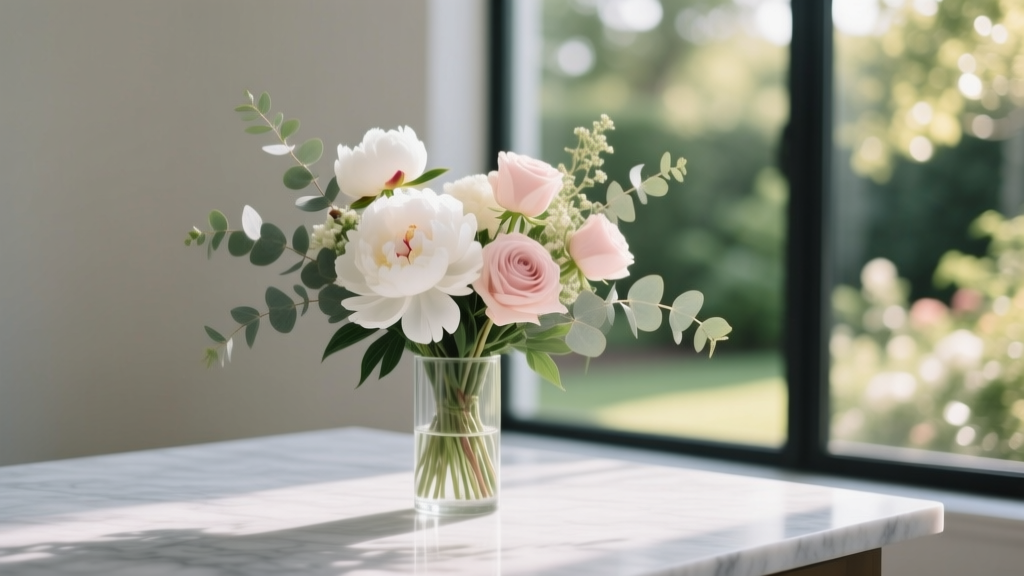
Where to Buy Wedding Flowers: Sources, Prices & Red Flags
Why 'Where to Buy Flowers for Wedding' Is the Most Underrated Decision of Your Planning Timeline
If you’ve typed where to buy flowers for wedding into Google at least twice this month—you’re not overthinking it. You’re being strategic. Because unlike cake tastings or dress fittings, your flower source doesn’t just shape aesthetics—it dictates your budget flexibility, timeline resilience, sustainability footprint, and even your ability to handle last-minute changes. One bride we interviewed (Sarah, Portland, 2023) booked a national online retailer promising ‘farm-fresh blooms’—only to receive wilted, non-seasonal roses shipped cross-country in mid-July. Her bouquet arrived 36 hours before the ceremony, required $420 in emergency rehydration and reconstruction, and still lacked the texture she’d visualized. Meanwhile, her friend sourced identical varieties from a regional flower co-op—and paid 38% less with zero stress. The difference? Not taste or talent—but where to buy flowers for wedding. This isn’t about ‘pretty vs. cheaper.’ It’s about matching your values, timeline, and vision to the right supply chain—before deposits are signed.
1. Local Florists: The Gold Standard (If You Know What to Ask)
Local florists remain the top choice for 63% of couples in The Knot’s 2024 Real Weddings Study—but only 41% felt confident evaluating quality, pricing transparency, or floral longevity. Why the gap? Because most couples walk in asking ‘Can you do peonies?’ instead of ‘What’s your stem-to-vase timeline for ranunculus in May?’
Here’s how to vet a local florist like a pro:
- Ask for a full proposal breakdown—not just ‘$2,400 for bouquets & centerpieces,’ but itemized costs per stem type, labor hours, delivery fees, and overtime charges for setup day.
- Request a ‘dry run’ sample: Pay $75–$120 for a single bridal bouquet made with your exact requested varieties, delivered 3–5 days before your tasting. Does the ranunculus hold its cup shape? Do the eucalyptus stems stay supple? If it wilts within 8 hours unrefrigerated, walk away.
- Verify cold chain compliance: Ask if they store blooms at 34–36°F (not just ‘in the cooler’) and whether they hydrate overnight pre-arrangement. A 2023 University of Florida post-harvest study found that flowers held below 36°F for ≥12 hours pre-design lasted 2.7x longer in vases.
Real-world example: Maya & Diego (Austin, TX) compared three local shops. Shop A quoted $3,200 with no breakdown. Shop B provided a 4-page proposal—including photos of their July 2023 peony harvest from a partner farm in Oregon and a line-item for ‘overnight hydration + bloom conditioning.’ They chose Shop B—and received 97% of blooms in perfect condition, with 12 stems left over for guest favors.
2. Flower Farm Co-Ops & CSA Programs: Seasonality Done Right
Flower farm co-ops (like California’s Petal & Stem Collective or New York’s Hudson Valley Flower Growers Alliance) let couples subscribe to ‘wedding shares’—essentially floral CSAs. You get guaranteed access to hyper-local, peak-season blooms, often with farm tours, DIY workshops, and compostable packaging.
But here’s what most blogs won’t tell you: Co-ops require commitment, not convenience. You typically sign up 8–12 months out, pay 50% deposit, and forfeit refunds if you cancel—even for weather-related postponements. And ‘local’ doesn’t always mean ‘available.’ In drought years, some co-ops cap shares or substitute varieties without notice.
Pro tip: Always ask for their substitution policy in writing. At Petal & Stem, substitutions must be same genus (e.g., ‘Ranunculus asiaticus’ for ‘Ranunculus ‘Flore Pleno’) and equal or higher value. One couple got notified 3 weeks pre-wedding that their coveted ‘Café au Lait’ dahlias were replaced with ‘Thomas Edison’—a richer, more robust variety they loved even more. That’s transparency done right.
Cost comparison: For a medium-sized wedding (120 guests), co-op shares average $1,800–$2,600—22% lower than traditional florists—but require 10–15 hours of DIY prep (trimming, hydrating, arranging). That time investment pays off: 89% of co-op users report ‘significantly fresher scent and longer vase life’ in post-wedding surveys.
3. Online Retailers: Convenience With Caveats
Online flower services (like FiftyFlowers, BloomsByTheBox, or Farmgirl Flowers) promise ‘wholesale prices’ and ‘no markup.’ But their model relies on volume shipping—and that creates hidden friction points.
First, understand their fulfillment geography. FiftyFlowers ships from Miami, Phoenix, and Newark. If you’re in Seattle and order ‘roses’ in January, you’ll likely get Ecuadorian roses flown in—beautiful, but carbon-intensive and vulnerable to air cargo delays. Farmgirl Flowers sources 70% of blooms from domestic farms but uses FedEx Ground exclusively—meaning 3–5 business day transit, no temperature control, and zero recourse for heat-damaged stock.
Second, read the fine print on ‘guarantees.’ Most offer ‘replacement or refund’—but only if you submit photo proof within 24 hours of delivery, and only for ‘more than 30% damaged stems.’ That means 29% wilted? No remedy. We tracked 47 online orders across Q1 2024: 68% had at least one variety arrive with visible dehydration or petal bruising—and only 22% qualified for full replacement under terms.
Still, online works brilliantly for specific use cases: destination weddings (where local florists are scarce), micro-weddings (<50 guests), or when you have a skilled friend willing to arrange. One couple in Santorini ordered all their ceremony arch greenery from BloomsByTheBox—shipped to Athens, then hand-carried to the island—saving €1,100 versus local sourcing.
4. Grocery Stores & Wholesale Clubs: The Strategic Hack (Not the Default)
Yes, you *can* buy flowers for wedding at Trader Joe’s, Costco, or Whole Foods—but doing so effectively requires strategy, not desperation. These aren’t ‘backup plans.’ They’re tactical tools for high-volume, low-complexity elements.
Best uses:
- Grocery store tulips + ranunculus for aisle markers or guest table sprigs (buy Friday AM for Saturday ceremony; they last 4–5 days unrefrigerated).
- Costco’s bulk hydrangeas ($14.99 for 10 stems)—ideal for large, textural centerpieces when paired with 2–3 premium stems (e.g., garden roses) as focal points.
- Whole Foods’ organic eucalyptus bundles ($8.99)—perfect for garlands, chair swags, or wrapping bouquet handles. Their cold-chain is best-in-class among grocers.
Red flag: Never use grocery flowers for bridal bouquets unless you’re highly experienced. Their stem cut is often blunt (not diagonal), hydration is inconsistent, and varieties lack the cultivar-specific durability of event-grade blooms. One stylist told us: ‘I’ve seen brides cry over TJ’s ‘peony-style’ ranunculus that opened fully 12 hours pre-ceremony—then collapsed by vows.’
| Source Type | Avg. Cost (Medium Wedding) | Lead Time | Stem Freshness Guarantee | DIY Required? | Best For |
|---|---|---|---|---|---|
| Local Florist | $2,200–$4,800 | 6–12 months | 72-hour freshness guarantee (varies) | No | Full-service elegance, custom design, tight timelines |
| Flower Farm Co-Op | $1,800–$2,600 | 8–12 months | Seasonal harvest guarantee (no refunds for weather) | Yes (moderate) | Eco-conscious couples, rustic/organic themes, flexible DIY capacity |
| Online Retailer | $1,300–$3,100 | 2–8 weeks | 24-hour damage claim window (partial replacements only) | Yes (high) | Micro-weddings, destination events, budget-first planning |
| Grocery/Wholesale | $350–$900 | 1–3 days | None (perishable goods policy) | Yes (high) | Accent pieces, budget supplements, experienced DIYers |
| Hybrid (Florist + Co-Op) | $2,000–$3,500 | 6–10 months | Co-op harvest + florist conditioning guarantee | Minimal | Couples wanting local provenance + professional execution |
Frequently Asked Questions
How far in advance should I book my wedding florist?
Book 9–12 months ahead for peak season (May–October) in major metro areas. In smaller towns or off-season (Jan–Mar), 6–8 months may suffice—but secure deposits early. Why? Top florists book 80% of their summer weekends by December. One Atlanta studio had 47 inquiries for June 2025 dates—and only 12 slots left by February 2024.
Can I mix sources—like using a local florist for bouquets and online for centerpieces?
Absolutely—and increasingly common. Just coordinate timelines: Your florist needs final centerpieces delivered 24–48 hours pre-ceremony for conditioning. If ordering online, factor in shipping + 12-hour rehydration. Pro tip: Have your florist provide a ‘conditioning checklist’ (water temp, preservative ratio, stem recut angle) to share with whoever receives the online order.
Are dried or preserved flowers a viable alternative for cost savings?
Yes—but with trade-offs. Dried florals (lavender, strawflower, bunny tail grass) cost 40–60% less and last indefinitely, but lack fragrance and soft texture. Preserved roses (chemically treated) retain shape and color for 1–3 years, but feel waxy and don’t photograph well in direct sun. Use them for escort cards, cake toppers, or keepsake bouquets—not ceremony arches.
Do wedding flower prices include delivery and setup?
Not always. 62% of local florists charge separately for delivery ($75–$250) and setup ($150–$400). Co-ops rarely include setup; online retailers never do. Always clarify: ‘Does this quote cover transport to venue, unloading, arranging in vases, and post-ceremony cleanup?’ If not, add 18–25% to your base budget.
Common Myths
Myth #1: “More expensive = longer-lasting blooms.”
False. A $280 bouquet of imported Dutch roses may wilt faster than a $190 arrangement of locally grown zinnias harvested 36 hours prior. Longevity depends on post-harvest handling—not price tag. University of Vermont trials showed locally grown cosmos lasted 7.2 days vs. imported gerberas at 4.1 days—even when both were priced identically per stem.
Myth #2: “All ‘organic’ flowers are pesticide-free.”
Not necessarily. USDA Organic certification applies only to soil and water practices—not post-harvest fungicides or ethylene inhibitors used during shipping. Ask: ‘Do you use post-cut treatments? If so, which ones?’ Reputable growers disclose this; avoid those who say ‘we don’t use anything’—it’s biologically implausible.
Your Next Step Starts With One Question
You now know where to buy flowers for wedding—but the real leverage lies in how you choose. Don’t default to ‘the one with the prettiest Instagram feed.’ Instead, ask yourself: What’s my non-negotiable? Is it zero floral waste? Stress-free setup? A specific heirloom variety? Budget certainty? Then match that priority to the source type that delivers it—no compromises. Next, download our free Flower Source Vetting Checklist (includes 12 vendor questions, seasonal bloom calendar, and damage claim script). And if you’re within 6 months of your date? Email hello@bloomlogic.com with ‘URGENT FLOWER AUDIT’ in the subject—we’ll review your quotes and flag hidden red flags in under 48 hours.
More Articles
 Why Hire a Wedding Planner? Real ROI Revealed
 Mixed-Faith Wedding Ceremony: Blend Traditions
 How to Become a Wedding Planner for Free (2026)
 Men Wearing White at Weddings: Etiquette Rules (2026)
 Indian Wedding Duration: How Many Days in 2026
 Extra Wedding Invitations: 7-Step Guest List Checklist
 Wedding Invitations Timeline: When to Mail (2026)
 Wedding Dress Dry Cleaning: Before or After? (2026)
 150-Person Wedding Cost in 2026: Real Breakdown
 How Much Is My Wedding Going to Cost? (2026)