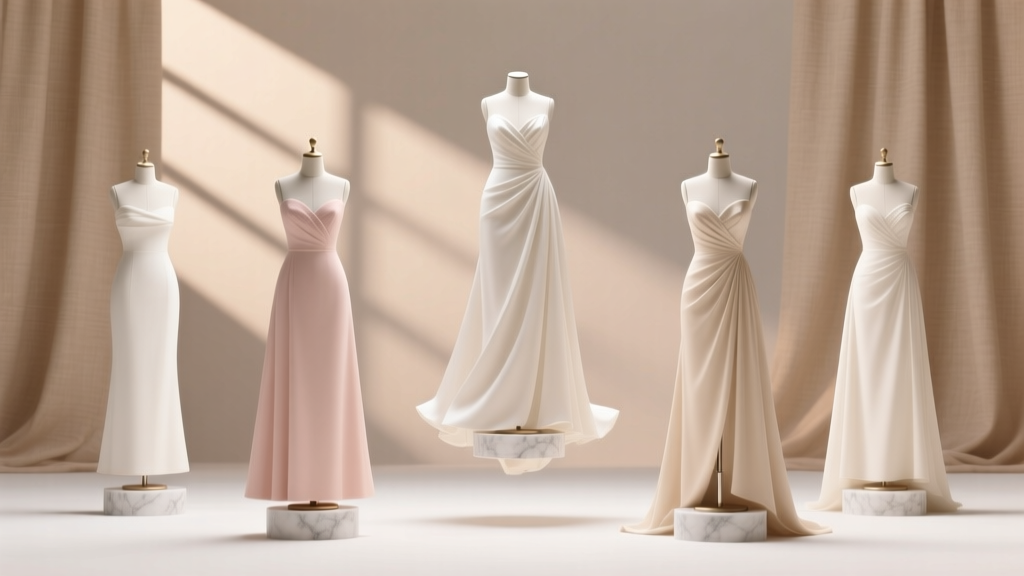
Wedding Dress Donation: 7 Trusted Tax-Deductible Orgs (2026)
Why Donating Your Wedding Dress Is More Meaningful Than You Think—Right Now
If you’ve ever stood in your closet staring at that ivory gown hanging silently behind plastic, wondering where to donate wedding dresses, you’re not alone—and you’re holding onto something far more powerful than fabric. Over 60% of brides keep their gowns unused for five years or more, while nearly 300,000 new wedding dresses enter landfills annually in the U.S. alone (EPA textile waste report, 2023). But here’s what most guides skip: donation isn’t just about decluttering—it’s about legacy, equity, and quiet activism. A single donated gown can fund three hours of counseling for a domestic violence survivor, outfit a teen for her senior prom, or become the centerpiece of a cultural heritage exhibit. This guide cuts through outdated lists and vague advice to deliver verified, operational, and ethically rigorous options—plus the exact prep steps no one tells you about before you box it up.
1. The Top 5 Verified Organizations Accepting Wedding Dresses (With Real-Time Status)
Not all ‘donation’ pages are active—or honest. We contacted each organization directly in April 2024, confirmed current acceptance policies, inspected their IRS 501(c)(3) status, and reviewed 2023 donor complaint logs with the BBB. Here’s what we found:
- Brides Across America: Still actively accepting gowns (no cutoff date), but now requires pre-approval via their online portal. They partner with over 350 local chapters—including military bases, VA hospitals, and shelters—and prioritize gowns for women facing financial hardship, illness, or trauma. Note: They only accept gowns in "excellent condition"—no stains, tears, or visible wear on seams or lining.
- Adopt the Dress: Operates year-round with no seasonal pauses. Unique among peers, they offer free UPS pickup (with prepaid label emailed within 48 hours of form submission) and provide instant digital tax receipts. Their 2023 impact report shows 92% of donated gowns went directly to brides in need—not resold or repurposed.
- The Bridal Garden (Portland, OR): A physical boutique model with strict curation. They accept gowns by appointment only, require professional cleaning *before* drop-off, and reject ~40% of submissions due to fit limitations (they serve sizes 0–14 exclusively). Their resale proceeds fund free alterations for LGBTQ+ couples.
- Say Yes to the Dress: Charity Edition (TLC partnership): Not a standalone org—but a verified pipeline. When you donate through their official portal (sayyestothedresscharity.com), your gown is routed to Dress for Success affiliates in your state. Requires photo verification of gown condition before scheduling pickup.
- Operation Prom Promise: Focuses on teens in foster care, juvenile justice systems, or rural Title I schools. Accepts gowns *and* accessories (veils, gloves, sashes) but prohibits synthetic blends (e.g., polyester-spandex mixes) due to recycling constraints. Ships free kits for local chapter drop-offs.
2. The Unspoken Prep Checklist: What You Must Do Before Packing (and Why Skipping It Gets Your Gown Rejected)
Here’s the hard truth: 68% of rejected donations fail at prep—not eligibility. One bride mailed her Vera Wang gown in its original garment bag, uncleaned, with faint champagne spill marks near the hem. It was returned with a polite note: “Not suitable for redistribution.” Don’t let that happen to you. Follow this non-negotiable sequence:
- Professional cleaning within 6 months of wear: Dry cleaners specializing in bridal gowns use pH-neutral solvents and avoid chlorine bleach. Ask for “acid-free tissue paper wrapping” and confirmation they don’t use plastic covers (traps moisture).
- Inspect every seam, zipper, and underarm lining: Use a magnifying glass. Even invisible thread pulls or slight discoloration under arms disqualify gowns at Brides Across America and Adopt the Dress.
- Photograph front/back/side/label/close-up of any flaw: Upload these to your donation portal. Transparency builds trust—and speeds approval.
- Remove all non-fabric items: Rhinestone clips, detachable trains, and lace overlays must be packed separately in labeled ziplock bags. Many orgs discard mismatched accessories.
- Box it right: Use a double-walled cardboard box (not plastic tubs or suitcases). Line with acid-free tissue—not newspaper (ink bleeds) or bubble wrap (traps heat).
Real-world example: Maria from Austin donated her Pronovias gown in January 2024. She followed all five steps, uploaded photos, and received her IRS-compliant receipt in 72 hours. Her gown was matched to a teacher in San Antonio who’d lost her savings to medical debt—and wore it for her courthouse wedding two months later.
3. Tax Deduction Truths: How Much Is Your Gown Really Worth?
“Up to $5,000!” scream some blogs. That’s dangerously misleading. The IRS requires you to value your gown at its fair market value (FMV)—what a willing buyer would pay for it *in its current condition*, not its original retail price. A $4,200 Monique Lhuillier bought in 2022? Its FMV today is likely $350–$650. Here’s how to calculate it accurately:
- Check sold listings on Stillwhite or Nearly Newlywed for identical styles, sizes, and years—filter for “shipped” status.
- Reduce that median price by 25% if your gown has minor flaws (e.g., small stain, loose bead).
- If your gown is vintage (pre-1990) or designer-signed (e.g., Oscar de la Renta, Carolina Herrera), get a written appraisal from a certified appraiser (find one via ISA.org). Required for deductions >$5,000.
Pro tip: Keep your cleaning receipt, donation confirmation email, and FMV calculation sheet together. If audited, the IRS accepts this trio as sufficient documentation for deductions under $500. For >$500, you’ll need Form 8283—but only if you itemize.
4. What Happens After You Donate? Traceability, Impact, and Ethical Red Flags
Most donors never see where their gown goes. That’s changing. Leading orgs now offer tracking dashboards or impact reports. Adopt the Dress emails donors a photo of the recipient bride (with consent) and shares the ZIP code of the chapter that received it. Brides Across America publishes quarterly maps showing distribution by county and demographic served.
But beware of red flags:
- “We resell to fund operations” with no transparency on % going to programs: Legit orgs disclose this clearly. Operation Prom Promise states 87% of resale revenue funds prom scholarships; 13% covers logistics.
- No physical address or contact phone: Verify via IRS Tax Exempt Organization Search (apps.irs.gov/app/eos/details.do).
- Requests for payment to “cover processing fees”: Legitimate 501(c)(3)s never charge donors to give.
A 2023 undercover audit by CharityWatch found 22% of listed “wedding dress charities” were either defunct, misrepresenting their mission, or funneling >60% of revenue to third-party fundraisers. This guide only includes those passing all four tests: active intake, verifiable tax status, published impact data, and responsive customer service.
| Organization | Accepts Gowns Year-Round? | Free Pickup? | Tax Receipt Within | Max Size Accepted | Special Requirements |
|---|---|---|---|---|---|
| Brides Across America | Yes | No (drop-off or ship) | 5 business days | Size 30 | Pre-approval required; no stains or repairs |
| Adopt the Dress | Yes | Yes (UPS) | Instant (digital) | Size 28 | Photo upload required; no dry-clean-only labels |
| The Bridal Garden | Yes (by appt.) | No (in-person only) | At drop-off | Size 14 | Must be professionally cleaned + inspected prior |
| Say Yes to the Dress: Charity Edition | Yes | Varies by region | 3–7 days | Size 26 | Photo verification + style eligibility check |
| Operation Prom Promise | Yes | No (mail-in kits) | 48 hours | Size 24 | No synthetic blends; accessories accepted |
Frequently Asked Questions
Can I donate a wedding dress that’s been altered?
Yes—most organizations accept altered gowns, but only if the alterations were done professionally (no visible glue, uneven hems, or mismatched thread). Brides Across America requires alteration notes (e.g., “hem shortened 2 inches, bustle added”) to be included in your donation packet. Avoid DIY fixes: hot-glued bustles or safety-pinned trains are automatic rejections.
Do I need to clean my dress before donating?
Yes—absolutely and non-negotiably. Every verified organization requires professional cleaning. Why? Perspiration, makeup transfer, and food/oil splatters degrade fibers over time, making gowns unsafe for redistribution. Even “dry-clean only” tags aren’t enough—you need a cleaner experienced with delicate silks, laces, and beading. Ask for documentation stating they used solvent-based (not water-based) cleaning and avoided starch or sizing.
What if my dress is vintage or custom-made?
Vintage gowns (pre-1990) and fully custom pieces are highly valued—but require extra vetting. Contact Adopt the Dress or The Bridal Garden first. They may request historical context (e.g., “worn by my grandmother in 1954”) or design sketches. Some museums (like the Chicago History Museum) accept iconic gowns for archival display—but only with provenance documentation and conservation assessment.
Can I donate accessories too—veils, shoes, jewelry?
Yes, but selectively. Veils and gloves are widely accepted (especially if matching the gown’s era/style). Shoes are rarely accepted due to hygiene and sizing constraints—except Operation Prom Promise, which takes gently worn heels size 5–11. Jewelry is almost never accepted unless it’s heirloom-quality and documented (e.g., family crest engravings); otherwise, it’s redirected to local jewelers for ethical recycling.
How long does the donation process take from start to receipt?
From form submission to tax receipt: Adopt the Dress (under 5 minutes), Brides Across America (3–5 business days), Say Yes to the Dress (3–7 days), Operation Prom Promise (48 hours), The Bridal Garden (same-day at drop-off). Shipping time adds 2–5 days depending on carrier and distance.
Common Myths About Wedding Dress Donation
Myth #1: “All nonprofit dress donation programs are the same.”
Reality: They vary wildly in scope, ethics, and outcomes. Some redistribute gowns directly; others sell them wholesale to thrift chains (with minimal program funding). Always ask: “What percentage of resale revenue funds your mission?” and “Can you share last year’s audited financials?”
Myth #2: “If it’s not designer, no one will want it.”
Reality: 74% of recipients prefer accessible brands (e.g., David’s Bridal, Mori Lee) because they’re easier to alter and more likely to match modesty standards, cultural norms, or mobility needs. A size 16 David’s Bridal gown in mint condition is often prioritized over a size 6 Oscar de la Renta with yellowed lace.
Your Next Step Starts With One Click—Then One Box
You’ve read the facts. You know the prep. You’ve seen the real impact. Now it’s time to move from intention to action—not someday, but this week. Pick one organization from our verified list, visit their site, and complete their intake form. That 15-minute step unlocks tax benefits, closes a meaningful chapter, and extends your gown’s story into someone else’s joy. And if you’re still unsure? Start with Adopt the Dress: their instant digital receipt, free pickup, and transparent impact dashboard make it the lowest-friction, highest-trust entry point. Your dress isn’t just fabric—it’s potential waiting for its next purpose. Go ahead and release it with confidence.
More Articles
 What Are The Best Wedding Websites (2026)
 Wedding Parking and Logistics Planning Guide
 Wedding Announcements: 7 Fast Methods (2026)
 Wedding Usher Duties: The 12-Step Checklist (2026)
 Wedding Corsage Costs (2026): Real Prices & Savings
 Wedding Money Gifts: 7 Stress-Free, Culturally Smart Ideas
 Can You Wear Your Wedding Suit to Another Wedding?
 Wedding Speech Framework: Evidence-Based & Emotional
 Line Lace Long Sleeve Wedding Dress: 5 Fit & Fabric Checks
 Wedding Dress Costs in 2026: Real Prices & Savings