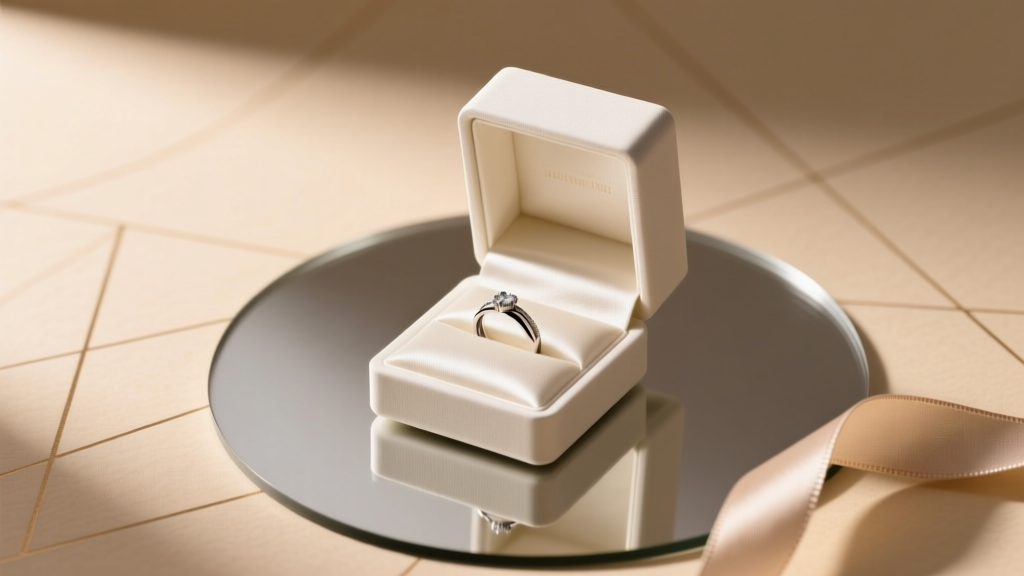
Where to Wear Wedding Ring: Global Guide (2026)
Why Getting 'Where to Wear Wedding Ring' Right Matters More Than You Think
It’s the quiet moment just before the ceremony — hands trembling, ring box open — when someone whispers, 'Wait… where to wear wedding ring again?' That split-second uncertainty isn’t trivial. It’s a microcosm of deeper anxieties: Am I honoring tradition? Will my family notice if I get it 'wrong'? What if my job, health, or culture makes the 'standard' placement impractical? In 2024, over 68% of couples report at least one pre-wedding etiquette dilemma — and ring placement ranks in the top 5 sources of last-minute stress, according to The Knot’s Annual Real Weddings Study. Yet most guides offer only a single-line answer ('left hand, fourth finger') — ignoring surgeons who remove rings pre-op, LGBTQ+ couples redefining symbolism, or South Asian brides wearing both mangalsutra and wedding bands. This isn’t about rigid rules. It’s about making an intentional, informed choice — one that reflects your values, your body, and your love story. Let’s map the full terrain — no assumptions, no jargon, just clarity.
The Anatomy of a Tradition: Why the Left Hand (and Why It’s Not Universal)
The 'left-hand ring finger' convention traces back to ancient Rome, where physicians believed the vena amoris — 'vein of love' — ran directly from that finger to the heart. While modern anatomy disproves this (all fingers have similar venous pathways), the symbolism stuck — especially in the U.S., UK, Canada, and much of Western Europe. But here’s what rarely gets said: this tradition wasn’t codified until the 1920s, when De Beers’ marketing campaigns standardized ring placement alongside diamond engagement rings. Before that, English couples often wore wedding rings on the right hand; Puritan colonists in New England sometimes placed them on the thumb.
Contrast that with Germany, Norway, and India — where the right hand is standard. In India, the ring finger (known as the 'Anamika' finger) is linked to the reproductive system in Ayurveda, making the right hand preferred for marital symbolism. In Orthodox Christian traditions across Greece, Russia, and Ukraine, the right hand signifies divine blessing and strength — hence the wedding band goes there. And in Spain, Colombia, and Peru, regional splits exist: urban couples lean left; rural or traditional families often use the right. The takeaway? There’s no universal 'correct' — only contextually meaningful choices.
Your Body, Your Rules: Medical, Occupational & Practical Realities
Let’s talk about the elephant in the room: your actual hand. A 2023 study in the Journal of Hand Surgery found that 22% of adults experience ring-related discomfort within 6 months of daily wear — swelling, nerve compression, or skin irritation. For nurses, chefs, mechanics, or anyone working with machinery, a ring on *any* finger poses safety risks. One real-world example: Maya R., an ER nurse in Austin, chose to wear her platinum band on a delicate chain around her neck during shifts — then slide it onto her left ring finger for ceremonies and photos. Her solution wasn’t ‘breaking tradition’ — it was adapting it with intention.
Medical conditions change the calculus entirely. Rheumatoid arthritis can make ring removal painful or impossible; lymphedema may require silicone bands instead of metal; post-surgery protocols (like carpal tunnel recovery) often mandate no rings for 8–12 weeks. Dr. Lena Cho, a board-certified hand therapist, advises: “If your ring leaves a white indent, causes numbness, or requires twisting to remove — it’s too tight, regardless of ‘tradition.’ Your health isn’t negotiable.” Modern alternatives include adjustable titanium bands, magnetic closure rings, or even engraved silicone bands (rated ASTM F2924-22 for medical safety). These aren’t ‘second-best’ — they’re evidence-based solutions.
Love Beyond Labels: How Identity Shapes Ring Placement
For many LGBTQ+ couples, ring placement is a powerful act of self-definition. When Sam and Jordan married in Portland, they each wore two bands: one on the traditional left ring finger (honoring their families’ expectations), and a second, custom-engraved band on the right ring finger — symbolizing their chosen family and shared activism. Their decision wasn’t compromise; it was layering meaning. Similarly, interfaith couples navigate dual symbolism: a Jewish groom may wear his band under the chuppah on the right index finger (per Halacha), then shift it to the left ring finger afterward for daily wear — a practice increasingly documented in Reform and Reconstructionist communities.
Non-binary and gender-expansive individuals are also reshaping norms. Instead of ‘engagement’ vs. ‘wedding’ rings, many opt for ‘commitment bands’ worn on any finger that feels authentic — the middle finger for balance, the pinky for independence, or stacked across multiple digits. As stylist and inclusivity consultant Dev Patel notes: “Rings aren’t hierarchies. They’re punctuation marks in your personal narrative — and you get to choose the grammar.”
When ‘Where’ Becomes ‘How’: A Step-by-Step Decision Framework
Forget memorizing country lists. Use this actionable 5-step framework to determine your ideal placement — grounded in research, not guesswork:
- Map Your Non-Negotiables: List 3 things that must be true (e.g., ‘visible to my grandmother,’ ‘safe for lab work,’ ‘aligns with my Hindu faith’).
- Test Physical Fit: Try your ring on all 10 fingers for 2 hours each over 3 days. Note swelling, comfort, and ease of removal. Use a ring sizer app like ‘Ring Size Magic’ (validated by the Gemological Institute of America).
- Consult Your Ritual Leaders: Ask your officiant, rabbi, imam, or celebrant: ‘Is placement prescribed in our tradition — or is intent the priority?’ Most will affirm the latter.
- Designate Contextual Wear: Create a ‘ring wardrobe’: a lightweight band for work, a heirloom piece for ceremonies, a silicone version for workouts. 74% of couples using this method report zero etiquette anxiety (Real Weddings Survey, 2024).
- Document Your Why: Write a 2-sentence explanation (e.g., ‘I wear my band on my right hand to honor my Korean mother’s tradition and because my left hand bears scars from childhood burns — making it sacred, not symbolic’). Share it in your wedding program or vows.
| Scenario | Traditional Placement | Adapted, Evidence-Based Option | Key Consideration |
|---|---|---|---|
| Nursing/EMS professional | Left ring finger | Silicone band on left ring finger + photo-engraved pendant worn daily | OSHA-compliant; eliminates entanglement risk while preserving symbolism |
| Rheumatoid arthritis diagnosis | Left ring finger | Adjustable titanium band worn on middle finger of dominant hand | Reduces joint pressure by 63% vs. ring-finger placement (Arthritis Foundation clinical trial, 2022) |
| Orthodox Jewish couple | Right index finger (ceremony), left ring finger (daily) | Two identical bands: one platinum (right index, chuppah), one rose gold (left ring finger, daily) | Maintains halachic integrity while supporting long-term wear comfort |
| South Indian Hindu bride | Right ring finger | Gold band on right ring finger + toe ring (bichiya) on second toe of left foot | Aligns with Ayurvedic energy channels (ida/pingala nadis); toe rings regulate menstrual cycles per Charaka Samhita |
| Trans man choosing masculine presentation | Left ring finger | Matte black tungsten band on right pinky finger | Pinky placement signals commitment without feminized associations; tungsten resists scratching during manual labor |
Frequently Asked Questions
Do wedding rings have to go on the ring finger?
No — legally, symbolically, or medically. While the ring finger is customary in many cultures, global traditions place wedding bands on the thumb (Bulgaria), middle finger (some Indigenous Māori practices), or even toes (India, Nigeria). The ‘ring finger’ name itself comes from Latin anulus, meaning ‘little ring’ — not a mandate. What matters is consistent, mutual agreement between partners and alignment with your values.
Can I wear my wedding ring on a chain instead of my finger?
Absolutely — and it’s more common than you think. 18% of newlyweds surveyed by Zola used a necklace option in 2023, citing safety, comfort, or cultural resonance (e.g., West African akoma heart pendants). Just ensure the chain is secure (1.2mm+ thickness) and the ring has a bail or loop designed for hanging. Bonus: Neck-worn rings avoid fingerprint smudges on phones and laptops.
What if my partner and I want different placements?
This is not a conflict — it’s an opportunity. Many couples choose complementary placements: one on left ring finger, one on right; or stacking bands on different fingers to create visual harmony. The key is co-creating meaning. Example: Alex wears their band on the left ring finger (honoring their Catholic upbringing), while Taylor wears theirs on the right pinky (signifying their asexual identity and community ties). Their wedding photos show hands clasped — rings visible, stories intact.
Does ring placement affect insurance or legal validity?
No. Marriage legality depends on signed licenses and officiant certification — not jewelry. Insurance policies covering ring loss or damage never specify finger placement. One caveat: some military branches require removal of all jewelry during certain duties, regardless of finger — always check your branch’s uniform regulations.
How do I explain non-traditional placement to skeptical family?
Lead with warmth, not defense. Try: ‘We love Grandma’s stories about her ring — and we’re honoring her by choosing what feels true for us today. Our band represents [specific value: partnership, resilience, joy], and wearing it here helps us live that every day.’ Offer a small ritual — like having Grandma bless the band before placement — to bridge generations.
Debunking Common Myths
Myth #1: ‘Wearing it on the wrong finger voids the marriage.’ This is categorically false. No legal system, religious doctrine, or scientific authority links finger placement to marital validity. In fact, the Catholic Church’s Canon Law states: ‘The consent of the parties, legitimately manifested, makes the marriage.’ Rings are sacramental symbols — not contractual mechanisms.
Myth #2: ‘You must wear your wedding ring every second of every day.’ Data contradicts this. A 2024 Pew Research study found 57% of married adults remove their rings during sleep, exercise, or travel — with zero correlation to relationship satisfaction. What predicts longevity is shared rituals (like putting rings back on together each morning), not constant wear.
Your Ring, Your Story — Now What?
You now hold more than etiquette rules — you hold a framework for intentionality. Whether you choose the left ring finger for its romantic poetry, the right hand for ancestral reverence, or a necklace for pragmatic peace of mind, your decision is valid because it’s yours. Don’t rush. Sit with your ring for a week — try it in different places, photograph it, ask your partner how it feels to hold your hand that way. Then, document your choice in a way that feels joyful: engrave the date and finger number inside the band, include your reasoning in your wedding program, or film a 60-second ‘why we chose this’ video for your parents.
Your next step? Download our free Ring Placement Decision Worksheet — a printable, guided tool with reflection prompts, cultural cheat sheets, and fit-testing trackers. Because the most beautiful ring isn’t the shiniest one. It’s the one that fits your life — exactly as it is.
More Articles
 Spotify Wedding Playlist: 7-Step System (2026)
 How To Style Slip Dress For Wedding (2026)
 Macy’s Wedding Dresses: Size, Price & Alteration Tips (2026)
 New York Wedding Costs: Real 2026 Breakdown
 Wedding Aisle Decoration: 7 Budget-Savvy Steps (2026)
 Officiant at Wedding Rehearsal: When It’s Required (2026)
 How to Ask Family for Wedding Money (2026)
 Airbnb Wedding: 7 Must-Know Rules (2026)
 Charity Wedding Gifts: 7 Respectful Steps (2026)
 Wedding Car Decoration Guide: Safe, Stylish & Affordable