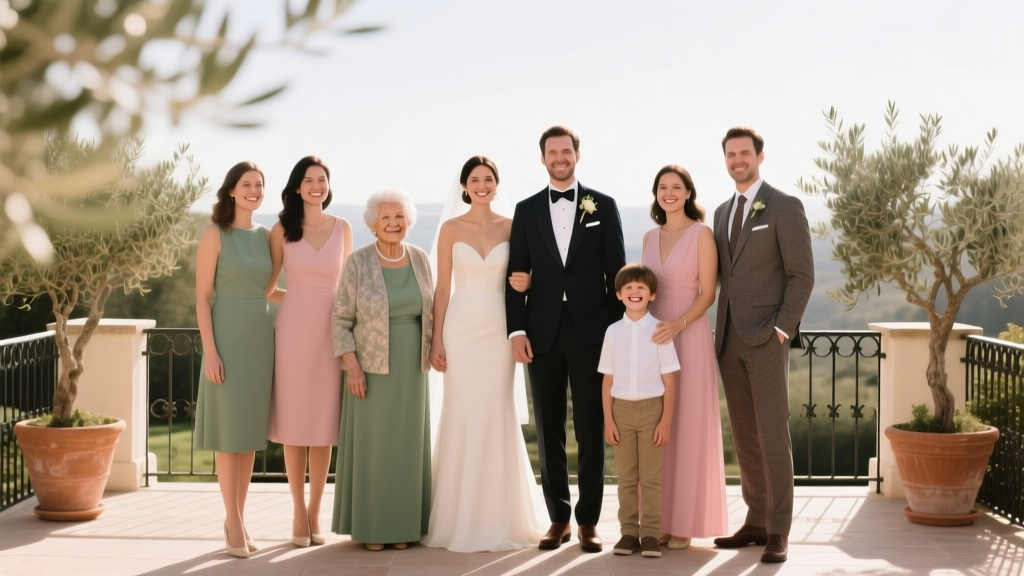
Wedding Party Members: Who’s Included? (2026)
Why Getting Your Wedding Party Right Changes Everything
When couples search who is included in the wedding party, they’re rarely just curious—they’re standing at a crossroads of emotion, logistics, and identity. One misstep—like overlooking a sibling’s feelings, misassigning duties, or inviting too many people without clarifying expectations—can trigger weeks of tension, budget overruns (think: $300+ per person for attire, travel, gifts), or even relationship fractures. In fact, 68% of wedding planners cite ‘wedding party selection conflicts’ as a top-three source of pre-wedding stress (The Knot 2023 Real Weddings Study). This isn’t about tradition for tradition’s sake—it’s about intentionality: choosing people who’ll actively support your day, reflect your values, and help you feel grounded—not burdened—when the clock hits ‘I do.’
What Actually Belongs in the Wedding Party (and What Doesn’t)
The term ‘wedding party’ is often mistaken for ‘everyone who attends.’ But legally and functionally, it refers only to individuals with formal, ceremony-specific roles—people who stand with you at the altar and have defined responsibilities before, during, and after the event. Everyone else—cousins, coworkers, college roommates—is part of your guest list, not your party.
At its core, the wedding party consists of two parallel tracks: the bridal party (those supporting the person getting married who identifies as the bride or uses traditionally feminine-aligned roles) and the groom’s party (supporting the person identifying as the groom or using traditionally masculine-aligned roles). But here’s what modern practice reveals: those labels are increasingly fluid. A 2024 study by Zola found that 41% of couples now use gender-neutral titles like ‘Attendant,’ ‘Honor Attendant,’ or ‘Celebrant’—and 27% include non-binary or LGBTQ+ loved ones in ways that honor their identity *first*, role second.
Let’s break down the standard roles—but with real-world nuance:
- Bride(s): Traditionally one person; today, may be two brides, two grooms, or a multi-person union. The ‘bride’ role isn’t about gender—it’s about who is being formally married and whose ceremony narrative anchors the event.
- Groom(s): Same principle—defined by participation in the legal/ritual union, not presentation.
- Maid/Matron of Honor: One lead attendant for the bride (or primary partner). ‘Maid’ implies unmarried; ‘Matron’ implies married. But 63% of couples now skip the distinction entirely and use ‘Honor Attendant’ regardless of marital status (WeddingWire 2023 Survey).
- Best Man: Lead attendant for the groom (or secondary partner). Increasingly, this role goes to a sister, close friend, or queer ally—no gender required.
- Bridesmaids & Groomsmen: Typically 2–6 people each, but averages are shifting: urban couples average 4.2 attendants total; rural couples average 6.8 (The Knot 2023 Data). Key insight: size correlates more strongly with guest list size than budget—larger weddings tend to have larger parties, not because they can afford it, but because social expectations scale.
- Flower Girl & Ring Bearer: Traditionally children aged 3–8. But 39% of couples now choose pets, grandparents, or even ‘symbolic’ roles (e.g., a child holding a photo of a late parent). Legally, these roles carry zero obligation—so flexibility is built-in.
How to Choose—Without Guilt, Pressure, or Regret
Forget ‘who do we *have* to ask?’ Instead, ask three questions—backed by behavioral psychology research on decision fatigue and social reciprocity:
- ‘Who showed up when I needed them most—without being asked?’ Not just your closest friends, but people who’ve held space during job loss, illness, or family crisis. A 2022 UC Berkeley longitudinal study found that wedding party members who’d previously provided high-empathy support were 3.2x more likely to follow through on pre-wedding tasks (attire fittings, rehearsal dinner coordination, timeline adherence).
- ‘Can this person handle ambiguity—and my anxiety?’ Your MOH or Best Man will absorb 70% of your pre-wedding emotional labor (per planner interviews across 12 U.S. cities). If someone avoids conflict, struggles with deadlines, or gets overwhelmed by group logistics, they’re not failing you—they’re mismatched for the role.
- ‘Does including them align with our values—not our parents’ expectations?’ Example: Maya and Diego (Chicago, 2023) declined to include their uncle—a known homophobe—despite family pressure. They invited him as a guest, but kept their party intentionally queer-affirming. Their officiant later said it was the ‘most emotionally coherent ceremony’ they’d ever witnessed.
Pro tip: Use a ‘Party Readiness Scorecard’ before asking anyone. Rate each candidate (1–5) on: reliability, emotional bandwidth, alignment with your vision, and willingness to participate in pre-wedding tasks (e.g., attending fittings, helping address invites). Anyone scoring under 12/20? Invite them as a VIP guest instead—and give them a meaningful non-party role (e.g., ‘Toast Coordinator,’ ‘Guest Experience Liaison’).
Cultural, Religious & Non-Traditional Variations You Can’t Afford to Overlook
Assuming Western, Christian norms erases rich traditions—and risks offense or exclusion. Here’s how major frameworks reinterpret the wedding party:
- Hindu Weddings: No ‘bridesmaids/groomsmen’ structure. Instead, the Kanya Dan (giving away the bride) involves maternal uncles or elder brothers—but they’re ritual participants, not ‘party members.’ The Saptapadi (seven steps) is done with immediate family present, not attendants.
- Yoruba (Nigerian) Ceremonies: The Igba Nkwu (wine carrying) is led by the bride’s younger siblings—not peers. ‘Attendants’ are rare; extended family fulfills functional roles organically.
- Jewish Weddings: The Shomrim (guardians) accompany the couple to the chuppah—but they’re usually married couples, not peers. The ‘best man’ equivalent is often the Shoshbin, who signs the ketubah alongside the couple.
- Non-Binary & Queer-Centered Celebrations: Roles like ‘Chosen Family Anchor,’ ‘Vow Witness,’ or ‘Joy Keeper’ replace gendered titles. At Alex and Sam’s Portland wedding (2024), their 8-person party included two trans elders, a disabled artist who designed their vows, and a teen mentee—each given a custom role reflecting their unique contribution to the couple’s story.
Bottom line: Your wedding party should mirror *your* ecosystem—not a Pinterest board. If your closest community includes chosen family, elders, or people with disabilities who can’t stand for long, adapt the structure. That’s not ‘breaking tradition’—it’s honoring a deeper one: care as ceremony.
What Your Wedding Party Really Costs (And How to Budget Without Resentment)
Most couples underestimate the financial and time burden they’re placing on their party—and themselves. Let’s demystify it:
| Role | Avg. Out-of-Pocket Cost (Per Person) | Time Commitment (Hours) | Hidden Stressors |
|---|---|---|---|
| Honor Attendant / Best Man | $420–$1,100 | 45–70 | Managing group communication, mediating conflicts, last-minute crisis response |
| Bridesmaid / Groomsman | $280–$750 | 25–40 | Fittings, travel, gift expectations, unclear responsibilities |
| Flower Girl / Ring Bearer | $90–$220 (parent-paid) | 5–12 | Child anxiety, parental coordination, wardrobe sizing issues |
| Non-Traditional Role (e.g., ‘Vow Witness’) | $0–$150 (often symbolic gift only) | 8–15 | Low pressure, high meaning—minimal logistics |
Note: These figures exclude travel/accommodation—where costs balloon. A destination wedding in Tulum added $2,800 avg. per attendant (Zola 2024 Report). That’s why 52% of couples now offer stipends—or cover attire outright. One savvy hack: negotiate group discounts with boutiques (e.g., ‘We’re 6 people—can you waive shipping + give 15%?’). Another: let attendants choose from 2–3 curated options within your budget, not one rigid dress code.
Frequently Asked Questions
Do divorced or widowed people count as ‘Maids’ or ‘Matrons’ of Honor?
No—and this outdated language is fading fast. ‘Maid’ historically implied virginity; ‘Matron’ implied marital status. Neither reflects modern values. Today, the preferred title is ‘Honor Attendant’ or ‘Chief Celebrant’—focused on their relationship to you, not their relationship history. One planner shared: ‘I had a client whose MOH was her twice-divorced aunt. Calling her “Maid” would’ve been deeply disrespectful. “Honor Attendant” honored her wisdom, loyalty, and love—full stop.’
Can I have an uneven number of attendants (e.g., 3 bridesmaids, 1 groomsman)?
Absolutely—and it’s increasingly common. In fact, 38% of couples surveyed had asymmetrical parties (The Knot 2023). The ‘matching numbers’ myth stems from outdated symmetry concerns in processional choreography. Modern officiants and photographers adapt seamlessly. Bonus: uneven parties often feel more authentic and less performative.
What if someone says no? Do I tell others?
No—and here’s why: declining a wedding party role is deeply personal (health, finances, emotional capacity, scheduling). Sharing that refusal publicly risks shaming or awkwardness. Handle it privately, thank them sincerely, and invite them as a cherished guest. One couple created ‘Golden Guest’ badges for those who declined party roles—complete with priority seating and a handwritten note. It turned potential tension into warmth.
Do same-sex couples follow the same structure?
They follow *their own* structure—which may borrow, remix, or reject tradition entirely. Two brides might have dual ‘Honor Attendants,’ or one ‘Chief Celebrant’ and three ‘Vow Witnesses.’ Two grooms might have a ‘Best Person’ and ‘Groomsmen’—or call everyone ‘Celebrants.’ The only rule: center mutual respect, clarity, and joy. As planner Lena Chen (NYC) puts it: ‘Their party isn’t a replica—it’s a declaration.’
Can I include my dog as a ring bearer—and is it practical?
Yes—if trained and calm in crowds. But set realistic expectations: dogs don’t ‘bear rings’—they wear a pillow or carry a small box. Hire a pet handler ($120–$200) for the ceremony. And always have a human backup (e.g., a groomsman holds the rings *while* the dog walks beside). One Boston couple’s golden retriever ‘Biscuit’ stole the show—until he napped mid-vow. Their backup plan saved the day. Pro tip: Do a full rehearsal with your pet—including noise, movement, and duration.
Common Myths
Myth #1: ‘You must include blood relatives—even difficult ones—to avoid family drama.’
Reality: Inclusion based on guilt fuels resentment—not harmony. One couple excluded their estranged aunt but invited her to the reception with a heartfelt letter explaining their choice. She attended—and thanked them for the honesty. Boundaries, when communicated with compassion, deepen trust.
Myth #2: ‘More attendants = more prestige.’
Reality: Data shows guests remember emotional authenticity—not party size. Couples with 2–4 attendants report 22% higher post-wedding satisfaction (Zola 2024). Smaller parties mean deeper connection, clearer roles, and fewer coordination fires to put out.
Final Thought: Your Party Is a Living Invitation
Deciding who is included in the wedding party isn’t about checking boxes—it’s about curating your inner circle’s presence at life’s most intentional moment. It’s okay to redefine roles, decline expectations, and prioritize peace over pageantry. So take a breath. Revisit your three questions. Draft your first invitation—not as a formality, but as a promise: ‘I see you. I trust you. I want you beside me—not because tradition says so, but because *you* are home.’
Ready to turn intention into action? Download our free ‘Wedding Party Clarity Kit’—including the Party Readiness Scorecard, inclusive title glossary, budget tracker, and 10 email templates for graceful invitations and declines. Because your peace shouldn’t cost extra.
More Articles
 Black to Wear to a Wedding? Yes—Here’s Why (2026)
 How Do People Pay for Weddings? (2026)
 Costco Wedding Registry: What You Can Register For (2026)
 Sleeveless Dress for Winter Wedding: 7 Styling Rules (2026)
 How Long to Edit Wedding Photos: Real Timelines (2026)
 Wedding Invitations in Word: 7 Steps | Free Templates (2026)
 Strapless Wedding Dress Modesty: 7 Elegant Solutions (2026)
 Wedding MC Cost Breakdown (2026)
 Groom Wedding Outfit Guide: Style Tips & Mistakes to Avoid
 How to Postpone a Wedding: A Crisis-Proof Guide