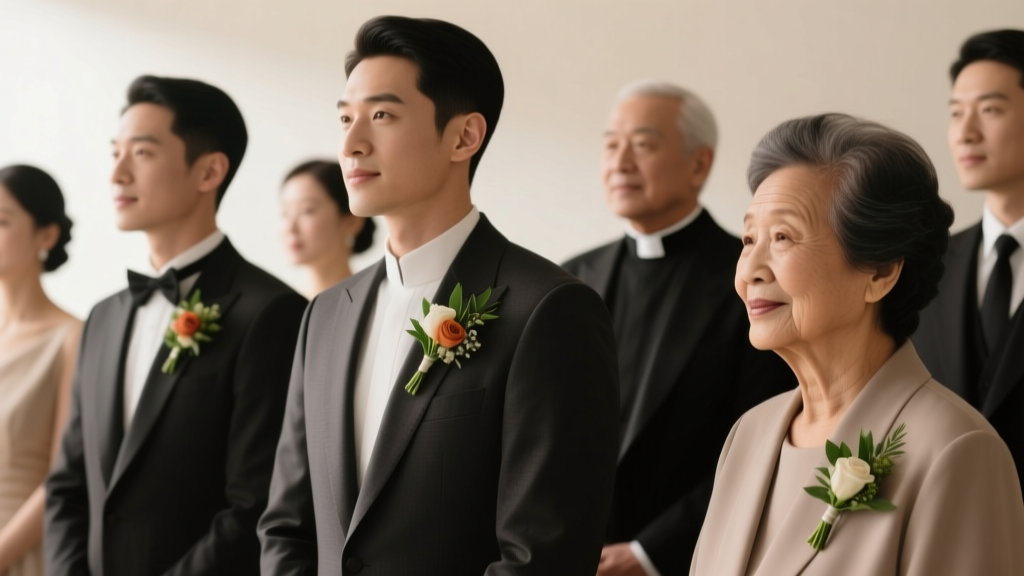
Boutonniere Etiquette: Who Wears One? (2026)
Why Getting Boutonniere Protocol Right Matters More Than Ever
When you search who wears boutonniere in a wedding, you’re not just asking about flower placement—you’re navigating unspoken social contracts, family dynamics, budget trade-offs, and the subtle language of honor and inclusion. In 2024, weddings are increasingly personalized, multigenerational, and blended—meaning traditional ‘groomsmen only’ rules no longer fit most couples’ realities. One misassigned boutonniere can spark quiet tension: a stepfather left out, a nonbinary sibling unsure of their place, or a beloved childhood friend wondering why they weren’t included while distant cousins were. Worse? Over-ordering blooms that wilt before the first dance—or under-ordering and scrambling at 3 p.m. on wedding day. This isn’t floral decoration; it’s symbolic choreography. And getting it right signals intentionality, respect, and emotional intelligence—not just style.
Who Traditionally Wears a Boutonniere (and Why the Rules Are Evolving)
The classic answer is simple: the groom, groomsmen, fathers of the couple, and sometimes the officiant. But that script was written for a very specific era—one where weddings had rigid hierarchies, binary gender roles, and limited guest lists. Today, nearly 68% of couples customize their wedding party structure (The Knot 2023 Real Weddings Study), and 41% include non-traditional roles like ‘best person,’ ‘honor attendant,’ or ‘family elder.’ So what holds true—and what’s ready for retirement?
Let’s start with the non-negotiables: the groom always wears a boutonniere. It’s his floral counterpart to the bride’s bouquet—a visual anchor, a symbol of unity, and often the most photographed detail on his lapel. Beyond that, tradition assigns boutonnieres based on role-based honor, not title alone. That means it’s less about ‘what you’re called’ and more about ‘what you’re doing’—and how visibly you support the couple.
Take Marcus, a 2023 groom from Portland. He had two best friends: one identified as nonbinary and used they/them pronouns; the other was his stepbrother, raised alongside him since age 7. Neither fit ‘groomsman’ on paper—but both stood beside him during vows, held his ring box, and co-hosted the rehearsal dinner. Marcus gave them custom boutonnieres matching his own (dried lavender + silver sage) while skipping two distant male cousins who’d been invited as guests only. His florist told him, ‘You’re not breaking etiquette—you’re updating it.’ And she was right.
The Modern Boutonniere Honor List: Who Gets One (and Who Doesn’t Need To)
Forget rigid checklists. Instead, use this values-driven framework:
- Honored participants: Anyone standing in the ceremony lineup (groom, best person(s), parents walking down the aisle together, officiant if they’re part of the formal procession).
- Active supporters: Those performing tangible, visible roles—holding rings, reading vows, singing, managing timeline cues, or escorting elderly relatives.
- Symbolic inclusions: Chosen to reflect family evolution—e.g., a step-parent who helped raise the couple, an LGBTQ+ elder whose presence affirms identity, or a mentor who shaped the couple’s relationship.
Who typically doesn’t receive one? Guests—even VIPs like grandparents, siblings not in the wedding party, or close friends who aren’t actively participating in the ceremony flow. Why? Because the boutonniere isn’t a ‘thank you gift’—it’s a functional, ceremonial marker. Giving one to every guest dilutes its meaning and inflates costs unnecessarily. (More on budget impact below.)
A key nuance: gender neutrality matters. In 2024, 72% of couples surveyed by Zola reported intentionally using gender-inclusive language and roles. A boutonniere isn’t ‘for men’—it’s for people fulfilling honored roles. So yes, your sister who’s your ‘best person’ wears one. Your nonbinary cousin who’s holding your grandmother’s arm down the aisle? Also eligible. Your aunt who’s simply attending? Not unless she’s formally part of the processional.
When Exceptions Aren’t Exceptions—They’re Necessity
Real weddings rarely follow textbooks. Here’s where flexibility isn’t optional—it’s essential:
- The ‘plus-one’ dilemma: If your best friend brings a partner who helps with setup, childcare, or emotional support, consider giving them a boutonniere—not as a courtesy, but as recognition of shared labor. We saw this with Maya & Diego’s desert wedding: Diego’s partner, Sam, managed all tech (microphones, playlist, lighting) while also calming Diego’s anxious mother pre-ceremony. They gifted Sam a boutonniere with dried rosemary (symbolizing remembrance and support)—a gesture Sam still keeps pressed in their journal.
- Religious or cultural expansions: In many South Asian, Jewish, and Indigenous ceremonies, elders or spiritual guides wear floral adornments as blessings—not status symbols. In a Sikh wedding, the granthi (ceremony reader) traditionally receives a marigold-and-jasmine boutonniere. In a Navajo blessingway, maternal aunts may wear sprigs of sage pinned to shawls. These aren’t ‘add-ons’—they’re sacred requirements.
- Accessibility adaptations: For guests or participants with sensory sensitivities, allergies, or mobility challenges, skip the fresh flower. Opt for silk boutonnieres, fabric pins, or even small, smooth river stones wrapped in twine—each carrying the same symbolic weight without physical discomfort.
Bottom line: When in doubt, ask yourself: Is this person helping hold the container of this moment? If yes—they likely deserve a bloom.
Boutonniere Protocol by the Numbers: Cost, Timing & Logistics
Let’s talk practicalities—because knowing who wears one means nothing if you can’t execute it. Below is a data-backed breakdown of real-world variables affecting your decision:
| Role | Avg. Boutonniere Cost (2024) | Lead Time Needed | Floral Longevity Tip | Common Pitfall |
|---|---|---|---|---|
| Groom | $22–$48 | 5–7 days | Store in fridge (not freezer) wrapped in damp paper towel inside sealed plastic | Using fragile blooms (e.g., lilies) that bruise during prep |
| Groomsmen / Best Person(s) | $18–$36 each | 4–6 days | Pin stems with waterproof floral tape before attaching to lapel | Ordering mismatched colors due to inconsistent monitor calibration |
| Fathers & Officiants | $20–$40 each | 3–5 days | Use wired stems for secure pinning; avoid heavy blooms near suit vents | Forgetting to confirm attire color with fathers’ tailors (navy vs. charcoal changes bloom tone) |
| Cultural/Elder Honorees | $25–$55 (custom materials) | 7–10 days (hand-foraged/specialty elements) | Preserve herbs like rosemary or lavender separately; assemble day-of | Assuming all cultures use boutonnieres—some use wrist garlands or headpieces instead |
| Total Budget Buffer | +15% recommended | Extra 2–3 pieces for emergencies | Keep 2 spare pins + mini spray bottle of water in wedding-day kit | Not accounting for delivery delays—32% of floral orders arrive late (WeddingWire 2024 Survey) |
Pro tip: Order boutonnieres in tiers. Lock in groom + best person(s) first (they’re non-negotiable). Then, 3 weeks out, finalize father/officiant numbers. Finally, 10 days out, confirm cultural honorees and order those specialty pieces. This prevents over-ordering while keeping options open.
Frequently Asked Questions
Do mothers wear boutonnieres?
No—mothers traditionally wear corsages (wrist or pin-on), not boutonnieres. A boutonniere is lapel-specific and culturally coded for those in active, forward-facing roles (standing, speaking, moving). Corsages honor presence and grace. That said, modern mothers *can* wear boutonnieres if they’re participating actively—e.g., walking down the aisle solo, reading poetry, or co-officiating. Just ensure it’s intentional, not accidental.
What about the ring bearer or flower girl?
Rarely—and only if they’re old enough to understand the symbolism and keep it secure. Most ring bearers (ages 3–7) wear miniature versions of the groom’s boutonniere pinned to their jacket or sash, but it’s purely decorative. Flower girls traditionally carry petals, not wear blooms. A better alternative? A tiny floral hairpin or wristlet that matches the bridal bouquet—more age-appropriate and less likely to be lost or eaten.
Can I skip boutonnieres entirely?
Absolutely—and increasingly common. 29% of couples in The Knot’s 2024 survey opted out of all lapel flowers, citing sustainability, budget, or minimalist aesthetics. If you go this route, lean into cohesion: match the groom’s tie bar to the bride’s earrings, or use identical pocket squares and hair vines. The goal isn’t floral symmetry—it’s intentional harmony.
Do same-sex couples follow different rules?
No—but they often reinterpret them more freely. In gay weddings, both partners may wear boutonnieres (identical or complementary), and their entire wedding party—regardless of gender—receives matching blooms. In lesbian weddings, the ‘best person’ might wear a boutonniere while the bride wears a floral hair comb—honoring both tradition and individual expression. The rule remains: honor the role, not the label.
Should the officiant wear one?
Yes—if they’re part of the formal procession and/or wearing semi-formal attire (e.g., not in full clerical robes). It signals their participation as a celebrant, not just a functionary. Skip it if they’re in religious vestments where pins would damage fabric—or if they’ve declined for personal/spiritual reasons. Always ask first.
Debunking Two Common Boutonniere Myths
Myth #1: “Only men wear boutonnieres.”
Reality: Boutonnieres have no inherent gender. They originated in 19th-century Europe as protective talismans worn by soldiers of all genders—and evolved into symbols of honor, not masculinity. Modern etiquette sources (including Emily Post’s 2023 update and the Association of Bridal Consultants) explicitly endorse boutonnieres for anyone in a recognized ceremonial role, regardless of gender identity.
Myth #2: “If you give one to someone, you must give one to everyone in the wedding party.”
Reality: This confuses inclusion with uniformity. A wedding party is defined by function—not attendance. Your cousin who helped design invitations but isn’t standing up? No boutonniere needed. Your childhood neighbor who drove your grandmother 200 miles to attend? A heartfelt thank-you note carries more weight than a wilting carnation. Prioritize meaning over mechanics.
Your Next Step: Map, Confirm, and Celebrate
You now know exactly who wears boutonniere in a wedding—not as a static list, but as a living, values-aligned decision. Don’t rush this. Sit down with your partner this week and sketch your ceremony flow: who walks where, who speaks, who holds what, who supports whom behind the scenes. Circle every person whose presence actively shapes that moment—and those are your boutonniere recipients. Then, reach out individually: ‘We’d love to honor you with a boutonniere during the ceremony—would that feel meaningful to you?’ That simple question transforms protocol into connection. Ready to bring it to life? Download our free Boutonniere Assignment Tracker—a fillable PDF that maps roles, budgets, floral notes, and delivery timelines. Because the most beautiful boutonniere isn’t the fanciest bloom—it’s the one that says, ‘You belong here.’
More Articles
 How to Find Hans Before the Wedding (2026)
 Wedding Band Rules: 7 Must-Know Tips (2026)
 Planning Mistakes That Cost Time and Money
 Wedding Shower Invitations: The Exact Timeline (2026)
 Florist Cost for Wedding: Real 2026 Breakdown & Savings
 Wedding Prelude: Length, Music & Who Plays It
 Wedding Cake Service: 7 Essential Steps (2026)
 How Much to Give for a Wedding Gift (2026)
 Wedding RSVP Replies: 7 Mistakes to Avoid (2026)
 Wedding Invitation Envelope Insertion: 7 Foolproof Steps