Engagement vs Wedding Rings: 5 Key Differences (2026)
Why This Question Matters More Than Ever in 2024
If you’ve ever scrolled through Instagram bridal feeds, stared blankly at a jeweler’s display case, or overheard your cousin whisper, 'Wait—so do I wear both rings *on the same finger*?', you’re not alone. The question are engagement rings the same as wedding rings isn’t just semantics—it’s a foundational decision that impacts budget, symbolism, daily wear comfort, metal longevity, and even relationship dynamics. With 68% of couples now co-designing rings (The Knot 2023 Real Weddings Study), and 41% opting for non-traditional metals like titanium or recycled gold, confusion about roles and rules has skyrocketed. Misunderstanding these distinctions doesn’t just lead to awkward conversations at the altar—it can mean paying double for resizing, replacing scratched bands, or regretting a solitaire that clashes with your platinum wedding band after six months of wear.
1. Purpose & Symbolism: Why They Exist for Different Moments
An engagement ring and a wedding ring serve fundamentally different symbolic functions—rooted in centuries of evolving tradition, not arbitrary custom. Think of them as two chapters in one love story, each with its own narrative arc.
The engagement ring marks the *proposal*—a public declaration of intent to marry. Historically tied to Roman legal contracts (the 'arrhae'), it evolved into a romantic gesture popularized by De Beers’ 1947 ‘A Diamond Is Forever’ campaign. Today, it’s worn on the left ring finger as a visible 'reservation'—a promise held in trust until vows are exchanged.
The wedding ring, by contrast, signifies the *consummation* of that promise. It’s exchanged during the ceremony itself—the physical seal of covenant, unity, and mutual commitment. Its circular shape represents eternity; its unbroken band, continuity. Unlike the engagement ring—which may be chosen by one partner alone—the wedding band is almost always selected *together*, reflecting shared values, aesthetics, and lifestyle needs.
Here’s where real-world friction arises: A bride-to-be who falls in love with a vintage emerald-cut diamond engagement ring (with delicate milgrain detailing) may later discover her ideal wedding band—a sleek, 3mm brushed titanium band—doesn’t sit flush against it. Or a groom who chooses a bold, textured tungsten wedding band may realize his fiancée’s delicate rose-gold engagement ring will scratch against it daily. These aren’t ‘small details’—they’re ergonomic and metallurgical realities.
2. Design & Construction: Anatomy of Two Distinct Jewelry Categories
Let’s dissect what makes each ring structurally and aesthetically unique—not just ‘what they look like,’ but *why* those features exist.
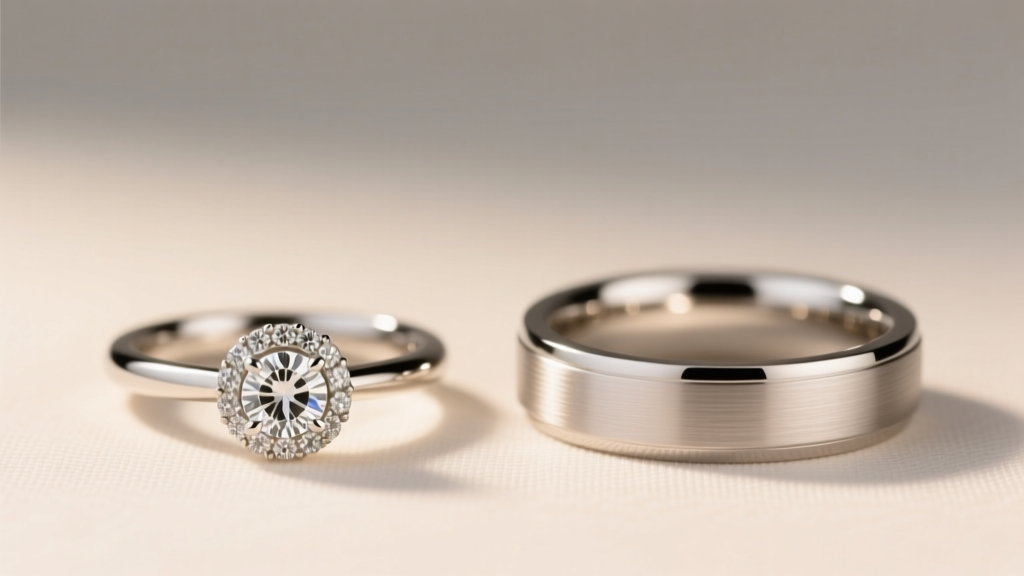
- Engagement rings prioritize visual impact and personal expression. They typically feature a center stone (diamond, sapphire, moissanite, or lab-grown gem) set in prongs, bezels, or halos. Settings range from classic solitaires to three-stone ‘past-present-future’ designs or intricate vintage filigree. Band width is often narrower (1.5–2.5mm) to draw focus upward.
- Wedding rings emphasize durability, comfort, and seamless integration. Most are plain or subtly textured bands (comfort-fit interiors are standard). Widths run 2–6mm for men; 1.8–4mm for women. Metals lean toward high-wear resistance: platinum (95% pure), 14k or 18k gold (alloyed for strength), or modern alternatives like cobalt-chrome. Engravings—names, dates, coordinates—are common *inside* the band, not on the surface.
Crucially, engagement rings are rarely designed for 24/7 wear. That delicate prong setting? It’s vulnerable to snagging on fabric or catching on gym equipment. Wedding bands, however, are engineered for decades of friction, sweat, soap, and manual labor. One real-world example: Sarah M., a pediatric occupational therapist, wore her $4,200 oval diamond engagement ring daily for 8 months—until she chipped a prong while helping a toddler tie shoelaces. Her wedding band? A 4mm palladium band with a satin finish—she’s worn it nonstop since her ceremony, zero maintenance required.
3. Timeline, Budget & Decision-Making: When and How Each Ring Enters the Picture
This is where financial and emotional stakes peak—and where most couples stumble. Let’s map the typical journey:
- Engagement ring purchase: Usually occurs within days or weeks of the proposal. Often funded by one partner (though 57% of couples now split this cost, per Brides 2024 Survey). Average spend: $6,400 (The Knot). Key considerations: stone quality (4Cs), metal type, sizing accuracy, insurance.
- Ring shopping window: Couples typically begin wedding band research 3–6 months pre-wedding. This delay is strategic—it allows time to assess how the engagement ring wears, confirm finger size changes (yes, weight loss/gain or pregnancy can shift size by up to half a size), and align on shared priorities (e.g., sustainability, ethical sourcing).
- Joint purchase: Wedding bands are almost always bought together. Why? Because fit, finish, and metal compatibility affect *both* people. A mismatched pair isn’t just aesthetic—it’s a functional liability. Imagine a groom’s matte black ceramic band rubbing against his bride’s polished white gold engagement ring: micro-scratches accumulate within weeks.
Cost disparity matters too. While engagement rings dominate budgets, smart couples allocate 20–30% of their total jewelry spend to wedding bands—because quality here prevents long-term replacement costs. A $1,200 platinum wedding band may seem steep next to a $5,000 engagement ring—but it’ll outlast three cheaper alternatives.
| Feature | Engagement Ring | Wedding Ring | Why the Difference Matters |
|---|---|---|---|
| Primary Function | Symbolizes proposal & intention to marry | Seals marital covenant during ceremony | Misaligning purpose leads to emotional dissonance—e.g., wearing a ‘wedding band’ before vows feels premature or inauthentic. |
| Typical Center Stone | Yes (diamond, sapphire, etc.) | No (plain or channel-set accent stones) | Stones on wedding bands increase snag risk and cleaning complexity—92% of jewelers advise against center stones for daily wear bands. |
| Standard Metal Choices | White gold, platinum, rose gold, yellow gold | Platinum, 14k/18k gold, palladium, titanium, tungsten | Tungsten & titanium lack malleability—can’t be resized. If chosen for wedding bands, sizing must be perfect upfront. |
| Average Lifespan (with care) | 10–20 years (prongs wear, stones loosen) | 30–50+ years (solid bands resist deformation) | Assuming $150/year maintenance for engagement rings vs. $20/year for wedding bands, the 10-year TCO differs by $1,300. |
| Insurance Requirement | Strongly recommended (high theft/loss risk) | Often covered under engagement ring policy or home insurance | Most insurers require separate riders for engagement rings—but wedding bands are frequently added at no extra cost if under same policy. |
Frequently Asked Questions
Do I have to wear both an engagement ring and a wedding ring?
No—you’re never obligated. Cultural expectations vary widely: In Norway and Sweden, only wedding bands are customary. In India, toe rings or bangles hold greater significance than finger bands. Within the U.S., 73% of married women wear both, but 19% choose *only* their wedding band post-ceremony for practicality or personal style. Some stack multiple thin bands; others opt for a ‘bridge’ ring between the two. Your choice reflects your values—not tradition.
Can I use my engagement ring as my wedding ring?
Technically yes—but rarely advisable. Engagement rings aren’t built for lifetime daily wear. Their settings (especially prong or tension) weaken over time; gemstones can loosen. Also, wearing *only* an engagement ring after marriage erases the symbolic weight of the wedding band’s exchange. That said, some couples ‘repurpose’ the center stone into a new band design—a growing trend called ‘ring evolution.’ Just ensure the new band meets durability standards for lifelong wear.
What if our rings don’t match? Is that okay?
Absolutely—and increasingly common. ‘His and hers’ doesn’t mean ‘identical.’ A matte black titanium band pairs beautifully with a vintage yellow gold engagement ring when metals are intentionally contrasted. The key is *intentionality*: Does the pairing reflect your shared identity? Does it feel cohesive when worn together? One couple we profiled—Maya (a graphic designer) and David (a carpenter)—chose a hand-carved walnut-wood inlay wedding band for him and a recycled-gold band with embedded river stones for her. Their engagement rings were purchased separately years earlier. Their rule? ‘If it tells our story, it belongs.’
How do I clean and maintain both rings properly?
Engagement rings need weekly gentle brushing with soft toothbrush + mild dish soap; professional cleaning every 6 months to check prongs. Wedding bands? Monthly soak in warm water + baking soda (1 tbsp per cup) for 10 minutes, then rinse—no scrubbing needed for plain bands. Pro tip: Store them separately in soft pouches when not worn. Never wear either ring while applying lotion, chlorine, or household cleaners—they accelerate metal erosion and dull gemstone luster.
Common Myths
Myth #1: “Wedding bands must be purchased from the same jeweler as the engagement ring.”
False. While matching metals and finishes simplify coordination, many couples source bands from specialists—like a master engraver for personalized inscriptions or an eco-jeweler for conflict-free gold. What matters is metallurgical compatibility (e.g., avoid pairing 18k gold with stainless steel—galvanic corrosion can occur).
Myth #2: “The wedding ring goes on first, under the engagement ring—that’s the ‘rule.’”
It’s tradition—not law. The ‘under’ placement (wedding band closest to heart) stems from Victorian-era symbolism. But modern ergonomics often flip this: A high-profile engagement ring sits more securely *over* a low-profile wedding band. Many jewelers now recommend ‘stacking order’ based on comfort and proportion—not dogma.
Your Next Step: Build a Ring System—Not Just Two Rings
You now know that are engagement rings the same as wedding rings? No—they’re complementary instruments in a lifelong duet. The goal isn’t uniformity; it’s harmony. So before you book that next jeweler appointment, do this: Pull out your engagement ring. Hold it beside three band options (different metals, widths, finishes). Wear each combo for a full day—type emails, wash dishes, hug your dog. Note where pressure builds, where light catches awkwardly, where metal warmth feels right. Then, schedule a consultation—not to ‘pick a band,’ but to co-design a *ring system*: one that honors your past, anchors your present, and evolves with your future. And if you’re still weighing lab-grown vs. mined diamonds, ethical gold sourcing, or whether to engrave coordinates from your first date? Our free Ring Sourcing Checklist breaks down certifications, red flags, and questions to ask any jeweler—before you sign anything.
More Articles
 What Strain Is Wedding Cake: Indica or Sativa? (2026)
 How Many Weddings Happen in Las Vegas Per Year Revealed
 Wedding Anniversary Message to My Husband (2026)
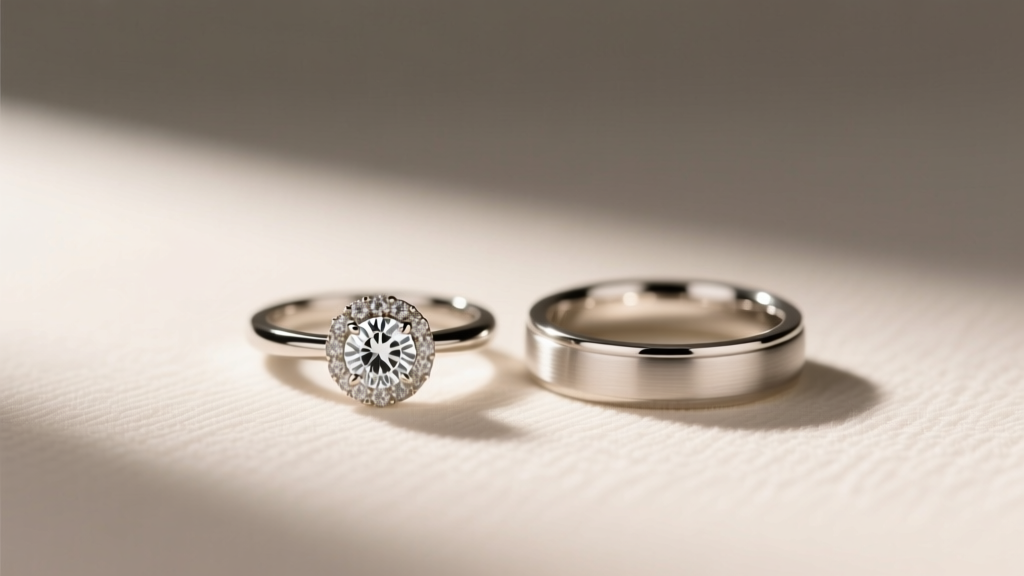 Is Your Engagement Ring Your Wedding Ring (2026)
 Wedding Dress in Spanish: Exact Terms by Style & Region
 Prince Philip Wedding Ring: The Royal Truth
 Black Wedding Dress: Yes in 2026—Style Tips & Symbolism
 How to Have Fun at a Wedding (2026)
 Silver Wedding Anniversary: What Most Couples Miss
 Catelyn Stark and the Red Wedding: What She Knew (2026)