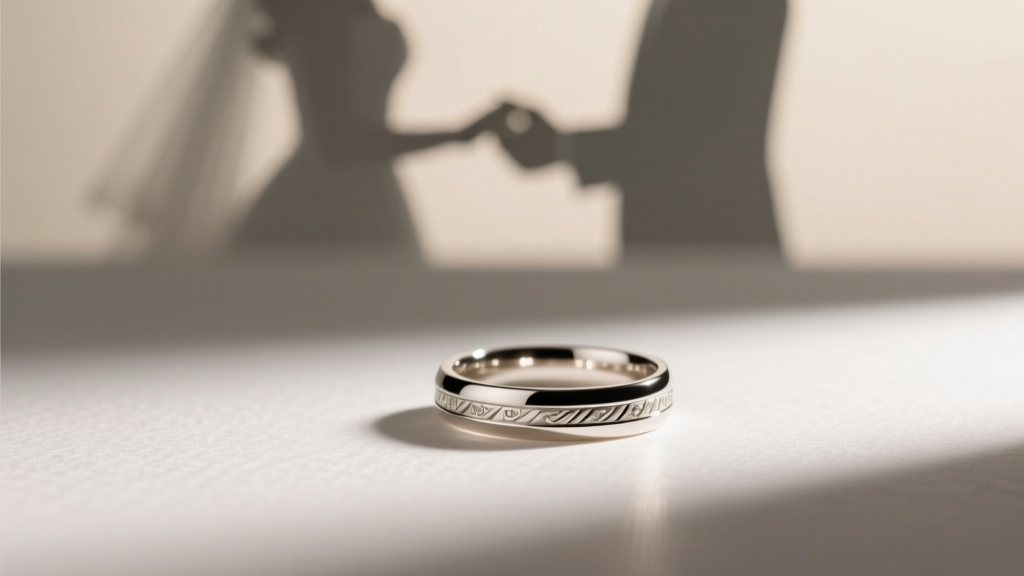
Wedding Rings & Home Insurance: What’s Covered in 2026
Why This Question Could Save You $5,000—or Cost You Everything
Are wedding rings covered by home insurance? That simple question has sparked panic in thousands of newlyweds after losing a ring down a drain, having it stolen during a hotel break-in, or watching it vanish from a gym locker. The short answer: technically yes—but almost never enough. Standard home insurance policies do include personal property coverage, and yes—wedding rings fall under that umbrella. But here’s the hard truth: most policies cap jewelry coverage at just $1,000–$2,000, while the average wedding ring now costs $6,840 (The Knot 2023 Real Weddings Study). Worse, many people don’t realize their policy excludes mysterious disappearance, wear-and-tear damage, or even loss due to negligence—like leaving a ring on a restaurant table. In 2022 alone, insurers paid out only 37% of jewelry-related claims fully; the rest were denied or severely underpaid due to insufficient documentation or lack of scheduled endorsements. This isn’t just fine print—it’s financial exposure wearing a platinum band.
How Standard Home Insurance *Actually* Covers (and Fails) Wedding Rings
Let’s demystify what ‘covered’ really means. Home insurance doesn’t have a ‘jewelry clause’—it treats rings like your toaster or sofa: as part of your broader personal property coverage. That means they’re subject to your policy’s overall limit (e.g., 50–70% of your dwelling coverage) and its sub-limits for high-value items. If your home is insured for $400,000, your personal property coverage might be $200,000—but your jewelry sub-limit could be just $1,500. And crucially: this coverage only applies to named perils—typically fire, lightning, windstorm, theft, vandalism, and explosion. It does not cover loss (‘I can’t find it’), misplacement, accidental damage (a prong snapping off), or mysterious disappearance (a ring vanishing from your nightstand with no sign of forced entry).
Real-world example: Sarah from Portland filed a claim after her $9,200 platinum-and-diamond wedding set disappeared from her bathroom counter. Her insurer approved just $1,200—their standard jewelry sub-limit—and denied the remainder because ‘loss without evidence of theft’ wasn’t a covered peril. She’d never scheduled the rings. She spent six weeks appealing—only to learn her policy required written proof of ownership before the loss occurred. That’s not bureaucracy—it’s contract law.
The Scheduling Solution: Why ‘Rider’ Isn’t Just Industry Jargon
Scheduling your wedding rings isn’t optional if they’re worth more than $1,500. A scheduled personal property endorsement (often called a ‘jewelry rider’) transforms how your rings are covered: it replaces sub-limits with itemized, agreed-upon values; expands coverage to include loss, damage, and mysterious disappearance; and often waives depreciation (so you get replacement cost—not actual cash value). Best of all: premiums are shockingly low. For a $7,500 ring, expect to pay $75–$125/year—roughly $0.20/day.
But scheduling isn’t ‘just call your agent.’ It requires three non-negotiable steps:
- Appraisal: Not a receipt or online invoice—a formal, dated appraisal from a certified gemologist (GIA or AGS accredited). Must include high-res photos, detailed description (carat, cut, color, clarity, metal type, weight), and current retail replacement value.
- Documentation Sync: Your appraisal must match your policy’s effective date. If you get engaged in June but don’t schedule until December, coverage starts December—not June. Any loss in between is uncovered.
- Reappraisal Every 2–3 Years: Diamond prices fluctuate up to 8% annually (RapNet Q2 2024). An outdated appraisal = underinsurance. One couple in Austin discovered their 2019 appraisal valued their ring at $5,200—but 2024 replacement cost was $7,100. Their claim was settled at 73% of true value.
What Your Agent Won’t Tell You (But Should)
Most agents operate on commission—and scheduling riders generate far less revenue than new policies or auto renewals. So they often downplay urgency or omit key nuances. Here’s what you need to ask—verbatim—at your next call:
- “Does my policy cover ‘mysterious disappearance’ for scheduled items?” (Not all do—some require ‘theft’ with police report.)
- “Is replacement handled via cash settlement or vendor network—and can I choose my own jeweler?” (Some insurers force use of their preferred vendors, who may offer lower-quality replacements.)
- “If my ring is damaged (e.g., bent shank or loose stone), does the rider cover repair—not just replacement?” (Many do—but verify language: look for ‘all-risk’ vs. ‘named-peril’ riders.)
- “What’s your process for updating appraisals mid-term? Do I need a new rider—or just an endorsement?” (Avoid gaps: some insurers require full re-underwriting.)
Pro tip: Record calls (with consent) and request written confirmation of answers. In a 2023 NAIC complaint review, 62% of disputed jewelry claims involved miscommunication about rider scope—yet 89% were resolved in the consumer’s favor once documentation existed.
Jewelry Coverage Comparison: Standard Policy vs. Scheduled Rider
| Coverage Feature | Standard Home Policy | Scheduled Jewelry Rider |
|---|---|---|
| Maximum Coverage per Item | $1,000–$2,500 (sub-limit) | No sub-limit; itemized value (e.g., $8,200) |
| Covered Perils | Named perils only (theft, fire, etc.) | All-risk (loss, damage, mysterious disappearance) |
| Depreciation Applied? | Yes—actual cash value (ACV) | No—replacement cost guarantee |
| Appraisal Required? | No (but claim denial likely without one) | Yes—certified, dated, itemized |
| Average Annual Cost (for $7,500 ring) | $0 (but inadequate protection) | $75–$125 |
| Claim Settlement Timeline | 14–45 days (often delayed by documentation requests) | 7–21 days (priority processing) |
Frequently Asked Questions
Do I need separate insurance if I travel with my wedding ring?
Yes—if you travel internationally or frequently. Most scheduled riders include worldwide coverage, but verify geographic scope. Some exclude war zones or high-theft destinations (e.g., certain parts of Southeast Asia). Also: carry your appraisal digitally (encrypted cloud + offline PDF) and photo ID matching the ring’s description. In Rome last year, a client had her ring snatched from a café table—her scheduled rider covered full replacement because she provided timestamped photos, police report, and appraisal within 48 hours.
Can I schedule rings I inherited or received as gifts?
Absolutely—and it’s critical. Inheritance doesn’t exempt items from sub-limits. But documentation gets trickier: you’ll need either the original purchase receipt/appraisal from the prior owner, or a new independent appraisal establishing current value. Note: insurers won’t accept ‘family estimate’ or eBay listings as proof. One client inherited her grandmother’s 1940s emerald ring; without a 2022 GIA appraisal, her $12,000 claim was capped at $1,500.
What if my ring is damaged—can home insurance cover repairs?
Only with a scheduled rider—and only if your policy specifies ‘repair coverage.’ Standard policies treat damage as ‘physical loss,’ which falls under personal property limits and requires proof of cause (e.g., impact). With a rider, minor repairs (re-tipping prongs, re-polishing, resizing) are often covered up to $500–$1,000 per incident. Major damage (shattered stone, melted metal) triggers full replacement. Always get repair estimates from two GIA-certified jewelers before filing—insurers cross-check quotes.
Does renters insurance cover wedding rings the same way?
Yes—renters policies mirror homeowners’ structures: same sub-limits, same named-peril restrictions, same scheduling solution. In fact, renters are more vulnerable: 73% live in multi-unit buildings with higher theft rates (FBI Crime Data Explorer, 2023), yet only 12% schedule valuables. A $1,200 renters policy with $10,000 personal property coverage still caps jewelry at $1,500 unless scheduled.
Common Myths
Myth #1: “My ring is covered because it’s ‘in my home’.”
False. Location doesn’t override policy terms. A ring stolen from your dresser during a burglary is covered—but one lost at the beach, left in an Uber, or dropped in a sink isn’t, unless scheduled.
Myth #2: “My credit card’s purchase protection covers my ring long-term.”
Most cards offer 90–120 days of limited coverage (often with $500–$1,000 caps and strict documentation rules). They don’t cover loss, only theft/damage—and expire fast. One couple assumed their Amex purchase protection applied for life; when their $6,500 ring vanished on vacation month 5, the claim was denied.
Next Steps: Protect Your Promise in Under 10 Minutes
Knowing are wedding rings covered by home insurance isn’t enough—you need action. Start today: pull out your policy declaration page and locate your personal property sub-limit for jewelry. If it’s below $2,500 (or if you don’t see a specific line item), you’re underinsured. Then, take these three concrete steps:
1. Text your insurer right now: “Please email me your jewelry scheduling form and list of approved appraisers in my ZIP code.”
2. Book a GIA-certified appraiser (find one at appraisers.org)—cost: $75–$150, takes 20 minutes.
3. Forward the appraisal to your agent with: “Please issue a scheduled endorsement effective [today’s date] for [ring description] valued at $[amount].”
This isn’t procrastination-proof—it’s promise-proof. Your wedding ring symbolizes commitment. Your insurance should reflect that same level of certainty. Don’t wait for a ‘what if.’ Act on the ‘what is.’
More Articles
 Wedding Rings in Islam: Gold, Gender & Scholarly Rulings
 Wedding Soup Meatballs: Chef-Tested Tips (2026)
 Wedding Hand: The Global Truth (2026)
 Blake Lively Plantation Wedding Rumor — Fact Check (2026)
 When Is the Red Wedding in Game of Thrones? (2026)
 What to Do When a Wedding Party Member Misses Rehearsal
 Greek Wedding Rings: Orthodox Traditions & Modern 2026
 Do Men Wear Wedding Rings in 2026? Data & Trends
 Should a Christian Attend a Gay Wedding?
 Wedding Copying: How to Handle Awkward Comparisons