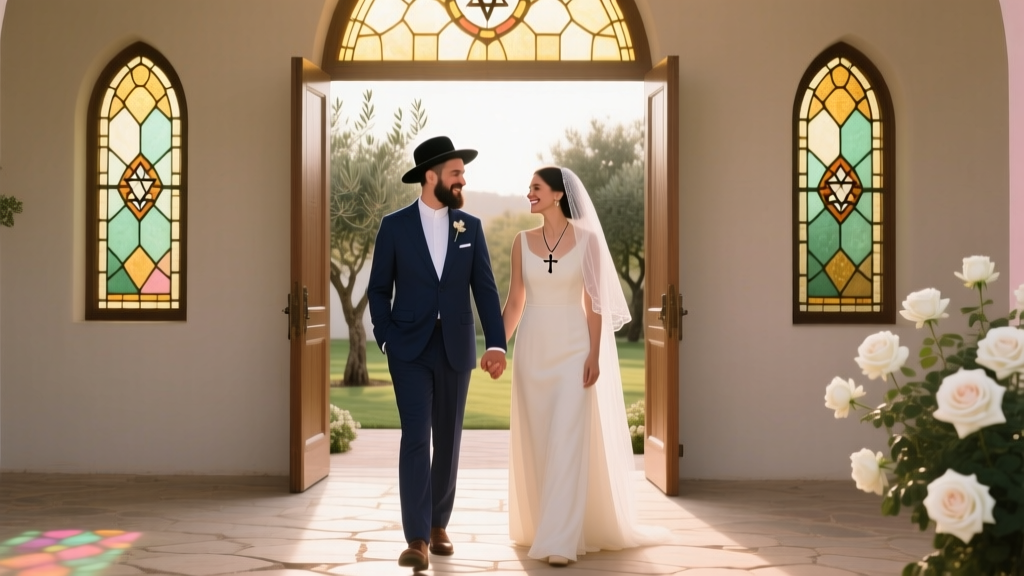
Jewish Guest at Catholic Wedding: What to Expect & Do
Why This Question Matters More Than Ever
Can a Jew attend a Catholic wedding? Absolutely—and millions do every year. Yet behind that simple 'yes' lies a quiet tension: the desire to honor a loved one’s faith while staying true to one’s own spiritual identity. In an era where over 58% of U.S. Jewish adults are married to non-Jews (Pew Research, 2023), and Catholic parishes report rising numbers of interfaith pre-marital counseling sessions, this isn’t just a theoretical question—it’s a lived experience for grandparents, siblings, best friends, and colleagues navigating sacred space across theological lines. The anxiety isn’t about exclusion; it’s about *inclusion with integrity*. Will you be asked to pray aloud? Do you need to cover your head? What if you’re invited to the Eucharist? This guide answers those questions—not with dogma, but with pastoral wisdom, canonical clarity, and hard-won human insight.
What Canon Law and Pastoral Practice Actually Say
The short answer is unequivocal: yes, a Jew can attend a Catholic wedding—and not just as a passive observer, but as a welcomed guest whose presence affirms love, family, and shared humanity. According to the Code of Canon Law (Canon 1127 §3), non-Catholic Christians and non-Christians may be admitted to Catholic wedding ceremonies without restriction. The Church explicitly distinguishes between *attendance* and *participation*: while sacramental rites like receiving Communion require baptism and full communion with the Church, simply being present—listening, witnessing, celebrating—is not only permitted but encouraged when done respectfully.
That said, practical realities vary by diocese and presiding priest. A 2022 survey of 142 U.S. parish pastors found that 94% routinely welcome Jewish guests, but only 61% proactively brief them on ceremony flow or participation boundaries. That gap is where confusion—and unintentional discomfort—lives. One rabbi in Chicago told us: 'I’ve had congregants leave weddings in tears—not because they were rejected, but because no one told them it was okay to sit quietly during the consecration, or that standing for the Gospel wasn’t mandatory.' Knowledge, not conversion, is the real key to belonging.
Your Practical Playbook: 5 Steps Before, During, and After the Ceremony
Attending with confidence starts long before the processional. Here’s how to prepare—step-by-step—with intention and ease:
- Ask the couple (not the priest) what matters most to them. Some interfaith couples co-create hybrid elements—a Hebrew blessing alongside the Nuptial Mass, or a moment of silent reflection instead of the Creed. Their vision sets the tone. One Brooklyn couple included a brit ahuvim (covenant of lovers) reading after the vows—fully approved by their pastor and deeply meaningful to both families.
- Review the order of Mass (if it’s a Nuptial Mass). Most Catholic weddings today are celebrated within Mass—but not all. If it’s a Rite of Marriage Outside Mass, there’s no Eucharist, and the structure is simpler. Either way, download or request the program. Knowing when the Liturgy of the Word (Scripture readings) ends and the Liturgy of the Eucharist begins helps you anticipate moments requiring quiet reverence—even if you’re not participating.
- Decide your participation level—and communicate it gently. You’re never required to recite prayers, cross yourself, or say “Amen.” But if you’re comfortable joining in communal responses (“And with your spirit,” “Thanks be to God”), many priests affirm that as a sign of goodwill. Just know: declining is equally valid and respected. As Fr. Michael O’Connor (Diocese of Providence) shared: 'I tell guests: Your silence is prayerful. Your presence is sacramental.'
- Dress with dual awareness. While Catholic churches don’t enforce strict dress codes, modesty expectations align with Jewish values of tzniut (dignity). Avoid low necklines, sheer fabrics, or shorts—but also skip kippahs unless offered at the entrance (some parishes provide them; others don’t). A lightweight scarf or small hat works beautifully for both traditions. Pro tip: If attending a summer wedding in a historic basilica, bring a light shawl—air conditioning is often icy, and shoulders should remain covered during prayerful moments.
- Follow up with gratitude—not theology. Send a handwritten note referencing something specific: 'I loved hearing the reading from Tobit—it reminded me of the Book of Ruth.' Or: 'Thank you for letting me witness such joy.' Avoid commentary on doctrine ('I didn’t understand the transubstantiation part') or comparisons ('In our synagogue, we…'). Keep it relational, warm, and grounded in shared emotion.
When Rituals Collide: Navigating Key Moments with Grace
Three moments commonly spark uncertainty—and three clear, compassionate ways to respond:
- The Sign of Peace: Typically exchanged after the Lord’s Prayer, this gesture (a handshake or hug) is meant to embody reconciliation and unity. Jewish guests are warmly invited to participate—but it’s optional. If you prefer not to, a gentle nod and smile while remaining seated is universally understood. No explanation needed.
- The Eucharist: This is the most frequently misunderstood moment. Non-Catholics—including Jews—are not to receive Communion. But crucially: you do not need to leave your seat. While others queue, remain seated quietly, pray silently, or reflect on your own tradition’s covenant meals (e.g., the Passover Seder’s symbolic foods). Many parishes now include printed cards in pews explaining this norm—often titled 'A Note to Our Interfaith Guests.'
- The Final Blessing & Dismissal: When the priest says, 'Go in peace, glorifying the Lord by your life,' everyone stands. This is not a sacramental act—it’s a communal send-off. Stand, smile, and walk out with the assembly. Your presence through the final 'Thanks be to God' affirms solidarity, not subscription.
Real-world example: When Sarah Cohen attended her Catholic fiancé’s sister’s wedding in Boston, she worried about the Eucharist. Instead of stepping aside awkwardly, she’d quietly opened her pocket-sized Psalms and read Psalm 133 ('How good and pleasant it is when brothers dwell in unity') during the distribution. Her future mother-in-law later told her, 'That was the most beautiful thing I saw all day.'
Interfaith Wedding Etiquette: A Side-by-Side Comparison
| Moment / Custom | Catholic Norm | Jewish Custom (for reference) | What a Jewish Guest Should Do |
|---|---|---|---|
| Greeting at church entrance | No formal greeting; ushers seat guests | Often greeted personally by hosts; sometimes given kippah | Smile, accept seating direction; no need to seek out clergy |
| During Scripture readings | Standing is customary for Gospel; sitting for others | Standing for Torah reading; seated otherwise | Follow the congregation—standing for Gospel is respectful but optional |
| Response to 'The Lord be with you' | 'And with your spirit' | No equivalent communal response | Say it if comfortable; silence is equally appropriate |
| Receiving a blessing (instead of Communion) | Common practice: fold arms over chest to signal desire for blessing | No parallel ritual | Folding arms is widely recognized—and honored—by priests and Eucharistic ministers |
| Post-ceremony customs | No breaking of glass; often a receiving line | Breaking glass symbolizes remembrance amid joy | Join the receiving line; avoid referencing Jewish symbols unless invited |
Frequently Asked Questions
Can a Jew be a witness (godparent or official witness) at a Catholic wedding?
Yes—as an official witness, absolutely. Canon law requires two witnesses (Canon 1108), but places no religious restrictions on them. However, a godparent (sponsor) for baptism must be a confirmed, practicing Catholic—so while you can sign the marriage register, you cannot serve as a godparent for any future children unless you enter the Church. Couples sometimes appoint a Jewish friend as 'honorary witness' alongside the canonical pair—a lovely, inclusive compromise.
Will I be expected to convert—or pressured to consider it?
No—and reputable priests will not initiate such conversations. The U.S. Bishops’ Directory for the Application of Principles and Norms on Ecumenism (1993) explicitly forbids proselytization toward non-Catholics at weddings. If you encounter pressure, it reflects an individual’s boundary violation—not Church teaching. Trust your instincts: a respectful priest will offer resources (e.g., a pamphlet on interfaith spirituality) only if you ask.
What if the wedding includes Hebrew scripture or Jewish music?
This is increasingly common—and deeply meaningful. Over 37% of Catholic parishes now permit non-Christian Scripture in the Liturgy of the Word (with bishop approval), especially Tobit, Wisdom, or Psalms. If a Jewish text appears, listen attentively: its inclusion signals the couple’s desire for bridge-building. If a cantor sings 'Eshet Chayil' (Woman of Valor) during the signing of the register, it’s a gift—not an invitation to join in singing unless you’re explicitly asked.
Do I need to fast or prepare spiritually beforehand?
No. Catholic fasting rules (e.g., one hour before Communion) apply only to those receiving the Eucharist. As a Jewish guest, your spiritual preparation is personal: perhaps lighting a candle at home, saying a short blessing for the couple, or reflecting on Pirkei Avot 1:12: 'Be among the disciples of Aaron—love peace and pursue peace.' There’s no prescribed ritual—only heartfelt intention.
What if my child asks questions during the service?
Quiet, age-appropriate answers are fine ('They’re saying special words to promise love'), but save deeper theology for afterward. Many parishes welcome families with young children—and some even offer 'quiet kits' with coloring pages. If your child becomes restless, step into the narthex (entryway) calmly. No apologies needed; reverence includes compassion for developmental needs.
Debunking Common Myths
- Myth #1: 'Jews aren’t allowed in Catholic churches except for funerals or emergencies.'
Reality: Catholic canon law and pastoral guidelines explicitly welcome people of all faiths into churches for prayer, reflection, and celebration. The Vatican’s Nostra Aetate (1965) affirmed the enduring covenant with the Jewish people—and modern liturgical documents reinforce open doors. Synagogues and churches alike are houses of encounter, not exclusion. - Myth #2: 'If you attend, you’re tacitly endorsing Catholic doctrine.'
Reality: Attendance is an act of love—not assent. Just as Catholics attend bar mitzvahs without converting, Jewish guests attend Catholic weddings as witnesses to covenant, not catechumens. The Church itself teaches that 'interreligious dialogue does not aim at conversion, but at mutual understanding' (Pontifical Council for Interreligious Dialogue, 2021).
Final Thoughts—and Your Next Step
Can a Jew attend a Catholic wedding? Not only can you—you’re invited. Not as a curiosity, not as a project, but as a person whose history, values, and heart enrich the very meaning of 'family.' The beauty of interfaith celebration lies not in erasing difference, but in holding it with tenderness and precision. You don’t need to master theology to belong. You need only show up—with your integrity intact, your curiosity open, and your love leading the way.
Your next step? Reach out to the couple *this week* and say: 'I’m so honored to be part of your day. Is there anything I should know ahead of time to help me support you fully?' That single sentence—grounded in care, not anxiety—does more to build bridges than any handbook ever could. And if you’re the couple reading this? Share it with your Jewish guests. Because inclusion isn’t assumed—it’s extended, intentionally, one conversation at a time.
More Articles
 Black at Weddings: Is It Rude? (2026)
 Why Do Couples Have a Wedding Website and What to Include
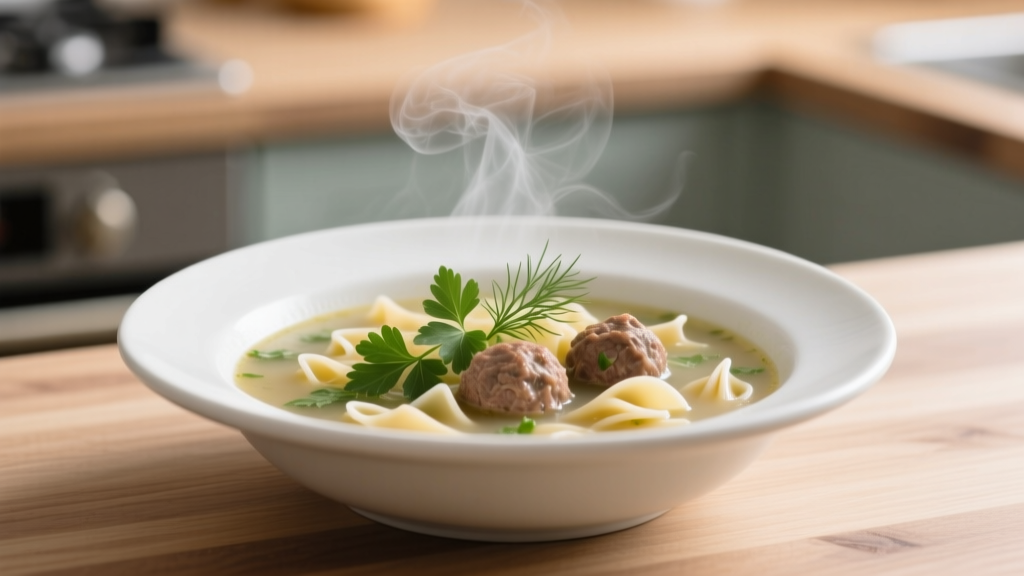 Is Italian Wedding Soup Gluten Free? (2026)
 Wedding Ring on Right Hand: Customs & Meaning
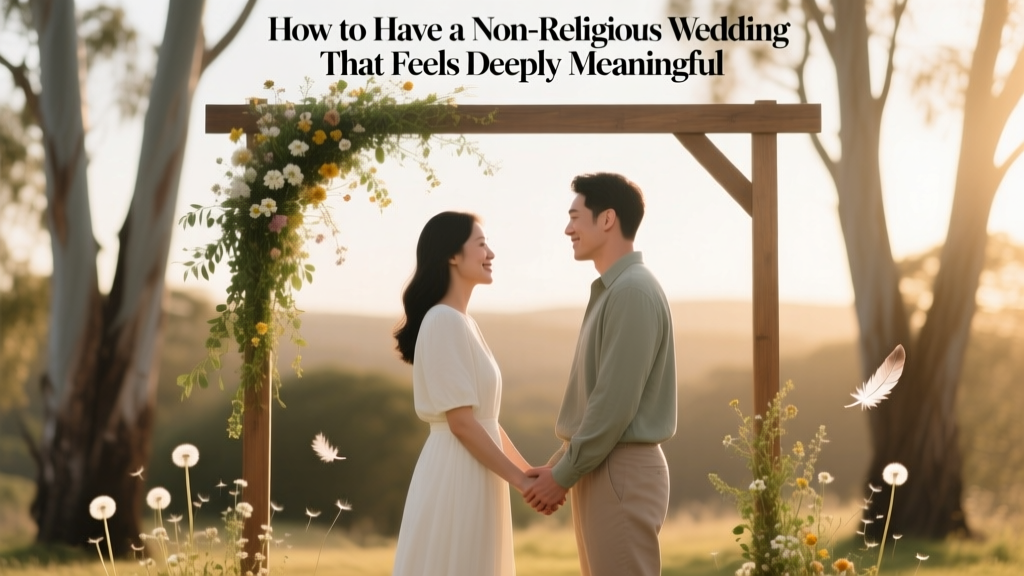 Non-Religious Wedding Ideas for a Meaningful Ceremony
 When Is It Rude to Not Invite Someone to Your Wedding
 Wedding Ring Worn: Left-Hand Truth, Sizing & Cultural Tips
 Kim Kardashian Wedding Dress Cost: Truth & 2026 Prices
 What to Do When Wedding Planning Overwhelms You
 Royal Wedding Rings: Queen Elizabeth to Kate Middleton