## What Actually Happens When Someone Objects at a Wedding
You've seen it in every romantic comedy: a guest dramatically stands up, declares their love, and the wedding grinds to a halt. But is that how it actually works in real life? The short answer is no — and understanding why could save you a lot of unnecessary anxiety before your big day.
## The Legal Reality of Wedding Objections
In most countries, including the United States, United Kingdom, Canada, and Australia, a wedding objection carries virtually no legal weight during the ceremony itself. The officiant is not legally required to stop the proceedings based on a guest's outburst.
Legal grounds to invalidate a marriage — such as one party already being married, a lack of consent, or the couple being too closely related — must be raised through proper legal channels, not shouted from a pew. A family court, not a wedding venue, is where legitimate objections are heard.
In England and Wales, the traditional phrasing "speak now or forever hold your peace" was historically a legal requirement, but it was removed from the Church of England's official marriage service in 2024. Most officiants today include it only as a ceremonial tradition, if at all.
**Key takeaway:** If someone has a genuine legal reason a marriage cannot proceed, they need to contact a lawyer or the relevant civil registry — not wait for the ceremony.
## What an Officiant Can Actually Do
An officiant has full discretion over how to handle an interruption. Most trained officiants will:
- Acknowledge the outburst calmly
- Ask the person to sit down or step outside
- Continue the ceremony without pause
- In rare cases, briefly recess to speak privately with the objector
No officiant is obligated to halt a ceremony because someone raises their hand. The couple's wishes and the flow of the ceremony take priority. If you're worried about a specific guest causing a scene, speak with your officiant in advance. Many couples now quietly omit the "speak now" prompt entirely.
## When a Wedding Can Legitimately Be Stopped
There are narrow, genuine circumstances where a ceremony might be paused or a marriage later annulled:
1. **Bigamy** — One partner is already legally married to someone else. This is a criminal offense in most jurisdictions.
2. **Lack of mental capacity** — One party cannot legally consent due to cognitive impairment.
3. **Duress** — One party is being coerced into the marriage against their will.
4. **Underage marriage** — One or both parties are below the legal marriage age without required parental or court consent.
None of these are resolved by standing up mid-ceremony. They require legal intervention after the fact, and in some cases, the marriage can be annulled through the courts.
## Common Misconceptions About Wedding Objections
**Misconception #1: "The officiant must stop the wedding if someone objects."**
False. There is no law in any major English-speaking jurisdiction requiring an officiant to halt a ceremony based on a verbal objection. The phrase is ceremonial, not a legal mechanism. Your officiant is empowered — and trained — to keep things moving.
**Misconception #2: "An objection automatically makes the marriage invalid."**
Also false. A marriage is valid once the legal requirements are met: both parties consent, the officiant is licensed, and the paperwork is properly filed. Someone yelling "I object" does not undo any of that. Even if the objection raises a genuine legal issue, the marriage remains valid until a court rules otherwise.
## How to Protect Your Ceremony
If you have real concerns about a guest disrupting your wedding:
- **Brief your officiant** on any potential issues beforehand
- **Assign a trusted person** (a groomsman, coordinator, or family member) to quietly manage the situation if it arises
- **Consider omitting** the "speak now" prompt from your ceremony script
- **Consult a family lawyer** if you have genuine legal concerns about the marriage being contested
The vast majority of weddings proceed without incident. The dramatic objection scene is a Hollywood invention that rarely, if ever, plays out in real life.
## The Bottom Line
A wedding can almost never be stopped simply because someone objects during the ceremony. The legal system doesn't work that way, and your officiant isn't obligated to play along with a dramatic interruption. If you're planning your wedding and this has been a source of stress, you can breathe easy.
Focus on what matters: your vows, your partner, and the celebration ahead. If you want extra peace of mind, talk to your officiant and wedding coordinator about your specific concerns — they've handled far more than you might expect.
*Planning your ceremony script? Ask your officiant about modern alternatives to the traditional objection prompt that keep the spirit of the moment without the anxiety.*
 Wedding Ring Attracts Women? Dating Psychology (2026)
 Happy Wedding Anniversary Grammar: What to Say Instead
 Taylor Swift Travis Kelce Wedding Date Rumors (2026)
 Did Mackenzie Scott Attend Jeff Bezos’ Wedding?
 Is Wedding Stories Still Broken in 2026?
 Widow Wedding Ring Traditions: 7 Meaningful Ways (2026)
 Wedding Veil Drawing: 7-Minute Lace Sketch (2026)
 Why Do Nuns Wear Wedding Rings? Spiritual Meaning
 Kopelman-Barrymore Wedding: Truth Behind Split & Myths
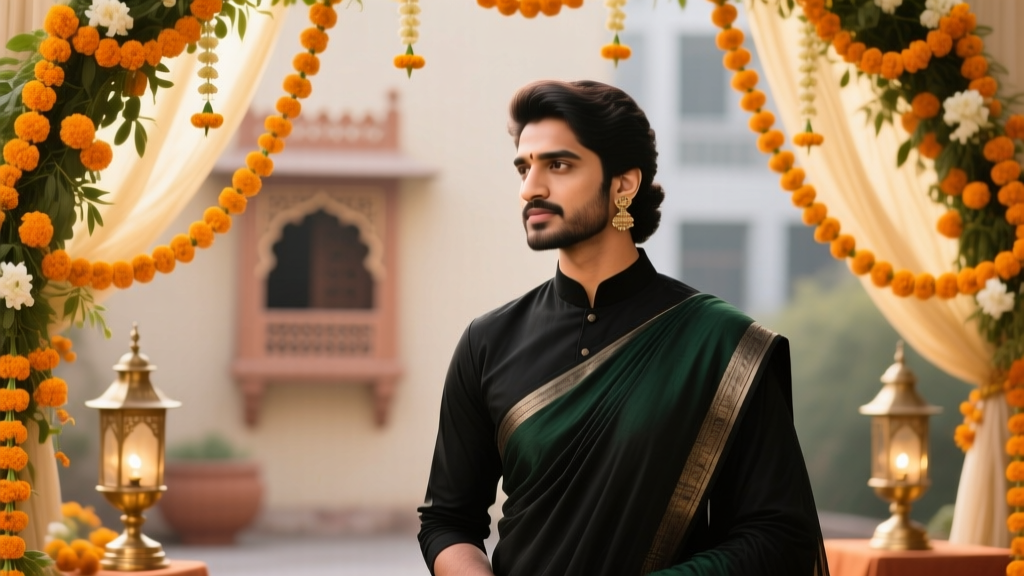 Can You Wear Black to an Indian Wedding? (2026)