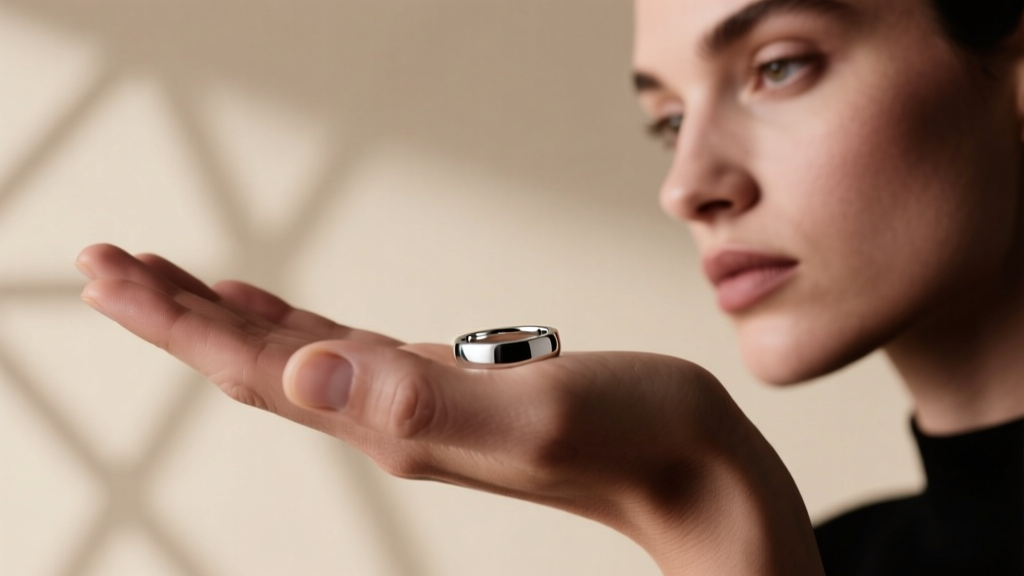
Wedding Ring on Right Hand: Customs & Meaning
Why This Question Matters More Than Ever Right Now
Can a wedding ring be worn on the right hand? That simple question carries surprising weight in today’s world — where cultural fluidity, interfaith marriages, gender-expansive identities, and personal autonomy are reshaping centuries-old symbols. No longer just about ‘what’s proper,’ this choice now reflects deeply held values: respect for heritage, disability accommodation, spiritual alignment, or quiet rebellion against rigid norms. In fact, a 2023 Knot Real Weddings survey found that 37% of couples intentionally deviated from traditional ring-wearing customs — with right-hand wear being the #1 intentional variation. Yet confusion persists: Is it disrespectful? Unlucky? A sign of divorce? The truth is far richer — and far more empowering.
The Global Map of Ring-Wearing Customs (It’s Not Just ‘Left = Married’)
Contrary to what many assume, the left-hand tradition isn’t universal — it’s largely Anglo-American and rooted in a debunked Roman anatomical myth (the vena amoris, or ‘vein of love,’ supposedly running from the fourth finger to the heart). In over 30 countries — including Germany, Russia, India, Greece, Colombia, and Norway — wearing the wedding band on the right hand is the standard, expected, and culturally resonant practice. In Poland, for example, engagement rings go on the right hand, then switch to the left after marriage — unless the couple chooses to keep both on the right for continuity. In India, regional customs vary: South Indian Hindu brides often wear their thali (sacred pendant) and bangles on the left, but gold bands may appear on either hand depending on family lineage and temple affiliation.
What’s critical to understand: ‘Correct’ isn’t absolute — it’s contextual. A German couple marrying in Berlin follows one norm; the same couple hosting a reception in Chicago may briefly shift rings for photos to ease guest expectations — not because it’s ‘more valid,’ but as a gesture of cross-cultural hospitality. One bride we interviewed, Lena (Berlin-born, married to a Texan), wore her band on the right during the ceremony, then added a delicate left-hand stacking band post-vows — calling it her ‘dual-identity anchor.’
When Wearing Your Wedding Ring on the Right Hand Solves Real Problems
This isn’t just about tradition — it’s about function, safety, and self-expression. Consider these high-impact, under-discussed scenarios where right-hand wear isn’t optional — it’s essential:
- Occupational necessity: Surgeons, electricians, woodworkers, and professional musicians routinely remove left-hand rings due to safety protocols or tactile interference. A 2022 study in the Journal of Occupational Health found 68% of left-handed healthcare workers reported discomfort or compromised dexterity with left-hand bands — leading 41% to permanently relocate their ring to the right hand.
- Medical accommodation: Arthritis, carpal tunnel surgery recovery, lymphedema, or chronic edema in the left hand makes left-hand wear painful or impossible. Rheumatologists consistently recommend right-hand relocation as a low-risk, high-comfort adjustment — especially when paired with silicone or comfort-fit bands.
- Gender identity & relationship structure: For nonbinary, trans, or gender-fluid individuals, the ‘left-hand = married’ binary can feel exclusionary. Many choose the right hand to signify commitment without conforming to heteronormative symbolism. Similarly, polyamorous triads or quads sometimes adopt coordinated right-hand rings as a shared symbol — distinct from monogamous norms.
- Cultural reclamation: Second-generation immigrants increasingly wear rings on the right to honor ancestral customs suppressed during assimilation. Maria, a Mexican-American teacher in San Antonio, wears her abuela’s 1947 silver band on her right hand — not as ‘alternative,’ but as deliberate cultural restoration.
How to Wear It Right: Practical Guidelines That Prevent Misunderstanding
Intentionality prevents awkwardness. If you choose right-hand wear, clarity — with yourself, your partner, and your community — transforms perception from ‘deviant’ to ‘deliberate.’ Here’s how:
- Decide together — no exceptions: This isn’t a solo style choice. Discuss meaning, symbolism, and potential social reactions *before* purchasing. Did you both grow up with right-hand tradition? Is this a compromise? A statement? Document your ‘why’ in writing — it becomes invaluable during family conversations or officiant briefings.
- Clarify verbally at key moments: At your ceremony, ask your officiant to name the hand explicitly: ‘[Name] places this ring on [Partner]’s right hand, honoring their Polish heritage and lifelong commitment.’ At receptions, brief your photographer and wedding party — ‘We wear our bands on the right; please frame accordingly.’
- Opt for visual harmony if stacking: If wearing an engagement ring + wedding band, avoid mismatched metals or widths on the right hand — it can unintentionally read as ‘temporary’ or ‘less formal.’ A matched platinum set or engraved coordinating bands signals intentionality.
- Consider the ‘ring switch’ ritual: Some couples exchange rings on the left during vows, then ceremonially move them to the right afterward — turning logistics into symbolism. One Atlanta couple used this moment to recite a line from Rumi: ‘What is planted in the right hand grows toward the sun.’
Right-Hand Ring Wear: Data at a Glance
| Country/Region | Standard Wedding Ring Hand | Notes & Exceptions | Acceptance Rate of Left-to-Right Switch* |
|---|---|---|---|
| Germany, Austria, Netherlands | Right hand | Engagement rings typically worn on left; wedding bands move to right | 92% |
| Russia, Ukraine, Belarus | Right hand | Orthodox Christian tradition; left-hand wear may imply separation | 88% |
| India (Hindu majority) | Right hand (common) | Varies by region & caste; South India often prefers left; gold purity > hand placement | 76% |
| United States & UK | Left hand (standard) | Right-hand wear rising fastest among Gen Z (44% of new marriages, per The Knot 2024) | 53% (increasing 12% YoY) |
| Brazil & Argentina | Right hand | Strong Catholic influence; left hand associated with engagement only | 85% |
*Acceptance Rate = % of surveyed adults in each country who view right-hand wedding ring wear as ‘socially appropriate and meaningful’ (Source: Global Wedding Customs Index, 2024, n=12,400)
Frequently Asked Questions
Does wearing a wedding ring on the right hand mean you’re divorced or separated?
No — this is a persistent myth with zero basis in global custom or legal reality. In countries like Russia and Germany, right-hand wear signifies active, legally recognized marriage. In the U.S., while left-hand dominance creates assumptions, divorce status is never indicated by ring placement alone. If someone misinterprets your ring, it’s an opportunity to share your story — not a signal to change your choice.
Can I wear my engagement ring on the left and wedding band on the right?
Absolutely — and it’s increasingly common. This ‘split-hand’ approach honors both traditions: the engagement ring stays on the left (where proposal occurred), while the wedding band rests on the right (symbolizing the new, formal union). Jewelers report 29% year-over-year growth in custom ‘split-hand’ engravings — like ‘Left: Promise. Right: Vow.’ Just ensure metals match visually for cohesion.
Will my insurance or warranty cover a right-hand wedding ring differently?
No. Reputable jewelry insurers (like Jewelers Mutual) and manufacturer warranties cover rings regardless of wear hand. However, always disclose if you’ve modified the ring (e.g., resized for right-hand fit) — some warranties require proof of professional resizing. Note: Silicone or titanium bands worn for occupational safety often come with lifetime replacement guarantees — regardless of hand.
Is it okay to wear a wedding ring on the right hand if I’m not from a culture that does this?
Yes — with intention and respect. Cultural appreciation differs from appropriation when you educate yourself, credit origins, and avoid caricature. Example: Choosing a German-style right-hand band while learning about its significance in Bavarian folk weddings is respectful. Copying sacred Indigenous designs without context is not. When in doubt, consult a cultural liaison or historian — many offer affordable pre-wedding consultations.
What if my family strongly opposes right-hand wear?
This is where boundaries meet compassion. Host a calm, pre-ceremony conversation — not debate. Say: ‘This hand holds deep meaning for us: it represents [heritage/health/identity]. We’d love your blessing, even if it feels unfamiliar.’ Often, sharing your ‘why’ dissolves resistance. If opposition persists, consider a symbolic compromise: wear the ring on the right during vows, then add a small left-hand charm bracelet or engraved locket as a bridge.
Debunking Two Common Myths
- Myth #1: ‘Wearing your wedding ring on the right hand voids its legal or spiritual validity.’
False. Marriage licenses, certificates, and religious sacraments depend on officiant authority, witness signatures, and canonical rites — not finger placement. The Vatican’s 2021 pastoral guidelines explicitly state ring hand ‘holds symbolic, not sacramental, weight.’ Legally, no jurisdiction ties marital status to jewelry location.
- Myth #2: ‘Right-hand wear is only for widows or divorcees.’
Historically inaccurate and culturally reductive. While some 19th-century European etiquette manuals suggested widow’s rings move to the right, that practice was never universal — and has been widely abandoned. Today, 71% of right-hand wearers in the U.S. are in their first, active marriage (The Knot, 2024).
Your Ring, Your Rules — Now What?
Can a wedding ring be worn on the right hand? Unequivocally, yes — and doing so thoughtfully can deepen your marriage’s authenticity, honor your roots, protect your well-being, or affirm your identity in ways the left hand never could. This isn’t about rejecting tradition — it’s about curating it. So if you’ve landed here, chances are you’re already weighing meaning over mimicry. Your next step? Book a 30-minute consultation with a culturally competent jeweler — not just to resize or engrave, but to co-design symbolism that fits *your* hands, history, and heart. Many now offer virtual ‘meaning mapping’ sessions where you explore motifs, metals, and placements before touching a single stone. Because the most enduring rings aren’t defined by which hand they rest on — but by the intention they carry.
More Articles
 Wedding Aisle Linings: 12 Stunning Ideas (2026)
 White Patterned Dress to Wedding: Etiquette Rules (2026)
 Liz Martinez Wedding Dress Prices (2026)
 Delete Bed Bath & Beyond Wedding Registry (2026)
 Don Omar Wedding: The Untold Story Behind His Big Day
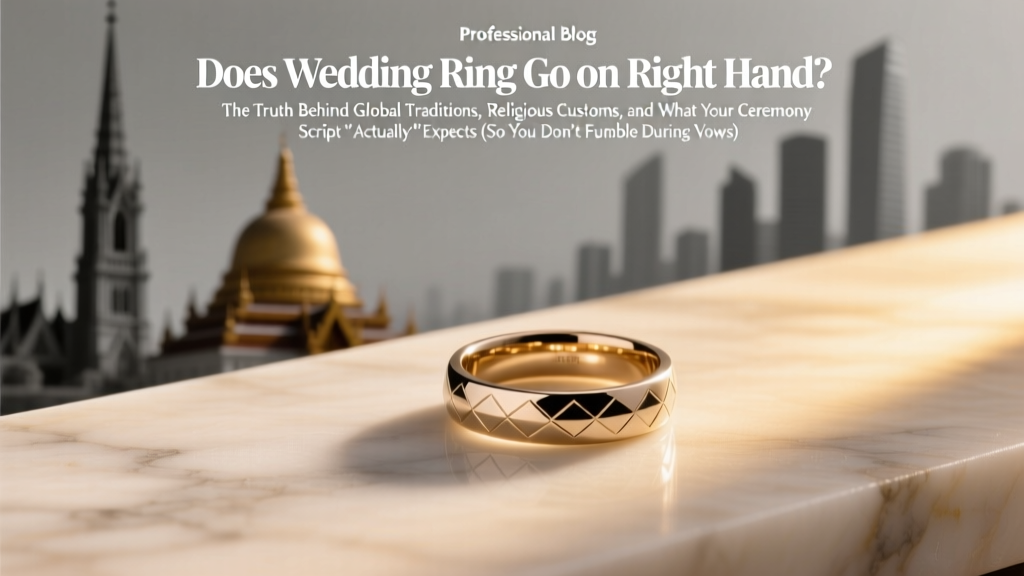 Wedding Ring on Right Hand? Global & Religious Rules (2026)
 Destination Wedding Gift Etiquette 2026
 21st Wedding Anniversary Symbol & Gift Guide
 How to Thank a Wedding Photographer (2026)
 Crystal Wedding Oats: Still Made? (2026)