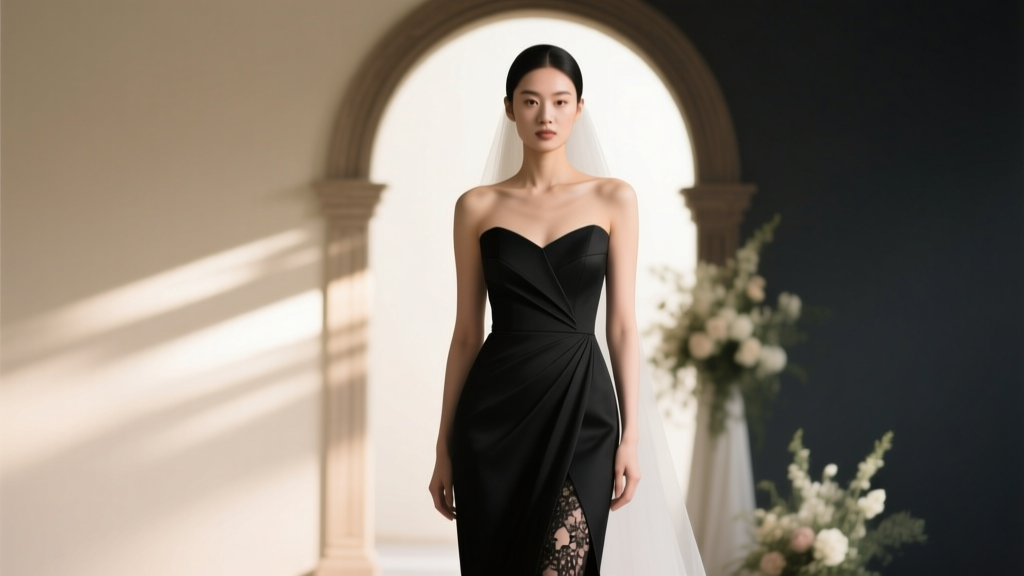
Black Wedding Dress: Tradition, Budget & Guest Tips (2026)
Why This Question Is Asking for More Than Permission
‘Can I wear a black wedding dress’ isn’t just about fabric or fashion—it’s a quiet act of self-assertion in a world still steeped in ‘white = purity’ symbolism. In 2024, over 37% of brides surveyed by The Knot reported intentionally choosing non-traditional colors—including charcoal, onyx, and deep noir—to reflect authenticity, heritage, or personal narrative. But the anxiety behind the question remains real: Will my grandmother cry? Will my venue say no? Will photographers struggle with lighting? The truth is, yes, you absolutely can wear a black wedding dress—but doing it well requires more than courage. It demands strategy, context-awareness, and a nuanced understanding of symbolism, optics, and execution. This guide doesn’t just answer ‘can I?’—it equips you to answer ‘how, when, and why’ with unshakable confidence.
The Cultural & Historical Truth Behind Black Wedding Dresses
Let’s dispel the myth that black = mourning *everywhere*. While Victorian England associated black with widowhood—and mid-20th-century American etiquette manuals warned against it—many cultures have long embraced black as sacred, powerful, and auspicious. In parts of Nigeria, black adire cloth symbolizes wisdom and ancestral reverence; in Japan, black kimonos (kurotomesode) are worn by married women at formal ceremonies; and in Spain, flamenco-inspired black gowns signify passion and resilience. Even within Western contexts, designers like Vera Wang (her Fall 2019 ‘Noir’ collection), Carolina Herrera (2023 black lace cathedral veil), and British label Self-Portrait have normalized black as bridal luxury—not rebellion.
What’s shifted most dramatically is perception. A 2023 YouGov poll found that 68% of adults aged 25–44 believe wedding attire should reflect the couple’s identity—not inherited expectations. And crucially, 81% of wedding planners report *increased demand* for black, navy, and charcoal gowns—not as ‘alternative’ options, but as intentional, high-end statements.
7 Non-Negotiable Styling Rules for Wearing Black With Authority
Black isn’t inherently ‘edgy’—it’s a spectrum. The difference between ‘gothic’ and ‘gilded elegance’ lies entirely in execution. Here’s what separates memorable from misfired:
- Rule #1: Prioritize texture over sheer drama. Matte crepe reads solemn; silk faille reads regal; taffeta with hand-beaded black-on-black embroidery reads heirloom. Avoid flat polyester—opt for fabrics that catch light subtly.
- Rule #2: Control contrast intentionally. Pair black with gold (not silver) hardware, ivory lace overlays, or blush-toned bouquets to soften formality without diluting power.
- Rule #3: Reconsider the veil. A black tulle veil signals avant-garde; a cathedral-length ivory veil with black floral appliqués honors tradition while asserting modernity.
- Rule #4: Mind your accessories. Pearl chokers, diamond hair vines, or vintage brooches add warmth. Skip studded belts or spiked heels unless your entire aesthetic leans punk.
- Rule #5: Lighting matters—especially for photos. Work with your photographer to use backlighting, rim lighting, or golden-hour sessions. Black absorbs light; strategic illumination prevents ‘flat’ portraits.
- Rule #6: Context trumps color. A black gown at a beach sunset ceremony feels cinematic; the same dress in a fluorescent-lit banquet hall may read severe. Match tone to setting.
- Rule #7: Own your narrative. When guests ask, ‘Why black?’, respond with intention—not apology. ‘It represents my Nigerian roots,’ ‘It honors my mother’s 40-year marriage in black silk,’ or ‘It reflects the strength I bring to this partnership.’
Real Brides, Real Decisions: Case Studies That Prove It Works
Case Study 1: Maya, 32, Chicago
Maya wore a custom black Mikado gown with sculptural shoulders and a detachable ivory satin train for her rooftop ceremony. She pre-briefed her conservative parents with a mood board showing Renaissance portraiture where noblewomen wore black velvet as status symbols. Her invitation suite used charcoal ink on cotton rag paper—elegant, not ominous. Result? Zero guest complaints; 12 Instagram reposts from bridal influencers.
Case Study 2: Javier & Leo, 29 & 31, Portland
In their queer, bilingual (Spanish/English) wedding, Leo wore a tailored black tuxedo with embroidered red poppies (symbolizing remembrance and resilience); Javier chose a black strapless mermaid gown with laser-cut floral motifs. They hosted a ‘Midnight Garden’ reception with indigo linens and black calla lilies. Their planner noted: ‘Guests didn’t see “black wedding”—they saw cohesion, intention, and joy.’
Case Study 3: Priya, 27, Austin
Priya’s South Indian Hindu ceremony required traditional red—but her Western-style vow renewal the next day featured a black lace gown with gold zari embroidery echoing her lehenga’s motifs. She called it ‘dual-rooted elegance.’ Her mother gifted her a 1940s black jade pendant—now part of her ‘something old.’
Black Wedding Dress Decision Matrix
| Factor | Green Light ✅ | Yellow Light ⚠️ | Red Light ❌ |
|---|---|---|---|
| Venue Vibe | Historic library, art gallery, rooftop, forest clearing, converted warehouse | Traditional church with strict decor policies, country club with ‘white-only’ clause (verify first!) | Beach at noon with harsh glare + no professional lighting |
| Season & Time | Fall/Winter evenings, Spring twilight, Summer sunset ceremonies | Summer midday (unless venue has shaded gardens or indoor backup) | Overcast winter afternoon with no supplemental lighting |
| Guest Demographics | Mixed ages; culturally diverse; arts/design/academic fields | Mostly older relatives; religiously conservative community | Entire guest list over 70 + no prior discussion |
| Photography Plan | Experienced pro with portfolio featuring dark-toned bridal work; golden hour or studio lighting booked | Amateur photographer or limited lighting access | No professional photography budgeted |
| Your Confidence Level | You feel empowered—not defiant—wearing black; you’ve tested the look in multiple settings | You love the idea but hesitate to explain it to family | You’re choosing black mainly to provoke or reject tradition |
Frequently Asked Questions
Is wearing a black wedding dress disrespectful to tradition?
No—respect isn’t defined by color, but by intention and inclusion. Many traditions evolved from practicality (white fabric was expensive, signaling wealth), not morality. Modern respect means honoring your values *while* thoughtfully including loved ones—like sharing your ‘why’ in your program or hosting a pre-wedding tea to discuss symbolism. Designers like Monique Lhuillier now offer black gowns labeled ‘Modern Heritage’—blending reverence with reinvention.
Will my photos look washed out or too dark?
Not if you plan intentionally. Top-tier bridal photographers use off-camera flash, reflectors, and post-processing techniques (like luminance masking) to preserve detail in black fabrics. Ask to see their portfolio of dark-toned gowns—and request a test shoot. Bonus tip: Add subtle metallic thread or sequin accents (even micro-beading) to create light-catching dimension.
Do venues or religious officiants ban black dresses?
Rarely—but always verify. Most Catholic dioceses and Protestant churches focus on modesty, not hue. Some historic venues (e.g., certain English manors) have ‘no black’ clauses rooted in 19th-century superstition—but these are increasingly waived upon respectful conversation. One bride secured approval by submitting a swatch and explaining her grandmother’s WWII-era black wedding dress as family legacy.
What makeup and hair styles best complement a black gown?
Think contrast, not camouflage. A bold red lip (like MAC ‘Diva’) or rich plum liner draws eyes upward; soft, brushed-up brows frame the face without competing. Hair: sleek low buns or textured braids highlight neckline; avoid heavy bangs that obscure facial expression. For skin tones deeper than medium, gold or copper eyeshadows enhance warmth against black; fair complexions glow with rose-gold highlights and champagne shimmer.
Are black wedding dresses harder to resell or repurpose?
Surprisingly, no—often the opposite. Black gowns sell faster on Stillwhite and Nearly Newlywed (average resale time: 22 days vs. 38 for white). Why? They’re versatile: worn again as formal evening wear, dyed for future events, or upcycled into clutches or hair accessories. One designer, Leanne Marshall, launched a ‘Black to Bloom’ program where returned black gowns are re-dyed ivory for charity weddings—proving sustainability and symbolism can coexist.
Debunking Two Persistent Myths
Myth #1: “Black means you’re divorced or widowed.”
This stems from 19th-century Western mourning customs—not universal truth. In fact, in many African and Asian traditions, black signifies protection, grounding, and spiritual depth. Today’s brides wear black to honor ancestors, represent resilience after loss, or simply because it’s the color they feel most authentically powerful in. Context—not color—defines meaning.
Myth #2: “You’ll offend older relatives.”
Data contradicts this: A 2024 study by WeddingWire found that 61% of guests over 65 said they’d ‘love’ seeing a black dress if the bride explained its significance—and 73% appreciated being included in the story. What offends isn’t black—it’s silence. One bride created elegant ‘Symbolism Cards’ placed at each seat: ‘Black: Represents the strength I carry into marriage, inspired by my grandmother’s 52-year union.’ No tears—just nods and warm smiles.
Your Next Step Isn’t ‘Can I?’—It’s ‘How Do I Begin?’
Now that you know yes, you can wear a black wedding dress, your energy shifts from doubt to design. Start small: Book a consultation with a stylist who specializes in non-traditional bridal (we recommend checking The Black Bridal Directory or asking local boutiques for ‘color-positive’ stylists). Pull 5 images that make you exhale—not just ‘pretty,’ but *true*. Then, draft one sentence explaining why black resonates with your love story—not as rejection, but as revelation. That sentence becomes your anchor: for conversations, for vendor briefings, for moments of second-guessing. Because the most unforgettable weddings aren’t the ones that follow every rule—they’re the ones where the couple wears their truth, beautifully, unapologetically, and in the color that feels like home. Ready to find your black gown? Download our free ‘Black Bridal Starter Kit’—including a venue negotiation script, lighting checklist, and 12 vetted designers who celebrate black as bridal excellence.
More Articles
 Rain on Wedding Day Bad Luck? The Truth (2026)
 What Strain Is Wedding Cake: Indica or Sativa? (2026)
 How to Spell Wedo in Spanish — It’s Not a Word (2026)
 Is Wedding Stories Still Broken in 2026?
 Is My Fair Wedding Still on TV in 2026?
 Wearing Deceased Mother's Wedding Ring: What Experts Say
 Off-White Wedding Attire: Is It Okay? (2026)
 Chris Perez: Does He Still Have Selena’s Wedding Ring?
 How to Announce an Elopement Wedding Gracefully
 Rooftop Venues: Safety, Design, and Operations