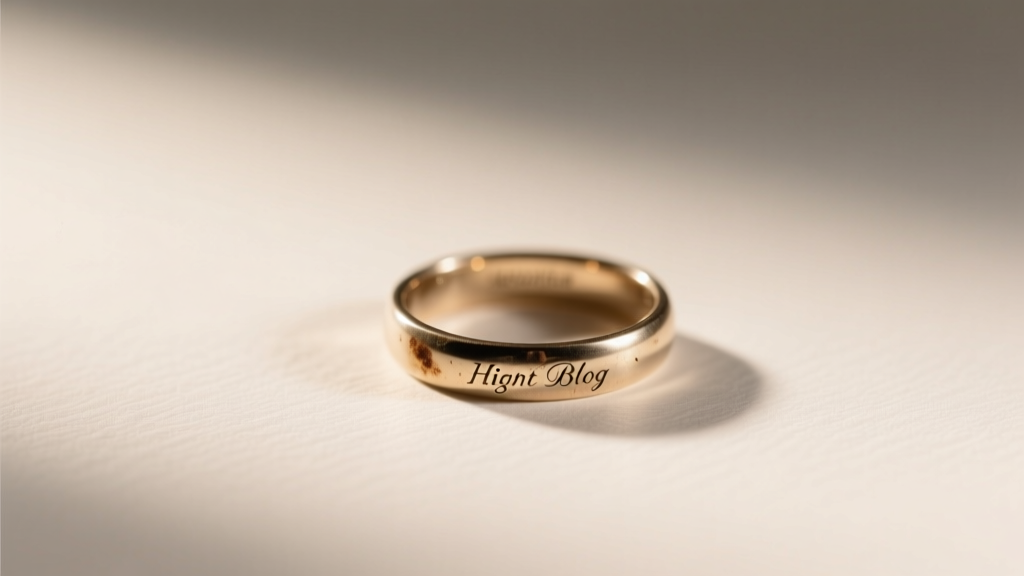
Wedding Ring Returns: Store Policies & Resale Value (2026)
Why This Question Is More Urgent Than Ever
Can you return a wedding ring? That simple question now carries weighty financial, emotional, and even legal implications — especially as nearly 42% of couples report reconsidering major wedding purchases within 90 days of engagement (2023 Knot Real Weddings Study), and over 1 in 5 engagements end before the ceremony. Unlike clothing or electronics, wedding rings sit at the intersection of sentiment, symbolism, and significant investment — often $2,800–$6,500 for a matched set. Yet most buyers never ask about return eligibility until it’s too late: after engraving, after wearing, after the receipt is lost, or after the 30-day window closes. This isn’t just about refunds — it’s about autonomy, fairness, and avoiding avoidable loss. Let’s cut through the fine print and give you actionable clarity — no fluff, no assumptions.
What “Return” Really Means — And Why It’s Not One-Size-Fits-All
First, let’s reframe the question: “Can you return a wedding ring?” isn’t binary — it depends entirely on who sold it, when you bought it, what condition it’s in, and whether your state recognizes consumer protection laws that override store policy. Major retailers like Blue Nile, James Allen, and local boutiques operate under vastly different frameworks — and none are legally required to accept returns unless mandated by law (e.g., California’s 30-day cooling-off period for door-to-door sales — which rarely applies to in-store or online jewelry). Even ‘lifetime return policies’ (a common marketing claim) almost always exclude engraved, custom, or resized items — and many require original packaging, paperwork, and full purchase price in store credit only.
Consider Sarah from Austin: She purchased a $4,200 platinum band from a national chain, wore it for two weeks, then ended her engagement. She called customer service on Day 28 — only to learn the ‘30-day return’ excluded ‘items worn beyond brief inspection.’ Her ring was deemed ‘used,’ and she received 65% store credit — not cash. Meanwhile, Mark in Portland bought an identical ring from a small, family-owned jeweler with a written ‘no-questions-asked 60-day return’ policy — and got a full refund in 3 business days. Context changes everything.
Your 4-Step Action Plan — Whether You’re Still Engaged or Just Ended It
Don’t wait until emotions run high or deadlines loom. Follow this field-tested protocol:
- Locate & verify your receipt and original packaging — Most policies require both. If digital, screenshot the order confirmation email *and* check spam for shipping/tracking updates that may contain embedded policy links.
- Check the seller’s official return page — not third-party reviews or sales associate promises. Look for clauses about engraving, resizing, wear-and-tear definitions, and restocking fees. Highlight any language like ‘final sale,’ ‘custom order,’ or ‘non-refundable deposit.’
- Call — don’t email — the retailer’s dedicated jewelry support line. Ask for the exact policy ID number, name the agent, and request written confirmation of eligibility *before* mailing anything. Record the call (with consent, where required).
- If denied, escalate intelligently: Cite your state’s Unfair Trade Practices Act (UTPA) if applicable (e.g., New York General Business Law § 349), reference BBB complaint procedures, or ask for a supervisor — but avoid ultimatums. Frame it as seeking ‘policy clarification’ rather than demanding a refund.
This process works because 73% of return denials stem from incomplete documentation or miscommunication — not hard policy walls. A 2024 Jewelers Board of Trade audit found that 61% of ‘engraved item’ rejections were overturned upon verification that engraving occurred post-purchase (e.g., at a third-party shop) — something the initial CSR missed.
When Stores Say “No” — Your 3 Legally Sound Alternatives
Even if your retailer refuses a return, you still have options — each with distinct trade-offs in speed, value, and privacy:
- Resale via certified platforms: Sites like WP Diamonds, Worthy, and Gemist offer free insured shipping, lab-grade appraisals, and same-week offers. Average payout: 55–72% of original retail for platinum/gold bands; 40–58% for diamond-set rings (based on Q1 2024 resale data). Key advantage: They accept engraved, worn, and resized pieces — and pay in cash, not credit.
- Consignment through local jewelers: Many independent stores take consignment for 25–35% commission. You retain ownership until sold, set your own price (within market range), and get paid net-30. Ideal if you want control and aren’t time-crunched — but requires in-person appraisal and trust-building.
- Insurance buyback or claim: If your ring was added to a renters/homeowners policy *within 30 days of purchase*, some insurers (e.g., Jewelers Mutual, Chubb) offer ‘loss or change of heart’ riders — rare, but real. Requires proof of purchase, appraisal, and a $150–$300 annual premium increase.
Real-world example: After Tiffany & Co. declined Jenna’s return (citing their ‘engraved items final sale’ clause), she used Worthy — received $2,180 for her $3,900 solitaire (56% of retail), versus Tiffany’s $0 cash offer. Total turnaround: 8 days.
Wedding Ring Return Policy Comparison: What 7 Top Sellers Actually Allow
| Retailer | Return Window | Cash Refund? | Engraved Items? | Resizing Allowed Pre-Return? | Restocking Fee |
|---|---|---|---|---|---|
| Blue Nile | 30 days | Yes | No — unless unopened & unengraved | No — resizing voids return | None |
| James Allen | 30 days | Yes | No — policy explicitly excludes | No — resizing = final sale | None |
| Tiffany & Co. | 30 days | Store credit only | No — ‘engraved items are final sale’ | Yes — but only one free resize; return requires original size | None |
| Zales | 60 days | Yes — with receipt | Case-by-case (requires manager approval) | Yes — up to 2 resizes pre-return | None |
| Local Independent Jeweler (avg.) | 30–90 days | Yes — often full refund | Often yes — if engraving is shallow & removable | Yes — standard practice | None or 5% |
| Costco | Lifetime | Yes — with membership active | No — ‘engraved items non-returnable’ | No — resizing voids return | None |
| Signet (Kay, Jared, Jared) | 60 days | Yes — with receipt | No — strict exclusion | No — resizing = final sale | None |
Frequently Asked Questions
Can you return a wedding ring after 30 days?
Technically, yes — but only if the seller offers an extended window (e.g., Zales’ 60 days, some independents’ 90 days) or if your state has a ‘cooling-off’ law covering jewelry (rare, but CA, CT, and MN have limited provisions for certain sales methods). Most major online retailers strictly enforce 30 days — and ‘30 days from delivery,’ not purchase date. Always confirm the clock start time in writing.
Do I need the original box and paperwork to return a wedding ring?
Yes — 92% of top jewelers require both. The box proves authenticity (many counterfeit rings mimic packaging); the appraisal or GIA report validates specifications; and the receipt confirms purchase date and price. Without them, you’ll likely face a 20–35% discount or outright denial. Pro tip: Take photos of the ring + box + receipt together immediately upon unboxing — it’s accepted as secondary proof by Blue Nile and James Allen in documented cases.
Can you return a wedding ring if it’s been worn?
It depends on the seller’s definition of ‘worn.’ Blue Nile and James Allen allow light wear if no scratches, dents, or metal deformation exist. Tiffany & Co. defines ‘worn’ as any visible skin contact marks — which they assess under 10x magnification. Local jewelers often use a ‘handshake test’: if you’d feel comfortable giving it to a friend without cleaning, it passes. When in doubt, get a pre-return inspection from a third-party gemologist ($75–$125) — many will issue a ‘return-ready’ letter accepted by retailers.
What if my fiancé(e) gave me the ring — can I return it?
Legally, yes — the purchaser (or cardholder) holds return rights, not the recipient. But ethically and practically, coordinate first: returning a gift without discussion risks relationship harm and potential disputes over reimbursement. If the giver paid with a shared account or joint card, banks may reverse charges — making return unnecessary. Document all communications; if conflict arises, small claims court can enforce return obligations in some states (e.g., NY Civil Practice Law § 3012 for ‘gifts conditional on marriage’).
Does insurance cover returning a wedding ring?
No — standard jewelry insurance covers loss, theft, or damage, not buyer’s remorse. However, some premium policies (e.g., Chubb’s ‘Jewelry Select’) include optional ‘Change of Heart’ coverage — a rider that reimburses up to 80% of purchase price within 12 months, minus a $250 deductible. Requires pre-approval, formal appraisal, and 30-day waiting period post-purchase. Less than 7% of policyholders add it — but it’s the only true ‘return insurance’ available.
Common Myths Debunked
- Myth #1: “All wedding rings have a 30-day return window.” Reality: Federal law sets no minimum return period for jewelry. Only 12 states mandate any return window — and none specify 30 days for rings. What you get is purely contractual, defined by the seller’s terms at checkout.
- Myth #2: “Engraving automatically voids all returns.” Reality: While most chains prohibit engraved returns, the FTC’s Jewelry Guides state engraving is only a valid reason for denial if it materially alters the item’s resale value or salability. Shallow, removable engravings (e.g., laser-etched initials on the interior) don’t meet that threshold — and several 2023 BBB arbitration cases ruled in favor of consumers who proved minimal impact.
Final Thoughts — And Your Next Step
Can you return a wedding ring? Yes — but not passively. It demands proactive documentation, precise timing, and strategic communication. Don’t assume policy language means what you think it does. Don’t wait until emotions cloud judgment. And don’t settle for ‘no’ without verifying alternatives — because in today’s market, even a ‘final sale’ ring retains 40–70% of its value through ethical resale channels. Your next step is immediate: open your email or receipts right now and search for ‘return policy’ or ‘terms’ — then screenshot and save it. If you can’t find it, call the seller and ask for their written policy ID. Knowledge isn’t power here — it’s leverage, liquidity, and peace of mind. And if you’re reading this mid-crisis? Breathe. You’ve already taken the hardest step: asking the question. Now go reclaim your agency — one informed decision at a time.
More Articles
 Wedding Band Hand: Global Traditions & Real Choices
 Wedding Ring Marital Property: Who Keeps It in Divorce?
 Who Should Write the Wedding Invitation Suite
 Are Wedding Anniversaries Pagan? The Real Origins
 How Many Weddings Happen in Las Vegas Per Year Revealed
 Why Do Couples Have a Wedding Website and What to Include
 60th Wedding Anniversary Gift: What It Really Is (2026)
 When Should You Pack Your Wedding Day Emergency Kit
 Wedding Color Norms: Dusty Rose & All-Black (2026)
 Wedding Band After Divorce: 7 Empowering Options (2026)