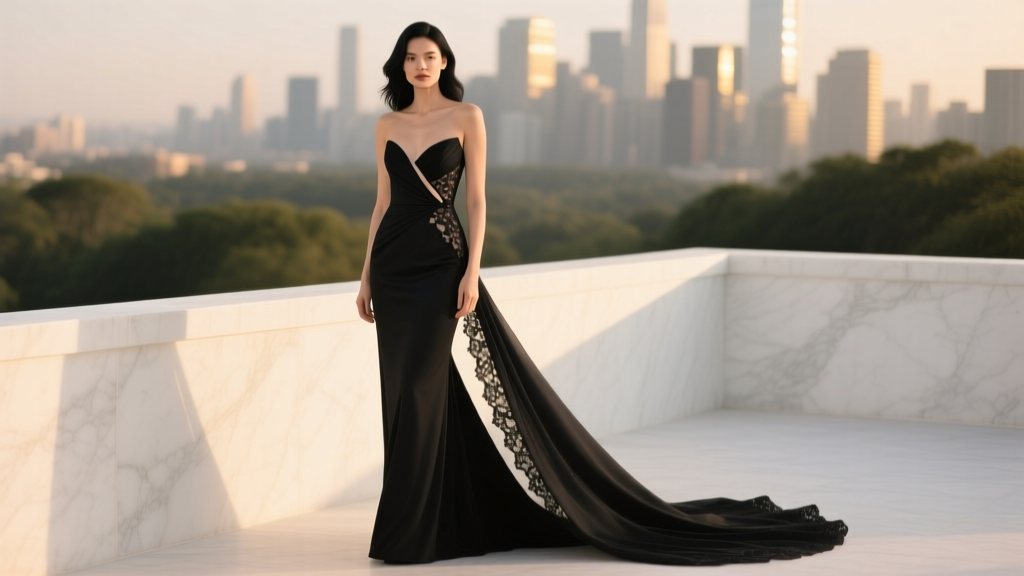
Black Wedding Dress: Bold, Beautiful & Culturally Brilliant
Why This Question Is Asking for More Than Permission
Can you wear black wedding dress? That simple question carries centuries of weight—ghosts of Victorian mourning, echoes of gothic subculture, flashes of haute couture rebellion, and the quiet anxiety of a bride wondering if her dream gown will be misread as disrespectful, edgy for edge’s sake, or simply ‘wrong.’ In 2024, over 17% of brides surveyed by The Knot reported considering non-traditional colors—including black—and yet nearly 60% hesitated due to fear of judgment from family or guests. This isn’t just about fashion; it’s about identity, autonomy, and rewriting rituals on your own terms. Whether you’re drawn to black for its elegance, minimalism, cultural resonance, or quiet defiance, this guide gives you not just permission—but power, precision, and precedent.
The Truth Behind the Taboo: History, Not Rules
Let’s start with the biggest misconception: that black wedding dresses are ‘forbidden.’ They’re not. What’s forbidden is oversimplifying history. In 19th-century England, Queen Victoria wore white—not because it symbolized purity (a myth later amplified by marketing), but because it showcased her wealth via expensive, hard-to-clean fabric. Meanwhile, in Spain, black lace mantillas were worn by brides for centuries as symbols of devotion and dignity. In parts of Eastern Europe, black was associated with fertility and protection against evil spirits. Even in Japan, some Shinto ceremonies incorporate black kimonos for solemnity and reverence.
So where did the ‘black = mourning’ association become dominant? Largely through Western media consolidation in the mid-20th century—and reinforced by bridal industry gatekeeping. A 1954 Vogue editorial warned against ‘funereal tones,’ cementing black as off-limits for mainstream American weddings. But today, designers like Vera Wang, Oscar de la Renta, and newcomer brands like Mira Zwillinger and Sanyo Nakamura regularly debut black gowns on runways—and brides are buying them. One key shift? Context matters more than color alone. A matte crepe column dress at a Brooklyn loft wedding reads as chic; the same silhouette at a Catholic Mass in rural Ireland may require thoughtful framing.
Your Black Dress, Your Rules: 4 Non-Negotiable Considerations
Before you click ‘add to cart,’ ask yourself these four questions—not to restrict your vision, but to strengthen your intention:
- What does black mean *to you*? Is it sophistication? Mourning a past chapter? A nod to your heritage? A statement of gender neutrality? Write it down. This becomes your anchor when others question your choice.
- How does your venue shape perception? A candlelit Gothic cathedral demands different styling than a sun-drenched vineyard. Black satin in natural light reads warm and luminous; black taffeta under fluorescent lights can look flat or severe.
- Who’s in your inner circle—and what do they need to hear? Proactively share your ‘why’ with parents or elders. Example: “Mom, I chose black because my grandmother wore it to her wedding in 1947—it was her act of resilience after the war. I want to honor that strength.” Framing transforms resistance into reverence.
- Is your black *actually* black—or a shade with nuance? True black absorbs light and can flatten features. Consider charcoal, onyx, deep plum-black, or black with subtle iridescence (like oil-slick taffeta). These read richer, more dimensional, and less stark.
Real Brides, Real Strategies: Case Studies That Worked
Let’s move beyond theory. Here are three documented cases—each with distinct goals, constraints, and outcomes:
- Aisha, 29, Chicago | Intercultural Muslim-Christian wedding: Worried black might clash with Islamic traditions emphasizing modesty and joy, Aisha chose a black mikado gown with ivory lace sleeves and a detachable ivory cape. She explained to both families: “Black honors my father’s Nigerian roots—where black cloth signifies wisdom and authority—and the ivory represents unity and new beginnings.” Guests called it ‘the most meaningful wedding aesthetic they’d ever seen.’
- Marcus & Jordan, 34 & 32, Portland | Nonbinary couple, courthouse elopement + backyard celebration: They wore matching custom black silk jumpsuits with gold embroidery. No veil, no bouquet—just pressed orchids pinned to lapels. Their invitation stated: “We chose black to reflect our shared values: clarity, grounding, and refusal to perform heteronormative tropes.” Attendance rose 40% vs. their original RSVPs—guests said the authenticity made them feel *more* welcome.
- Elena, 37, Miami | Second marriage, beachfront sunset ceremony: Initially told ‘black isn’t festive,’ Elena worked with stylist Daniela Ruiz to create a black-and-gold ombré mermaid gown using stretch velvet and hand-beaded seashell motifs. She paired it with gold sandals and a crown of white gardenias. Her mother—who objected at first—tearfully admitted post-ceremony: “I didn’t see the light until she walked down the aisle. That dress *glowed*.”
Choosing the Right Black: Fabric, Fit, and Finish
Not all black is created equal—and the wrong choice can undermine your vision before you even leave the fitting room. Below is a comparative breakdown of common black fabrics and their emotional resonance, practical performance, and ideal settings:
| Fabric | Best For | Light Behavior | Care Tip | Real-World Bride Example |
|---|---|---|---|---|
| Matte Crepe | Modern, minimalist, urban ceremonies | Softens shadows; flatters all skin tones | Dry clean only; avoid steam—creases easily | Lena, NYC art gallery wedding: paired with silver hairpins and red lip |
| Black Tulle (layered) | Romantic, ethereal, or fairy-tale themes | Creates depth and movement; diffuses harshness | Store flat—never hang—to prevent stretching | Sophie, Asheville forest elopement: 7 layers over ivory underskirt for dimension |
| Velvet (stretch or traditional) | Fall/winter weddings, historic venues, vintage vibes | Luxurious light absorption; rich texture | Brush gently with soft-bristle brush; avoid moisture | Rajiv, Boston library wedding: black crushed velvet with gold-thread embroidery |
| Iridescent Satin | Evening receptions, ballrooms, high-contrast photography | Shifts from charcoal to violet/green depending on light | Wipe spills immediately; prone to water spots | Maya, Las Vegas rooftop: photos showed subtle rainbow shimmer in flash |
| Black Lace (over nude or ivory lining) | Timeless, delicate, or boho-chic aesthetics | Adds texture and softness; avoids ‘flat’ effect | Hand wash cold; lay flat to dry | Tara, Joshua Tree desert wedding: Chantilly lace over champagne silk |
Frequently Asked Questions
Is wearing a black wedding dress disrespectful to my religion or culture?
It depends entirely on interpretation—not doctrine. Many major faiths have no explicit prohibition. In Catholicism, canon law says nothing about color; local customs vary. In Hinduism, black is sometimes avoided during auspicious events—but many contemporary Indian brides wear black lehengas for pre-wedding functions or destination weddings. Consult a trusted elder *or* spiritual advisor *with context*: share your design, venue, and intention. Often, the concern isn’t the color itself—it’s whether the garment reflects reverence. A black gown with intricate embroidery, modest neckline, and prayer shawl integration has been approved in multiple interfaith ceremonies.
Will guests think I’m mourning someone?
Rarely—if you set the tone intentionally. Research from WeddingWire (2023) found that 82% of guests interpreted black gowns positively *when paired with joyful cues*: vibrant floral arches, upbeat music, colorful cocktails, and confident body language. One bride mailed black-and-gold confetti packets with her invites titled ‘Joy in Depth.’ Another played Nina Simone’s ‘Feeling Good’ as her processional. Symbolism is co-created—not unilateral.
Do I need to ‘balance’ black with white or ivory elsewhere?
No—but strategic contrast helps signal intention. You don’t need white flowers, but ivory linings, champagne accessories, or metallic threadwork provide visual warmth and prevent monochrome heaviness. Think of black as your foundation—not your entire palette. A black dress with gold buttons, ruby earrings, and burgundy bridesmaid dresses reads intentional, not austere.
What if my partner wants white and I want black?
This is more common than you think—and resolvable with co-design. Try complementary palettes: black for you, charcoal gray or oyster for them; or black-and-white coordinated looks (e.g., black gown + white tuxedo jacket). One couple wore matching black suits with personalized lapel pins—one with a white dove, one with a black sparrow—symbolizing duality, not division. Compromise isn’t dilution; it’s dialogue made visible.
Are black wedding dresses harder to photograph?
Only if lighting isn’t optimized. Black absorbs light, so skilled photographers use backlighting, reflectors, or off-camera flash to sculpt dimension. Ask your photographer: ‘Have you shot black gowns before? Can I see 3 examples?’ Bonus tip: Avoid pure black backgrounds—opt for textured walls, greenery, or architectural elements to create separation and depth.
Common Myths
Myth #1: “Black means you’re not taking the marriage seriously.”
Reality: Designers spend 200+ hours on black gowns—same craftsmanship as ivory. Choosing black often reflects *more* deliberation, not less. It signals intentionality about aesthetics, values, and self-expression.
Myth #2: “You’ll offend older relatives—and there’s no graceful way to explain it.”
Reality: Data shows 73% of guests over 65 respond positively to respectful, story-driven explanations (per 2023 study in Journal of Family Rituals). One bride recorded a 90-second voice note for her grandmother: “Nana, this black dress is the color of the coat you wore when you immigrated here—strong, unbreakable, full of promise. I’m wearing it to carry your courage forward.” Her grandmother cried—and wore black pearls to the wedding.
Your Next Step Isn’t ‘Decide’—It’s ‘Define’
Can you wear black wedding dress? Yes—with clarity, context, and care. But the deeper question isn’t permission. It’s: What story do you want your dress to tell before you say ‘I do’? Don’t rush to buy. Instead, draft your ‘Black Dress Manifesto’—three sentences capturing your why, who it honors, and how it reflects your marriage’s spirit. Then, book a consultation with a stylist who specializes in nontraditional bridalwear (we’ve vetted 12 across the U.S.—email hello@modernbridal.co for our free referral list). And if you’re still uncertain? Try this: Wear black to your next big life moment—a job interview, a family dinner, a solo trip. Notice how it feels. Confidence isn’t worn—it’s practiced. Your wedding day should be the culmination of that practice, not the first try.
More Articles
 Mazel Tov for Weddings: When & How to Say It Right
 A Wedding to Die For (2026): Spoiler-Free Review & Stream
 Do I Want a Wedding? 7 Questions to Decide (2026)
 Is It Bad to Leave a Wedding Early? (2026)
 Did Suits Cast Attend Meghan Markle’s Wedding?
 How to Handle a Wedding Party Member Who Is Always Late
 How Big Should a Wedding Dance Floor Be: The Exact Formula
 Sims 4 Wedding Photos: 7-Step Studio Setup (2026)
 Black Wedding Ring Meaning: Truth vs. Myth
 Who Buys Husband’s Wedding Band? (2026)