## Did Queen Victoria Really Start the White Wedding Dress Tradition?
Every year, millions of brides walk down the aisle in white, convinced they're honoring a centuries-old tradition. But how old is that tradition, really? The story of the white wedding dress is more surprising — and more recent — than most people think. Queen Victoria's 1840 wedding changed fashion history, but the full picture is far more nuanced.
## What Happened at Queen Victoria's 1840 Wedding
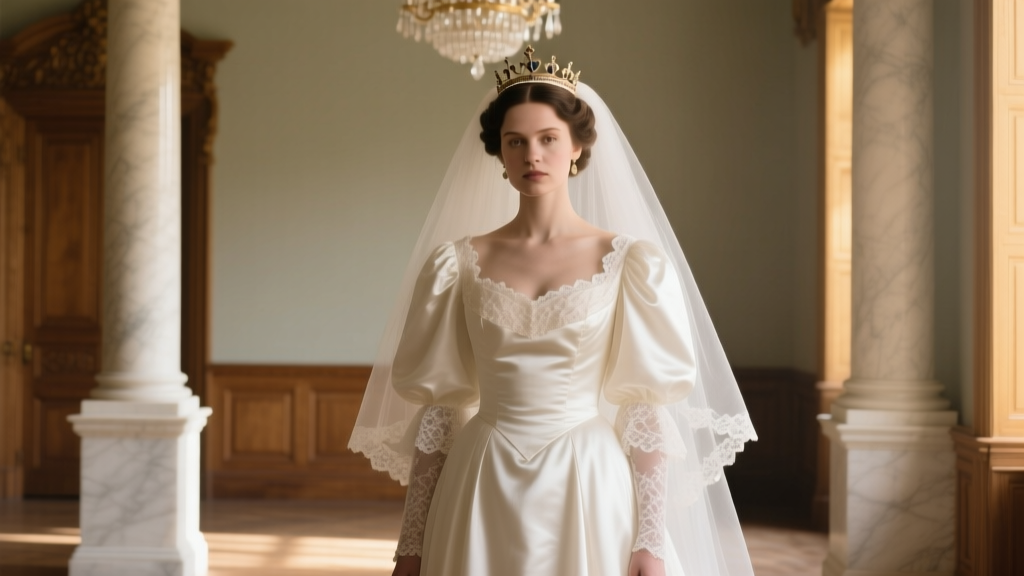
On February 10, 1840, Queen Victoria married Prince Albert of Saxe-Coburg and Gotha. She chose a white satin gown trimmed with Honiton lace — a deliberate decision to showcase British craftsmanship and support the struggling lace industry in Devon.
Before Victoria, white was not the standard bridal color. Wealthy brides typically wore their most expensive dress, regardless of color. Red was popular in some European cultures. Blue symbolized purity in others. Even black was acceptable in certain regions.
Victoria's choice was widely covered by the press, and fashion plates spread her image across Europe and America. Wealthy women began copying her look almost immediately. Within a generation, white had become the aspirational choice for middle- and upper-class brides in the English-speaking world.
So yes — Victoria was enormously influential. But she didn't invent the white wedding dress from nothing.
## White Wedding Dresses Before Queen Victoria
Here's what most people get wrong: white bridal gowns existed before 1840. They just weren't the dominant choice.
- **Mary Queen of Scots** wore white at her 1559 wedding to Francis II of France — though white was then considered a mourning color in France, making it a controversial choice.
- **Aristocratic portraits** from the 17th and 18th centuries occasionally show brides in white or ivory gowns.
- **White fabric** was expensive to produce and maintain, so wearing it signaled wealth rather than purity.
The purity symbolism we associate with white wedding dresses today was largely a **Victorian-era invention** — a meaning retrofitted onto a color choice that originally had more to do with economics and fashion than morality.
## How the Tradition Spread and Solidified
Victoria's influence worked through several channels:
**Fashion journalism**: Godey's Lady's Book, one of the most widely read American magazines of the 19th century, declared in 1849 that white was the most fitting color for a bride. This editorial push accelerated adoption across social classes.
**Photography**: As portrait photography became more accessible in the late 1800s, brides wanted to look their best for a permanent record. White photographed well and became associated with the formality of the occasion.
**Post-WWII mass market**: The modern white wedding dress tradition was truly cemented in the 1950s. The postwar economic boom, the rise of bridal magazines, and Hollywood films featuring white-gowned heroines turned the trend into an expectation. Vera Wang, David's Bridal, and the modern bridal industry built an entire economy around it.
By the time your grandmother got married, white wasn't just fashionable — it was practically mandatory.
## 2 Common Misconceptions About White Wedding Dresses
**Misconception 1: White has always symbolized virginity or purity.**
This is a modern interpretation. Historically, white was associated with wealth (it was hard to keep clean), mourning (in some cultures), and status. The purity symbolism was largely constructed during the Victorian era and amplified by 20th-century marketing. Many cultures around the world — including Chinese, Indian, and West African traditions — use red, gold, or other colors for bridal wear, with their own rich symbolism.
**Misconception 2: Wearing a non-white dress is a modern rebellion.**
Actually, it's a return to historical norms. Before 1840, most brides wore whatever color suited them or their budget. Today's brides choosing blush, champagne, blue, or even black are participating in a tradition far older than Victoria's white gown. The 180-year window of white dominance is the historical anomaly, not the rule.
## The Bottom Line
Queen Victoria didn't invent the white wedding dress — but she absolutely popularized it. Her 1840 wedding created a fashion moment so powerful that it reshaped bridal culture across the Western world for generations. The meaning of white (purity, new beginnings) was layered on afterward, largely by the Victorian press and later by the bridal industry.
Understanding this history gives modern brides genuine freedom. Your dress color is a choice, not a commandment. Whether you choose ivory, blush, red, or classic white, you're making a decision that brides have always made: wearing something that feels meaningful to you.
Thinking about your own wedding dress? Start with what makes *you* feel beautiful — history is on your side no matter what color you choose.
 What Do You Say on a Wedding Card: 40 Heartfelt Messages
 When Do You Need to Apply for a Marriage License
 Summer Wedding Outfit Tips: Stay Cool & Stylish
 Used Wedding Dresses: Demand & Pricing (2026)
 Wedding Ring Origins: A 3,000-Year History
 Financing a Wedding Ring: Smart Options Only
 Wedding Card Phrases for Best Friend (2026)
 What to Do If You Hate Your Engagement Photos
 Skully Wedding Meme: What Really Happened (2026)
 What Is the Proper Way to Handle Wedding Gift Returns