# Wedding Dress Codes Decoded: What Every Guest Must Know
You've just received a wedding invitation and there it is — two words that send a wave of anxiety through even the most fashion-savvy guest: *dress code*. What exactly does "cocktail attire" mean? Is a sundress too casual for a "garden party" wedding? Getting it wrong means standing out for all the wrong reasons on someone's most important day. Here's your complete guide to every wedding dress code, so you can dress with confidence every time.
---
## The Formal End: Black Tie and White Tie
**White Tie** is the most formal dress code in existence and is rarely used for weddings outside of royal or ultra-luxury events. If you see it, men wear a tailcoat, white waistcoat, and white bow tie. Women wear full-length ball gowns.
**Black Tie** is the most common formal wedding dress code. Here's what it means in practice:
- **Men:** A tuxedo (black or midnight navy) with a black bow tie, formal dress shirt, and patent leather shoes. A well-fitted dark suit is acceptable only if a tuxedo is genuinely unavailable.
- **Women:** A floor-length gown is ideal. A sophisticated midi dress or dressy jumpsuit in a luxe fabric (silk, velvet, chiffon) also works. Avoid anything short or casual.
- **Key rule:** When in doubt, go longer and more formal.
**Black Tie Optional** gives guests flexibility — men can wear a tuxedo or a dark formal suit; women can choose between a gown and an elegant cocktail dress.
---
## The Middle Ground: Cocktail, Formal, and Semi-Formal
These are the most frequently used wedding dress codes, and also the most misunderstood.
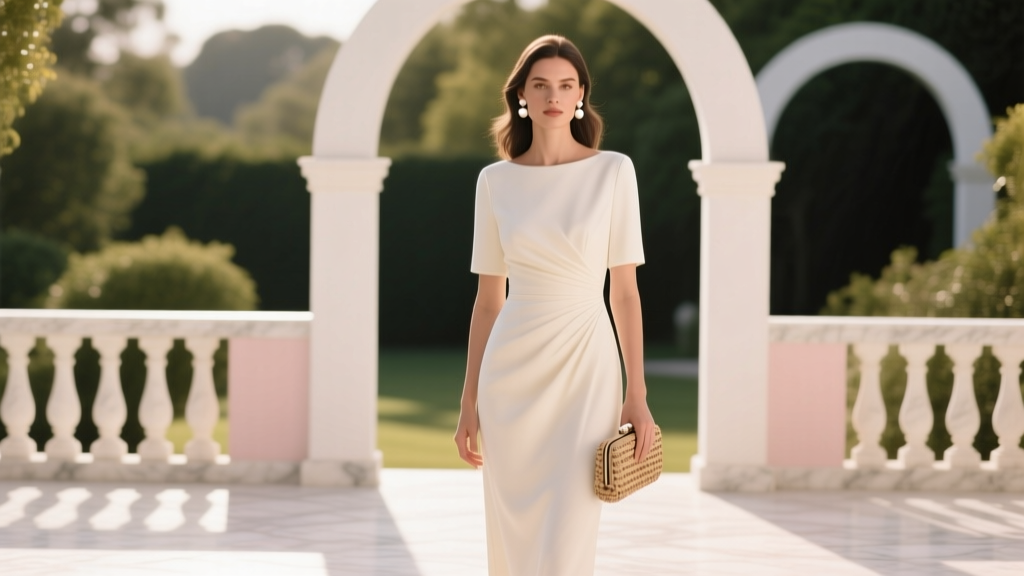
**Cocktail Attire** means knee-length to midi dresses for women in elevated fabrics — think wrap dresses, fit-and-flare silhouettes, or a chic two-piece set. Men wear a suit and tie; a blazer with dress trousers also works. Avoid anything too casual like linen shorts or sundresses.
**Formal or Black Tie Optional** sits between cocktail and full black tie. Women can wear a floor-length gown or a dressy midi; men should lean toward a dark suit with a tie rather than a tuxedo.
**Semi-Formal** is slightly more relaxed. Women can wear a midi dress, a dressy blouse with tailored trousers, or a stylish jumpsuit. Men wear a suit — a tie is optional but recommended.
**Actionable tip:** When the invitation says "formal," always interpret it one level up from your instinct. It's far easier to remove a blazer than to feel underdressed all evening.
---
## The Relaxed Codes: Garden Party, Casual, and Beach
These dress codes allow more creativity but still require thoughtfulness.
**Garden Party or Outdoor Wedding Attire** calls for light, breathable fabrics in floral or pastel tones. Women do well in midi dresses, flowy skirts, or elegant sundresses. Men can wear linen suits or chinos with a blazer. Critical practical note: avoid stilettos (they sink into grass) and opt for block heels, wedges, or dressy flats.
**Casual or Relaxed Attire** does not mean jeans and a t-shirt. It means smart-casual — a sundress or a neat blouse-and-skirt combo for women; chinos and a collared shirt for men. Think "brunch with someone important."
**Beach or Destination Wedding Attire** favors light fabrics like linen, cotton, and chiffon. Flowy maxi dresses, linen trousers, and open-toe sandals are all appropriate. Avoid dark, heavy fabrics that absorb heat and formal shoes that won't survive sand.
**Boho or Rustic Attire** invites earthy tones, floral prints, lace details, and relaxed silhouettes. Maxi dresses, flowy skirts, and layered accessories fit perfectly here.
---
## Universal Rules That Apply to Every Dress Code
Regardless of the specific wedding dress code, a few rules always apply:
1. **Never wear white, ivory, or cream** — these shades are reserved for the bride.
2. **Avoid overly revealing outfits** — a wedding is a celebration, not a nightclub.
3. **Check the venue** — a rooftop in Manhattan calls for different choices than a barn in Vermont, even with the same dress code label.
4. **When the invitation is silent**, default to cocktail attire for evening weddings and smart-casual for daytime events.
5. **Ask the couple or wedding party** if you're genuinely unsure — they will appreciate the thoughtfulness.
---
## Common Myths About Wedding Dress Codes
**Myth 1: "Cocktail attire just means any dress."**
This is one of the most common mistakes guests make. Cocktail attire has a specific meaning: knee-to-midi length, elevated fabric, and a polished finish. A casual sundress or a bodycon club dress both miss the mark. Think of cocktail attire as what you'd wear to an upscale dinner — put-together and intentional.
**Myth 2: "Black tie means I have to rent a tuxedo."**
For men, a very well-fitted dark suit in charcoal or navy with a formal dress shirt and tie is generally acceptable at black tie optional events. However, at a strict black tie wedding, a tuxedo is the expected standard. If the invitation says "black tie" without "optional," invest in or rent the tuxedo — it signals respect for the couple's vision.
---
## Your Next Step
Wedding dress codes exist to help guests feel confident and to create a cohesive, beautiful atmosphere for the couple's big day. The different dress codes for weddings — from white tie to casual beach attire — each have clear signals once you know what to look for.
**Here's your one simple action:** The next time you receive a wedding invitation, identify the dress code, check the venue and time of day, and choose an outfit that sits at the top of that dress code's range rather than the bottom. You'll always look appropriate, polished, and genuinely celebratory — which is exactly what every couple hopes to see when their guests walk through the door.
 Do You Wear The Wedding Band Or Engagement Ring First (2026)
 Wedding Anxiety: Why It’s Normal & How to Cope (2026)
 Can You Wear A Wedding Ring In An Mri (2026)
 Rain on Wedding Day: Good Luck? Truths & Tips
 Gareth’s Death in Four Weddings: The Truth (2026)
 Carrie Preston in My Best Friend's Wedding? (2026)
 Gucci Mane Wedding Cost: $2.1M Breakdown (2026)
 Wedding Ring Rules: 7 Must-Know Tips (2026)
 How to Sell a Wedding Ring After Divorce (2026)
 Who Does Tyler Perry Play in Madea’s Destination Wedding?