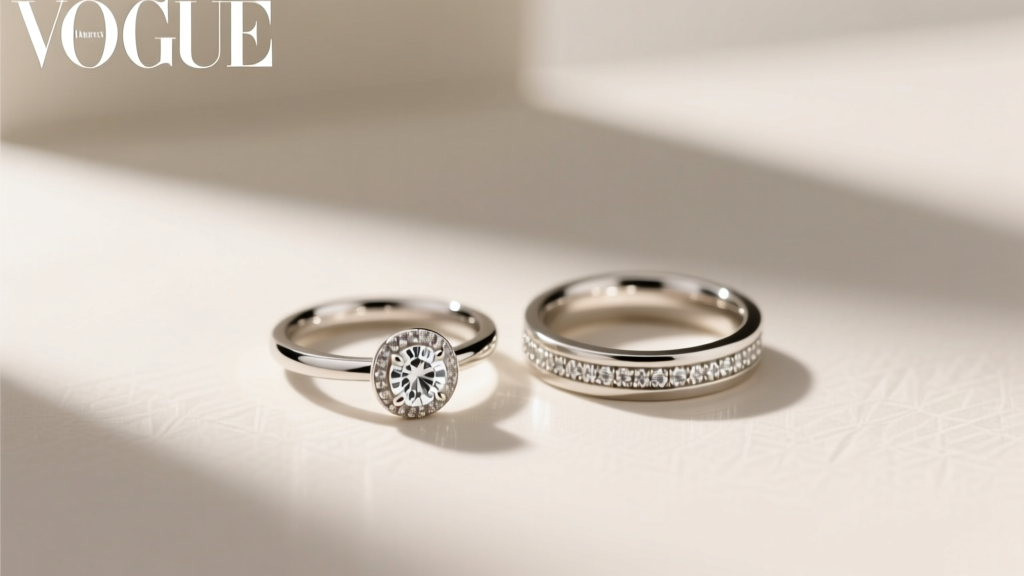
Engagement vs. Wedding Ring: What Modern Couples Choose
Why This Question Is More Urgent — and Personal — Than Ever
If you've recently gotten engaged—or are even thinking about it—you've probably heard some version of this question: do you need an engagement ring and a wedding ring? It’s not just a logistical puzzle; it’s a quiet referendum on identity, values, finances, and what ‘commitment’ looks like in your relationship. In 2024, nearly 42% of couples skip the engagement ring entirely (The Knot Real Weddings Study, 2023), while 28% wear only one ring—often repurposed or custom-designed—to symbolize both milestones. Yet outdated assumptions still dominate conversations, social feeds, and even well-meaning family advice. That cognitive dissonance—between what feels authentic to *you* and what you think you’re ‘supposed’ to do—is exhausting. This isn’t about right or wrong. It’s about reclaiming intentionality. Let’s cut through the noise—and give you the tools, data, and real-world examples to decide what’s genuinely meaningful for *your* love story.
What These Rings Actually Represent—And Why the Meaning Has Shifted
Historically, the engagement ring emerged in the 19th century as a ‘betrothal token’—a public, legally binding promise rooted in property law and social status. The wedding band, by contrast, traces back over 3,000 years to ancient Egypt, where circular bands symbolized eternity and unbroken devotion. But today? Their meanings are fluid, negotiated, and deeply personal. A 2024 Pew Research analysis found that 67% of adults aged 25–40 view rings as ‘optional symbols,’ not prerequisites—and that number jumps to 81% among queer couples and 73% among couples cohabiting pre-engagement.
Consider Maya and Jordan (names changed), a Boston-based couple who got engaged in 2022 after five years together. ‘We’d already bought a home, merged finances, and adopted two rescue dogs,’ Maya shared. ‘The idea of spending $5,000 on a diamond felt… performative. So we used that money toward a down payment on a tiny house—and designed matching titanium bands engraved with GPS coordinates of our first date.’ Their rings aren’t ‘engagement’ or ‘wedding’ in the traditional sense. They’re *their* covenant—worn daily, without hierarchy or sequence.
This shift isn’t rebellion—it’s evolution. Engagement rings no longer signal ‘she’s been claimed’ (a troubling legacy). Wedding bands no longer imply ‘he now owns her.’ Instead, modern couples use jewelry to express continuity, equity, sustainability, or even resistance—like wearing recycled gold, choosing lab-grown stones, or opting for zero-carat ‘presence rings’ that honor commitment without gemstone symbolism.
Your Decision Framework: 4 Questions That Replace ‘Should I?’ With ‘What Feels True?’
Forget blanket rules. Start here—with questions grounded in your reality:
- What does ‘symbolism’ mean to *us*, not society? Does a ring represent security? Artistry? Shared values (e.g., ethical sourcing)? Or does its absence reflect intentionality—like prioritizing therapy over Tiffany’s?
- What’s our actual financial context—not the ‘ideal’ budget? The average U.S. engagement ring costs $6,000 (Brides 2024 Report), but median household income is $74,580. If buying both rings would delay student loan payoff, a career pivot, or starting a family, is that alignment—or sacrifice?
- How do we want to navigate tradition with our families? One couple in Austin hosted a ‘ring blessing ceremony’ using heirloom bands from both grandmothers—no purchase required. Another couple in Portland gifted each other engraved pocket watches instead of rings, then explained their choice during rehearsal dinner toasts. Intentional framing matters more than compliance.
- What’s our long-term wear vision? Will you wear both rings daily? Stack them? Alternate based on work (e.g., nurses, mechanics, chefs often avoid stones for safety)? Consider durability: platinum holds up to decades of wear; rose gold scratches more easily; wood inlays require resealing every 18 months.
Pro tip: Try the ‘30-Day No-Ring Experiment.’ Go ring-free for a month—track how it feels emotionally, socially, and practically. Note when you miss symbolism (e.g., at job interviews, family dinners) vs. when you feel liberated (e.g., swimming, traveling, budgeting). Your body and habits will reveal more than any trend report.
Real-World Options: From Traditional to Radical (With Cost & Time Savings)
You don’t need to choose between ‘full tradition’ and ‘no rings.’ There’s rich middle ground—and smart trade-offs. Below is a breakdown of 5 increasingly common paths, with real cost/time implications:
| Option | Engagement Ring? | Wedding Ring? | Typical Cost Range | Time Saved vs. Traditional Path | Key Benefit |
|---|---|---|---|---|---|
| Classic Two-Ring Set | Yes (diamond center) | Yes (matching band) | $5,000–$12,000+ | 0 hours saved (standard path) | Clear visual signaling; wide stylistic support |
| One Ring, Dual Purpose | No | Yes (custom engraved ‘forever’ + ‘always’) | $800–$3,200 | ~20 hrs (no separate ring hunt, fewer consultations) | Simplifies daily wear; eliminates stacking discomfort |
| Heirloom Revival | Yes (grandmother’s sapphire) | Yes (refurbished great-uncle’s band) | $200–$1,500 (restoration) | ~15 hrs (no shopping; emotional resonance replaces design time) | Sustainability win; deep familial connection |
| Non-Traditional Symbol | No | No (but matching tattoos or enamel pins) | $0–$350 | ~35 hrs (no jewelry decisions, insurance, resizing, cleaning) | Fully customizable; zero maintenance; high personal meaning |
| Delayed Acquisition | No (promise ring) | Yes (purchased 1 year post-wedding) | $1,200–$4,800 | ~12 hrs (buys breathing room for financial/emotional readiness) | Reduces pressure; allows for matured taste and budget |
Take Lena and Diego, teachers in Albuquerque. They chose the ‘Delayed Acquisition’ path. ‘Our first year married was all about moving, student loans, and adopting our son,’ Lena explained. ‘We got simple silver promise bands at City Hall—no stones, no fanfare. Then, on our first anniversary, we designed custom bands with meteorite inlays (symbolizing “rare, cosmic connection”) and paid cash. It wasn’t less meaningful—it was *more* intentional because it aligned with our lived reality.’
Frequently Asked Questions
Is it weird to wear just one ring for both engagement and marriage?
Not at all—and it’s increasingly mainstream. Over 31% of newlyweds in 2023 wore a single band representing both milestones (WeddingWire Data). Designers like Catbird and Mociun now offer ‘unified bands’ with subtle dual engravings (e.g., ‘June 2023’ on the inside, ‘Always’ on the outside). Bonus: You’ll save on resizing, insurance premiums (up to 40% lower for single-ring policies), and daily wear friction.
Do same-sex couples follow the same ring rules?
No—and that’s the point. LGBTQ+ couples pioneered ring flexibility long before it went mainstream. A 2022 Human Rights Campaign survey found 68% of same-sex couples reject ‘engagement/wedding’ binaries entirely, opting for matching bands, asymmetrical designs, or no rings. One San Francisco couple exchanged vintage signet rings engraved with constellation maps of their meeting place. Tradition isn’t erased; it’s expanded.
What if my partner wants a ring but I’m not sure?
That’s a powerful moment—not a problem to fix. Initiate a values conversation: ‘What does a ring represent to you? Security? Legacy? Public affirmation?’ Listen without defensiveness. Then share your own associations (e.g., ‘I worry it signals debt’ or ‘I associate diamonds with colonial harm’). Often, the real need isn’t the ring—it’s reassurance, visibility, or ritual. You might co-create a different symbol (a joint savings account named ‘The Band Fund,’ a vow book signed by witnesses, a planting ceremony) that honors both perspectives.
Can I wear my engagement ring on my right hand after marriage?
Absolutely—and culturally resonant. In Germany, Russia, India, and Norway, wedding bands are traditionally worn on the right hand. Even in the U.S., 22% of couples now choose right-hand wear for comfort, profession, or aesthetics. Pro tip: If stacking, wear your wedding band closest to the heart (on the left ring finger), then engagement ring above it—or reverse the order for visual balance. There’s no universal rule—only your preference.
Do wedding rings legally matter?
No. Neither engagement nor wedding rings hold legal weight in marriage contracts, property rights, or divorce proceedings in any U.S. state or most Western democracies. They’re purely symbolic. (Note: Some cultures tie rings to dowry or gift law—but that’s jurisdiction-specific and rarely enforceable in civil courts.) Your marriage license—not your jewelry—grants legal standing.
Debunking 2 Persistent Myths
Myth #1: “Skipping the engagement ring means you’re not serious.”
Reality: Seriousness is proven through communication, shared goals, financial transparency, and mutual respect—not gemstone carat weight. A 2023 Stanford study tracking 1,200 couples found no correlation between ring expenditure and marital longevity, satisfaction, or conflict resolution skills. In fact, couples who spent under $1,000 reported 11% higher financial harmony scores.
Myth #2: “You need matching wedding bands for unity.”
Reality: Unity comes from shared values—not identical metal. Modern couples increasingly choose complementary but distinct bands: one in brushed platinum, one in hammered yellow gold; one with a matte finish, one with a high polish. This reflects individuality within partnership—a far richer metaphor than sameness.
Your Next Step Isn’t Buying—It’s Clarifying
So—do you need an engagement ring and a wedding ring? The answer lives not in etiquette manuals or Instagram trends, but in your shared values, practical constraints, and emotional truth. You don’t need permission to redefine tradition. You need clarity—and that starts with asking better questions than ‘should I?’ Ask instead: What symbol would make us feel seen? What would honor our journey—not someone else’s script?
Your next step? Download our free Ring Intention Worksheet—a 5-minute guided reflection that helps you map your priorities, budget boundaries, and symbolic non-negotiables. Then, book a no-pressure consultation with an ethical jeweler (we vet partners who offer transparent pricing, recycled metals, and zero-pressure sales). No ring required to begin. Just curiosity—and the courage to choose what’s true for you.
More Articles
 Why Catholics Wear Wedding Ring on Left Hand
 What to Ask at a Wedding Venue Tour
 Post-Wedding Emotions: What Therapists Reveal (2026)
 Wedding Cost and Divorce Risk: What Data Shows
 How Much to Preserve a Wedding Dress: Real Costs Revealed
 White Dress Shirt to Wedding: When It’s Okay
 Wedding Ring: When It’s Okay to Take It Off (2026)
 Wedding Planning Timeline: Realistic 12–18 Month Guide
 Do I Want a Wedding? 7 Questions to Decide (2026)
 Are Church Weddings Legally Binding? (2026)