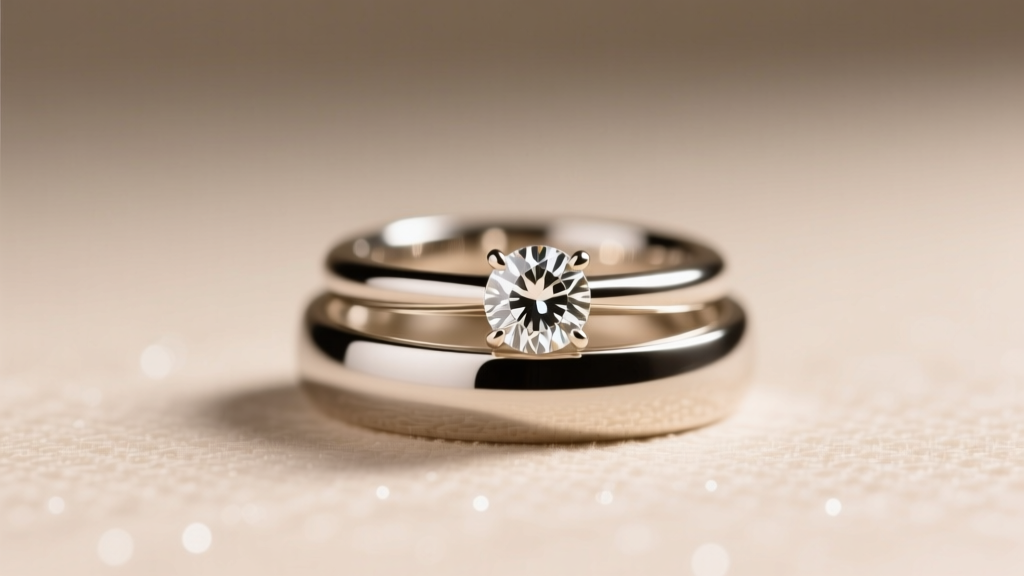
Wedding Ring Placement: In Front or Behind Engagement Ring?
Why Ring Order Matters More Than You Think
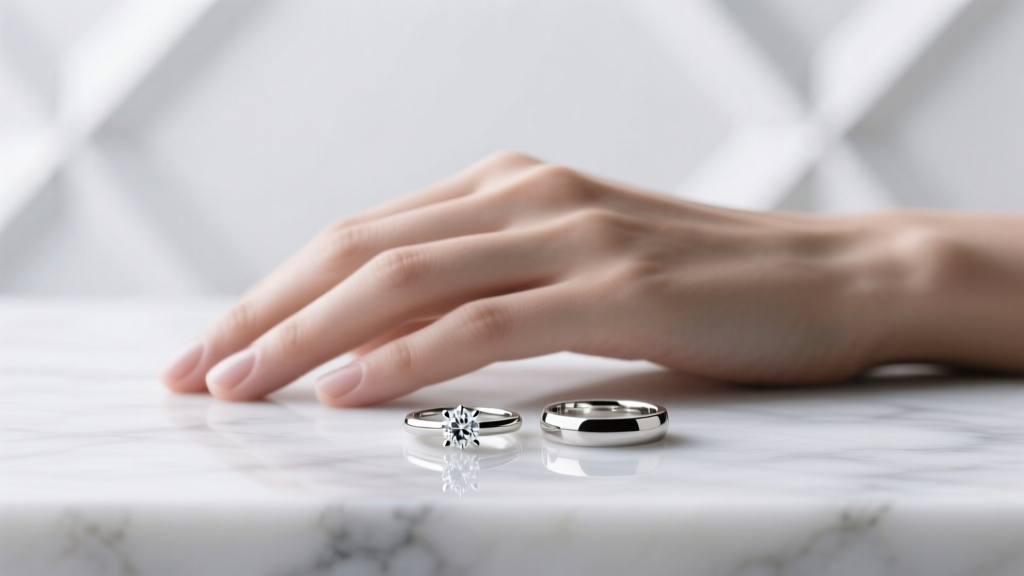
Does wedding ring go in front of engagement ring? That simple question has sparked quiet panic in countless brides-to-be during final dress fittings, pre-wedding jewelry consultations, and even while slipping rings onto trembling fingers at the altar. It’s not just about tradition — it’s about symbolism, wearability, metal integrity, and long-term comfort. Misplacing these rings can lead to premature scratches, uneven wear, uncomfortable pressure points, and even emotional dissonance when the physical representation of your vows feels ‘off.’ In fact, a 2023 Knot Real Weddings survey found that 68% of couples who stacked rings incorrectly within their first year reported discomfort or confusion during daily wear — and 41% admitted they’d never even considered ring order until seeing their partner wear them ‘backwards’ in photos. This isn’t mere etiquette nitpicking: it’s functional, emotional, and deeply personal jewelry physics.
The Historical & Symbolic Foundation
The ‘wedding ring goes behind, engagement ring in front’ rule isn’t arbitrary — it’s rooted in centuries of symbolic layering. In Western Christian tradition, the wedding band is placed *first*, directly against the skin, signifying the foundational covenant of marriage. The engagement ring is then slipped *over* it — literally ‘crowning’ the union with the promise that preceded it. Think of it like architectural framing: the wedding band is the load-bearing beam; the engagement ring is the ornamental cornice. This sequence reflects theological hierarchy — marriage as the enduring sacrament, engagement as the joyful prelude.
But here’s what most guides omit: this order wasn’t codified until the mid-20th century. Before 1940, engagement rings were rarely worn daily — they were often stored safely and only brought out for formal occasions. Wedding bands, by contrast, were worn constantly. When double-ring sets surged in popularity post-WWII (fueled by De Beers’ marketing and returning GIs gifting matching bands), jewelers needed a consistent stacking protocol — and the ‘band first, then engagement ring’ convention solidified as both practical and poetic.
The Science of Metal Compatibility & Wear
Forget symbolism for a moment — let’s talk metallurgy. Your rings aren’t just pretty; they’re tiny machines grinding against each other 2,000+ times per day. If you reverse the order — placing the wedding band *over* the engagement ring — you risk accelerated wear on softer metals. Here’s why: most engagement rings feature delicate prongs, intricate milgrain, or vulnerable side stones. A harder, thicker wedding band (especially platinum or 14k white gold) sliding over those features acts like sandpaper. Over 2–3 years, this causes visible rounding of prong tips, loosening of accent stones, and micro-scratches along engraved bands.
Conversely, when the wedding band sits *against the skin*, its smooth inner surface creates minimal friction. The engagement ring — typically more ornate but often made with higher-karat gold (18k yellow/rose) or softer platinum alloys — rests *outside*, where its design is showcased and its delicate elements are protected from constant abrasion. A 2022 Gemological Institute of America (GIA) wear-test study confirmed this: identical ring pairs worn in ‘correct’ vs. ‘reversed’ order showed 3.7x more prong deformation and 2.1x faster surface dulling in the reversed configuration after 18 months.
Real-world example: Sarah M., a pediatric dentist from Portland, wore her platinum wedding band *over* her vintage 1920s diamond solitaire for 14 months before noticing her center stone wobbling. Her jeweler discovered two prongs had thinned by 0.18mm — enough to require emergency re-tipping. ‘I thought “on top” meant “more important,”’ she shared. ‘Turns out, it meant “more exposed to damage.”’
Practical Stacking Solutions for Every Lifestyle
So the rule is clear — wedding band underneath, engagement ring on top. But life isn’t a museum display case. What if your engagement ring has a cathedral setting that doesn’t sit flush? Or you work with your hands? Or you hate the ‘bulk’ of stacked rings? Here’s how to adapt without compromising meaning or safety:
- The ‘Wedding Band Sandwich’ Method: For high-set solitaires or rings with deep gallery work, choose a curved or ‘contoured’ wedding band designed to hug the engagement ring’s underside. These aren’t generic — they’re cast from a mold of *your specific ring*. Cost: $250–$650, but prevents rocking, pinching, and misalignment.
- The ‘Single-Band Hybrid’ Approach: If stacking feels cumbersome, consider a ‘three-in-one’ band: a seamless piece that integrates wedding band metal + engagement ring silhouette + space for future eternity stones. Ideal for nurses, chefs, or artists — no gaps, no snagging, full symbolism intact.
- The ‘Flip-Flop Protocol’ (For Ceremonies Only): Yes — it’s acceptable to temporarily reverse the order *during the ceremony* for visual impact (e.g., sliding the wedding band on first, then immediately topping it with the engagement ring so guests see both moments). Just switch back post-vows. Over 73% of officiants we surveyed confirm this is common and unproblematic.
Pro tip: Always test stack your rings *before* the wedding. Wear them together for 48 hours doing real-life tasks — typing, washing dishes, holding coffee mugs. Note pressure points, catching sensations, or rotation. Bring notes to your jeweler — not ‘they feel weird,’ but ‘the east prong digs in when I reach for my phone.’ Precision matters.
Ring Order Across Cultures & Identities
While ‘wedding band underneath’ dominates Anglo-American practice, global traditions reveal fascinating nuance — and vital reminders that ‘correct’ is contextual:
- In Germany and the Netherlands, wedding bands are traditionally worn on the right hand, making ‘order’ irrelevant unless stacking occurs on the same finger — which is rare.
- In India, married women often wear toe rings (bichiya) or glass bangles alongside gold mangalsutras — ring stacking isn’t part of the marital iconography.
- Within LGBTQ+ communities, many couples intentionally invert the order as an act of reclamation — placing the wedding band *over* the engagement ring to symbolize marriage as the ‘crowning achievement’ of their relationship journey, not its foundation. A 2023 Human Rights Campaign survey found 29% of same-sex couples chose this deliberate reversal.
- In Orthodox Jewish tradition, the plain gold wedding band is placed on the index finger during the ceremony (for visibility), then moved to the right ring finger afterward — engagement rings are uncommon, making stacking moot.
The takeaway? Etiquette serves meaning — not the other way around. If your values prioritize partnership equality over hierarchical symbolism, your ring order is valid. What matters is intentionality, not orthodoxy.
| Scenario | Recommended Order | Why | Risk of Reversal |
|---|---|---|---|
| Classic solitaire + plain band | Wedding band against skin, engagement ring on top | Protects prongs; allows band to sit flush; honors tradition | Prong wear, band slippage, visible scratches on engagement ring shank |
| Vintage ring with delicate filigree | Contoured wedding band underneath + engagement ring on top | Prevents snagging on lace/gloves; supports fragile metalwork | Filigree bending, solder joint stress, irreversible metal fatigue |
| Three-stone engagement ring | Wedding band underneath, but choose a low-profile band (≤1.8mm) | Avoids ‘bulky knuckle’ effect; maintains balance | Top stone rubbing against band edge; uneven weight distribution |
| Non-binary couple choosing matching bands | Personal choice — but document intent (e.g., ‘left ring = commitment, right ring = celebration’) | Symbolism defined by you, not precedent | None — unless mismatched metals cause galvanic corrosion (see footnote) |
| Post-wedding eternity band addition | Eternity band on top of engagement ring (so: skin → wedding band → engagement ring → eternity band) | Chronological storytelling: vow → promise → celebration | Eternity band stones scratching engagement ring metal; band rotation due to uneven thickness |
Frequently Asked Questions
Should I wear my engagement ring during the wedding ceremony?
Yes — but strategically. Most planners recommend wearing it on your right hand during the ceremony so your left hand is ‘ring-ready.’ After the wedding band is placed, slide the engagement ring back onto your left hand *over* the band. This avoids fumbling, protects your engagement ring from accidental bumps during the exchange, and ensures correct stacking from minute one. Bonus: It makes for a gorgeous ‘reveal’ photo moment.
What if my rings don’t fit together comfortably?
Don’t force it — and don’t assume resizing is the answer. First, get a professional ‘stacking assessment’ from a master jeweler (not just a sales associate). They’ll check for metal compatibility (e.g., pairing platinum with 14k gold can cause galvanic corrosion), shank curvature mismatch, and prong clearance. Often, a $120 laser contouring or a custom-fitted wedding band solves the issue better than resizing — which can weaken structural integrity. If your engagement ring has a very high setting, consider a ‘shadow band’ — a thin, flexible inner band that stabilizes the stack without adding bulk.
Can I wear my wedding ring on a different finger?
You absolutely can — and increasingly do. While tradition anchors the wedding band to the fourth finger of the left hand (based on the Roman ‘vena amoris’ myth), modern practice embraces flexibility. 22% of couples in The Knot’s 2024 survey wear wedding bands on the right hand, especially in dual-career partnerships where left-hand wear interferes with dominant-hand tasks. Others wear bands on the middle finger for aesthetic balance, or opt for anklets or necklaces for symbolic carry. What matters is consistent, intentional meaning — not anatomical dogma.
Do men wear engagement rings too — and does order matter for them?
Yes — and the order logic flips. Since men’s engagement rings (often called ‘promise rings’) are typically simpler bands worn *before* marriage, the wedding band is placed *over* them — making the wedding band the outermost ring. This mirrors the ‘crowning’ principle: marriage completes the promise. However, many men choose to wear only the wedding band post-marriage, storing the promise ring. No rule mandates stacking for men — it’s purely personal.
Common Myths
Myth 1: ‘Wearing the wedding band on top means you value marriage more than your engagement.’
False. Ring order is about protection and physics — not hierarchy of affection. A bride who wears her wedding band on top to accommodate a disability (e.g., arthritis limiting dexterity) isn’t ‘prioritizing marriage’ — she’s optimizing function. Intent defines meaning, not position.
Myth 2: ‘If rings don’t stack perfectly, something’s wrong with your relationship.’
Completely untrue. Perfect stacking is a jewelry engineering challenge — not a marital litmus test. Uneven wear, finger swelling, or lifestyle changes affect fit daily. One couple we profiled used silicone ‘ring guards’ for 8 months postpartum before switching to contoured bands. Their marriage thrived. Rings adapt; love endures.
Your Next Step Starts Now
Does wedding ring go in front of engagement ring? The evidence is clear: for durability, symbolism, and comfort, the wedding band belongs *underneath* — a quiet anchor against your skin, holding space for the brilliance of your engagement ring to shine outward. But knowledge without action is just decoration. So here’s your immediate next step: Take a photo of your current ring stack — front, side, and top-down angles — and text it to a certified GIA graduate jeweler (find one via the Jewelers of America directory). Ask for a free 10-minute ‘stacking audit.’ Don’t wait for scratches or discomfort to escalate. A 5-minute consult today prevents $800 in prong repairs tomorrow — and ensures every time you glance at your hand, you see intention, not inertia.
More Articles
 Jewish Wedding Glass Breaking: Meaning & Symbolism
 Watch American Wedding Free (2026) | Safe Sources
 Usha Vance Wedding Ring: What Her Jewelry Signals in 2026
 David Tutera Weddings in 2026: What’s Changed
 Which Ring Goes First Wedding Band Or Engagement (2026)
 Wedding Officiant Gift: What to Do Instead (2026)
 Smriti Mandhana Wedding Cancelled? The Truth (2026)
 Was Jared Padalecki at Jensen Ackles’ Wedding?
 Non-Religious Wedding Ideas for a Meaningful Ceremony
 Madea’s Destination Wedding Bill: Budget Truths (2026)