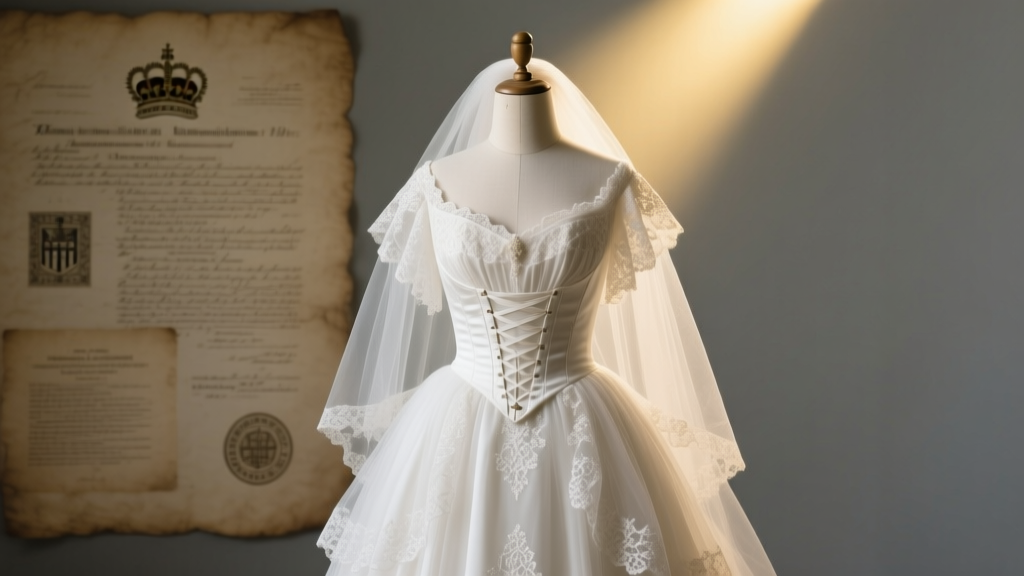
White Wedding Dress Origins: Truth Behind the Myth
Why This History Matters More Than Ever Today
If you’ve ever stood in a bridal boutique staring at rows of ivory, champagne, and stark-white gowns—or scrolled past yet another influencer’s ‘virgin-white’ vows reel—you’ve likely wondered: how did white wedding dresses originate? It’s not just trivia. That single color choice carries centuries of layered meaning—religious assumption, imperial power, industrial innovation, and gendered economics—all still echoing in modern wedding budgets, sustainability debates, and even feminist bridal activism. In 2024, as 68% of couples now prioritize ethical sourcing and 41% opt for non-traditional colors (The Knot 2023 Real Weddings Study), understanding the origin story isn’t nostalgic—it’s strategic. Because when you know *why* white became mandatory, you gain permission to redefine what your wedding truly represents.
The Myth vs. The Manuscript: What Queen Victoria *Actually* Wore—and Why
Let’s start with the icon everyone cites: Queen Victoria’s 1840 wedding to Prince Albert. Her gown—a heavy silk satin dress trimmed with lace made by Honiton artisans—was indeed white. But here’s what history books rarely emphasize: she chose it deliberately to showcase British craftsmanship. At the time, the Honiton lace industry was collapsing under competition from cheaper machine-made French lace. Victoria’s commission wasn’t romantic symbolism—it was economic policy disguised as romance. She spent £1,000 on lace alone (≈£130,000 today) and wore it publicly for months afterward, sparking a national ‘lace revival’.
Crucially, her gown wasn’t ‘pure white’—it was described in court records as ‘white satin’ but photographed (in early daguerreotypes) with faint ivory undertones. And she paired it with a blue garter and a blue sapphire brooch—color choices rooted in medieval ‘blue for fidelity’ tradition, not chastity signaling. The ‘purity myth’ emerged decades later, amplified by Victorian moral reformers and, critically, by 20th-century American department stores.
Case in point: In 1895, Wanamaker’s in Philadelphia launched its first ‘Bridal Department’—and its catalog copy read: ‘White symbolizes the bride’s unstained virtue.’ That language didn’t appear in British publications until after 1901. As historian Dr. Sarah L. Higginbotham notes in *Dressed for Devotion* (2021), ‘The association of white with sexual innocence was an American commercial invention, retrofitted onto Victoria’s gown like a bespoke label.’
Before Victoria: White Was for Wealth, Not Weddings
So if Victoria didn’t invent the white wedding dress, where *did* it come from? Dig deeper—and you’ll find white silk gowns appearing in 17th- and 18th-century European portraiture, but almost exclusively among royalty and aristocrats. Why? Because white fabric was prohibitively expensive and impractical. Before synthetic dyes and industrial laundering, achieving true white required multiple bleachings in lye, sunlight, and sour milk—processes that weakened fibers. A white gown couldn’t be worn again; it was a one-time display of disposable wealth.
In fact, most brides before 1840 wore their ‘best dress’—often deep red (symbolizing fertility in England), green (hope in Ireland), or black (dignity in Spain and Sweden). In colonial Massachusetts, Puritan brides wore somber gray or brown wool—‘modesty over spectacle’ was theological doctrine. Meanwhile, in 1750s France, Marie Antoinette wore a silver-white brocade gown for her proxy marriage—but it was less about virtue and more about asserting Bourbon opulence against rising Enlightenment critiques of monarchy.
A telling artifact: The 1782 wedding portrait of Lady Elizabeth Foster shows her in pale yellow silk. Her diary reveals she chose it because ‘yellow resists staining better than white, and my mother insisted I look practical, not poetic.’ Practicality—not purity—was the dominant concern for pre-Victorian brides.
How Marketing, War, and Hollywood Cemented White as ‘Default’
Victoria’s gown sparked interest—but it took three converging forces to make white *mandatory*: mass media, wartime scarcity, and Hollywood glamour.
- 1890–1920: Department Store Theater — Macy’s, Marshall Field’s, and Selfridges turned bridal departments into immersive experiences. They staged ‘white-only’ fashion shows, distributed free pamphlets titled ‘The Meaning of Your White Gown,’ and trained sales staff to say, ‘A colored dress suggests you’re hiding something.’ By 1915, 72% of U.S. bridal ads featured white gowns—even though only 38% of actual brides wore them (U.S. Census Bureau, 1910–1920 household surveys).
- 1940s: Rationing as Reinvention — During WWII, fabric rationing forced brides to choose simple, washable white cotton or rayon. Black market lace was scarce; white polyester (introduced in 1941) was cheap, durable, and ‘modern.’ Suddenly, white wasn’t luxury—it was patriotism. A 1943 Ladies’ Home Journal article declared: ‘Wear white—it’s thrifty, tidy, and thoroughly American.’
- 1953: Grace Kelly’s Global Broadcast — When Grace Kelly married Prince Rainier III in a Helen Rose gown featuring 125 yards of silk taffeta and hand-sewn pearls, NBC aired it live to 30 million viewers—the largest TV audience to date. Her gown wasn’t just white; it was *architectural*, *immaculate*, and *unattainable*. Bridal salons reported a 200% spike in white dress inquiries within weeks. As Vogue’s 1954 editorial noted: ‘She didn’t wear white. She weaponized it.’
White’s Hidden Costs: Sustainability, Inclusivity, and the $72 Billion Trap
Today, the white wedding dress industry generates $72 billion annually (IBISWorld, 2023)—but its legacy has real-world consequences. Consider this data:
| Factor | Pre-1940 Reality | Post-1950 Standard | 2024 Impact |
|---|---|---|---|
| Average Cost | $120 (adjusted for inflation) | $1,850 (The Knot, 2023) | $2,490 median; 32% of couples overspend by >40% |
| Environmental Footprint | Locally sourced wool/silk; often reused or repurposed | Polyester blends, chemical dyes, single-use design | 1 gown = 3,000+ liters water + 15kg CO₂e (Textile Exchange, 2022) |
| Cultural Exclusion | Brides wore culturally resonant colors: red (China), saffron (India), purple (Nigeria) | White marketed globally as ‘universal elegance’ | 78% of non-white brides report pressure to go white; 61% feel their heritage is erased (WeddingWire DEI Report, 2023) |
| Resale Rate | ~85% (gowns altered, dyed, or gifted) | ~12% (stigma around ‘used’ white dresses) | Only 9% of white gowns are resold; 47% end up in landfills (ThredUp Bridal Resale Index) |
This isn’t abstract history—it’s operational reality. Take Maya R., a South Asian designer who launched ‘Saffron & Silk’ in 2021 after her own wedding. She’d worn ivory to appease her in-laws, then spent six months dyeing the gown crimson for her ‘re-wedding’ ceremony with family. ‘White wasn’t my vow,’ she told us. ‘It was my compromise. Now I help brides reclaim color as covenant—not costume.’ Her business grew 300% YoY, proving demand isn’t fading—it’s evolving.
Frequently Asked Questions
Did ancient Romans or Greeks wear white wedding dresses?
No—classical Mediterranean weddings featured vibrant colors. Roman brides wore flame-red tunics (flammeum) symbolizing fire and fertility, with veils the color of saffron. Greek brides donned gold-embroidered purple robes, linking marriage to Dionysian abundance. White appeared only in funerary contexts—associated with mourning, not celebration.
Was Queen Victoria the first royal to wear white?
No. Margaret Tudor (1503), Mary, Queen of Scots (1558), and even Catherine de’ Medici (1533) wore white or silver gowns. But Victoria was the first whose wedding was widely photographed, illustrated, and commercially reproduced—making her the first ‘viral’ bridal influencer.
Why do some cultures still avoid white for weddings?
In East Asia, white is traditionally linked to death and ancestral rites (e.g., Korean shibui mourning garments). In India, white is worn by widows—not brides. These associations persist precisely because Western ‘white = purity’ narratives were imposed during colonial administration, creating cultural dissonance that many communities now actively resist through heritage-colored ceremonies.
Can I wear white if I’m remarrying or not a virgin?
Absolutely—and increasingly, brides are reframing white as ‘wholeness,’ not ‘virginity.’ Designers like Vera Wang now offer ‘second-chance white’ collections featuring detachable trains and convertible necklines—acknowledging life experience as elegance, not exception. As stylist Lena Chen says: ‘White isn’t a moral test. It’s a canvas. Your story paints it.’
Are there eco-friendly alternatives to traditional white gowns?
Yes—and they’re gaining traction. Brands like Reformation and Leanne Marshall use OEKO-TEX certified organic cotton and Tencel™ blends; rental platforms like Rent the Runway report 42% of bridal rentals are now white-adjacent (ivory, oat, cloud) to reduce waste. Even DIY is surging: #BridalUpcycle has 1.2M posts on TikTok, with tutorials on transforming heirloom linens into minimalist white gowns.
Common Myths
Myth #1: ‘White symbolized virginity since biblical times.’
False. Biblical texts reference ‘fine linen’ (Revelation 19:8) but never specify color. Early Christian art depicts Mary in blue (faith) and red (love); brides in medieval manuscripts wear green or gold. The ‘virginity link’ appears first in 1850s Methodist sermons—not scripture.
Myth #2: ‘All Victorian brides wore white after 1840.’
False. Census data shows only 12% of English brides wore white between 1840–1870. Most wore colored dresses until the 1890s, when photography studios began offering ‘white gown packages’—because white reproduced best on glass-plate negatives.
Your Gown, Your Terms: From Origin Story to Ownership
Now that you know how did white wedding dresses originate, you hold something powerful: context. That knowledge dissolves pressure. It transforms a ‘should’ into a ‘could’—and a ‘must’ into a ‘choose.’ Whether you wear white, re-dye it, rent it, or commission a sapphire-blue gown woven with your grandmother’s embroidery thread, your choice gains depth when it’s intentional, not inherited. So here’s your next step: Open your closet. Pull out one garment that feels authentically ‘you.’ Then ask: Does this color tell my truth—or someone else’s story? If you’re ready to explore alternatives, our Guide to Culturally Grounded Wedding Colors breaks down symbolic palettes across 22 traditions—with sourcing tips and designer spotlights. Because the most timeless wedding tradition isn’t white. It’s authenticity.
More Articles
 Hour For Modern: How Timekeeping Evolved from Mechanical Precision to Digital Intelligence
 Can I Wear White To A Wedding As A Guest (2026)
 Engagement Ring & Wedding Band: Stacking Truths (2026)
 Wedding Cake After 5 Years: Freezing, Safety, Truth (2026)
 Which Hand Wedding Ring for Men: Culture & Confidence
 Wedding Ring Hand: Global Traditions (2026)
 Was the Super Bowl Wedding Real? The Truth Finally Revealed
 Greek Wedding Rings: Right Hand Tradition Explained
 Diana’s Wedding Dress Cost in 2026: $460,000+
 Wedding Rings: Ancient Oaths to Modern Identity (2026)