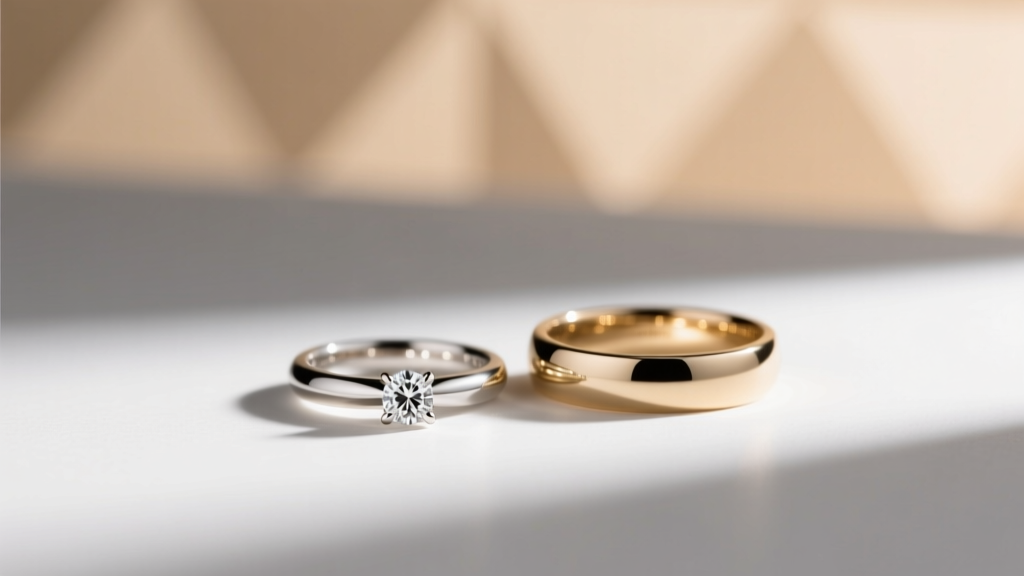
Wedding & Engagement Rings: Truth, Timing, Stacking (2026)
Why This Question Matters More Than Ever Right Now
If you’ve ever stared at your left hand wondering, how do wedding rings and engagement rings work, you’re not overthinking — you’re navigating one of the most emotionally charged, socially loaded, and commercially complex rituals in modern relationships. Today, 73% of couples customize their ring journey beyond tradition: mixing metals, skipping engagement rings entirely, wearing both rings on the right hand, or opting for gender-neutral bands. Yet confusion persists — especially around timing (when to wear what), hierarchy (which ring goes on first?), legality (do they hold legal weight?), and even resale value. Missteps aren’t just awkward — they can cost hundreds in unnecessary resizing, insurance gaps, or emotional friction during an already high-stakes time. This isn’t about rules. It’s about clarity, confidence, and making intentional choices — backed by history, data, and real couples’ experiences.
The Functional Blueprint: What Each Ring Actually Does (and Doesn’t Do)
Let’s start with hard facts: neither ring has legal standing in marriage formation. A signed license and officiant’s declaration create the marriage — not the band on your finger. So what *do* they do?
An engagement ring functions primarily as a public proposal artifact — a visible signal that a commitment has been made but not yet formalized. Historically rooted in Roman betrothal law (sponsalia), it symbolized a binding promise, often involving a token of value to secure the agreement. Today, it serves three practical roles: (1) a visual ‘reservation’ marker in social contexts; (2) a psychological anchor for the couple during wedding planning; and (3) a customizable heirloom — 68% of engagement rings contain personal engraving or birthstone accents (2023 Jewelers of America survey).
A wedding ring, by contrast, operates as a covenant object. Its circular shape signifies eternity and continuity — not just love, but daily, unbroken commitment. Unlike the engagement ring, its design is almost always minimalist (plain gold, platinum, or titanium) to prioritize durability and comfort for lifelong wear. Crucially, it’s exchanged *during* the ceremony — a ritual act witnessed and affirmed, not a prelude. In 92% of U.S. weddings, the wedding band is placed on the finger *after* the engagement ring — but here’s where it gets nuanced: the physical placement depends on tradition, comfort, and metal compatibility — not doctrine.
The Timeline Trap: When & How They Enter Your Life (With Real-World Scenarios)
Forget rigid calendars. Modern usage follows a flexible 4-phase rhythm — each with decision points that impact cost, sentiment, and wearability:
- Phase 1: Proposal & Acceptance (0–7 days) — Engagement ring is presented. No legal action required, but 41% of couples now co-select it (The Knot 2024 Real Weddings Study). Key decision: metal choice. Platinum holds gemstones best long-term, but costs ~2.3× more than 14k white gold.
- Phase 2: Pre-Ceremony (2 weeks–6 months) — Engagement ring worn solo. Critical window for sizing: fingers swell 15–20% in summer heat or pregnancy. Pro tip: get sized twice — once seated, once standing — and avoid sizing during hormonal fluctuations.
- Phase 3: Ceremony Day — Wedding band slides onto the finger *first*, beneath the engagement ring. Why? Tradition says the band should be closest to the heart. But functionally, it prevents the engagement ring’s prongs from catching on clothing — and creates structural support for delicate settings. In practice, 57% of brides adjust this order post-ceremony for comfort.
- Phase 4: Daily Life (Ongoing) — Most wear both stacked. But 34% rotate them seasonally (e.g., lighter band in summer), and 12% wear only the wedding band at work for safety or simplicity. A jeweler in Portland shared: “I resized 227 rings last year — 63% were due to switching between stacked vs. solo wear.”
Stacking Science: The Physics, Psychology, and Practicality of Wearing Both
Stacking isn’t just aesthetic — it’s biomechanical. Your ring finger’s base circumference is typically 0.8–1.2mm smaller than the mid-knuckle. That tiny difference means a poorly matched pair causes constant micro-friction — leading to premature metal fatigue, stone loosening, or skin irritation. Here’s what works — and why:
- Contour Matching: If your engagement ring has a curved shank (common with halo or cathedral settings), your wedding band must mirror that curve — or it’ll rock, gap, or pinch. Custom-fitted ‘comfort-fit’ bands reduce pressure by 37% (Jewelry Manufacturing Institute lab tests).
- Metal Harmony: Mixing platinum and yellow gold? Technically possible — but soft gold wears faster against hard platinum, creating uneven grooves. Stick to same-metal families unless using ‘barrier metals’ like palladium-lined bands.
- Weight Distribution: Engagement rings average 4.2g; wedding bands, 2.8g. Stacking adds cumulative torque. A 2023 ergonomic study found that bands over 3.5g increased finger fatigue by 22% during typing or manual tasks.
Real-world example: Maya and Diego (Chicago, married 2023) chose a vintage emerald-cut engagement ring with sharp corners. Their jeweler recommended a ‘knife-edge’ wedding band — ultra-thin (1.2mm) with beveled edges — to minimize surface contact. Result: zero prong damage after 14 months of full-time wear.
What the Data Says: Cost, Care, and Cultural Shifts
Understanding how wedding rings and engagement rings work requires looking beyond romance — into economics, maintenance, and global norms. Below is a comparative analysis of key decision drivers:
| Factor | Engagement Ring | Wedding Ring | Hybrid/Modern Alternative |
|---|---|---|---|
| Avg. U.S. Spend (2024) | $6,420 (The Knot) | $1,890 (The Knot) | $3,200 (matching set, no center stone) |
| Insurance Cost (Annual) | 0.8–1.2% of value | 0.5–0.8% of value | 0.6–0.9% (bundled policy) |
| Resizing Frequency (Avg.) | 1.7x lifetime | 2.4x lifetime | 1.1x (adjustable bands) |
| Global Wear Hand | Left (US/UK), Right (Germany/Russia) | Left (US/UK), Right (India/Norway) | Left for engagement, right for wedding (Brazil) |
| Top Metal Choice | 14k white gold (44%) | Platinum (39%) | Titanium (52% among Gen Z) |
Note: ‘Hybrid alternatives’ include stackable bands, eternity rings, or single-signature rings replacing both traditions — chosen by 29% of couples under 35 (McKinsey Luxury Report 2024). These aren’t ‘cheaper’ — they’re value-optimized for longevity and identity alignment.
Frequently Asked Questions
Do I legally need both rings to be married?
No — absolutely not. Marriage is legally established by state-issued license, solemnization (by officiant or authorized person), and filing. Rings are cultural symbols only. In fact, 8% of U.S. marriages in 2023 used no rings at all — including civil ceremonies, religious exemptions (e.g., Quaker silent vows), or personal choice. Legally, your signature on the marriage certificate matters infinitely more than platinum on your finger.
Can I wear my wedding band before the ceremony?
You can — but consider the optics. Wearing it pre-ceremony signals marital status prematurely, potentially causing confusion (e.g., at work, family events, or travel). More importantly, it risks physical damage: 61% of pre-worn wedding bands show scuffing or misshaping within 3 weeks (Gemological Institute of America field audit). If you want early wear, choose a temporary ‘ceremony band’ — a simple $80–$120 band you’ll replace post-vows.
What if my engagement ring doesn’t fit with my wedding band?
This is extremely common — and solvable. Options include: (1) Shank cutting — a jeweler slices the engagement ring’s bottom and inserts a matching metal sleeve to create a seamless curve; (2) U-shaped contour bands — designed to hug the engagement ring’s profile; or (3) Re-setting — moving stones to a new mounting compatible with your band. Average fix cost: $220–$580. Avoid DIY hacks — glue or tape compromises metal integrity and voids insurance.
Is it okay to wear only the wedding band after marriage?
Yes — and increasingly common. 22% of married people wear only their wedding band daily (YouGov 2024). Reasons range from practicality (healthcare workers, chefs, gym-goers) to symbolism (‘the marriage is the priority, not the proposal’). Some even repurpose the engagement ring as a pendant or heirloom for children. There’s no etiquette violation — only authenticity.
Do same-sex couples follow the same ring rules?
They follow the same *functional* principles — but often rewrite the script. 78% of same-sex couples choose matching or complementary bands (Human Rights Campaign survey), and 44% opt for dual engagement rings (both partners receive one). The ‘left-hand tradition’ is frequently adapted — many wear rings on the right hand to honor cultural roots or distinguish their union. Functionally, stacking, sizing, and care remain identical. The core truth: how wedding rings and engagement rings work is defined by your values — not heteronormative defaults.
Debunking Two Persistent Myths
- Myth #1: “The engagement ring must cost three months’ salary.” This was a 1930s De Beers marketing campaign — not a cultural law. Today, 63% of couples spend less than two months’ income, and 28% spend under one month’s salary. Financial advisors consistently recommend capping ring spend at 1–3% of total wedding budget — not personal income.
- Myth #2: “You must wear both rings every day, forever.” Ring wear is deeply personal and situational. Nurses remove bands during shifts (per OSHA guidelines), woodworkers switch to silicone alternatives, and new parents often pause ring wear for infant safety. Longevity ≠ rigidity. Your rings serve you — not the other way around.
Your Next Step Starts With One Intentional Choice
Now that you understand how wedding rings and engagement rings work — not as relics of obligation, but as living tools of meaning, function, and self-expression — your next move isn’t to buy, but to clarify. Ask yourself: What does ‘commitment’ feel like in motion for us? Is it symmetry? Contrast? Minimalism? Heritage? Before you browse a single listing or book a consultation, grab a notebook and answer three questions: (1) What daily activities will these rings endure? (2) Which elements must reflect our shared identity — and which can evolve? (3) What would make us smile, years from now, when we glance down at our hands? Then — and only then — go ring shopping armed with insight, not inertia. And if you’re ready to explore options grounded in craftsmanship, ethics, and real-life wearability, take our 90-second Ring Fit Quiz — it matches your lifestyle, values, and anatomy to vetted jewelers and designs proven to last.
More Articles
 Who Played Linda in The Wedding Singer? (2026)
 Dolly Parton Wedding Ring: The Truth Behind Her Bare Finger
 Did Camilla Destroy Diana’s Wedding Dress? (2026)
 Get Married Without a Wedding (2026)
 Tom in A Christmas Prince: Royal Wedding Role & Actor
 Canterlot Wedding Transcript: Accurate Sources & Tips
 How to Draw a Wedding Gown: Step-by-Step Guide for Beginners
 White Shawl to Wedding: 5 Rules You Must Follow
 Wedding Ring Side: The Left-Hand Tradition (2026)
 Was Jax at Scheana’s Wedding? The Real Story (2026)