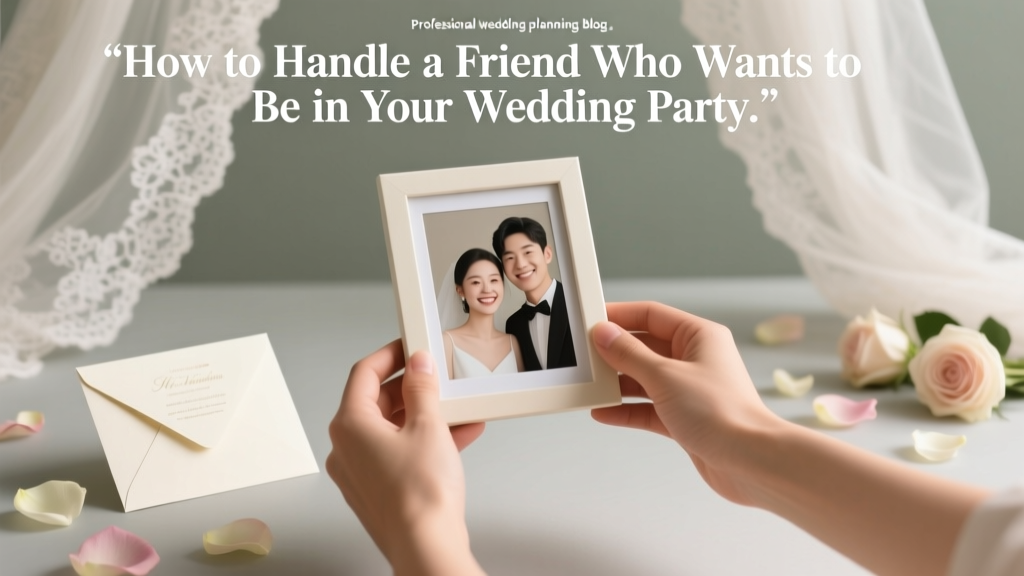
How to Handle a Friend Who Wants to Be in Your Wedding Party
How to Handle a Friend Who Wants to Be in Your Wedding Party
You’re planning your wedding, feeling good about your guest list and wedding party… and then a friend says something like, “So, am I one of your bridesmaids?” or “I can’t wait to stand up there with you.” It can catch you off guard, even if you care about them deeply. Suddenly you’re juggling feelings, etiquette, and the practical reality of how many people you can reasonably include.
This matters because wedding parties are emotionally loaded. For many people, being asked feels like a public “ranking” of friendship. For you, it’s more complicated—budgets, family expectations, group dynamics, and the kind of wedding you actually want.
Quick Answer: How do you handle a friend who wants to be in your wedding party?
Handle it early, kindly, and directly. Thank them for caring, then be honest about your plan. If you want them in the wedding party, ask them intentionally (not out of pressure). If you don’t, set a warm boundary and offer another meaningful way to be involved—like a reading, getting-ready time, or a pre-wedding event—without making promises you can’t keep.
Why friends ask—and why it can feel awkward
Most friends who hint (or outright ask) aren’t trying to be pushy. They may assume closeness equals a wedding party role, or they’re reacting to social media where wedding parties look huge and all-inclusive.
Wedding planner “Danielle Ruiz” (fictional), owner of Gather & Grace Events, puts it simply: “People aren’t asking for a job; they’re asking for reassurance that they matter. Couples do best when they answer the feeling beneath the question—while still holding their boundary.”
Also, current wedding trends create new pressures:
- Smaller wedding parties (or none at all) are common, especially with micro-weddings and budget-conscious planning.
- Mixed-gender wedding parties (“bridesmen,” “groomswomen”) are more accepted, which can expand the “who should be included?” question.
- Non-traditional roles (wedding content creator, ceremony witness, pet attendant) offer meaningful alternatives.
Scenario 1: You want them in the wedding party, but you didn’t ask yet
If you genuinely want them, the solution is easy: ask clearly and soon. You don’t need a big “proposal” moment. A sincere conversation works.
What to say:
“Honestly, I’ve been meaning to talk to you—I’d love for you to be in the wedding party. I’m sorry it’s taken me a bit to finalize everything.”
Real-world example: “Maya & Jordan” (fictional) delayed asking anyone until they confirmed venue capacity and budget. Maya’s friend blurted out, “So I’m a bridesmaid, right?” Maya replied, “I’m finalizing the lineup this week, and you’re absolutely on my list.” The friend relaxed immediately—because the uncertainty was the painful part, not the waiting.
Scenario 2: You’re keeping the wedding party small (and they didn’t make the cut)
This is the most common situation: you care about them, but your wedding party has limits. The key is to be direct without being harsh, and to avoid over-explaining.
What to say (kind, clear, and final):
“I love you, and I’m so grateful you want to be part of this. We’re keeping our wedding party really small—just siblings/just our closest lifelong friends—and we’re not adding more. I’d still really love for you to be involved, though. Would you be open to doing a reading at the ceremony or getting ready with us that morning?”
Why this works:
- It affirms the relationship.
- It states the plan as a decision, not a negotiation.
- It offers an alternative that fits modern wedding etiquette.
Wedding etiquette expert “Kendra Miles” (fictional) shares: “The mistake couples make is leaving a crack in the door—‘maybe’ or ‘we’ll see.’ Clarity is kinder than prolonged ambiguity.”
Scenario 3: Family expectations are driving your choices
Sometimes you’d include a friend, but family members expect certain cousins or siblings to be attendants. This can be especially tricky when you’re balancing cultural traditions with your own preferences.
Traditional approach: Include family first, friends second. This can reduce family conflict, but it may create friend disappointment.
Modern approach: Choose attendants based on active support in your life now, regardless of family hierarchy. This aligns with many current wedding trends, but you may need to manage family feelings.
What to say if a friend is affected by family choices:
“I wish I could include everyone, but we’re limited. Because of family expectations, our wedding party spots are committed. I’m really hoping you’ll still be close to us through all of it—can I count on you for a toast at the rehearsal dinner or to join me for a low-key bachelorette dinner?”
Scenario 4: The friend is pushy, guilt-trippy, or keeping score
If a friend is applying pressure (“After everything I’ve done for you…”) you still don’t need to argue. Stay calm, repeat your boundary, and change the subject. If the friendship is strong, it will survive a respectful “no.” If it doesn’t, that tells you something important.
What to say when they push:
“I hear you, and I care about you. Our decision is final, and I’m not changing the wedding party. I really hope you’ll still celebrate with us.”
Tip: Avoid listing “why” they weren’t chosen (timing, closeness, drama history). Even if true, it creates unnecessary hurt and future awkwardness.
Actionable tips for handling it with grace
- Decide your wedding party criteria before you respond. Size, budget, responsibilities, and whether you’re doing a traditional wedding party at all.
- Answer sooner than later. Waiting increases anxiety and fuels assumptions—especially when friends see other attendants posting online.
- Use “we” language. “We decided…” signals a united front and reduces the chance someone tries to negotiate with only one partner.
- Offer roles that feel real, not pity roles. A ceremony reading, usher, personal attendant, witness, or getting-ready invite can be meaningful if presented sincerely.
- Be consistent with your story. If you say “we’re keeping it tiny” but add three more people next week, feelings will be hurt. If plans change, address it directly.
- Separate friendship from wedding logistics. Remind them you value them outside of this one event: “I want you in my life long after the wedding.”
Meaningful alternatives to being a bridesmaid or groomsman
If you’re aiming for a smaller wedding party (a big trend right now), these options help friends feel included without adding matching outfits, bouquets, and rehearsal obligations:
- Do a reading or blessing during the ceremony
- Be an usher or help seat family
- Be a witness for the marriage license (where allowed)
- Give a toast at the rehearsal dinner or reception
- Get ready together (hair/makeup morning, coffee, playlist)
- Host or co-host a shower (only if they offer and it fits your crowd)
- Join a “house party” (a modern twist: supportive friends in coordinated colors, no formal standing at the altar)
Related questions couples often worry about
What if they ask directly, “Why didn’t you pick me?”
Keep it loving and short. “This was a really hard decision. We had to keep the group small, and it wasn’t a reflection of how much I care about you.” Then offer the alternative role if you have one.
What if I already asked someone else, and now I feel guilty?
Guilt is normal. But changing your wedding party out of guilt often creates more stress. If you’re happy with your choices, stick with them and focus on making the friend feel valued as a guest and in pre-wedding moments.
What if we’re not having a wedding party at all?
That’s increasingly common. Say it confidently: “We’re skipping a wedding party—no bridesmaids or groomsmen. We want a simple ceremony.” Then invite them to celebrate in another way (pre-wedding dinner, getting ready, ceremony reading).
What if the friend offered money or help and expects a role?
If gifts or help come with strings, it’s okay to clarify expectations: “We appreciate your help so much, and I want to be clear that wedding party roles are already decided. Your support means a lot either way.” If needed, politely decline assistance that feels transactional.
Conclusion: A calm, kind boundary protects your wedding—and your friendship
A friend wanting to be in your wedding party usually comes from love and excitement. You don’t have to reward pressure, and you don’t have to hurt someone to be honest. The best approach is simple: decide what works for your wedding, communicate it clearly, and offer heartfelt ways to stay connected. Most friendships can handle a respectful “no”—especially when it comes with warmth, clarity, and follow-through.
More Articles
 Jeff Bezos Wedding Cost: The Real Number (2026)
 Wedding Scent Ideas: 7 Ways to Create a Memorable Fragrance
 Thank Coworkers for Wedding Gifts (2026)
 20th Wedding Anniversary Meaning & Gift Ideas
 Sister's Wedding Absence: 7 Honest Truths (2026)
 Do You Need Wedding Insurance in 2026?
 Was Leighton Meester at Ed Westwick’s Wedding? (2026)
 When to Start Making Your Wedding Playlist
 Wedding Favorites Legit? 2026 Red Flags & Verified Reviews
 What Is a Wedding Welcome Party and Why You Need One