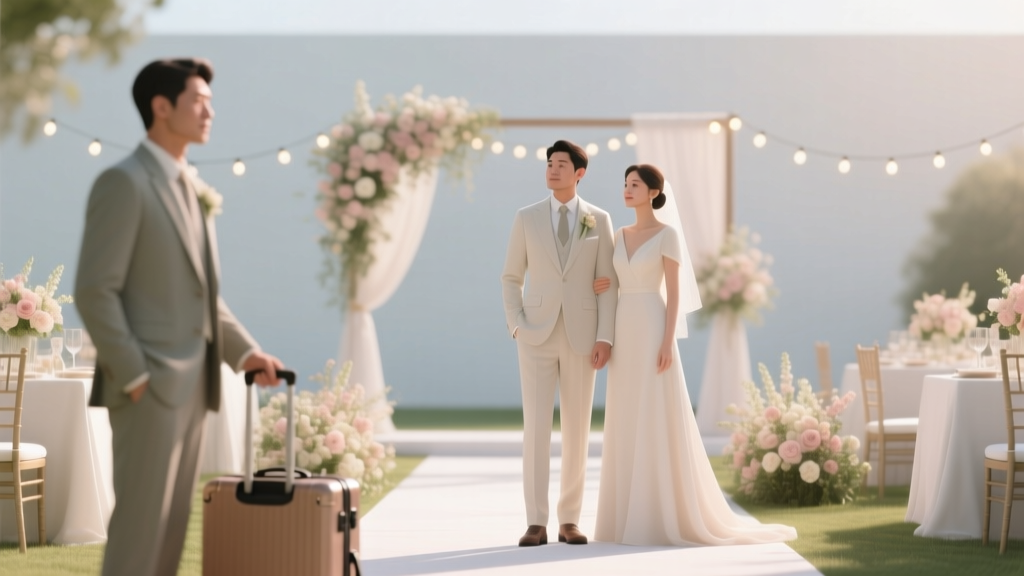
How to Handle a Wedding Guest Who Overstays Their Welcome
How to Handle a Wedding Guest Who Overstays Their Welcome
You’ve planned the timeline, you’ve paid for the bar package, and you’ve envisioned a smooth ending to your wedding day—then one guest lingers. Maybe they’re still chatting when the venue staff is stacking chairs, or they’ve migrated to the after-party even though it’s clearly winding down. A wedding guest who overstays their welcome can turn a joyful close into an awkward one, and it’s more common than couples expect.
This matters for more than comfort. Wedding venues often charge overtime fees, vendors have strict end times, and your wedding party is usually exhausted. Knowing how to handle an overstaying guest—with kindness and clarity—protects your budget, your boundaries, and your memories of the night.
The quick answer
If a wedding guest overstays their welcome, don’t handle it alone. Assign a trusted point person (planner, coordinator, maid of honor, best man, or a firm-but-friendly relative) to politely close the conversation and guide them out. Use clear, upbeat language: “We’re wrapping up now—thank you so much for coming!” If the guest is intoxicated, prioritize safety: arrange a ride, involve venue security if needed, and avoid direct confrontation.
Why this happens (and why it’s not always rude)
Most guests who linger aren’t trying to be difficult. They may be:
- Nostalgic: A relative who rarely sees the family and wants more time.
- Socially unaware: They don’t realize the venue has a hard stop.
- Over-served: Alcohol can blur cues like lights coming up or music ending.
- “Helper mode” guests: They think staying late is supportive and helpful.
- After-party confusion: With modern wedding trends (welcome parties, after-parties, next-day brunch), some guests assume the celebration is open-ended.
As wedding planner “Maya Chen of EverAfter Events” puts it: “Guests don’t see the behind-the-scenes clock. They don’t know your venue charges $500 per 15 minutes, or that your photographer has a hard out. Your job isn’t to teach etiquette—it’s to close the night gracefully.”
Modern etiquette: kind, direct, and designed ahead of time
Traditional etiquette leaned on subtle hints: dimming the lights, ending the music, the couple making a grand exit. Modern weddings are more flexible—micro-weddings, restaurant receptions, backyard weddings, multi-event weekends—and that flexibility can create blurry endings. The most effective approach today is simple: plan the ending like you plan the ceremony.
Real-world example: “After our last dance, my college roommate kept telling stories to the bartender like it was a reunion,” says “Leah,” a recent bride. “Our coordinator stepped in, thanked him warmly, and walked him toward the exit while I was saying goodbye to my grandparents. It saved me from feeling like the ‘bad guy.’”
Scenario 1: The guest won’t leave the reception (but isn’t causing trouble)
Best approach: A friendly wrap-up message plus a gentle physical cue.
- Use the timeline: Have the DJ announce, “Thank you for celebrating—this concludes our reception!”
- Turn on the lights: Many venues do this automatically; it’s the universal closing signal.
- Deploy the point person: “We’re doing our final goodbyes now—can I walk you out?”
What to say (scripts that work):
- “We’re wrapping up and the venue needs us out—thank you so much for being here.”
- “We’re heading out for the night. Let me help you grab your coat.”
- “Last call is done and staff is closing—can I call you a ride?”
Scenario 2: The guest follows you to the after-party and overstays there
After-parties are a huge trend right now—hotel bars, rented suites, late-night pizza stops—and they’re often less structured than the reception. That makes them prime territory for one person to camp out long after everyone else is ready to sleep.
Modern solution: Make the after-party “opt-in” with clear boundaries.
- Specify the vibe: “Join us for a casual after-party at the lobby bar from 10:30–12:00.”
- End it with intention: A quick toast at 11:45 signals the close.
- Choose a location with natural stopping points: A bar with closing time is easier than a suite with no end cue.
“We added an end time to our after-party details card, and it helped so much,” shares “Jordan,” a groom. “When it hit midnight, people left naturally. The one friend who wanted to keep going was gently redirected to his own plans.”
Scenario 3: The guest is intoxicated or disruptive
This is where etiquette shifts to safety. If someone has had too much to drink, don’t rely on subtlety or social pressure.
What to do:
- Involve professionals: Ask your planner, venue manager, or security to assist. Bartenders are trained for this, too.
- Cut off alcohol appropriately: Let the venue handle it—avoid a direct confrontation from you.
- Arrange safe transportation: Call a rideshare, a sober friend, or the hotel shuttle.
- Protect your space: If they won’t leave, it’s okay to escalate to venue security. You are not obligated to manage unsafe behavior personally.
“Couples worry it’ll look ‘mean,’” says “Daniel Ruiz, venue manager at The Hawthorne House.” “But if someone refuses to leave at the end of contracted time, that becomes a venue issue. We’d rather step in early than have the couple stressed or the staff stuck late.”
Traditional vs. modern approaches (and when each works)
Traditional: The couple does a formal send-off (sparklers, bubbles, last dance), which signals a definitive ending. This works well for ballroom and banquet hall weddings.
Modern: The couple may skip a grand exit and quietly transition to an after-party or private last moment. That’s lovely, but it can confuse guests. If your wedding leans modern, add structure through signage, announcements, and clear end times on the wedding website.
Tip: If you’re doing a “soft exit,” ask your DJ or coordinator to make a closing announcement so guests don’t interpret your disappearance as an invitation to keep hanging out.
Actionable tips to prevent an overstaying guest
- Build a “closing plan”: Decide who will cue the end, who handles lingering guests, and where you’ll be.
- Put end times in writing: On your wedding website FAQs: “Reception ends at 10:00 PM. After-party: 10:30–12:00.”
- Use signage: A small sign near the exit: “Thank you for celebrating with us! Reception concludes at 10:00 PM.”
- Create a buffer: If your venue ends at 10, schedule music to end at 9:45 so goodbyes don’t push you into overtime fees.
- Choose a “boundary person”: Someone calm, firm, and not easily guilted—often an aunt, a sibling, or your planner.
- Prep vendors: Let your coordinator know if you’re worried about a particular guest. This is more common than you think, and pros can manage it discreetly.
Related questions couples often ask
What if the guest is a close family member or someone who helped pay?
Keep it respectful, but keep the boundary. Use “venue rules” as the neutral reason: “We have to be out by 10 because of the contract.” If it’s a parent, designate another family member they’ll listen to—an uncle, a sibling, or the planner—so it doesn’t feel like a power struggle.
Should we confront them later?
If it was minor (just lingering), no. If it caused real issues (overtime charges, staff conflict, safety concerns), a calm follow-up can be appropriate. Keep it factual: “We were charged extra because the venue couldn’t close on time. In the future, we need you to respect end times.” If alcohol was involved, wait a few days.
What if we’re having a backyard wedding and there’s no “venue closing time”?
Backyard weddings are charming, but they can feel endless. Set a clear end time and communicate it. Plan a “closing ritual”: a final toast, a last song, or a late-night snack sendoff. Then have a small crew ready to start cleanup signals—turning on lights, putting away rentals, and packing leftover cake.
What if guests move the party to the hotel lobby or someone’s room?
You’re not responsible for everyone’s post-wedding choices. If you’re done, you’re done. A simple line works: “We’re turning in—thank you for celebrating!” If it’s causing issues for the hotel, let hotel staff handle it.
Is it rude to ask someone to leave?
It’s not rude to end an event at the agreed-upon time. What feels rude is making it personal. Focus on the close of the night, not their behavior: “We’re wrapping up,” not “You need to go.”
Conclusion: a graceful ending is part of good hosting
Handling a wedding guest who overstays their welcome doesn’t require drama or a confrontation. With a clear end time, a designated point person, and a few polite phrases ready, you can close the night warmly and protect your budget, your vendors, and your peace. The goal isn’t to police your guests—it’s to let your wedding day end the way it began: intentional, joyful, and fully yours.
More Articles
 OxiClean Wedding Dress Cleaning: Safe or Risky? (2026)
 Wedding Wishes: 7 Culturally Smart, Emotional Phrases (2026)
 Black to a Wedding? Modern Etiquette (2026)
 Is Wedding Pie Indica or Sativa? (2026)
 Men's Wedding Ring Hand: Global Customs (2026)
 What Is 10th Wedding Anniversary? (2026)
 A Different World Wedding: Watch Whitley & Dwayne (2026)
 Wedding Anniversary Message to My Husband (2026)
 When Do You Need to Submit Your Song List to the DJ
 Wedding Ring Hand: Left vs. Right by Country & Religion