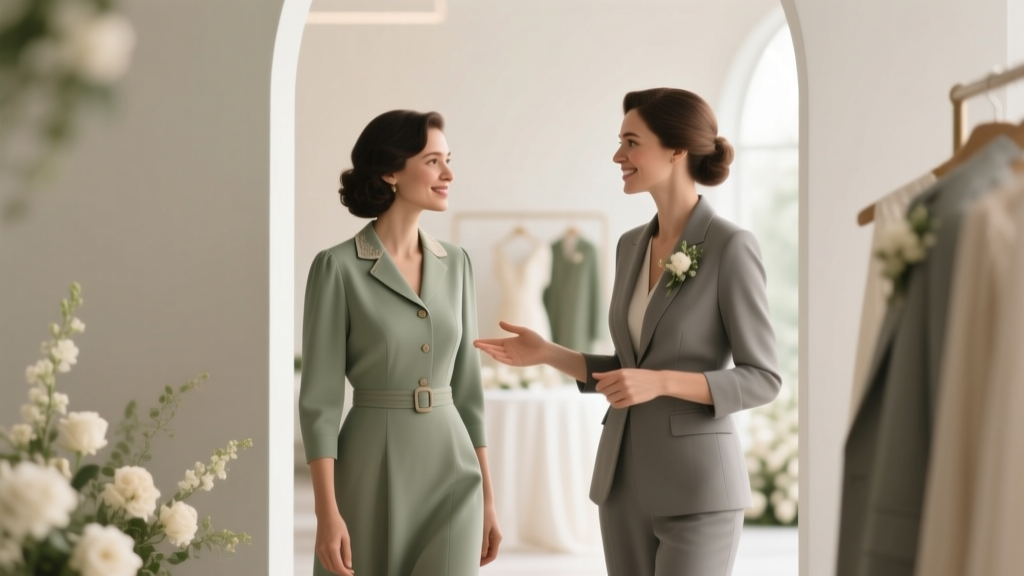
Wedding Party Outfit Budget Dilemma: How to Handle It
How to Handle a Wedding Party Member Who Cannot Afford the Outfit
Few wedding planning moments feel as awkward as realizing someone you love can’t afford what you’ve asked them to wear. You’re trying to create a cohesive look for photos, they’re trying to show up for you—and suddenly money is sitting in the middle of the friendship.
The good news: this is common, it’s fixable, and handling it with care can actually strengthen your relationship. Modern wedding etiquette has shifted toward flexibility and inclusivity, and couples have more options than ever to keep the wedding party looking great without stressing anyone’s budget.
Q: What should we do if a wedding party member can’t afford the outfit?
A: Make it safe for them to be honest, then offer choices—lower-cost options, rentals, or financial help—without shame. Your goal is to keep them included while protecting their dignity. Start with a private conversation, confirm what’s realistically affordable, and adjust the outfit plan or cover the difference if you can. If you can’t, choose a more budget-friendly direction for everyone.
Q: How do we bring it up without making it uncomfortable?
Approach it like you would any sensitive topic: privately, kindly, and with an assumption of good intentions.
You can say something simple like:
- “I want being in the wedding to feel fun, not stressful. How are you feeling about the outfit cost?”
- “No pressure to answer on the spot—what budget feels comfortable for you?”
- “If this price point doesn’t work, we can adjust. I’d rather have you with us than stick to a specific dress.”
Wedding planner Marisa Klein of Harbor & Vine Events puts it this way: Couples worry they’re being rude by asking about budget, but what feels rude to attendants is being expected to quietly struggle. A kind, direct check-in is often a relief.
Q: Who is “supposed” to pay for wedding party outfits?
Traditionally in many regions, attendants pay for their own wedding party attire. But tradition is only one lens—today’s weddings include a wider range of ages, incomes, and life circumstances. Between inflation, travel-heavy weddings, and multiple pre-wedding events (shower, bachelor/ette trips, rehearsal dinner), couples are increasingly sharing costs or creating affordable outfit guidelines.
Modern etiquette is less about “supposed to” and more about clarity and fairness. If you want a specific outfit with a specific price tag, it’s considerate to either:
- Keep it within a widely accessible budget, or
- Offer to subsidize it (partially or fully), or
- Choose a flexible approach (color palette, mix-and-match) that lets each person shop within their budget.
Q: What are our best options (with real-world examples)?
Option 1: Switch to a flexible “color and vibe” dress code
This is one of the biggest current wedding trends: instead of identical outfits, couples pick a palette (like “dusty blue” or “black cocktail”) and let attendants choose something they already own or can rewear.
Example: Jenna and Mark wanted sage green bridesmaid dresses, but one bridesmaid admitted she couldn’t swing $240 plus alterations. Jenna changed the plan: any “sage-to-olive” floor-length dress, any fabric. Two attendants found dresses on sale; one re-wore a gown from another wedding; everyone still looked cohesive in photos.
Photographer Luis Ortega shares: Uniformity isn’t what makes photos beautiful. Confidence does. When people feel comfortable, it shows.
Option 2: Use rentals (especially for suits and tuxes)
Rental programs have become easier and more size-inclusive, and they can reduce upfront cost. This works especially well for groomsmen attire. For bridesmaid dresses, rental options exist too, though fit and availability can vary.
Tip: If you’re considering rentals, order early, understand the return timeline, and budget for backup items like shoes or shirts.
Option 3: Cover the outfit (or the gap) discreetly
If you have room in your wedding budget, covering the outfit can be a kind, straightforward solution—especially if you’re requesting a very specific look. You can pay the retailer directly, buy the outfit and gift it, or offer a stipend.
How to do it without embarrassment:
- Frame it as part of your wedding budget: “We’ve decided to cover wedding party outfits.”
- Keep it consistent when possible (even partial support for everyone can feel fair).
- Don’t require receipts or explanations. Treat it like a gift.
Example: “We’re doing matching velvet dresses, and we know that’s a splurge. We’re covering dresses and alterations—your job is just to show up.” That’s clear, generous, and removes stress.
Option 4: Choose a lower-cost retailer or secondhand route
Another modern approach: pick a brand with a wide price range, frequent sales, or a resale ecosystem. Many attendants find great options through secondhand sites, local consignment, or community wedding groups.
Tip: If you’re set on a specific color, prioritize a retailer with consistent dye lots or a broad selection. If color matching is tricky, choose a “family” of tones rather than one exact shade.
Option 5: Simplify the requirements
If the outfit cost is driven by extras—specific shoes, jewelry, hair and makeup, shapewear, special undergarments—simplifying can make a big difference.
Consider swapping:
- “Nude heels from this brand” → “Any neutral shoe you can walk in”
- “Professional hair and makeup required” → “Optional services”
- “Exact matching ties” → “Any black tie” (or provide the ties as a gift)
Q: What if we already picked the outfits and someone speaks up late?
This happens a lot—people try to make it work, then the credit card bill hits. Respond with grace, not frustration.
- Pause and get specifics. Is the issue the dress cost, alterations, travel, or all of it?
- Look for quick fixes. Can another attendant share a tailor recommendation to reduce alteration costs? Can you switch to a simpler shoe requirement?
- Offer a dignified “out.” If there’s no solution, give them the option to step down without guilt: “I’d rather protect our friendship than force this.”
As etiquette consultant Dana Cho explains: The kindest couples give people room to make the choice that’s right for their finances. A wedding invitation should never feel like a bill.
Q: What if we can’t afford to help—and changing the look affects the whole wedding party?
If your budget is tight too, you still have options. The most effective approach is to set a cost ceiling and design around it. For example:
- Choose any black suit with a white shirt (many already own this).
- Pick a palette and let attendants select dresses under a set amount.
- Use accessories to tie everyone together (matching bouquets, ties, pocket squares, wraps).
Traditional etiquette might prioritize identical outfits, but modern weddings prioritize the people. A slightly less uniform lineup is rarely noticed by guests—and it often photographs beautifully.
Q: How do we keep things “fair” if we help one person?
This is a common concern, especially with mixed-income friend groups. Fair doesn’t always mean identical; it means considerate and transparent.
Practical ways to keep it fair:
- Offer the same stipend to everyone. Even a modest amount can help.
- Cover one shared item for all attendants. For example, you buy matching ties, jewelry, or getting-ready robes (only if they’re actually wanted and usable).
- Keep support discreet. If you cover the cost for one person, you don’t need to announce it.
Related questions couples often ask
What if they already bought the outfit and now regret it?
If it’s within the return window, help them explore returns or exchanges. If not, see whether the outfit can be altered, resold, or reused. If you requested an expensive item, consider offering to reimburse part of it as a goodwill gesture.
What if they can afford it but disagree with the style?
Treat this separately from cost. If your choice is genuinely uncomfortable or not size-inclusive, consider a mix-and-match approach. If it’s simply preference, you can empathize while holding the line—just avoid forcing anyone into something that feels exposing or unsafe.
What if multiple attendants are struggling financially?
That’s a signal to reset the plan. The most sustainable fix is a budget-forward dress code, rentals, or covering outfits as part of your wedding expenses.
What if a parent or family member offers to pay—should we accept?
If the offer comes with no strings and it solves a real problem, it can be a win. Keep communication clear: who is paying, what’s covered (outfit, alterations, accessories), and how the payment will happen.
Actionable tips to prevent this from happening again
- Talk budget early. Before picking outfits, ask for a comfortable range. You’ll get more honest answers when it’s hypothetical.
- Include the “hidden” costs. Mention alterations, shoes, undergarments, and hair/makeup so no one is surprised.
- Share links with varied price points. Give three to five options that meet your color and formality goals.
- Set deadlines with flexibility. “Order by X date” helps, but build in time for shipping delays and exchanges.
- Normalize speaking up. A simple line in your wedding party email—“Please tell me privately if the cost is stressful”—goes a long way.
Conclusion
If a wedding party member can’t afford the outfit, the most gracious move is to protect the relationship first and adjust the plan second. A calm, private conversation and a few flexible options—rentals, mix-and-match outfits, a stipend, or simplified requirements—can keep your wedding party intact and your celebration joyful. People won’t remember whether every hemline matched; they’ll remember how you made them feel while standing beside you.
More Articles
 Who Pays for the Wedding? Modern Etiquette Guide
 Strapless Wedding Dresses: Comfort Tips & Truth (2026)
 Best Wishes Usage: When & Why + 7 Better Alternatives
 How to Respond to Wedding Invitation M (2026)
 Wedding Dress Fitting Fees: Truth & How to Avoid Them
 Sydney Sweeney Wedding Cancellation Rumors (2026)
 How to Handle a Wedding Guest Who Refuses to Leave
 Brittany & Jax Wedding Cost: $1.2M in 2026
 Do Lefties Wear Wedding Rings on Right Hand?
 Engagement Ring After Wedding: Truth & Tips (2026)