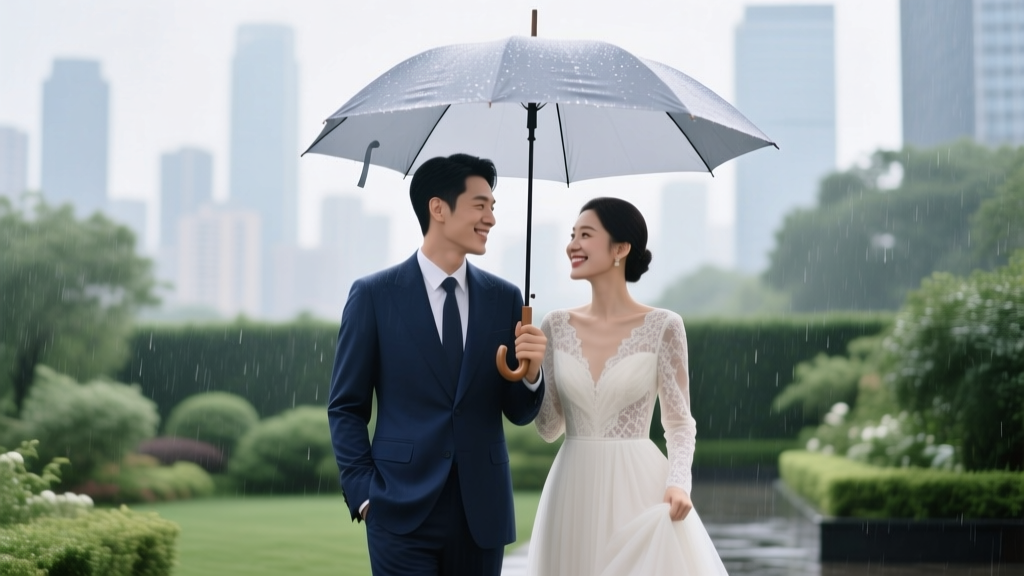
How to Handle Bad Weather on Your Wedding Day
How to Handle Bad Weather on Your Wedding Day
Q: What if the weather is bad on my wedding day?
If you’re planning any part of your wedding outdoors—ceremony, cocktail hour, portraits, even just a sparkler exit—bad weather can feel like the one thing you can’t control. And because it’s your wedding day, it’s easy for a forecast to spiral into stress.
The good news: weather is a common wedding-day curveball, and you can absolutely plan for it without losing the vibe you’ve worked so hard to create. Couples handle rain, wind, heat waves, and cold snaps every weekend—beautifully.
Direct answer: The best way to handle bad weather on your wedding day is to make a clear “Plan B” early (with a firm decision time), communicate it to your vendor team, and set guest expectations with simple, calm messaging. Then focus on comfort and logistics—coverage, flooring, heat/cool options, and timing—so the day still feels intentional, not improvised.
Q: When should we decide to switch to Plan B?
A practical rule: set a decision time that works for your venue and rental team, not just your nerves. For many weddings, the call needs to be made 12–24 hours ahead if you’re moving chairs, bringing in tents, or changing layouts. For simpler flips (like moving a ceremony indoors with minimal setup), it might be 4–6 hours ahead.
“I always recommend a weather decision deadline in writing,” says Marisol Grant, wedding planner and owner of Rowan & Pine Events. “If the couple doesn’t have to renegotiate the plan in the middle of hair and makeup, they’re calmer—and the whole vendor team performs better.”
Real-world example: Jess and Amir planned a garden ceremony with an indoor ballroom backup. Their planner set a 10 a.m. decision time for a 4 p.m. ceremony. At 9:30 a.m., radar showed scattered storms. They moved indoors, kept the original floral arch, and used candles and aisle arrangements to make the ballroom feel “ceremony-ready.” Jess later said, “Once we committed, it was actually fun again. The worst part was the maybe.”
Q: Do we need a tent, or is an indoor backup enough?
It depends on your venue style and what “backup” really means.
- Indoor backup (common for venues with a dedicated rain plan): Easiest and usually the most polished. Ask where the ceremony would go, what it looks like, and whether it affects guest flow.
- Tent backup (popular for private property weddings and estates): Great for keeping an outdoor feel, but weather-safe tents require planning. A “just in case” tent isn’t always enough if there’s wind, heavy rain, or extreme heat.
Modern trend: Couples are increasingly booking venues that offer a built-in Plan B that still looks intentional (think: covered verandas, greenhouse spaces, stylish pavilions). This is partly because weather patterns have gotten more unpredictable, and couples want peace of mind.
“A tent is not one item—it’s a system,” explains Drew Calder, rental specialist at Northside Event Co. “If there’s rain, you may need sidewalls, flooring, weighted anchors, and a plan for mud. If it’s hot, you may need fans. If it’s cold, heaters and propane.”
Q: What’s the etiquette around moving things indoors?
You don’t owe anyone an apology for protecting your guests and your investment. Modern wedding etiquette is simple: prioritize comfort and safety, then communicate clearly.
If you need to change plans, keep messaging short and confident:
- Wedding website banner: “Weather update: Our ceremony will be indoors at 4:00 p.m. Please arrive by 3:30 p.m.”
- Text to wedding party/immediate family: “We’re moving the ceremony inside. Same time. Please use the main entrance.”
- Signage at the venue: “Ceremony indoors →” with an arrow (simple beats pretty in a storm).
Traditional vs. modern perspective: Traditionally, couples might try to “tough it out” to keep the original plan. Today, many couples choose a proactive switch because guest experience is a top priority—especially with older relatives, kids, and anyone traveling in dress shoes.
Q: What if the weather is extreme—heat, cold, wind, or smoke?
Rain gets all the attention, but other weather can be tougher. Here are scenario-based tips that work in real weddings:
Heat wave
- Move the ceremony time later if possible (even 30–60 minutes can help).
- Provide water at arrival and at the ceremony seating area.
- Skip “full sun” seating; use shade, umbrellas, or a covered space.
- Adjust attire expectations (remove “black tie” language if it’s outdoors midday).
“The best heat plan is hydration plus shade,” says Talia Nguyen, venue manager at Willow Terrace. “If guests are squinting and sweating before vows, everything feels harder than it needs to.”
Cold snap
- Heaters (confirm placement and propane refills).
- Cozy add-ons like shawls, pashminas, or a basket of blankets (a popular wedding trend that also photographs well).
- Shorten the ceremony slightly—guests remember the emotion, not the extra reading.
Wind
- Skip tall, lightweight décor that can tip over (welcome signs are frequent casualties).
- Use weighted vases and low centerpieces.
- Mic your officiant and consider wind guards for microphones.
Wildfire smoke / air quality issues
- Move events indoors with filtered air if possible.
- Offer masks discreetly in restrooms or a basket station.
- Shorten outdoor photo time and prioritize essential portraits.
Q: How do we keep the day from feeling like a “backup plan”?
This is the emotional core of the question. The key is to make Plan B feel designed, not default.
- Ask your florist for a “portable statement piece.” An arch arrangement, ground floral installation, or two large ceremony markers can move indoors easily.
- Plan indoor photo spots ahead of time. Walk your venue and pick 2–3 locations with good light (lobby windows, a covered porch, a staircase, a stylish bar area).
- Upgrade lighting. Candles, bistro lights, uplighting, and lanterns can make an indoor switch feel romantic, not cramped.
- Build a weather buffer into your timeline. Add 15–20 minutes for transitions if you’re flipping spaces.
Real couple experience: “It poured during cocktail hour,” says Priya, who married in a coastal town known for surprise storms. “Our planner moved drinks to the covered veranda, the band played acoustic under the awning, and it felt like a chic resort moment. Guests still talk about it like it was on purpose.”
Q: What should we confirm with vendors ahead of time?
Bad weather reveals gaps in communication. A quick vendor checklist can prevent last-minute scrambling:
- Venue: Where is the indoor ceremony option? Who moves chairs? Is there a fee for flipping spaces? What’s the rain plan for guest arrivals and parking?
- Rentals: Tent type, sidewalls, flooring, heater/fan options, delivery windows, wind ratings, and who decides on add-ons.
- Photography/video: Indoor portrait locations, clear umbrellas, lighting needs, and how weather affects timelines.
- Catering/bar: Can service move inside quickly? Are there weather limits for outdoor cooking or open flames?
- DJ/band: Covered power, equipment protection, and whether they can relocate setups.
Helpful keyword note for your planning spreadsheet: label this section wedding rain plan or outdoor wedding backup plan so it’s easy to find when you’re juggling details.
Q: What are easy, practical items to keep on hand?
- Clear umbrellas (they look great in photos and don’t hide faces).
- Towels or blotting cloths for seats and quick touch-ups.
- Heel protectors for grass or soft ground.
- Bug spray and sunscreen (weather shifts often bring pests and surprise sun).
- A small “weather kit”: ponchos, hair spray, bobby pins, fashion tape, stain remover, band-aids.
Related questions couples ask (and honest answers)
Q: Should we tell guests to bring jackets or umbrellas?
Yes—briefly. Add a line to your wedding website or a day-before text: “Forecast calls for cooler temps—bring a light jacket.” Guests appreciate the heads-up, and it’s considered thoughtful, not fussy.
Q: Can we delay the ceremony if it’s raining?
Sometimes, but delays can domino into catering timelines, venue curfews, and photographer coverage. If you want the option, discuss it in advance and decide on a maximum delay (often 15–30 minutes).
Q: What if the weather ruins my hair or dress?
Plan a touch-up moment. Ask your stylist about humidity-resistant products, and keep a blotting cloth and mini hairspray. For dresses, bustling earlier, carrying the train outside, and having a backup pair of shoes can save the look and your mood.
Q: What if guests complain?
Most guests don’t complain when they’re comfortable and informed. If someone does, a simple: “We’re so glad you’re here—thank you for rolling with it,” is enough. Your energy sets the tone.
Conclusion
Bad weather doesn’t have to mean a bad wedding day. A solid Plan B, a clear decision time, and a few comfort-focused choices are usually all it takes to protect the experience—and sometimes, the unexpected weather becomes the most memorable part. You’re not aiming for perfect skies; you’re creating a day where people feel cared for and you get to marry your person, no matter what’s happening outside.
More Articles
 Wedding Ring Hand: Left or Right in 2026?
 Was Jared Goff at Paige Drummond's Wedding?
 Super Bowl LVIII Wedding: Was It Real?
 Bezos Wedding 2026: Did His Kids Attend?
 Are Wedding Registries Free? (2026)
 Did Charlie Kirk Attend Candace Owens Wedding?
 Wedding Shower Purpose: Community, Culture & Support
 Should I Go to a Wedding? A Real-World Decision Guide
 Wedding Ring Hand Tradition by Country (2026)
 Black Dress to Wedding: Bad Luck? (2026)