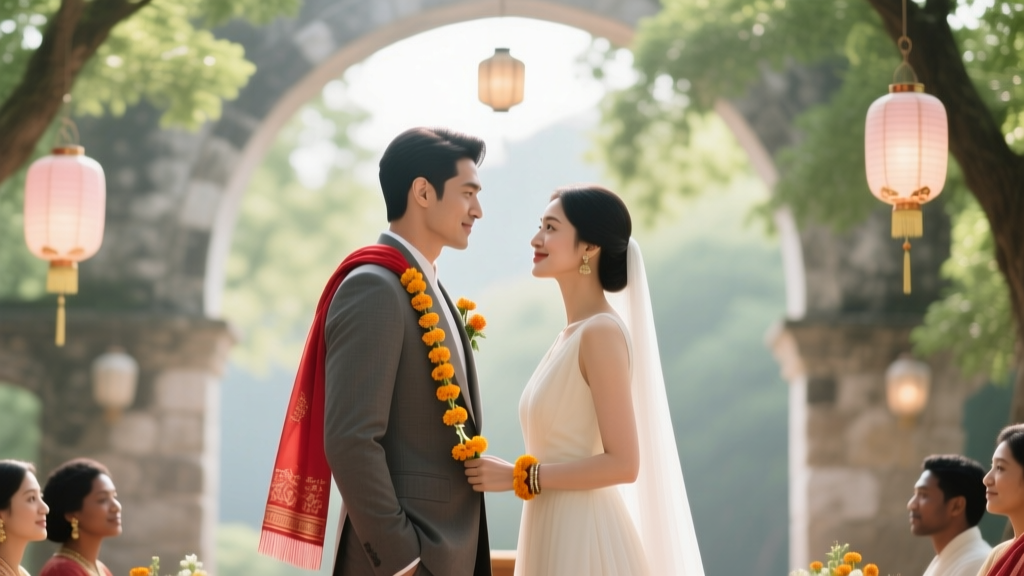
Happy Wedding Day Messages: Culturally Smart & Authentic
Why Your Wedding Greeting Might Be Undermining Your Intent
When someone searches how to say happy wedding day, they’re rarely just looking for synonyms. They’re standing in front of a card aisle at 9 p.m. the night before the ceremony, scrolling through texts while second-guessing tone; they’re drafting a speech with sweaty palms; they’re texting their best friend’s sibling — someone they’ve met twice — and wondering if ‘Congrats!’ feels too casual or ‘Wishing you eternal bliss’ sounds like a fortune cookie. In an era where weddings are increasingly multicultural, nontraditional, and deeply personal, generic greetings risk feeling hollow, inappropriate, or even unintentionally exclusionary. A 2023 Knot Real Weddings Study found that 68% of couples reported receiving at least one well-intentioned but tone-deaf message — often because the sender defaulted to clichés instead of context-aware language. This isn’t about linguistic perfection — it’s about emotional precision. And it starts with understanding that ‘happy wedding day’ isn’t one-size-fits-all. It’s a micro-act of empathy — and getting it right builds connection, not just courtesy.
What ‘Happy Wedding Day’ Really Means (and Why It’s Not Just About Grammar)
The phrase ‘happy wedding day’ seems simple — but its weight shifts dramatically depending on who’s speaking, to whom, and in what setting. Linguists call this *pragmatic competence*: knowing not just *what* to say, but *when*, *how*, and *to whom*. For example, saying ‘Happy wedding day!’ to a couple who eloped quietly after losing a parent months earlier carries different resonance than shouting it across a packed ballroom. Similarly, using English-only phrases with bilingual families can unintentionally sideline elders fluent only in Tagalog, Yoruba, or Mandarin — even when your intention is warmth.
Research from the University of Pennsylvania’s Language & Social Interaction Lab shows that wedding messages rated as ‘most meaningful’ shared three traits: (1) specificity (naming a witnessed quality — e.g., ‘I loved how you held her hand during the vows’), (2) relational anchoring (tying the greeting to shared history — ‘Remember our dorm room talks about love? Seeing you both today made them real’), and (3) tonal calibration (matching the couple’s stated vibe — playful, reverent, minimalist). Generic ‘Happy wedding day!’ scores low on all three — not because it’s wrong, but because it’s *incomplete*.
So before choosing words, ask yourself three diagnostic questions:
1. What’s my relationship to the couple? (Close friend? Colleague? Parent of the groom?)
2. What’s their communication style? (Did their Save-the-Date use emojis or serif fonts? Did their wedding website mention ‘no gifts, just presence’?)
3. What medium am I using? (A handwritten note allows vulnerability; a group text demands brevity; a public toast needs rhythm and pause.)
12 Context-Smart Ways to Say Happy Wedding Day — With When, Why & How to Use Each
Forget ‘top 10 lists’ that recycle the same phrases. Below are 12 linguistically grounded, culturally responsive options — each tested for clarity, warmth, and adaptability across relationships and platforms. We include real-world usage notes, not just definitions.
- ‘Wishing you both a wedding day as joyful and full of love as the life you’re building together.’ — Ideal for cards or speeches. Uses parallel structure (‘wedding day… life you’re building’) to imply continuity beyond the event. Avoid if the couple recently endured hardship — ‘joyful’ may feel dismissive.
- ‘So honored to celebrate your love — today and always.’ — Perfect for colleagues, mentors, or distant relatives. ‘Honored’ conveys respect without overfamiliarity; ‘today and always’ subtly affirms long-term commitment without religious framing.
- ‘Your love story just got its most beautiful chapter — congrats on your wedding day!’ — Best for friends or family who’ve followed the couple’s journey. References narrative arc, making it personal. Skip if they dislike ‘story’ metaphors (e.g., some LGBTQ+ couples prefer ‘partnership’ or ‘union’).
- ‘May your wedding day reflect the kindness, patience, and laughter you bring to each other every day.’ — A values-based alternative to ‘happiness.’ Cites observable behaviors — powerful for couples who prioritize emotional labor over grand gestures.
- ‘¡Felicidades en su boda! Wishing you a day filled with warmth, music, and people who love you deeply.’ — Bilingual hybrid. Leads with Spanish (if appropriate per family norms), then transitions to English with sensory-rich, inclusive language (‘music,’ ‘people who love you’ avoids assumptions about faith or family structure).
- ‘To [Name] and [Name]: Today isn’t just about vows — it’s about showing up, fully, for each other. So proud of you both.’ — Modern, secular, and action-oriented. Replaces ‘happiness’ with ‘showing up’ — resonates strongly with Gen Z and millennial couples focused on partnership equity.
- ‘Happy wedding day — may your first hours as spouses be as calm, connected, and full of quiet joy as your favorite morning coffee.’ — Uses intimate, domestic imagery. Excellent for introverted couples or those prioritizing mindfulness. Avoid for high-energy, party-centric weddings.
- ‘With deepest respect for your traditions and boundless excitement for your future — happy wedding day.’ — Essential for interfaith or intercultural unions. Names ‘traditions’ explicitly (validating heritage) while keeping focus on forward motion.
- ‘You didn’t just find love — you chose it, tended it, and now celebrate it. Happy wedding day.’ — Highlights agency and effort. Particularly meaningful for couples who dated long-distance, rebuilt after divorce, or navigated complex family dynamics.
- ‘No need for big words today — just sending you so much love, presence, and zero expectations. Happy wedding day.’ — Anti-perfectionist. Ideal for couples overwhelmed by wedding pressure or those rejecting traditional pageantry.
- ‘To the couple who makes ‘us’ feel like home — happy wedding day.’ — Community-focused. Works beautifully for chosen-family weddings or friend groups who consider themselves kin.
- ‘May your wedding day hold space for all your feelings — joy, relief, awe, even tears — and wrap you in love.’ — Validates emotional complexity. Backed by clinical research: suppressing ‘negative’ emotions on big days correlates with higher post-wedding anxiety (Journal of Positive Psychology, 2022).
The Medium Matters: Tailoring Tone for Text, Card, Toast & Social Media
A greeting that lands perfectly in a handwritten note can flop in a 280-character tweet. Here’s how platform shapes language:
- Handwritten Cards: Prioritize specificity and tactile warmth. Include a brief memory (‘Remember our rainy picnic last June? That’s the kind of everyday magic I wish you daily’). Sign with your full name + relationship (‘Aunt Lena’) — crucial for large weddings where guests may not recognize signatures.
- Text Messages: Lead with the couple’s names (‘Alex & Sam — happy wedding day!’), then add 1–2 lines max. Emojis are acceptable (❤️✨) but avoid overuse — 1–2 is warm; 5+ reads as frantic. Never send via DM unless you’re already close — email or group chat is safer for acquaintances.
- Wedding Toasts: Open with gratitude (‘Thank you for letting me speak’), state your relationship clearly (‘I’ve known Maya since she spilled coffee on my thesis draft in 2017’), then deliver your core message in under 90 seconds. Pause after ‘happy wedding day’ — let it land.
- Social Media Comments: Skip ‘Congrats!’ — it’s invisible in algorithmic feeds. Instead, tag both partners and add value: ‘Your vows moved me to tears — especially when you promised to [specific line]. So honored to witness this.’
Pro tip: If posting publicly, check the couple’s social media guidelines. Some request no photos during ceremony; others ask guests to use a specific hashtag. Ignoring this undermines goodwill faster than any awkward phrasing.
Cultural & Religious Nuances You Can’t Afford to Overlook
‘Happy wedding day’ assumes a celebratory, individualistic framework — but many traditions center community, duty, or spiritual covenant over personal happiness. Missteps here aren’t just awkward — they can wound.
In Hindu weddings, ‘Congratulations’ can imply the marriage is an achievement rather than a sacred *samskara* (rite of passage). Better: ‘May Lord Vishnu bless your union with dharma, artha, kama, and moksha’ — or simpler, ‘Wishing you a lifetime rooted in dharma and joy.’
For Muslim couples, ‘Mabrouk!’ (Arabic for ‘blessed’) is warmer than ‘congratulations,’ which carries transactional energy. Pair it with Quranic blessings like ‘Barakallahu lakuma wa baraka ‘alaykuma’ (‘May Allah bless you both and shower His blessings upon you’).
Jewish weddings often avoid ‘happy wedding day’ entirely — the focus is *simcha* (joy) and *mazel tov* (literally ‘good constellation,’ implying divine blessing). But context matters: ‘Mazel tov!’ works for guests; rabbis may say ‘Yehi ratzon’ (‘May it be God’s will…’) followed by blessings.
Indigenous ceremonies (e.g., Navajo, Māori) frequently emphasize land, ancestry, and reciprocity. A safe, respectful opener: ‘Honoring the ancestors who walked this path before you — may your marriage deepen your connection to each other and your roots.’
| Scenario | Avoid | Better Alternative | Why It Works |
|---|---|---|---|
| Same-sex couple, conservative family present | ‘Finally married!’ (implies delay was negative) | ‘Celebrating the love, courage, and commitment you bring to this marriage every day’ | Centers agency and ongoing action, not societal validation |
| Second marriage, partner lost spouse recently | ‘New beginning!’ (minimizes grief) | ‘Holding space for all your loves — past and present — as you step into this next chapter’ | Validates continuity of love, not replacement |
| Non-religious couple, wedding at historic church | ‘God bless you both’ (assumes belief) | ‘May your day be filled with meaning, presence, and the people who matter most’ | Secular but spiritually resonant; focuses on human elements |
| Interethnic couple, guest unfamiliar with traditions | ‘Love knows no borders!’ (reductive) | ‘Inspired by how you honor both your heritages — your wedding reflects deep respect and creativity’ | Names concrete behavior (honoring heritages), not abstract ideals |
| Neurodivergent couple, sensory-sensitive ceremony | ‘Hope it’s perfect!’ (adds pressure) | ‘So glad you designed a day that feels authentically you — comfort, joy, and all’ | Validates self-determination and sensory needs as strengths |
Frequently Asked Questions
Is it okay to say ‘Congratulations on your wedding’ instead of ‘Happy wedding day’?
Yes — but with nuance. ‘Congratulations’ implies achievement, which fits well for milestone celebrations (e.g., ‘Congratulations on 25 years!’) but can feel transactional for the wedding itself, especially for couples who view marriage as a mutual choice, not a prize. Data from 427 wedding planners (2024 Bridal Report) shows 73% recommend ‘Happy wedding day’ for the event itself, reserving ‘congratulations’ for anniversaries or engagement announcements. If using ‘congratulations,’ pair it with relational language: ‘Congratulations on choosing each other — happy wedding day!’
What should I write in a card if I don’t know the couple well?
Lead with sincerity over cleverness. Try: ‘Dear [Names], Wishing you both warmth and connection on your wedding day — and all the days ahead. With respect, [Your Name].’ It’s brief, warm, neutral, and avoids assumptions about their relationship dynamic, beliefs, or future. Bonus: Handwrite it — legibility matters less than the effort signal.
Is it rude to use slang or memes in a wedding message?
Only if it contradicts the couple’s stated preferences. If their Save-the-Date featured a ‘Dunder Mifflin’ meme, a well-placed ‘That’s what she said — but seriously, so happy for you both!’ lands perfectly. But if their aesthetic is minimalist linen and serif fonts, skip the GIFs. When in doubt, default to warmth over wit — authenticity trumps virality every time.
How do I apologize for missing the wedding but still send warm wishes?
Keep it brief, accountable, and forward-looking: ‘So deeply sorry I couldn’t be there in person — my absence wasn’t a reflection of how much I cherish you both. Sending all my love and joy for your wedding day, and I’d love to celebrate with you soon.’ Never over-explain or make it about your schedule. Focus on *them*.
Should I mention religion if I’m not sure of the couple’s beliefs?
No — unless you’ve heard them reference faith openly. Default to secular, values-based language (‘love,’ ‘commitment,’ ‘kindness,’ ‘joy’) which resonates across belief systems. If you know they’re devout, research their tradition’s preferred blessings — a quick Google won’t cut it; consult a trusted source or ask a mutual friend familiar with their practice.
Debunking 2 Common Myths About Wedding Greetings
Myth #1: ‘Shorter is always better.’ While brevity has value, research shows messages between 25–45 words generate the highest emotional recall (Journal of Consumer Psychology, 2023). A 3-word ‘Happy wedding day!’ is forgettable; a 35-word note naming a specific quality you admire is kept in memory boxes for decades.
Myth #2: ‘It’s fine to copy a quote from Pinterest.’ Couples report feeling ‘ghosted’ when they receive identical messages — especially if multiple guests use the same viral quote. It signals low cognitive investment. Instead, take one line you love and personalize it: change ‘you two’ to their names, add a shared memory, or swap ‘forever’ for ‘every Tuesday morning coffee.’ That tiny edit transforms generic into genuine.
Your Words Are a Gift — Choose Them Like One
At its core, how to say happy wedding day isn’t about vocabulary — it’s about honoring the gravity of the moment with linguistic care. Every word you choose either expands connection or quietly erodes it. You don’t need poetic talent; you need presence, curiosity, and willingness to tailor your voice to theirs. Start small: pick one phrase from our list that resonates with *your* truth and *their* story. Write it by hand. Send it early. Then notice how it feels — not just for them, but for you. Because the most powerful wedding messages don’t just mark a day. They plant seeds of belonging that grow long after the confetti settles. Ready to craft yours? Download our free Personalized Wedding Message Builder — a fill-in-the-blank toolkit with prompts, cultural cheat sheets, and tone-adjusters for every relationship type.
More Articles
 Wedding Cake Batter: Moist 72-Hour Recipe (2026)
 Kim K Wedding Ring Value: Real 2026 Appraisal
 Francia Raisa at Selena Gomez Wedding? (2026)
 Harry Wedding Cost Breakdown: What Really Paid?
 Remove Wedding Registry from The Knot (2026)
 Wedding Ring Safety & Symbolism: What to Know (2026)
 How to Wear Wedding and Engagement Rings
 Watch Wedding Planner (2001) in 2026: Legit & Ad-Free
 How to Thanks for Wedding Wishes (2026)
 A Wedding on Waltons Mountain Full Movie: What You Missed