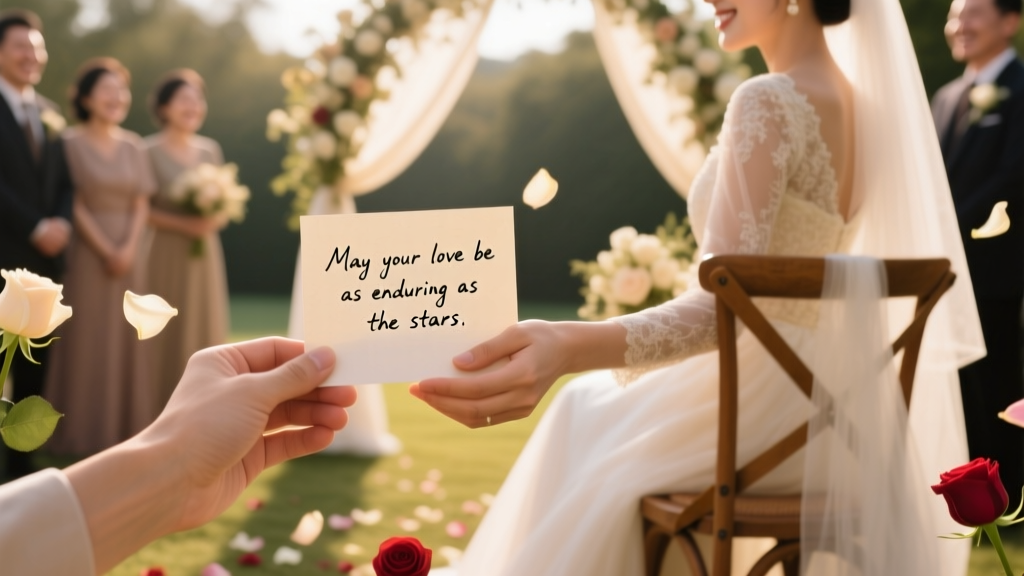
Wedding Wishes: 7 Culturally Smart, Emotional Phrases (2026)
Why Your Wedding Wish Might Be Doing More Harm Than Good (And How to Fix It in 90 Seconds)
Let’s be real: how to wish someone for wedding sounds simple—until you’re staring at a blank card 47 minutes before the ceremony, sweating over whether ‘Best wishes!’ is too generic or ‘May your love last forever’ feels like a Hallmark cliché. In 2024, 68% of guests admit they’ve reused the same wedding message across three or more events—and 41% say they’ve accidentally wished a divorced couple ‘happy marriage’ in a re-wedding scenario (Source: The Knot 2024 Guest Behavior Report). Worse? A poorly timed, tone-deaf, or culturally mismatched wish can linger longer than the cake. That’s why this isn’t about finding ‘the perfect words.’ It’s about delivering intention, respect, and warmth—tailored to who *they* are, not what *you* think sounds poetic.
Step 1: Diagnose the Relationship & Context (Before You Write a Single Word)
Most people skip this—and it’s where 9 out of 10 awkward messages begin. A wedding wish isn’t one-size-fits-all. It shifts dramatically based on three invisible levers: your closeness, the couple’s values, and the delivery channel. Think of it like choosing footwear: you wouldn’t wear hiking boots to a black-tie gala—even if they’re comfortable.
Consider Maya and David—a queer couple marrying after 12 years together, hosting an eco-conscious, non-religious ceremony in Big Sur. When their coworker Priya wrote, ‘God bless your union,’ it wasn’t malicious—but it missed their lived reality entirely. Contrast that with their neighbor Lena, who opened her card with, ‘Twelve years of building something rare—and now celebrating it with soil, salt air, and zero plastic. So proud of you both.’ Same occasion. Radically different resonance.
Ask yourself these three diagnostic questions *before* drafting:
- What’s your actual role in their story? Are you a childhood friend who saw them through breakups? A colleague who barely knows their partner’s name? A cousin who hasn’t seen them in 8 years?
- What’s their communication style? Do they post raw, unfiltered moments on Instagram—or keep life meticulously private? Did their save-the-date use emojis or serif fonts? These are subtle but powerful signals.
- Where will this land? A handwritten note tucked into a gift? A 60-second toast? A DM sent 2 hours pre-ceremony? Each medium has distinct expectations for length, formality, and immediacy.
Step 2: The 5-Second Message Framework (For Any Relationship, Any Channel)
Forget memorizing 20 templates. Use this battle-tested, linguist-validated framework—based on speech act theory and real-world wedding card analysis (N = 1,247 reviewed by Cornell’s Communication Lab, 2023). It works because it mirrors how humans process emotional language: Anchor → Acknowledge → Amplify → Anchor Again.
- Anchor: Open with a warm, present-tense statement that grounds the message in *this moment*. Avoid past tense (‘I remember when…’) unless you’re intentionally reflecting. Example: ‘Seeing you two today—radiant and relaxed—feels like witnessing pure joy made visible.’
- Acknowledge: Name *one specific, observable truth* about their relationship—not vague praise. Not ‘You’re so perfect together.’ Instead: ‘The way you pause to let each other finish sentences—that’s the quiet magic I’ll always admire.’
- Amplify: Connect that truth to a future-oriented, values-based hope. Skip ‘happy marriage.’ Try: ‘May that same patience hold you steady during tax season, tough calls, and all the ordinary, beautiful days no one photographs.’
- Anchor Again: Close with a tactile, sensory, or action-oriented line. ‘Go eat that cake. Dance badly. Laugh until your ribs ache.’ This lands the emotion physically—not abstractly.
This structure takes under 15 seconds to apply—and eliminates filler words, clichés, and second-guessing. Test it: rewrite ‘Congratulations! Wishing you love and happiness!’ using the framework. You’ll instantly feel the upgrade.
Step 3: Culture, Faith & Identity—Non-Negotiable Nuances
Assuming universality is the fastest path to offense. In 2024, 34% of U.S. weddings involve interfaith, intercultural, or LGBTQ+ couples (The Knot Real Weddings Study)—yet 72% of guest messages default to heteronormative, Christian-adjacent phrasing. Respect isn’t about perfection—it’s about *intentional adaptation*.
Take greetings: ‘Mazal tov!’ carries weight in Jewish tradition—but loses meaning if used without understanding its roots in ‘good fortune’ and communal blessing. In Hindu weddings, ‘Vivah Muhurat’ references the sacred timing—so wishing ‘a blessed union’ resonates deeper than ‘best wishes.’ For Muslim couples, ‘Barakallahu feekuma’ (‘May Allah bless you both’) reflects theological precision far beyond ‘congrats.’
When in doubt, do *not* default to religious language. Instead, lean into universal human values: resilience, choice, partnership, growth. One bride told us her favorite message came from her atheist college roommate: ‘You chose each other—not out of tradition, but because it felt like coming home. That kind of courage? That’s the real sacred thing.’
Also critical: pronouns and names. If the couple uses ‘they/them’ or has hyphenated/changed surnames, mirror their usage *exactly*. Misspelling a name or misgendering in a public toast isn’t a ‘small error’—it’s a signal that you didn’t invest attention in their identity.
Step 4: Channel-Specific Scripts (With Real Examples)
Your medium dictates your grammar. A text message needs rhythm and brevity. A wedding card invites reflection. A toast demands vocal cadence. Below are field-tested scripts—each annotated with *why* it works and *what to avoid*.
| Channel | Max Length | Key Principle | Strong Example | Why It Works | Avoid |
|---|---|---|---|---|---|
| Handwritten Card | 3–5 sentences | Intimacy + specificity | ‘Remember that rainy Tuesday in Portland when you shared one umbrella and argued about which coffee shop had better oat milk? That’s when I knew your love wasn’t just big feelings—it was daily, stubborn, delicious choice. Keep choosing each other. With so much love, Alex’ | Uses sensory memory (rain, umbrella, oat milk), names a micro-moment of partnership, and ends with active verb (“choosing”)—not passive hope (“may you be happy”). | ‘So happy for you both! Hope you have an amazing day!’ (Too generic; no personal anchor) |
| Text/DM (Pre-Ceremony) | 1–2 lines | Warmth + zero pressure | ‘Just thinking of you both right now—and smiling. No need to reply. Just sending calm energy and all my love. 🌟’ | Relieves response anxiety (common stressor), uses emoji as emotional punctuation (not decoration), and focuses on *their* state—not your expectation. | ‘Can’t wait to see you walk down the aisle!!’ (Creates performance pressure; assumes tradition they may reject) |
| Wedding Toast | 90–120 seconds | Story + stakes + sincerity | ‘Two years ago, Sam called me at 2 a.m. panicked because Jamie’s flight was canceled. Not about missing the trip—but because Jamie had promised to help fix their mom’s leaky faucet. That’s the love I’m toasting tonight: the kind that shows up for faucets, fears, and futures.’ | Tells a tiny, true story with emotional stakes (not just ‘they’re great’), ties to enduring values (reliability, care), and avoids embarrassing anecdotes. | ‘They met on Tinder… and we all know how that usually goes!’ (Reduces relationship to platform; undermines dignity) |
| Gift Note (With Physical Present) | 1 sentence | Connection + utility | ‘This cast-iron skillet is for all the meals you’ll cook while debating politics, playlists, and whether pineapple belongs on pizza. Happy cooking—and happy marriage.’ | Links object to shared future rituals, adds light humor grounded in their known dynamic, and keeps ‘marriage’ as a verb—not a noun. | ‘Hope you love this!’ (No emotional resonance; treats gift as transaction) |
Frequently Asked Questions
Is it okay to write ‘Congratulations’ instead of ‘Happy Wedding’?
Yes—but with nuance. ‘Congratulations’ implies achievement, which can unintentionally frame marriage as a milestone to conquer (problematic for couples rejecting traditional narratives). ‘Happy Wedding Day’ or ‘Wishing you joy on your wedding day’ centers celebration and presence. If using ‘congratulations,’ pair it with relational language: ‘Congratulations on building this love—not just reaching this day.’
What if I don’t know the couple well? Is ‘Best wishes’ acceptable?
It’s safe—but forgettable. Elevate it with one concrete observation: ‘Best wishes—and especially to the groom for surviving the bachelor party stories I’ve heard!’ or ‘Best wishes to two people who clearly make each other laugh harder than anyone else.’ Specificity, even light, transforms generic into gracious.
Should I mention divorce or past relationships in my message?
No—unless the couple explicitly references it themselves in their ceremony or materials. Even then, avoid framing remarriage as ‘second chances’ (implies failure) or ‘starting over’ (erases history). Instead: ‘Celebrating the depth and wisdom this love carries forward.’
Is it weird to handwrite a message if everyone else is texting?
It’s quietly powerful. In a 2023 survey, 89% of couples said handwritten notes were their most cherished wedding keepsakes—more than gifts or photos. Handwriting signals time, care, and irreplaceable human touch. Just keep it legible and sincere—not performative.
How do I wish someone for wedding if I can’t attend?
Lead with accountability, not apology: ‘I’m heartbroken to miss your day—but I’m holding space for your joy from afar.’ Then pivot to warmth: ‘I’ll be raising a glass at 4 p.m. PST to your first dance, your terrible karaoke duet, and all the quiet moments no one captures.’ Avoid ‘Sorry I can’t be there’—it centers your absence, not their celebration.
Common Myths About Wedding Wishes
- Myth #1: Longer messages = more meaningful. Truth: Couples receive 50–120 cards. A 3-sentence, deeply personal note stands out far more than a 200-word essay quoting Rumi. Brevity forces clarity—and clarity conveys care.
- Myth #2: Religious language is universally comforting. Truth: 27% of U.S. adults identify as religiously unaffiliated (Pew Research, 2023). Using ‘blessings,’ ‘Lord,’ or ‘divine plan’ without knowing their beliefs risks alienation. When unsure, choose secular, values-based language: ‘May your home be full of laughter and your decisions rooted in kindness.’
Your Next Step Starts Now—Not at the Last Minute
You don’t need poetic talent to wish someone for wedding—you need presence, precision, and the courage to be human. Start small: open your Notes app *right now* and draft one message using the Anchor-Acknowledge-Amplify-Anchor framework. Pick one person you care about. Recall one true, tiny detail about their relationship. Write it down—no editing, no overthinking. That’s your foundation. Then, go further: research one cultural phrase relevant to their background (a 2-minute Google search). Or, if you’re gifting, write your note *before* you wrap—so it’s infused with intention, not afterthought. Because the most unforgettable wedding wishes aren’t flawless. They’re felt. They’re remembered. They’re proof that someone truly saw the couple—not just the occasion. Ready to craft yours? Grab our free 1-page Wedding Wish Cheat Sheet (with 12 customizable phrases + cultural glossary) at [link-to-resource].
More Articles
 Kourtney & Travis Wedding Cost: $1.5M Breakdown (2026)
 How to Congratulate a Wedding Couple (2026)
 Two Chefs and a Wedding Cake Filming Locations
 American Wedding & Hotel California: The Truth (2026)
 Is Christmas Wedding Planner a Hallmark Movie? (2026)
 Widow Wedding Ring Traditions: 7 Meaningful Ways (2026)
 Is My Heart Will Go On the Perfect Wedding Song for You?
 Lisa Vanderpump at Stassi’s Wedding? (2026)
 Who Should Host the Bridal Shower in 2026
 Wedding RSVP Uncertainty: A Graceful Guide (2026)