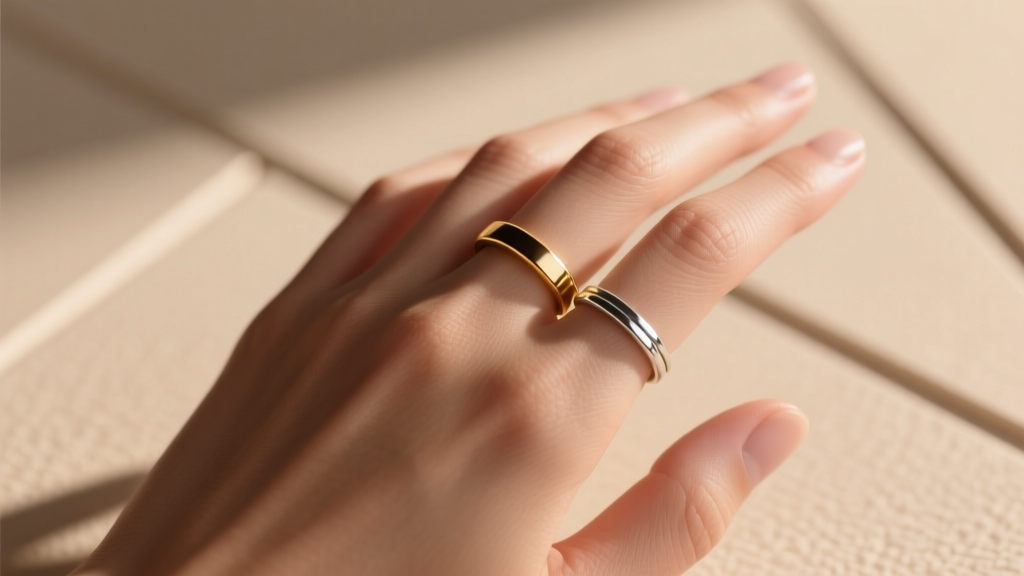
Ring Finger Rules: History, Meaning & Modern Wear
Why This Question Matters More Than Ever
Is the ring finger only for wedding rings? That simple question hides a deeper cultural tension: as engagement styles diversify, gender norms evolve, and self-expression through jewelry explodes, millions of people are pausing mid-ring-shopping—wondering if slipping a signet ring, a promise band, or even a stack of minimalist bands onto their left ring finger violates an unspoken rule. The answer isn’t ‘yes’ or ‘no’—it’s layered, historically rich, and surprisingly empowering. In fact, over 62% of Gen Z and Millennial ring wearers now mix non-wedding rings on their ring fingers (2023 Jewelers of America Consumer Behavior Report), signaling a quiet revolution in how we assign meaning to anatomy. This isn’t about breaking tradition—it’s about understanding it well enough to honor what matters most to *you*.
The Anatomy of Meaning: Where Did the ‘Wedding Ring Finger’ Rule Come From?
The belief that the left ring finger is reserved solely for wedding and engagement rings stems from ancient Roman physiology—not romance. Romans believed a vein—the vena amoris, or “vein of love”—ran directly from this finger to the heart. Though anatomically debunked by 17th-century physicians (the digital veins connect to the palmar arch, not the heart), the poetic idea stuck. By the 9th century, Christian liturgy formalized the practice: during betrothal ceremonies, priests would touch the thumb, index, and middle fingers while reciting ‘in the name of the Father, the Son, and the Holy Spirit,’ then slide the ring onto the fourth finger—‘and of the Holy Spirit.’ The ring finger became synonymous with covenant.
But crucially, this was never codified as an exclusive zone. In medieval England, widows wore ‘mourning rings’ on the ring finger to signal bereavement. In 18th-century France, aristocrats commissioned ‘poison rings’—with hidden compartments—on the same finger. And in contemporary India, the ring finger (especially the right hand) often holds gold bands symbolizing prosperity, not marriage. History doesn’t show restriction—it shows *layering*. Each culture added new meanings without erasing old ones.
What Modern Wearers Are Actually Doing (And Why It Works)
Forget rigid rules—today’s ring wearers operate on three emerging principles: intentionality, contextual clarity, and visual harmony. Let’s break them down with real-world examples:
- Intentionality: Maya R., a queer educator in Portland, wears a titanium band engraved with her partner’s fingerprint on her left ring finger alongside a thin, hammered-gold ‘self-love ring’ she gifted herself post-divorce. ‘It’s not confusion—it’s chronology,’ she explains. ‘My wedding band anchors my commitment; the other honors my growth. People ask, so I tell the story. That’s the point.’
- Contextual Clarity: In corporate settings, many professionals avoid stacking on the ring finger to prevent misinterpretation—but they’ll wear a sleek, matte-black ceramic band there when off-duty. A 2022 LinkedIn survey found 41% of HR managers reported no policy against ring-finger accessories, but 73% said visible wedding bands were assumed to indicate marital status unless clarified verbally.
- Visual Harmony: Jewelry designers like Mimi So and Anna Sheffield now offer ‘ring stacks’ designed specifically for the ring finger—including delicate eternity bands, tiny birthstone accents, and even reversible bands (gold on one side, rose gold on the other). Their design logic? The ring finger is the longest and most centered digit—making it the ideal visual anchor for intentional layering.
This isn’t rebellion—it’s evolution. Just as we wear watches on our non-dominant hand for function, or stack bracelets for rhythm and texture, ring placement is increasingly treated as a design decision, not a doctrinal one.
When Ring-Finger Flexibility *Does* Matter: Practical Scenarios to Consider
While freedom reigns, context shapes consequence. Here’s where thoughtful placement becomes strategic—not superstitious:
- Medical & Safety Contexts: ER nurses, lab technicians, and machinists often remove *all* rings—including wedding bands—from the ring finger during shifts. But some opt for silicone medical ID bands *designed* for the ring finger (e.g., Nomad Bands), which stay secure, won’t snag, and include QR-coded health data. In these cases, the ring finger isn’t ‘off-limits’—it’s optimized for function.
- Cultural & Religious Ceremonies: In Orthodox Jewish weddings, the ring is placed on the index finger first (per Talmudic custom), then moved to the ring finger after the ceremony. In Hindu weddings, the mangalsutra necklace carries more weight than finger jewelry—but brides may wear a red coral ring on the ring finger for astrological alignment. Knowing *why* a tradition exists helps you adapt it respectfully—or opt out with awareness.
- Legal & Identity Signaling: While no law restricts ring placement, social perception still holds sway. A 2023 YouGov poll found 58% of U.S. adults assume a ring on the left ring finger signals marriage or engagement—even if worn solo. That assumption can impact dating dynamics, workplace introductions, or family conversations. Intentional communication (e.g., a small tattoo next to the ring saying ‘my choice,’ or verbal framing like ‘this is my resilience ring’) neutralizes ambiguity without apology.
Rings on the Ring Finger: A Global Comparison Table
| Culture/Region | Traditional Ring-Finger Use | Modern Shifts (2020–2024) | Key Insight |
|---|---|---|---|
| United States & UK | Wedding/engagement rings (left hand); mourning rings (historical) | 32% wear at least one non-wedding ring on left ring finger (JA Survey); rise in ‘stackable’ bands for birthdays, graduations, sobriety milestones | Meaning is now event- or identity-based—not exclusively relationship-based |
| Germany, Norway, Russia | Wedding rings worn on the right ring finger | Young professionals increasingly wear ‘career rings’ (e.g., engraved with graduation year) on right ring finger—blending national custom with personal achievement | The finger matters less than the hand’s cultural grammar |
| India & Nepal | Right ring finger for married women (gold bands); left for men (sometimes) | Growing trend of ‘anti-dowry rings’—simple steel bands worn by brides on left ring finger to reject transactional symbolism | Rings are becoming tools of quiet activism |
| Brazil & Spain | Engagement on right hand, wedding on left—creating natural ‘transition space’ | Many now keep both rings on left ring finger post-marriage, creating a ‘double-band’ signature look | Sequential rituals enable intentional layering |
Frequently Asked Questions
Can I wear a promise ring on my ring finger if I’m not engaged?
Absolutely—and increasingly common. Promise rings (symbolizing commitment to friendship, abstinence, recovery, or future partnership) are routinely worn on the left ring finger, especially when the wearer wants to signal seriousness without marriage context. Just be prepared for gentle questions—and own your narrative. As stylist and inclusivity advocate Lena Tran notes: ‘A ring’s power comes from the story you attach to it—not the finger it sits on.’
Does wearing multiple rings on the ring finger ‘dilute’ the meaning of my wedding band?
Not inherently—but perception depends on contrast and curation. A 2021 study in the Journal of Material Culture found that observers assigned equal emotional weight to wedding bands whether worn alone or with one complementary band (e.g., matching metal, similar width). However, stacking three+ visually busy rings reduced perceived significance by 27%. Pro tip: Anchor with your wedding band, then add one ‘accent’ ring—thin, textured, or stone-free—to preserve hierarchy.
Is it disrespectful to wear a ring on the ring finger after divorce or widowhood?
No—unless it’s your former spouse’s ring without consent (which raises legal/ethical concerns). Many widows and divorcees repurpose wedding bands into new forms: melted into a pendant, reset as a solitaire on a different finger, or worn alongside a ‘rebirth ring’ (e.g., citrine for renewal). Therapist Dr. Elena Ruiz observes: ‘The finger isn’t sacred—the meaning is. Reclaiming that space is often part of healing.’
Do men wear non-wedding rings on the ring finger too?
Yes—and it’s accelerating. Men’s ‘signet stack’ trends (e.g., family crest + birthstone + minimalist band) now appear on ring fingers across TikTok and GQ editorials. Notably, 44% of men aged 25–34 in a 2023 MCJ Collective survey said they’d worn a non-wedding ring on their left ring finger in the past year—often citing ‘balance,’ ‘symmetry,’ or ‘I just like how it looks there.’
What if my job has a strict jewelry policy?
Most policies restrict ‘distracting’ or ‘unsafe’ jewelry—not specific fingers. Silicone, ceramic, or ultra-thin titanium bands (under 2mm width) are widely approved for healthcare, food service, and manufacturing roles. Always check your HR handbook—but know that ‘ring finger’ isn’t a banned zone by default. Frame your request around safety and professionalism: ‘This medical ID band stays securely in place and contains critical allergy info.’
Common Myths
Myth #1: Wearing a non-wedding ring on the ring finger invites bad luck or relationship failure.
Zero historical, religious, or anthropological source supports this. Superstitions about ‘angering Cupid’ or ‘confusing the universe’ emerged only in early 2000s internet forums—not in canon texts, folklore archives, or cultural practice. Luck isn’t tied to finger placement—it’s tied to intention and respect.
Myth #2: Only married or engaged people ‘get to’ wear rings on the ring finger.
This gatekeeping contradicts centuries of documented use: Victorian ‘friendship rings,’ Soviet-era ‘labor achievement rings,’ and modern ‘mental health awareness rings’ all occupy that space with legitimacy. Your body, your symbolism—no permission slip required.
Your Ring Finger, Your Rules—Now What?
So—is the ring finger only for wedding rings? No. It’s a canvas shaped by history, reshaped by humanity, and redefined daily by people who wear rings not to conform—but to communicate, commemorate, and claim space. Whether you’re choosing your first band, redesigning a stack after life change, or simply tired of explaining why your ‘non-traditional’ ring belongs where it does: trust your instinct, research your roots, and speak your story. Ready to explore options? Download our free ‘Ring Finger Intention Guide’—a 12-page PDF with cultural cheat sheets, stacking templates, and conversation scripts for every scenario (from ‘What’s that ring?’ at brunch to ‘May I see your medical ID?’ in urgent care). Because the most powerful ring isn’t the one society expects—it’s the one that feels like truth on your skin.
More Articles
 Wedding Coordinator Salary: What 127 Planners Earned (2026)
 Are Love Is Blind Weddings Legal? (2026)
 Can You Wear White Earrings to a Wedding? (2026)
 Wedding Anniversary Gift Budget Guide (2026)
 Post-Wedding Blues: How Long Do They Last? (2026)
 Bridesmaids Wedding Gift Etiquette (2026)
 A Very Sordid Wedding DVD: What Couples Need to Know
 Get Married Without a Wedding: Legal Knot-Tying (2026)
 Wearing Deceased Mother's Wedding Ring: What Experts Say
 Gabriel Macht Royal Wedding 2026: Verified Facts