## Should Your Fascinator Match Your Dress or Shoes? The Answer Might Surprise You
You've found the perfect fascinator — but now you're standing in front of the mirror wondering if it clashes with your outfit. Should it match your dress? Your shoes? Your bag? The anxiety is real, and with wedding season in full swing, getting this wrong feels high-stakes. Here's the good news: there's a clear framework that stylists use, and once you know it, you'll never second-guess your fascinator choice again.
---
## The Golden Rule: Match Your Fascinator to a Dominant Color, Not Just One Piece
The most common mistake wedding guests make is treating the fascinator like it must be an exact match to either the dress or the shoes. Professional stylists follow a different principle: **the fascinator should anchor to the dominant or most visually prominent color in your overall outfit.**
If your dress is a bold cobalt blue and your shoes are nude, your fascinator should lean cobalt — or a complementary tone like navy or royal blue. The dress dominates the visual field, so the fascinator echoes it.
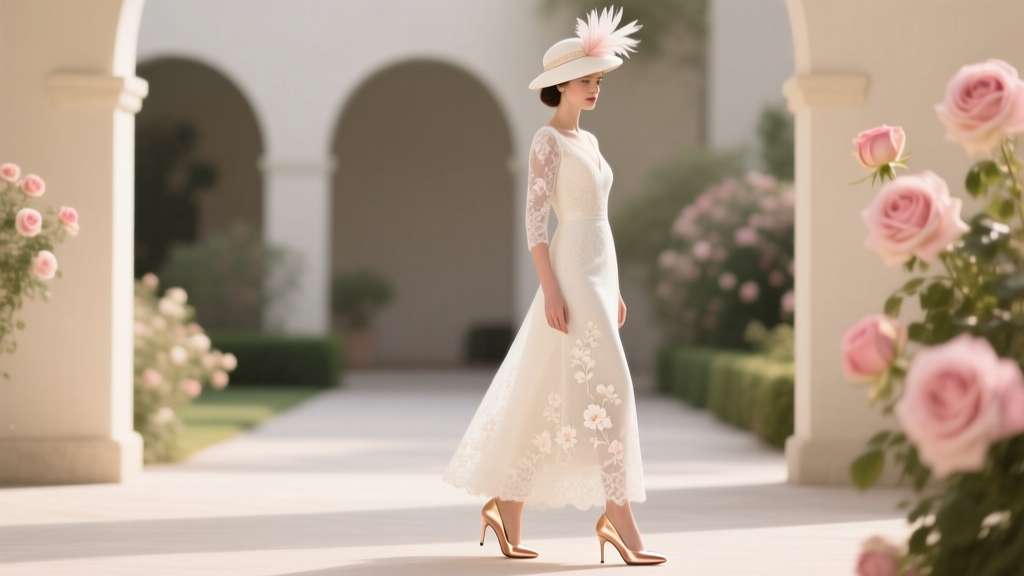
However, if your dress is a neutral (ivory, champagne, blush, grey), your shoes and accessories carry more visual weight. In that case, matching or coordinating your fascinator with your shoes creates a polished, intentional look that reads as "put together" rather than "matchy-matchy."
**Actionable steps:**
- Lay your full outfit flat: dress, shoes, bag, and jewelry
- Identify the single most visually dominant color
- Choose a fascinator in that color, a shade darker, or a complementary tone
- Avoid exact fabric matches unless you're going for a coordinated set
---
## When to Match Your Fascinator to Your Shoes (and When Not To)
Matching your fascinator to your shoes works beautifully in specific scenarios:
**Match shoes when:**
- Your dress is neutral, printed, or multi-colored
- You want to elongate your silhouette (matching hat and shoes draws the eye up and down, creating a vertical line)
- Your shoes are a statement color (red, emerald, hot pink) and you want to lean into the drama
**Don't match shoes when:**
- Your shoes are barely visible under a floor-length gown
- Your dress is a strong solid color that already anchors the look
- The shoe color would clash with your skin tone when placed near your face
A practical tip from wedding stylists: hold the fascinator next to your face, not next to your shoes. The color near your face affects how your complexion reads in photos. A shoe color that looks stunning on your feet can wash you out at face level.
---
## Coordinating vs. Matching: The Distinction That Changes Everything
Here's where most guides go wrong — they conflate *matching* with *coordinating*, and they're not the same thing.
- **Matching** = same color, ideally same or similar fabric/finish
- **Coordinating** = colors that work harmoniously together without being identical
For weddings, **coordinating almost always looks more sophisticated than matching.** A dusty rose dress with a burgundy fascinator coordinates beautifully. An ivory dress with a cream fascinator matches — but can look unintentionally bridal, which is a faux pas for guests.
**The coordination formula:**
1. Choose your dress color
2. Find it on a color wheel
3. Select a fascinator in an analogous color (adjacent on the wheel) or a tonal variation (lighter or darker shade)
4. Use your shoes and bag to bridge the two
For example: sage green dress → olive or forest green fascinator → nude or tan shoes. The fascinator deepens the palette; the shoes ground it.
---
## Common Myths About Fascinator Matching
**Myth 1: Your fascinator must be the same color as your outfit.**
This is outdated advice from an era when hats were formal accessories with strict rules. Modern wedding style embraces contrast. A black fascinator on a floral dress, or a metallic gold fascinator on a navy outfit, can be far more striking and intentional than a same-color match. The key is that the contrast looks *deliberate*, not accidental — which comes down to the rest of your accessories tying the look together.
**Myth 2: Neutral fascinators are always the safe choice.**
Nude, ivory, and beige fascinators are often recommended as "safe," but they carry their own risks. Ivory near the face can clash with certain skin tones. Nude can disappear visually and make your look feel incomplete. A well-chosen colored fascinator that coordinates with your outfit often photographs better and reads as more polished than a neutral that was chosen out of uncertainty.
---
## Your Next Step: Build the Look from the Dress Out
The simplest way to nail your fascinator choice every time:
1. **Start with your dress** — it's the foundation
2. **Identify the dominant color** — this is your anchor
3. **Choose a fascinator** that matches, deepens, or coordinates with that anchor
4. **Select shoes and bag** to bridge or complement
5. **Hold the fascinator to your face** before buying — lighting and skin tone matter
Whether you're attending a garden party wedding, a black-tie reception, or a country house celebration, this framework works across dress codes and styles. The goal isn't to follow a rigid rule — it's to look like you made intentional choices. That's what separates a polished wedding guest look from one that feels thrown together.
Ready to shop? Start with your dress color in hand, and let that guide every accessory decision from there.
 Wedding Rings Marital Property? (2026 Guide)
 Glass Smashed at Jewish Wedding: What It Really Symbolizes
 Does a Wedding Stop If Someone Objects? (2026)
 How to Say No Wedding Gifts Without Offending Your Guests
 My Big Fat Greek Wedding Movies: Official Count (2026)
 What Is a Wedding Celebrant? (2026)
 How Long Should a Wedding Ceremony Last
 Can You Wear a Preserved Wedding Dress? (2026)
 Can You Edit Wedding Photos? A Complete Guide
 Sleep With Wedding Ring? Dermatologists & Jewelers Weigh In