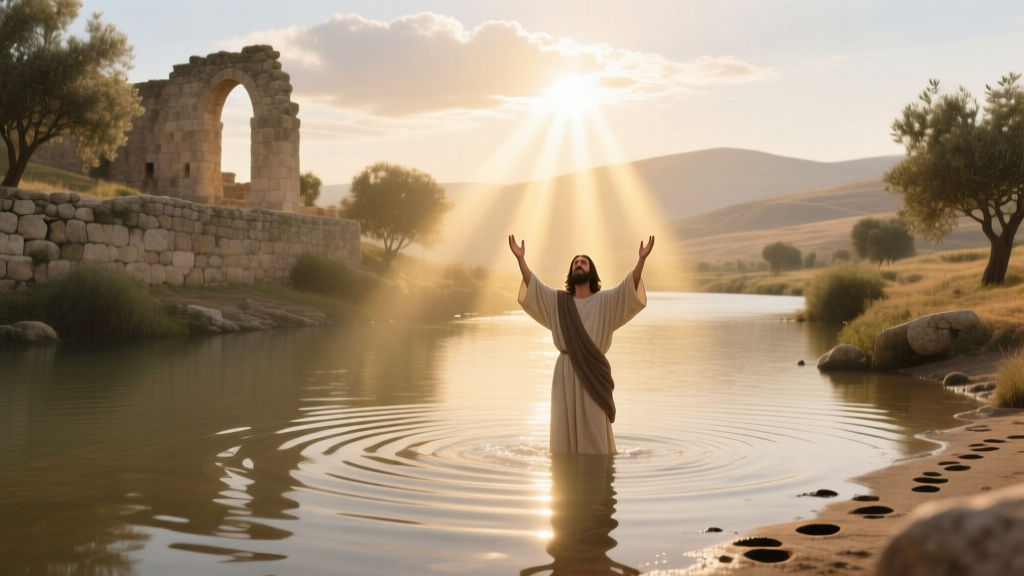
Jesus Baptized Before Cana? Chronology of His First Miracle
Why This Chronology Isn’t Just Biblical Trivia—It’s Foundational
The question was Jesus baptized before the wedding at Cana strikes at the heart of how we understand the launch of Jesus’ public ministry—and yet, many believers assume the wedding miracle came first because it’s the first ‘sign’ recorded in John’s Gospel. That assumption obscures a profound theological truth: Jesus’ baptism wasn’t a prelude—it was His commissioning. It’s where heaven opened, the Spirit descended, and the Father declared, ‘This is my beloved Son.’ Only after that divine affirmation did He begin His signs, starting with water-to-wine at Cana. Getting this sequence right doesn’t just satisfy curiosity—it reveals how authority, identity, and mission are inseparably linked in Christ’s story. And in an era where spiritual authenticity is constantly questioned, anchoring our faith in the documented, Spirit-validated launch of Jesus’ work offers deep stability.
What the Gospels Actually Say: A Verse-by-Verse Timeline
The Synoptic Gospels (Matthew, Mark, and Luke) and John’s Gospel tell the same story—but with different emphases and narrative structures. Crucially, all four place Jesus’ baptism *before* His Galilean ministry begins—and the wedding at Cana is explicitly the opening event of that Galilean phase in John’s account. Let’s walk through the evidence step by step.
In Matthew 3:13–17, Mark 1:9–11, and Luke 3:21–22, Jesus’ baptism occurs immediately after John the Baptist’s public proclamation in the wilderness—and before any recorded teaching or miracles. Matthew and Mark then state that Jesus ‘went into Galilee’ only *after* John was arrested (Matthew 4:12; Mark 1:14). Luke places Jesus’ temptation in the wilderness directly after His baptism (Luke 4:1–13), followed by His return to Galilee ‘in the power of the Spirit’ (Luke 4:14).
John’s Gospel provides the clearest chronological bridge. After describing Jesus’ baptism indirectly (through John the Baptist’s testimony in John 1:29–34), John records Jesus calling His first disciples (1:35–51)—a process spanning several days. Then comes the decisive transition: ‘On the third day a wedding took place at Cana in Galilee’ (John 2:1). The phrase ‘on the third day’ is not vague—it’s a precise literary marker linking this event to what preceded it: the calling of Philip and Nathanael in 1:43–51, which itself follows John’s witness to Jesus’ baptism. So the baptism → witness → calling → Cana sequence is tightly woven—not a loose collection of anecdotes.
A common misstep is reading John 2 in isolation and assuming ‘first sign’ means ‘first thing Jesus ever did.’ But John himself clarifies his purpose: ‘These are written so that you may believe that Jesus is the Messiah, the Son of God, and that by believing you may have life in his name’ (John 20:31). His ‘signs’ are selective, theological markers—not a comprehensive log. The baptism, though not called a ‘sign,’ is the foundational event upon which every sign rests.
Why the Order Matters: Identity, Authority, and Mission
Jesus’ baptism wasn’t merely ritual immersion—it was His public identification with humanity’s need for repentance and cleansing, even though He had no sin. It was also the moment His messianic identity was divinely ratified. Without that ratification, the wedding at Cana would be just an impressive party trick. With it, it becomes the first visible outworking of a commissioned King.
Consider the symbolism: At His baptism, Jesus steps into the Jordan—the same river where Israel crossed into the Promised Land under Joshua, and where Elisha parted waters after Elijah’s ascension. He reenacts Israel’s journey but fulfills it perfectly. Then, at Cana, He transforms water used for Jewish purification rites (John 2:6 notes ‘six stone water jars… for the Jewish rites of purification’) into wine—symbolizing the arrival of the new covenant, where external rituals give way to abundant, joyful grace. The baptism establishes His authority; Cana demonstrates its character.
This sequence also shapes discipleship. When Jesus tells His mother, ‘My hour has not yet come’ (John 2:4), He’s not refusing her request—He’s affirming that His actions flow from divine timing, not human urgency. That ‘hour’ is first revealed at His baptism (‘You are my beloved Son’), then progressively unveiled through signs, teachings, and ultimately the cross. The wedding at Cana isn’t the start of His mission—it’s the first public echo of the commission received at the Jordan.
Historical & Cultural Context: What ‘Baptism’ and ‘Cana’ Meant in 1st-Century Judea
To grasp why this chronology mattered to the original audience, we must recover the cultural weight of both events. In Second Temple Judaism, baptism wasn’t a Christian rite—it was a radical, prophetic act associated with repentance, eschatological expectation, and preparation for the coming Kingdom. John’s baptism drew crowds from Jerusalem, Judea, and beyond (Matthew 3:5); it signaled crisis and renewal. For Jesus—a Nazarene carpenter with no priestly lineage—to submit to it was socially jarring. It marked Him not as a religious insider, but as one standing *with* sinners, bearing their burden before God.
Cana, meanwhile, was a small, unremarkable village in Lower Galilee—so obscure that it’s absent from Josephus and rabbinic literature. Its significance lies precisely in its insignificance: Jesus chose an ordinary setting for His first sign. No temple, no religious elite, no fanfare—just a family wedding running low on wine. Yet it’s here, *after* His heavenly commissioning, that He inaugurates the age of abundance. Archaeologists have identified possible Cana sites near Kafr Kanna and Khirbet Qana; excavations at the latter uncovered a Roman-era synagogue and ritual baths—confirming the village’s observant Jewish character and reinforcing John’s detail about purification jars.
This context makes the sequence even more intentional: Jesus’ authority isn’t derived from pedigree or place, but from divine appointment at the Jordan—and then lived out in the humble, relational fabric of everyday life. Modern readers often spiritualize Cana into a ‘blessing on marriage’ message, missing the deeper point: the Kingdom arrives not in grand temples, but in shared joy, relational need, and Spirit-empowered provision—*because* the King has already been anointed.
Practical Implications: How This Timeline Shapes Faith Today
Understanding that Jesus was baptized before the wedding at Cana isn’t academic—it reshapes how we approach our own callings, communities, and crises. Here’s how:
- For leaders and ministers: Your ‘Cana moments’—public initiatives, outreach efforts, creative projects—must be rooted in prior spiritual formation and divine confirmation, not just opportunity or enthusiasm. Like Jesus, your ‘hour’ emerges from obedience to the Father’s voice, not human timelines.
- For new believers: Baptism isn’t the end of a decision—it’s the beginning of a witnessed identity. Just as Jesus’ baptism preceded His signs, your public confession precedes your visible fruit. Don’t rush to ‘perform’ before you’ve been positioned.
- For those facing scarcity: The wine shortage at Cana mirrors modern lack—financial strain, emotional depletion, relational drought. Jesus didn’t fix it with a wave; He worked *through existing resources* (the water jars) and *trusted timing* (‘My hour has not yet come’). Your ‘water jars’—your current limitations, routines, or disciplines—are not obstacles to abundance; they’re the very vessels He fills when aligned with His commission.
A real-world example: A church plant in Portland spent 18 months in ‘baptismal season’—prayer, theological grounding, leadership development, and community listening—before launching public services. Critics urged faster action. But when they finally hosted their first neighborhood dinner (their ‘Cana’), 47 people came—not because of marketing, but because relationships formed in that preparatory season carried credibility and warmth. Their ‘first sign’ flowed from prior commissioning.
| Milestone | Gospel Reference | Key Chronological Marker | Theological Significance |
|---|---|---|---|
| Jesus’ Baptism | Matthew 3:13–17; Mark 1:9–11; Luke 3:21–22; John 1:29–34 | Precedes wilderness temptation, calling of disciples, and Galilean ministry | Divine affirmation of identity; inauguration of messianic mission; solidarity with repentant humanity |
| Calling of First Disciples | John 1:35–51 | Follows John the Baptist’s testimony about seeing the Spirit descend at baptism | Discipleship begins with witness to Christ’s anointed status—not personal charisma or teaching ability |
| Wedding at Cana | John 2:1–11 | ‘On the third day’ after the calling of Philip and Nathanael (John 1:43–51) | First ‘sign’ revealing glory; transformation of purification rites into covenant abundance; demonstration of timing aligned with ‘the hour’ |
| Temple Cleansing | John 2:13–22 | Occurs shortly after Cana, during Passover—establishing early Galilean ministry timeline | Asserts Jesus’ authority over sacred space; foreshadows His body as the true temple |
Frequently Asked Questions
Did Jesus perform any miracles before the wedding at Cana?
No biblical text records any miracle performed by Jesus before Cana. While apocryphal texts like the Infancy Gospel of Thomas claim childhood wonders, these are late (2nd century), non-canonical, and rejected by all major Christian traditions. The Gospels present Cana as the first public sign—deliberately placed after His baptism and commissioning to underscore its theological weight.
Why does John’s Gospel place the temple cleansing early, while the Synoptics place it near the end?
John uses a thematic, theological chronology rather than strict linear sequence. By placing the temple cleansing early (John 2:13–22), he frames Jesus’ entire ministry as a confrontation with corrupted religion—echoing the ‘new temple’ reality inaugurated at His baptism and revealed at Cana. The Synoptics emphasize the climactic tension of Holy Week, so they reserve the cleansing for its dramatic impact before the crucifixion. Both approaches are historically coherent and serve distinct narrative purposes.
Does the timing of Jesus’ baptism affect the doctrine of His sinlessness?
No—it reinforces it. Jesus’ baptism wasn’t for repentance from sin (as He had none), but as an act of ‘fulfilling all righteousness’ (Matthew 3:15). It was His identification with humanity’s need and His submission to the Father’s redemptive plan. Early church fathers like Athanasius stressed that Christ’s baptism sanctified the waters for all believers—making it an act of grace, not confession.
How do scholars reconcile John the Baptist’s statement ‘I did not know him’ (John 1:31, 33) with the familial connection between Jesus and John?
While Luke 1:36 notes Elizabeth and Mary were relatives, ‘knowing’ in John’s Gospel often carries theological weight—not just biographical familiarity. John likely knew Jesus as a cousin, but hadn’t recognized His messianic identity until the Spirit descended at baptism. This highlights that divine revelation—not bloodline or proximity—is the basis of true knowledge of Christ.
Common Myths
Myth #1: “The wedding at Cana was Jesus’ first public appearance.”
Reality: Jesus had already been baptized, tempted, and called at least four disciples (Andrew, Peter, Philip, Nathanael) before Cana. His public identity was established—not initiated—at the wedding.
Myth #2: “John’s Gospel contradicts the Synoptics on chronology.”
Reality: John’s ‘third day’ (2:1) and the Synoptics’ ‘after John was arrested’ (Matthew 4:12) describe the same period using different narrative lenses. John focuses on theological sequence; the Synoptics on political catalysts. Harmonization is not only possible—it’s affirmed by early church historians like Eusebius.
Conclusion & Next Step
So, yes—was Jesus baptized before the wedding at Cana? Absolutely. And that ‘yes’ is far more than a date stamp: it’s a declaration that all of Jesus’ works flow from who He is, not what He does. His baptism wasn’t prep work—it was the throne room moment where heaven endorsed His mission. Cana was the first ripple of that decree in human time. If you’ve ever felt pressure to produce results before you’ve heard the Father’s voice, or wondered if your ‘small’ setting qualifies for divine abundance, remember: the King began in obscurity, commissioned at the river, and revealed His glory in a village wedding. Your next step? Revisit your own ‘baptismal moment’—not as a past ritual, but as an ongoing identity. Spend 10 minutes today journaling: Where have I confused activity with authority? What ‘water jars’ in my life might Jesus be preparing to fill? Then share one insight with a trusted friend—not to perform, but to practice the relational abundance Cana models.
More Articles
 Wedding Ring Placement: History, Religion & Meaning
 Thank Wedding Money: 7 Culturally Smart Steps (2026)
 Wedding Dress Shopping Companions: Etiquette Tips
 What Is the Etiquette for Wedding Attire for Guests
 Meghan Markle at Pippa Middleton’s Wedding? (2026)
 Did Adam Sandler Sing in The Wedding Singer? (2026)
 Wedding Loan with Fair Credit: 7 Lenders & Approval Tips
 Wedding Ring: The 5-Second Rule (2026)
 When Should You Prepare Your Wedding Day Timeline
 Where to Watch Georgie and Mandy's First Wedding (2026)