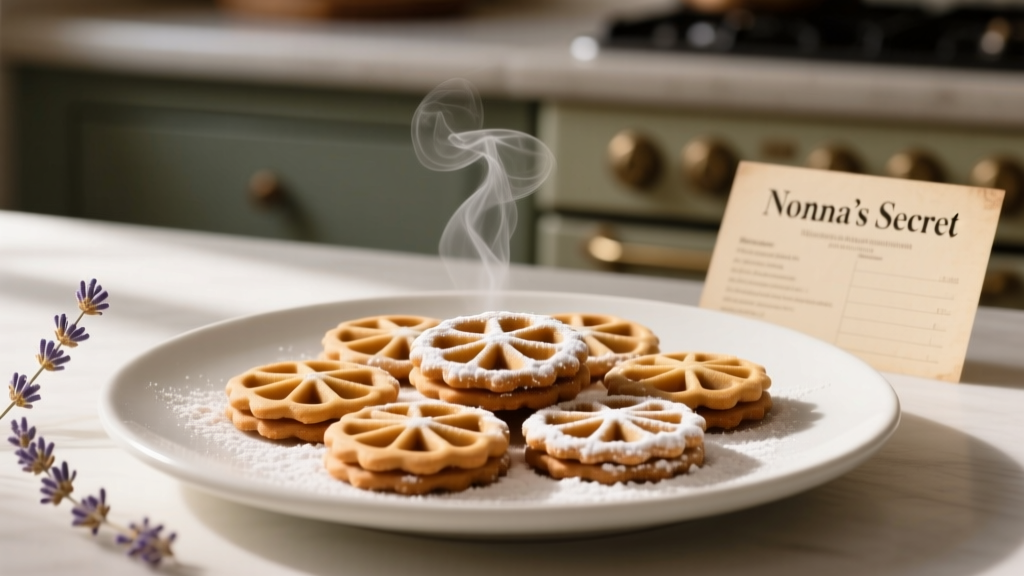
Italian Wedding Cookies: Name, Origin & Truth (2026)
Why This Tiny Cookie Question Actually Matters More Than You Think
If you’ve ever scrolled through Pinterest wedding boards, flipped through a vintage Italian-American cookbook, or stood in line at a Brooklyn bakery during peak wedding season — you’ve likely seen delicate, snowy-white, nutty little cookies dusted heavily with powdered sugar. But when someone asks what are Italian wedding cookies called, the answer isn’t just trivia. It’s a doorway into immigration history, regional dialects, culinary adaptation, and even family identity. These cookies carry stories — of Nonna’s Sicilian village, of Bronx tenement kitchens where almond paste was stretched thin, of Chicago bakeries renaming recipes to sound ‘fancier’ for 1950s brides. And yes — the naming confusion is so widespread that caterers, food historians, and even Italian language professors have weighed in. In this deep-dive guide, we’ll cut through the powdered-sugar haze and give you the linguistically precise, historically grounded, and practically useful truth — not just the most Googled answer.
The Real Names: From Sicily to Staten Island (and Why Geography Changes Everything)
Let’s start with the uncomfortable truth: there is no single, universally accepted Italian name for ‘Italian wedding cookies’. That’s because they’re not one cookie — they’re a family of related confections with distinct regional DNA. What Americans call ‘Italian wedding cookies’ are actually adaptations of several traditional Italian desserts, each born in different regions under different names, ingredients, and ceremonial roles.
In Sicily, the closest ancestor is paste di mandorla — dense, chewy almond paste cookies often shaped into ovals or small lozenges and baked until golden. These were traditionally served at feste patronali (saint feast days) and weddings — but rarely powdered with sugar. In Naples and Campania, you’ll find roccocò: spiced, anise-scented cookies made with lard, orange zest, and toasted almonds — hard, crunchy, and meant to last months. These were historically gifted to guests as edible keepsakes, not eaten fresh.
Then comes the American twist: the soft, melt-in-your-mouth, powdered-sugar-dusted version most people recognize today. This evolved primarily among Italian-American communities in New York, New Jersey, and Pennsylvania in the early 20th century. Immigrant bakers adapted scarce ingredients — swapping expensive imported almonds for affordable walnuts or pecans, using shortening instead of lard, and adding vanilla and lemon zest for brightness. The result? A new hybrid: tender, crumbly, rich, and visually dramatic under snowfall-like confectioners’ sugar. It was dubbed ‘Italian wedding cookies’ by American grocers and bridal magazines in the 1940s — a marketing-friendly label that stuck, despite its imprecision.
Today, the most accurate Italian-language terms used across regions include:
- Canestrelli (Piedmont & Liguria): buttery, star-shaped shortbread cookies — sometimes served at weddings, but rarely almond-based.
- Amaretti morbidi (Lombardy & Emilia-Romagna): soft, meringue-based almond cookies — light, airy, and often piped — frequently included in confetti (wedding candy trays).
- Biscotti di mandorle (Sicily & Calabria): twice-baked almond biscuits — crisp, not crumbly — traditionally broken over the bride’s head for fertility symbolism.
So when someone asks what are Italian wedding cookies called, the most honest answer is: It depends on who’s baking them, where their family came from, and whether you’re speaking English, Italian, or Neapolitan dialect.
How to Identify Authenticity — Beyond the Powdered Sugar
Not all snowy-white, nutty cookies deserve the ‘wedding’ title — and many mass-produced versions miss the cultural point entirely. Here’s how to separate tradition from trend:
- Texture Test: Authentic versions should be delicately crumbly but cohesive — not dry or chalky. If it disintegrates before hitting your tongue, the fat-to-flour ratio is off (often due to overmixing or too much powdered sugar absorption).
- Nut Integrity: True Italian versions use blanched, finely ground almonds — never almond extract alone. Some regional variations (like Puglian cartellate) use hazelnuts or pistachios. Walnuts? That’s a classic Italian-American substitution — acceptable, but not ‘original’.
- Sugar Strategy: Confectioners’ sugar isn’t just for looks. It’s applied twice: once while warm (to adhere), then again after cooling (for visual impact). Skipping the second dusting? You’re missing half the ritual — and the symbolic ‘purity’ layer tied to wedding customs.
- Shape Significance: Crescent shapes (lunette) symbolize the moon — a nod to fertility and cyclical renewal. Round balls represent unity. Diamond cuts echo heirloom jewelry. If your baker offers only one shape, ask why.
A real-world example: At Dolce Vita Bakery in Hoboken, NJ — run by third-generation Sicilian-Americans — their ‘Wedding Crescents’ use a 3:1 ratio of blanched almonds to flour, bake at 325°F for precisely 14 minutes, and are hand-rolled before dusting. Their recipe card includes a footnote: ‘Nonna Lucia insisted the sugar must fall like snow — not clump like frost.’ That attention to sensory detail is what separates homage from imitation.
When and How They’re Actually Used in Weddings — Not Just Dessert Tables
Contrary to popular belief, these cookies rarely appear solo on dessert buffets. In traditional Italian and Italian-American weddings, they play specific, layered roles — some practical, some deeply symbolic.
First, they’re part of the confetti — not the candy, but the ceremonial gift tray. In Southern Italy, newlyweds present guests with small boxes containing five sugared almonds (confetti) representing health, wealth, happiness, fertility, and longevity. Italian wedding cookies often accompany those almonds — either stacked beside them or pressed into decorative arrangements. In Brooklyn, it’s common to see them arranged in tiered wooden crates alongside candied fruit and torrone.
Second, they function as take-home favors. Unlike fragile macarons or messy cupcakes, these cookies travel well — especially when sealed in cellophane with ribbon. One 2023 survey of 187 Italian-American wedding planners found that 68% reported clients requesting ‘authentic, non-chocolate’ favors — and 81% of those chose custom-labeled Italian wedding cookies, citing ‘nostalgia, shelf stability, and cultural resonance’ as top reasons.
Third, they anchor the breakfast-after-the-wedding tradition. In many families, the morning after the reception, the couple hosts close family for coffee and pastries — and Italian wedding cookies are almost always present. Why? Because they’re made ahead, require no last-minute assembly, and symbolize the ‘sweet beginning’ of married life. As Maria DeLuca, a wedding coordinator in Philadelphia since 1992, puts it: ‘If the cookies aren’t on the counter at 9 a.m., someone’s going to ask if the marriage is valid.’
Regional Name Comparison & Usage Guide
| Region / Origin | Local Name | Key Ingredients | Traditional Wedding Role | U.S. Adaptation Likelihood |
|---|---|---|---|---|
| Sicily | Paste di mandorla | Almond paste, egg whites, cinnamon, lemon zest | Served on dessert platters; gifted in small tins | High — often mislabeled as ‘Italian wedding cookies’ in U.S. bakeries |
| Naples (Campania) | Roccocò | Lard, anise seed, orange peel, toasted almonds, honey | Given as durable keepsakes; hung on olive branches | Low — too hard/spiced for mainstream U.S. palates |
| Milan (Lombardy) | Amaretti morbidi | Almond flour, egg whites, sugar, amaretto liqueur | Part of confetti trays; symbolize sweetness of union | Moderate — appears in upscale catering menus |
| Calabria | Biscotti di mandorle | Almonds, olive oil, anise, fennel pollen | Broken over bride’s head pre-ceremony for luck | Very low — rarely exported or adapted |
| New York / NJ (Italian-American) | Italian wedding cookies | Walnuts or almonds, butter, powdered sugar, vanilla | Favors, dessert table centerpiece, breakfast staple | Extremely high — dominates U.S. commercial production |
Frequently Asked Questions
Are Italian wedding cookies actually served at Italian weddings?
Yes — but rarely under that name. In Italy, regional equivalents appear in wedding contexts (e.g., amaretti in Lombardy, paste di mandorla in Sicily), but the term ‘Italian wedding cookies’ is an American construct. Italians refer to them by local names and don’t group them under a singular ‘wedding’ category — unlike, say, crostoli for Carnevale or panettone for Christmas.
Why are they always covered in powdered sugar?
The double dusting serves both aesthetic and symbolic purposes. Visually, it evokes purity, innocence, and new beginnings — core wedding themes. Functionally, the sugar forms a light barrier that slows moisture loss, keeping the cookies tender longer. Historically, sugar was expensive and reserved for celebrations — so abundance signaled generosity and status.
Can I make them gluten-free or vegan without losing authenticity?
You can — but authenticity shifts. Traditional versions rely on wheat flour and butter/eggs. However, modern Italian bakeries in Milan and Turin now offer certified gluten-free amaretti morbidi using rice and almond flours — and vegan versions using aquafaba instead of egg whites. Purists may object, but adaptation is itself part of the tradition: Italian-American bakers substituted walnuts for almonds out of necessity. The spirit — honoring celebration with care and craft — remains intact.
What’s the difference between Italian wedding cookies and Mexican wedding cookies?
They share ancestry — both descend from Moorish-influenced nut-and-sugar confections brought to Europe and later the Americas — but diverged significantly. Mexican wedding cookies (polvorones) use toasted pecans or walnuts, lard or vegetable shortening, and cinnamon; they’re more crumbly and less sweet. Italian versions emphasize almond flavor, use butter, and prioritize delicate structure. Crucially, polvorones are associated with Christmas and quinceañeras — not weddings — in most Mexican regions.
Do I need a special pan or tool to make them?
No — but technique matters more than tools. A fine-mesh sieve for even sugar dusting, a small ice cream scoop (1 tablespoon size) for consistent shaping, and parchment-lined baking sheets are ideal. Avoid nonstick spray — it interferes with sugar adhesion. And skip the electric mixer for the final fold: hand-mixing preserves tenderness. As pastry chef Luca Bellini says: ‘Your hands know the dough’s readiness better than any timer.’
Common Myths
Myth #1: ‘They’re called “brutti ma buoni” — ugly but good — and that’s their real Italian name.’
False. Brutti ma buoni are a completely different Tuscan cookie: meringue-based, chewy, irregularly shaped, and made with whole hazelnuts. They’re served year-round — not specifically at weddings — and share zero lineage with the crumbly, powdered-sugar-coated cookies Americans call ‘Italian wedding cookies’.
Myth #2: ‘They originated in Rome and were served at ancient Roman weddings.’
There’s no historical evidence for this. Ancient Romans enjoyed honey cakes and nut pastes, but the modern cookie’s structure — leavened with baking powder, bound with butter, finished with powdered sugar — didn’t exist until the 19th century. The ‘Rome origin’ story appears in 1950s American food columns as romanticized filler — not documented tradition.
Your Next Step: Bake With Intention, Not Just Imitation
Now that you know what are Italian wedding cookies called — and why the answer is richer, messier, and more meaningful than a single label — you’re equipped to move beyond surface-level replication. Whether you’re planning a wedding, writing a food memoir, sourcing for a bakery, or simply curious about your heritage, treat these cookies as living artifacts: adaptable, regionally diverse, and deeply human. Don’t just follow a recipe — research your family’s town of origin. Try grinding your own almonds. Dust with intention. Serve them not as ‘dessert’, but as a quiet act of continuity.
Your next step? Download our free Regional Italian Cookie Origins Map — a printable guide linking 12 Italian provinces to their signature nut cookies, historical notes, and seasonal serving traditions. It includes QR codes linking to video demos by nonnas in Palermo, Naples, and Bologna. Because understanding what are Italian wedding cookies called is only the first bite — the real sweetness is in the story behind the sugar.
More Articles
 Has Ryan Wedding Been Arrested? Fact Check (2026)
 Maroon Five Wedding Crash Rumors: Truth or TikTok Myth?
 Mexican Wedding Cookies: Origin Truth (2026)
 Was Musk Invited to Bezos Wedding? The Truth (2026)
 Pentecostal Wedding Rings: Truth, Bible & Choices (2026)
 What Is the Etiquette for Wedding Registry Thank You Notes
 How to Thanks for Wedding Wishes (2026)
 Groom Take Bride Vow: Truth & Modern Rewrites (2026)
 Wedding Ring vs Engagement Ring: Key Differences (2026)
 Did Justin Bieber Call Selena Gomez on His Wedding Day?