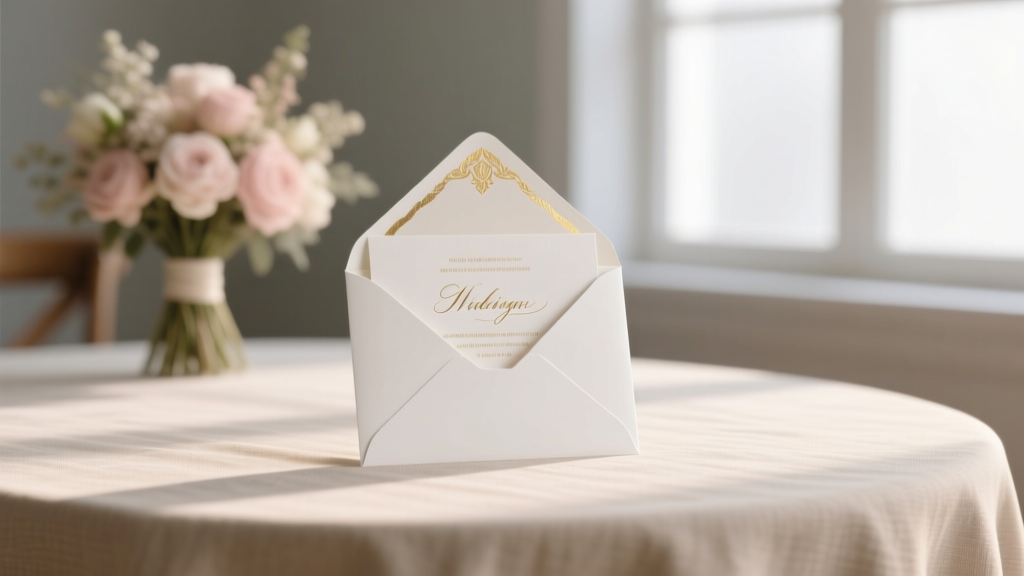
What Are the Rules for Wedding Invitation Wording
What Are the Rules for Wedding Invitation Wording?
Wedding invitation wording can feel weirdly high-stakes. You’re trying to communicate the who/what/when/where clearly, set the tone for your celebration, and avoid accidentally offending a relative who still remembers what Miss Manners said in 1998. No pressure, right?
The good news: invitation “rules” are more like guidelines, and modern wedding etiquette gives you a lot of flexibility. The best wording is the wording that’s accurate, easy to understand, and fits your wedding style—whether you’re hosting a black-tie ballroom reception or a backyard ceremony with tacos.
Quick Answer: The Real Rules for Wedding Invitation Wording
If you want the clear, practical rules, here they are:
- Include the essentials: hosts, couple’s names, date, time, location, and reception details.
- Match your formality level: formal wording for formal events, relaxed wording for casual weddings.
- Be honest and specific: if it’s adults-only, a destination wedding, or reception-only, say it clearly (and kindly).
- Put extra details elsewhere: dress code explanations, travel info, registry, and FAQs belong on your wedding website or details card—not the main invitation.
- Prioritize clarity over tradition: guests should never have to guess the time, place, or what they’re invited to.
As stationer and wedding paper designer “Elena Park” puts it: “The most ‘correct’ invitation is the one your guests can read once and immediately know what to do. Tradition is optional; clarity isn’t.”
Q: What Information Must Be on a Wedding Invitation?
At minimum, your wedding invitation wording should include:
- Who is hosting (could be parents, both families, the couple, or a combination)
- The request line (invite you to celebrate, request the honor of your presence, etc.)
- The couple’s names
- Date and time
- Ceremony location (venue name + city/state; include full address if it’s a private home or hard-to-find location)
- Reception information (same location vs. different location; “Reception to follow” works when it’s immediately after at the same venue)
If you’re keeping things streamlined (a big current trend), a clean invitation plus a wedding website is totally acceptable. Many couples use a simple “Details” or “Weekend Schedule” card instead of crowding the invitation.
Q: How Should We List the Hosts (Parents vs. Us vs. Everyone)?
This is where “rules” used to be strict. Now, wording can reflect your real situation.
Traditional parent-hosted wording
If one set of parents is hosting:
Mr. and Mrs. Daniel Rivera
request the honor of your presence
at the marriage of their daughter
Sofia Rivera
to
James Lee
Both families hosting
Together with their families
Sofia Rivera
and
James Lee
invite you to celebrate their wedding
Couple hosting (very common)
Sofia Rivera
and
James Lee
invite you to join them
as they celebrate their marriage
Planner “Maya Thompson” shares a helpful approach: “If family dynamics are complicated, ‘Together with their families’ is a diplomatic lifesaver. It’s warm, inclusive, and doesn’t force you to rank anyone.”
Q: Do We Have to Write Out the Date and Time?
Formal invitations often spell everything out (“Saturday, the twentieth of September”), while modern invitations typically use numerals (“Saturday, September 20, 2026”). Either is acceptable—just be consistent with your overall design and tone.
Traditional/formal example:
Saturday, the twentieth of September
two thousand twenty-six
at half after four in the afternoon
Modern example:
Saturday, September 20, 2026
4:30 PM
One real-world tip: if you’re starting on the dot (like a church ceremony that truly begins at 2:00), list the exact time. If you’re building in guest arrival time, list the actual ceremony start time and use your wedding website for “Doors open at…” or “Arrive by…” guidance.
Q: How Do We Handle Dress Code Wording Without Sounding Bossy?
Dress code is one of the most-searched wedding etiquette questions, and the trend lately is being more explicit so guests feel comfortable. You can include a short dress code line at the bottom of the invitation or on a details card.
- Black tie: Black Tie
- Formal: Formal Attire
- Cocktail: Cocktail Attire
- Garden/outdoor: Garden Party Attire
If the dress code needs explanation (beach wedding, grassy lawn, cultural attire welcome), put the extra guidance on your wedding website:
“Cocktail attire. Ceremony is on grass—block heels or wedges recommended.”
As couple “Nina and Chris” told us after their outdoor wedding: “The best compliment we got was from guests who said, ‘Thank you for telling us the vibe.’ No one felt overdressed or underdressed.”
Q: What About “No Kids,” Plus-Ones, and Other Sensitive Details?
This is where modern etiquette matters most: guests appreciate clarity, but the invitation itself should stay gracious.
Adults-only / child-free wedding
Traditional etiquette says don’t print “No children” on the invitation. Modern reality: you can communicate it clearly via addressing and your RSVP options.
- Address the envelope precisely: “Ms. Jordan Patel” (not “The Patel Family”)
- RSVP wording: “We have reserved 1 seat(s) in your honor”
- Wedding website FAQ: “We love your little ones, but our celebration will be adults-only.”
Plus-ones
The “rule” is simple: if you’re offering a plus-one, include it in the addressing and RSVP. If you’re not, don’t leave it ambiguous.
- With guest: “Alex Chen and Guest”
- Named partner: “Alex Chen and Jordan Kim”
Tip: Avoid “and Guest” for long-term partners—name them when you can. It feels more thoughtful and prevents confusion.
Q: What’s the Difference Between Traditional and Modern Invitation Wording?
Traditional wording often includes host lines, formal request lines (“request the honor of your presence”), and spelled-out dates/times. It’s a great fit for classic venues, religious ceremonies, and black-tie dress codes.
Modern wording tends to be shorter, more direct, and more reflective of how people actually speak. It’s ideal for casual celebrations, micro weddings, and weekend wedding events with multiple locations.
Traditional ceremony wording example:
request the honor of your presence
at the marriage of…
Modern ceremony wording example:
invite you to celebrate
their wedding day
Both are “correct.” The rule is alignment: if your invitation says black tie but your event is a laid-back brewery reception, guests will feel uncertain.
Q: What Are Common Scenarios and the Best Wording for Each?
Reception-only invitation
If you’re having a private ceremony or already married, be straightforward.
Wording example:
Sofia Rivera & James Lee
were married in an intimate ceremony
and invite you to celebrate at a reception
Saturday, September 20, 2026 • 6:00 PM
The Willow Room • Austin, TX
Destination wedding
Keep the invitation clean and direct, then point guests to your wedding website for travel details.
Wording example:
Join us in Cabo San Lucas
for the wedding of
Sofia Rivera & James Lee
Saturday, March 14, 2026 • 5:00 PM
Esperanza Resort • Cabo San Lucas, MX
Details at: ourweddingwebsite.com
Multiple events (welcome party, farewell brunch)
This is a strong trend right now. Put the main ceremony info on the invitation and include an insert card for the weekend schedule.
Details card line: “Weekend events and RSVP: ourweddingwebsite.com”
Actionable Tips for Getting Wedding Invitation Wording Right
- Write a “first draft” in plain language (as if you’re texting a friend), then adjust for formality.
- Decide your host line early to avoid reworking your layout later.
- Use consistent naming (Nicknames on the invite but formal names on legal documents is fine; just don’t mix within one card).
- Proofread like it’s a contract: date, time, address, city/state, and spelling of names. Have two people outside the couple review it.
- Don’t force extra info onto the invitation. Use your wedding website for registry, parking, shuttles, unplugged ceremony notes, and FAQ.
Related Questions Couples Often Ask
“Can we put our wedding website on the invitation?”
Yes. It’s widely accepted and very common. Many couples add it at the bottom of the invitation or on a details card.
“Is it rude to mention gifts or the registry on the invite?”
Traditional etiquette says don’t print registry info on the invitation. The modern approach: keep registry details on your wedding website and spread it via word of mouth. If you include a wedding website, guests will find it easily.
“Should we include ‘no phones/unplugged ceremony’ wording?”
Better on a details card, website, and a ceremony sign. If you include a short line, keep it positive: “We invite you to be fully present with us—please enjoy an unplugged ceremony.”
“What about wording for divorced parents?”
You can list each parent on separate lines (no need to pair names that aren’t together). Or use “Together with their families” to keep things simple.
Conclusion: The Best “Rule” Is Clarity + Warmth
If your wedding invitation wording clearly tells guests what’s happening and makes them feel genuinely invited, you’re doing it right. Choose a traditional or modern style based on your celebration, use your wedding website for the extra details, and remember: good etiquette is about making people feel comfortable—not about passing a test.
More Articles
 Is My Wedding Tax Deductible? (2026)
 Legal Marriage Without Wedding: How It Works (2026)
 Paige Drummond Wedding Cost: $1.2M Breakdown (2026)
 How to Handle Wedding Registry Items That Are Too Expensive
 What to Do If Your Dream Venue Is Over Budget
 Shotgun Wedding: Real History & Modern Meaning (2026)
 Best Wishes Usage: When & Why + 7 Better Alternatives
 Humanist Wedding: What It Is & Why Couples Love It
 Jeff Bezos Kids at Wedding: What Really Happened
 Did Camilla Meet Diana Before the Wedding? (2026)