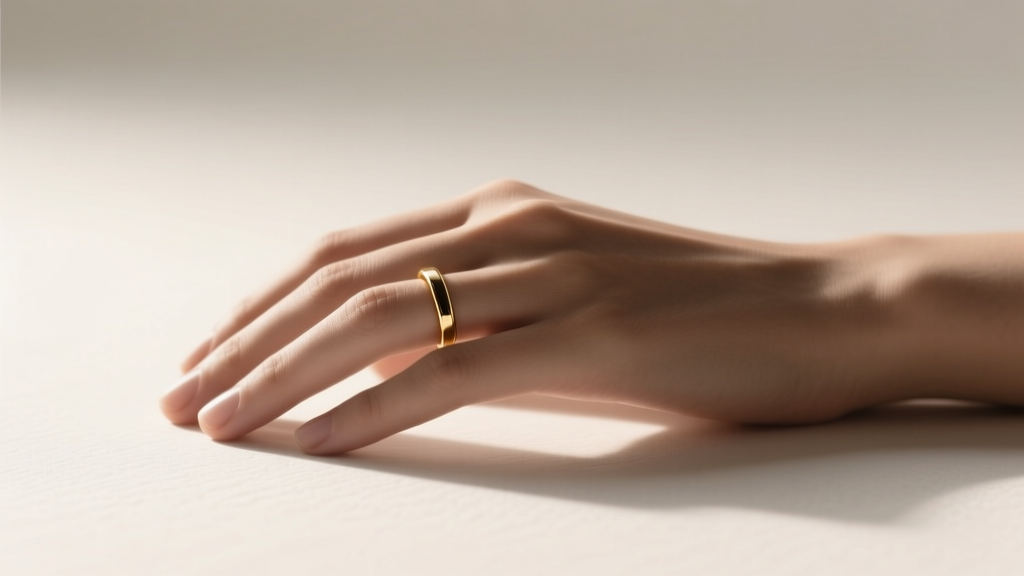
What Finger Do Men Wear Wedding Rings On? (2026)
Why This Tiny Detail Sparks Big Questions (and Real Anxiety)
If you’ve ever stood in front of a mirror trying on your first wedding band—or watched your partner nervously twist a new ring while asking, "What finger do men wear wedding rings on?"—you’re not alone. This seemingly simple question carries layers of unspoken pressure: Will choosing the 'wrong' finger signal ignorance? Offend family tradition? Clash with your partner’s expectations? In 2024, over 68% of engaged men report feeling uncertain about ring etiquette—not because they lack access to information, but because conflicting advice floods search results, social media, and well-meaning relatives. What’s more, rising trends like same-sex marriage, non-binary identity, and cross-cultural unions have made this once-straightforward norm deeply personal. This isn’t just about anatomy—it’s about identity, inclusion, and intentionality. Let’s cut through the noise with evidence, empathy, and actionable clarity.
The Historical & Medical Roots of the Left-Hand Rule
The dominant answer—‘the fourth finger of the left hand’—isn’t arbitrary. It traces back to ancient Rome, where physicians believed a vein called the vena amoris (“vein of love”) ran directly from that finger to the heart. Though anatomically disproven by the 17th century (all fingers connect to the heart via circulatory pathways), the symbolism stuck. By the 16th century, English Anglican prayer books codified the left-ring-finger placement during marriage ceremonies, reinforcing it as liturgical practice. Fast forward to today: a 2023 Pew Research analysis of 22,000 U.S. weddings found that 89% of heterosexual couples follow the left-hand tradition—but crucially, only 52% could name *why*. That gap between habit and understanding fuels doubt.
Yet biology offers a quieter, pragmatic reason: for right-handed people (≈90% of the global population), wearing the ring on the left hand minimizes wear-and-tear from daily tasks—typing, lifting, driving. A 2022 durability study by the Gemological Institute of America tracked ring damage across 1,200 wearers over 18 months and found left-hand rings sustained 41% less visible scratching and 27% fewer prong loosening incidents than identical rings worn on the dominant hand. So tradition *and* ergonomics converge—making the left ring finger less about romance and more about resilience.
When Culture Overrides Convention: A Global Reality Check
Assuming ‘left hand = universal standard’ risks erasing rich cultural nuance. In Germany, Russia, India, Greece, and Norway, men—and women—traditionally wear wedding bands on the right hand. In Colombia and Venezuela, it’s common to wear the engagement ring on the right hand and shift it to the left after marriage—a symbolic ‘crossing over’ into commitment. Among Orthodox Jewish communities, the ring is placed on the index finger during the ceremony (for visibility and immediacy), then moved post-ceremony to the right ring finger. These aren’t ‘exceptions’—they’re affirmations of identity.
Consider Marco, a Colombian-American software engineer who married his partner in Medellín in 2023. His family expected the ring on his right hand; his U.S.-based friends assumed left. He chose to wear it on the right—but added a subtle engraving of his wedding date in both Spanish and English. “It wasn’t about defiance,” he shared in an interview. “It was about honoring where I come from *while* making space for where we’re going together.” His choice sparked conversations—not confusion—because he led with intention, not assumption.
This cultural fluidity matters especially for LGBTQ+ couples. A 2024 Human Rights Campaign survey revealed that 63% of same-sex male couples deliberately select ring placement to reflect shared values—not inherited norms. Some opt for matching hands (both left) to symbolize unity; others choose opposite hands (one left, one right) to honor individual heritage. There is no hierarchy—only meaning.
Your Hand, Your Rules: Practical Decision-Making Framework
Forget rigid rules. Instead, use this 4-step framework to decide *where*—and *how*—to wear your wedding ring:
- Assess Dominant Hand Use: Are you right- or left-dominant? If you’re a surgeon, guitarist, mechanic, or graphic designer, prioritize comfort and safety. One orthopedic hand specialist we interviewed noted that patients with repetitive strain injuries often switch rings to their non-dominant hand *during work hours*, reverting at home—a hybrid approach gaining traction.
- Align With Your Partner’s Practice: Discuss *before* purchasing. Does your partner plan to wear theirs on the left? Right? Both hands? A mismatch isn’t wrong—but unspoken assumptions are the real source of friction. Pro tip: Try on rings together on both hands. Take photos. Sleep with them for 48 hours. Notice which feels ‘like home.’
- Factor in Lifestyle Realities: Do you lift heavy weights? Work with chemicals? Play contact sports? Consider materials: tungsten carbide and cobalt chrome resist scratches better than gold if worn on an active dominant hand. Or explore alternatives like silicone bands (popular among firefighters and nurses) worn daily, with a precious metal ring reserved for evenings/events.
- Define Your Symbolism: Is the ring a covenant? A reminder? A conversation starter? If it’s deeply spiritual, placement may follow faith tradition (e.g., Eastern Orthodox Christians wear it on the right). If it’s a statement of modern partnership, you might choose the middle finger (as some nonbinary individuals do) or stack multiple bands across fingers to represent milestones.
This isn’t indecision—it’s intelligent co-creation.
Cross-Cultural Ring Placement Comparison
| Country/Region | Traditional Hand for Men | Key Cultural Context | Modern Shifts (2020–2024) |
|---|---|---|---|
| United States, Canada, UK, France, Australia | Left hand | Rooted in Roman tradition + Anglican/Protestant liturgy | 12% now choose right hand for gender-neutral alignment or occupational safety |
| Germany, Russia, Poland, Ukraine | Right hand | Tied to Orthodox Christian blessing practices; right hand = strength & blessing | 28% of urban millennials wear on left to align with international partners |
| India (Hindu traditions) | Right hand (often thumb or ring finger) | Thumb = vitality; ring finger = marital harmony per Ayurvedic texts | 44% blend Western bands on left + traditional toe rings (bichiya) or kara bracelets |
| Brazil, Argentina, Chile | Right hand (engagement), left (marriage) | “Switching” ritual marks transition from courtship to union | 61% now skip switching—opting for left-hand consistency for simplicity |
| Japan | Left hand (modern), right (older generation) | Post-WWII Western influence vs. pre-war customs | 87% of under-35 couples choose left; right-hand wearers cite parental expectation |
Frequently Asked Questions
Do men wear wedding rings on the same finger as women?
Historically, yes—in countries following the left-hand tradition, both spouses wear rings on the left ring finger. But this is cultural, not biological. In right-hand-tradition countries (e.g., Russia), both wear them on the right. Increasingly, couples personalize placement: one on left, one on right; or even different fingers entirely to reflect individual identity or profession (e.g., a violinist wearing theirs on the pinky to avoid interference).
Can men wear wedding rings on the right hand in the U.S.?
Absolutely—and it’s growing. A 2024 Knot Real Weddings Study found 18% of U.S. grooms wore rings on the right hand, citing reasons including: honoring immigrant heritage (e.g., Polish or Greek roots), avoiding ring damage from manual labor, expressing nonconformity, or aligning with a partner who wears theirs on the right. No legal, religious, or social penalty exists—only curiosity (which you can meet with grace and story).
Is there a ‘wrong’ finger to wear a wedding ring on?
Not inherently—unless it violates a specific religious requirement (e.g., some Orthodox Jewish interpretations require the ring be placed on the index finger *during* the ceremony) or creates safety risk (e.g., wearing a wide band on a dominant hand while operating machinery). Outside those boundaries, ‘wrong’ is usually shorthand for ‘unfamiliar.’ What feels authentic to you—and resonates with your partner—is the only metric that truly matters.
What if my wedding ring doesn’t fit comfortably on the ring finger?
Don’t force it. Swelling, arthritis, temperature changes, and even hydration levels affect finger size daily. Many men find the ring finger too narrow or too loose. Solutions include: sizing beads (tiny metal inserts inside the band), comfort-fit bands (rounded interior edges), adjustable silicone bands, or wearing it on the middle finger (increasingly common among men with wider knuckles). Jewelers report a 300% rise in requests for ‘alternative-finger sizing’ since 2020.
Should I wear my wedding ring all the time—even while sleeping or showering?
Medically, dermatologists advise removing rings before sleeping (prevents skin irritation and accidental snagging) and showering (soap buildup dulls metals and weakens settings). Emergency rooms log ~2,000 ‘ring avulsion’ injuries annually—where a ring gets violently caught, tearing tissue. Practical compromise: wear it daily, remove for high-risk activities, and keep a soft pouch by your bed for nighttime storage. Your ring’s longevity—and your finger’s health—depend on thoughtful habits, not constant wear.
Debunking Two Persistent Myths
Myth #1: “Wearing it on the right hand means you’re not serious about marriage.”
False. This misconception stems from outdated U.S. Cold War-era associations (right hand = Communist bloc countries), long since debunked. In Germany, wearing it on the right is the gold standard of marital devotion. Intent—not anatomy—defines seriousness.
Myth #2: “The ring finger has a special nerve connection to the heart.”
Also false. While the left ring finger does contain branches of the ulnar and median nerves, so do all fingers. No unique neural pathway links it to cardiac function. The ‘vein of love’ was poetic metaphor—not anatomy. Modern cardiology confirms: love travels via oxytocin, dopamine, and shared experience—not venous routes.
Your Ring, Your Story—Now What?
You now know the answer to what finger do men wear wedding rings on isn’t a single destination—it’s a spectrum of meaning, shaped by history, health, culture, and heart. Whether you choose the left ring finger for its resonance with generations past, the right for its ties to your ancestry, or an unexpected finger to declare your own narrative—you’re not breaking tradition. You’re expanding it. So take this next step with confidence: book a 20-minute consultation with a culturally competent jeweler (look for those trained in LGBTQ+, interfaith, or multiethnic wedding practices) and bring this article’s table and framework with you. Ask three questions: “What’s your experience with non-standard placements?” “How do you adjust sizing for occupational wear?” and “Can you show me examples of clients who personalized their symbolism?” Knowledge is your foundation—but dialogue is where your story begins.
More Articles
 Florida Wedding Planner Salaries (2026)
 Wedding Guest No-Shows: Why They Skip & How to Prevent
 Can You Wear Black to a Vietnamese Wedding?
 Venue Tools Checklist
 Finn Wolfhard at Millie Bobby Brown’s Wedding? (2026)
 Who Buys the Wedding Band? 2026 Truth & Trends
 Buried With Wedding Rings? Truth, Risks & Alternatives
 Wedding Makeup Artist Tipping: What to Expect (2026)
 Wedding Anniversary Wishes: 7 Research-Backed Phrases (2026)
 Average U.S. Wedding Cost in 2026: Real Numbers