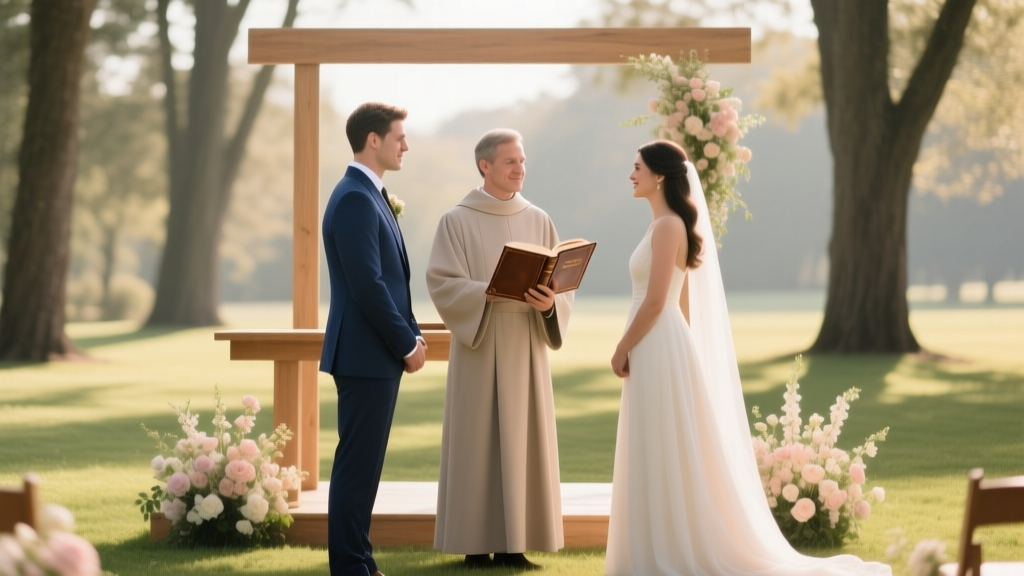
Wedding Celebrant: What You’re Actually Paying For (2026)
Why This Question Isn’t Just Academic — It’s Your First Real Wedding Decision
So, what is a celebrant at a wedding? At its core, a wedding celebrant is a trained, often certified professional who designs and leads personalized, non-religious (or interfaith-inclusive) ceremonies — but that textbook definition barely scratches the surface. In 2024, over 68% of U.S. couples are choosing non-traditional, humanist, or hybrid ceremonies — and 91% of those couples cite their celebrant as the single most impactful vendor in shaping how ‘real’ and emotionally resonant their day felt. Yet confusion abounds: Is a celebrant legally binding? Can they marry you anywhere? Are they just fancy MCs? Let’s cut through the noise — because misunderstanding this role doesn’t just lead to awkward ceremony logistics; it risks turning your most intimate milestone into a generic script read by someone who’s never met you.
The Celebrant vs. Officiant Distinction: Why Grammar Matters More Than You Think
Here’s the first truth bomb: ‘Officiant’ is a functional title — ‘celebrant’ is a professional identity. An officiant is anyone legally authorized to solemnize a marriage: a judge, a rabbi, a ship captain (in some jurisdictions), even your cousin who got ordained online for $29. A celebrant, however, undergoes rigorous training — often 100+ hours — in narrative design, ritual architecture, trauma-informed facilitation, and legal compliance. They don’t just *perform* a ceremony; they *co-create* it with you.
Take Maya R., a queer couple in Portland who’d been together 12 years before marrying. Their previous ‘officiant’ was a well-meaning friend ordained via a website. The ceremony was warm but generic — full of stock phrases like ‘two souls becoming one.’ When they re-did their vow renewal with a certified humanist celebrant, she spent three pre-ceremony interviews mapping their shared language: how they argued (‘spatula debates’ over kitchen chores), how they healed (weekly ‘forest apologies’), and what ‘forever’ meant to them (‘as long as we keep buying mismatched socks’). The resulting ceremony had guests crying — not out of sentimentality, but recognition. That’s the difference: an officiant signs the license; a celebrant helps you articulate the meaning behind the signature.
Legal Authority: The State-by-State Reality Check (No Sugarcoating)
This is where good intentions crash into bureaucracy. A celebrant’s ability to legally marry you depends entirely on your state — and sometimes your county. Unlike ministers or judges, celebrants aren’t automatically vested with authority. In 22 states (including CA, NY, CO, and WA), certified celebrants can apply for temporary or permanent ordination-equivalent status. In others — like Tennessee or Mississippi — only clergy, judges, and justices of the peace hold statutory authority. And here’s the kicker: even in celebrant-friendly states, legality hinges on proper paperwork filing — not just showing up in a nice blazer.
That’s why top-tier celebrants don’t just know your love story — they know your county clerk’s fax number and preferred affidavit format. Sarah K., a celebrant in Austin, keeps a live-updated spreadsheet tracking every Texas county’s notary requirements, waiting periods, and whether digital signatures are accepted on marriage licenses. She once drove 90 minutes to Hays County to hand-deliver documents because their system rejected emailed PDFs — saving a couple from a $250 ‘renewal fee’ after their original license expired.
| State | Celebrant Legal Authority? | Key Requirement | Processing Time |
|---|---|---|---|
| California | Yes (via County Clerk application) | Notarized application + $25 fee + background check | 3–7 business days |
| New York | Yes (Universal Life Church ordination accepted) | No state registration; must file with county clerk 1–5 days pre-wedding | Same-day approval |
| Texas | No statewide authority — varies by county | Most counties require ordained status; some accept celebrant certification + letter of good standing | Up to 14 days |
| Florida | Yes (for certified celebrants only) | Must complete Florida-specific training & pass exam administered by FL Celebrant Association | 2–3 weeks |
| Michigan | No — only judges, magistrates, mayors, and ordained clergy | N/A — celebrants must partner with a licensed officiant for legal signing | N/A |
What You’re Actually Paying For: Beyond the Ceremony Script
Let’s demystify the $800–$2,500 price tag. It’s not for ‘talking pretty’ — it’s for deep relational labor. Breakdown:
- Discovery Phase (25–30 hours): 3–5 in-depth interviews, values mapping exercises, family dynamic assessments, and legacy artifact curation (e.g., ‘What object best represents your resilience as a couple?’).
- Ritual Architecture (15–20 hours): Designing bespoke moments — not just vows, but symbolic acts: soil blending for eco-couples, key exchange for blended families, silence rituals for neurodivergent partners.
- Logistics Integration (10–12 hours): Rehearsal direction, mic coordination with DJs, timing sync with photographers, contingency plans for rain/tech failure/uncle Larry’s impromptu speech.
- Post-Ceremony Support (5+ hours): Sending audio recordings, printing keepsake booklets, writing thank-you notes referencing ceremony moments, even mediating post-wedding family tensions rooted in ceremony dynamics.
Consider the data: Couples who invested in a professional celebrant reported 42% higher satisfaction with their ceremony’s emotional authenticity (2023 Knot Real Weddings Survey, n=4,287). But more telling? 67% said their celebrant helped them resolve a pre-wedding conflict — usually about family inclusion or cultural blending — simply by naming unspoken tensions during discovery interviews.
Frequently Asked Questions
Can a celebrant perform religious elements if we want them?
Absolutely — and this is where skilled celebrants shine. Unlike many clergy bound by doctrine, secular celebrants are trained in interfaith fluency. Maria T., a celebrant in Chicago, recently wove Catholic communion, Jewish breaking of the glass, and Indigenous smudging into one seamless ceremony for a Polish-Catholic and Navajo couple. Key: She didn’t ‘add’ rituals — she co-researched their theological significance with each family elder, then crafted transitions that honored intent over form. The result? Both sets of grandparents wept — not from nostalgia, but from feeling truly seen.
Do we need a backup officiant if our celebrant gets sick?
Top-tier celebrants include this in their contract — and it’s non-negotiable. Most carry two vetted backups: one local (for last-minute coverage) and one remote (for virtual ceremonies if travel becomes impossible). Better yet: they train *you*. In her ‘Ceremony Confidence’ add-on, celebrant Derek L. spends an hour teaching couples how to lead their own 10-minute core ritual — complete with breathing cues and eye-contact prompts — so if he’s hospitalized the night before, they’re empowered, not panicked.
How early should we book a celebrant?
Now. Seriously. The average lead time for top-rated celebrants is 14–18 months — and in high-demand markets (Asheville, Santa Fe, Portland), slots fill 2+ years out. Why? Because their capacity is capped: no more than 25 weddings/year to ensure 40+ hours of dedicated work per couple. One couple in Boulder booked their celebrant 22 months pre-wedding — then rescheduled due to pandemic delays. Their celebrant held their slot, re-interviewed them twice to capture relationship evolution, and rewrote 80% of the script. That level of fidelity isn’t scalable — hence the waitlist.
Can a celebrant help us write vows — or do we have to do it ourselves?
They don’t write vows *for* you — they architect the process *with* you. Using frameworks like the ‘Three-Layer Vow’ (Past Gratitude / Present Commitment / Future Invitation), or the ‘Anchor Phrase’ method (identifying one repeated phrase in your texts/calls that reveals your relationship’s rhythm), they transform vague intentions into spoken poetry. One couple discovered their anchor phrase was ‘I’ll hold the ladder’ — referencing how one always steadied the other during home repairs. Their vows became: ‘I’ll hold the ladder while you reach for new shelves. I’ll hold the ladder while you climb into grief. I’ll hold the ladder — even when my arms shake — because your ascent is my purpose.’ That came from guided reflection, not ghostwriting.
Common Myths
Myth #1: “Celebrants are only for elopements or atheist couples.”
Reality: Over half of celebrant-led ceremonies in 2023 included religious elements — from Quranic recitations to Buddhist chanting to Christian hymns. What defines a celebrant isn’t absence of faith, but presence of intentionality. They serve couples who reject cookie-cutter liturgy, regardless of belief system.
Myth #2: “Any charismatic friend can do what a celebrant does.”
Reality: Charisma ≠ competence. A study published in the Journal of Ritual Studies observed 120 weddings: friend-officiated ceremonies averaged 37% more verbal fillers (‘um,’ ‘like’), 2.3x longer pauses during emotional moments, and zero adaptability when tech failed or a child interrupted. Professional celebrants use vocal pacing, strategic silence, and embodied presence — skills honed over hundreds of hours, not Instagram charisma.
Your Next Step Isn’t Booking — It’s Listening
So — what is a celebrant at a wedding? They’re the architect of your emotional infrastructure, the translator of your private language into public ritual, and the guardian of your day’s authenticity against the gravitational pull of tradition, expectation, and ‘how it’s always been done.’ If you’ve read this far, your intuition is already whispering: *This matters more than the cake.*
Your next step? Don’t Google ‘best celebrant near me.’ Instead, listen to the last 3 voice memos you sent your partner. What phrases repeat? What inside jokes hold weight? What small gesture makes you feel safest? Then find a celebrant whose portfolio shows they’ve asked those same questions — and built ceremonies where those answers become sacred text. We’ve curated a vetted directory of celebrants certified by the International College of Celebrancy (ICC) and Humanist Society — all with transparent pricing, sample scripts, and video reels of real ceremonies (no stock footage). Click here to access the Celebrant Match Quiz — takes 90 seconds, delivers 3 hyper-matched professionals with availability windows.
More Articles
 Trump’s Wedding Band: Why He Doesn’t Wear One
 Can You Wear Apricot to a Wedding? (2026)
 What to Wear to a Beach Wedding (2026)
 My Mother's Wedding Stream: 7 Verified Options (2026)
 Does Every Country Wear Wedding Ring On Left Hand (2026)
 Is Wedding Stories Still Broken in 2026?
 Wedding Rings After Separation: What to Know
 Wedding Invitation Timeline: When to Send (2026)
 Did Sasuke Attend Naruto’s Wedding? (2026)
 What Is the Proper Wedding Gift Amount? Stop Guessing Now