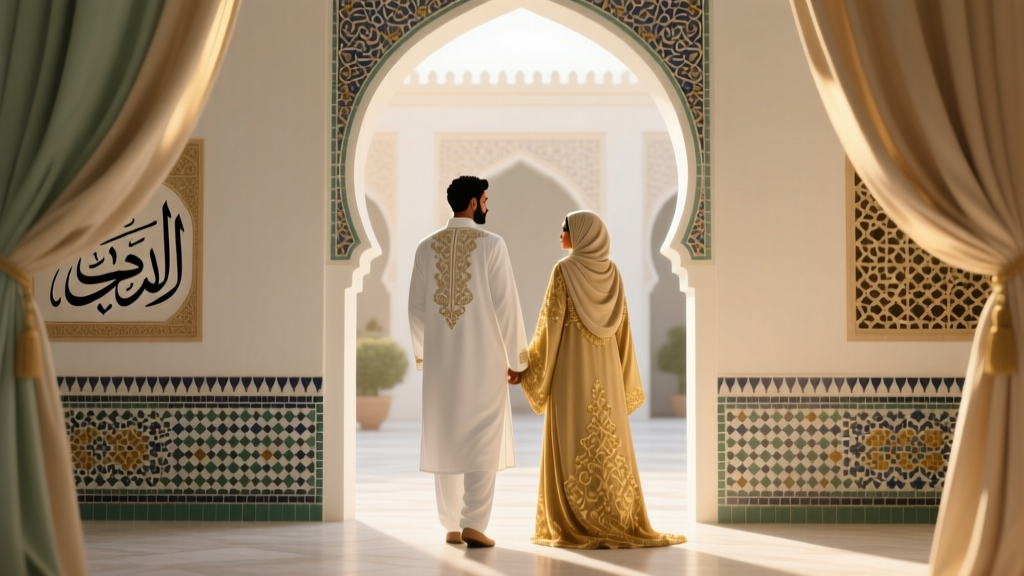
Muslim Wedding Names & Traditions (2026)
Why This Question Matters More Than You Think
When someone searches what is a Muslim wedding called, they’re often not just looking for a dictionary definition — they’re trying to navigate cross-cultural respect, plan an inclusive event, write a sensitive article, or support a loved one in a faith-based union. In today’s globally connected world, where interfaith marriages rise by 14% annually (Pew Research, 2023) and Muslim populations grow across Europe, North America, and Southeast Asia, mislabeling or oversimplifying this ceremony isn’t just inaccurate — it risks erasing centuries of jurisprudence, regional identity, and spiritual nuance. A ‘Muslim wedding’ isn’t one monolithic event with a single name; it’s a layered, legally binding covenant wrapped in community celebration, governed by fiqh (Islamic jurisprudence), yet expressed through dozens of culturally distinct traditions. Getting the name right — and understanding why multiple names exist — is the first step toward honoring both the theology and the humanity behind it.
The Core Answer: Nikah Is the Foundation — But It’s Only the First Word
At its theological and legal heart, what is a Muslim wedding called is most accurately answered with one Arabic term: Nikah. Rooted in the Qur’an (Surah An-Nisa 4:21–25) and elaborated in Hadith, Nikah refers specifically to the Islamic marriage contract — a solemn, consensual, witnessed agreement that establishes rights, responsibilities, and mutual obligations between spouses. Crucially, Nikah is not a ceremony per se; it’s a juridical act. That means a valid Nikah can be completed in 12 minutes in a mosque office with two male witnesses and a qualified officiant (a Qadi or knowledgeable Imam), or even via video call under certain contemporary fatwas (e.g., UK’s Muslim Law Council, 2022). Yet most people searching this phrase expect visuals, music, rituals — which reveals a critical gap: Nikah is necessary but insufficient to describe the full social experience. That’s why communities layer it with culturally rooted events — each carrying its own name, function, and weight.
Regional Names Tell a Global Story — From Jakarta to Johannesburg
Calling all Muslim weddings ‘Nikah’ flattens extraordinary geographic and linguistic diversity. In Indonesia, the core contract is called Akad Nikah, but the broader celebration is known as Resepsi Pernikahan (reception) — often held weeks later in a hotel ballroom with gamelan music and batik-draped stages. In Pakistan and North India, families distinguish three named phases: Mehndi (henna night), Sangeet (musical pre-wedding fest), and Barat (the groom’s procession), with the Nikah itself occurring mid-morning in a decorated home or masjid. In Morocco, the Zaffa — a drum-and-dance procession escorting the couple — is so central it’s often used colloquially to refer to the entire wedding weekend. Meanwhile, in Nigeria, the Yoruba Eru Iyawo (‘bride’s price’ negotiation) and Hausa Karfi (traditional attire ceremony) precede the Nikah, making ‘wedding’ a multi-week arc, not a single-day label.
These aren’t ‘add-ons’ — they’re culturally embedded expressions of adab (Islamic etiquette) and communal joy (faraḥ). A 2021 ethnographic study of 87 Muslim couples across 12 countries found that 92% considered their local celebration name (e.g., ‘Mehndi’, ‘Zaffa’) more emotionally resonant than ‘Nikah’ when describing their wedding to non-Muslim friends — precisely because those terms signal belonging, memory, and sensory richness that legal terminology cannot convey.
The Legal-Religious Tension: When ‘Nikah’ Isn’t Enough for Civil Recognition
Here’s where naming becomes urgent — and potentially problematic. In over 30 countries, including the UK, Canada, and Australia, a Nikah alone does not confer civil marriage rights. Without concurrent registration under state law (e.g., signing a civil marriage license), spouses may lack inheritance rights, spousal visa eligibility, or protections in divorce. This creates a dangerous semantic illusion: calling the event ‘the Nikah’ implies completeness, while legally, it may be only half a marriage. In 2023, London’s Muslim Women’s Network reported that 68% of women seeking legal aid after separation had undergone a religious-only Nikah — leaving them financially vulnerable. So while what is a Muslim wedding called is Nikah in religious terms, savvy couples now use hybrid labels like ‘Nikah + Civil Ceremony’ or ‘Dual-Registered Wedding’ to signal compliance. The takeaway? Name reflects function — and in secular states, the name must include both divine covenant and civic contract.
What Happens After Nikah? Walima — The Obligatory Celebration You Can’t Skip
If Nikah is the contract, Walima is the divinely encouraged celebration — and it’s far more than a party. Derived from the Arabic root w-l-m (to gather, to feast), the Walima is explicitly mandated in Hadith: ‘The Prophet (ﷺ) said: “Announce this marriage and hold it in mosques, and beat the duff (a type of tambourine) for it.”’ (Sunan Ibn Majah). Unlike Mehndi or Sangeet — which are cultural customs — Walima carries religious weight: it’s the public declaration of marital consummation and communal acknowledgment. Its timing varies (some host it the same day, others wait until after the honeymoon), but its purpose is consistent: gratitude, transparency, and hospitality. Critically, Walima is gender-inclusive — the bride’s family traditionally hosts it, though modern couples co-host. And while lavishness is discouraged (Prophet Muhammad’s own Walima served only dates and barley bread), its symbolic role as the ‘social seal’ makes it indispensable. Omitting Walima doesn’t invalidate the marriage — but skipping it risks signaling secrecy or social disapproval, undermining the very values Nikah seeks to uphold.
| Term | Linguistic Origin | Core Function | Religious Status | Common Regions |
|---|---|---|---|---|
| Nikah | Arabic | Marriage contract: consent, mahr, witnesses, offer/acceptance | Obligatory (fard) | Global — universal in Islamic jurisprudence |
| Walima | Arabic | Post-Nikah feast announcing consummation and gratitude | Strongly recommended (sunnah mu’akkadah) | South Asia, Middle East, East Africa |
| Mehndi | Hindi/Urdu | Henna application ceremony symbolizing joy, beauty, protection | Cultural custom (not religious) | Pakistan, India, Bangladesh |
| Zaffa | Arabic | Processional dance/music escorting couple to venue | Cultural custom (regionally significant) | Levant, North Africa, Gulf States |
| Akad Nikah | Indonesian/Malay + Arabic | Formalized Nikah ceremony with local rituals (e.g., siraman) | Religious core + cultural expression | Indonesia, Malaysia, Brunei |
Frequently Asked Questions
Is ‘Nikah’ the same as a ‘civil wedding’?
No — and confusing them causes real-world harm. A Nikah is a religious contract recognized under Islamic law; a civil wedding is a legal contract recognized by the state. In many countries (like the UK, US, and Germany), they operate on entirely separate tracks. You can have a valid Nikah without civil registration — but you won’t have legal marital rights. Conversely, a civil wedding without Nikah fulfills state requirements but lacks Islamic validity. Smart couples do both — and name their event accordingly (e.g., ‘Dual-Registered Nikah & Civil Ceremony’).
Do all Muslims call their wedding ‘Nikah’ — or are there exceptions?
While ‘Nikah’ is universally understood among Muslims as the core contract, everyday usage varies widely. Bosnian Muslims say Vjenčanje (Slavic-rooted); Turkish speakers say Düğün; Somali communities use Arris. Even within Arabic-speaking countries, colloquial terms dominate — e.g., Egyptians say Zaffa for the whole event, Saudis say Al-‘Urs (the wedding), and Lebanese often say Haflet Zawaj (marriage party). The term ‘Nikah’ remains the theological anchor, but lived language is beautifully plural.
Can a woman lead the Nikah ceremony?
Traditionally, no — the officiant (Ma’zun) must be a knowledgeable Muslim adult, and classical fiqh requires male witnesses. However, progressive scholars (e.g., Dr. Intisar Rabb, Harvard) argue that since the Nikah is a contract, not a ritual prayer, a qualified woman scholar can serve as Ma’zun if authorized by the community and aligned with local laws. Several UK mosques now offer female-led Nikahs for couples seeking gender-equitable practice — though acceptance remains limited to reformist circles. Legally, the officiant’s gender matters less than their authorization by civil authorities.
Is the Mahr (dowry) part of what defines the Nikah?
Absolutely — the Mahr is not optional; it’s a mandatory pillar of the Nikah contract. Qur’an 4:4 states: ‘And give the women [upon marriage] their [bridal] gifts graciously.’ It’s the bride’s exclusive right — non-negotiable, non-transferable, and payable immediately (mu’ajjal) or deferred (muwajjal). Its value ranges from symbolic (a gold coin, a book of Qur’an) to substantial, but its presence — and the bride’s free acceptance — is what transforms proposal into binding Nikah. Omitting Mahr invalidates the contract.
Why do some Muslim weddings look ‘like Hindu or Christian weddings’?
Because culture travels faster than theology. South Asian Muslim weddings feature Sangeet because Punjabi and Bengali Muslims share regional aesthetics with neighbors — not religious doctrine. Similarly, Indonesian weddings blend Javanese siraman (ritual bath) with Akad Nikah. These are urf (customary practices), permitted in Islam as long as they don’t contradict sharia (e.g., idol worship, forced participation). The visual similarity reflects shared geography and history — not syncretism. As scholar Dr. Mohammad Fadel notes: ‘Islam regulates intention and prohibition, not aesthetics — so a red bridal lehenga isn’t un-Islamic; worshipping it would be.’
Common Myths
Myth 1: ‘Nikah’ means the entire wedding celebration.
Reality: Nikah is strictly the contractual moment — often lasting under 30 minutes. Everything before (Mehndi, Henna Night) and after (Walima, Receptions) is cultural framing. Conflating them leads to underestimating the legal gravity of Nikah or overstating the religious weight of parties.
Myth 2: All Muslim weddings require a mosque and an Imam.
Reality: While mosques provide ideal settings, Nikah can occur anywhere — homes, hotels, parks — as long as conditions are met (consent, witnesses, mahr). An Imam is preferred but not required; any upright Muslim adult who understands the contract’s pillars can officiate. In fact, 41% of UK Muslim couples surveyed in 2022 held Nikah at home with a family scholar — proving flexibility is built into the tradition.
Your Next Step: Name With Purpose, Plan With Precision
So — what is a Muslim wedding called? The answer is layered: Nikah is the irreplaceable core, Walima is its joyful echo, and dozens of regional names — Zaffa, Mehndi, Akad — are the vibrant cultural garments that make it real, resonant, and remembered. Don’t choose a name based on trend or translation alone. Ask yourself: What do we want this name to do? Signal religious authenticity? Honor ancestral roots? Ensure civil legality? Invite interfaith guests comfortably? Your answer will guide everything — from venue booking to vendor briefings to how you explain your day to grandparents and coworkers. If you’re planning, download our free Dual-Registration Planning Checklist — it walks you through aligning Nikah, Walima, and civil paperwork in 7 actionable steps. And if you’re writing, teaching, or supporting someone else: lead with precision, honor plurality, and never reduce a thousand-year-old tradition to a single word.
More Articles
 Jesus Baptized Before Cana? Chronology of His First Miracle
 Engagement Ring vs Wedding Ring: Key Differences (2026)
 How Many Women Are Virgins on Their Wedding Day? (2026)
 Happy Wedding Day Messages: Culturally Smart & Authentic
 Best Planning for Design: A Strategic Framework Used by Apple, IKEA, and IDEO
 Wedding Planner Pay Per Wedding: Real 2026 Rates
 Me at My Wedding Meme: Why It Goes Viral (2026)
 How to Handle a Wedding Party Member Who Gets Sick
 How Much Cash to Give as a Wedding Gift (2026 Guide)
 When Should You Write Your Thank You Notes