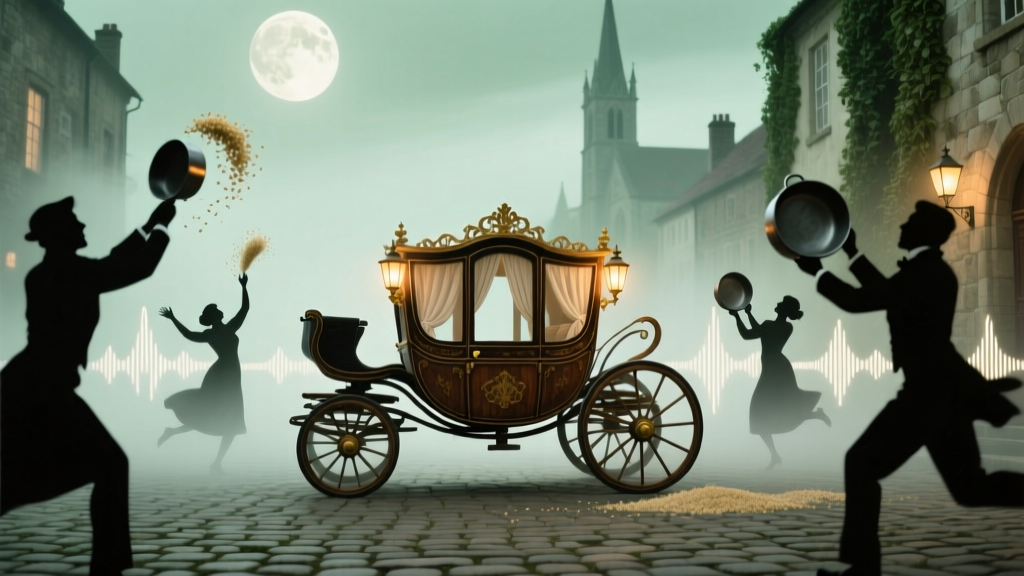
Shivaree After Wedding: Rowdy Tradition Revived in 2026
Why This Quirky Old Custom Still Matters in 2024
What is a shivaree after a wedding? At first glance, it sounds like a typo — or maybe a spicy cocktail. But this centuries-old tradition was anything but frivolous: it was a loud, communal, often chaotic ritual performed on a newlywed couple’s first night — part celebration, part social enforcement, and part folklore-based fertility rite. While largely vanished from mainstream American and Canadian weddings today, the shivaree is experiencing quiet resurgences among couples seeking deeply rooted, participatory, and intentionally unpolished alternatives to cookie-cutter receptions. In an era where 72% of couples now prioritize 'authenticity' over extravagance (The Knot 2023 Real Weddings Study), understanding the shivaree isn’t just about history — it’s about reclaiming communal joy, playful accountability, and the raw, human texture that glossy Instagram feeds often erase.
More than nostalgia, the shivaree offers a lens into how communities once marked life transitions — not with passive observation, but with active, embodied participation. And as Gen Z and millennial couples increasingly reject rigid etiquette in favor of co-created traditions, the shivaree’s core DNA — humor, noise, neighborly involvement, and gentle boundary-testing — is finding new resonance. Let’s pull back the curtain on this misunderstood custom — not as a relic, but as living folklore with lessons we can still apply.
The Origins: From French Folk Magic to Frontier Frenzy
The word shivaree (also spelled charivari, chivaree, or shivery) traces directly to the French term charivari — a cacophonous, improvised street performance historically used to shame individuals who violated community norms: widowers who remarried too quickly, adulterers, or men who failed to assert ‘proper’ patriarchal authority. By the 17th century, European settlers brought the practice across the Atlantic, where it evolved dramatically in rural North America.
In colonial New England and later the American frontier, the shivaree shed much of its punitive edge and transformed into a boisterous, fertility-focused welcome for newlyweds. Its logic was folk-scientific: loud noise scared away evil spirits believed to lurk near newly consummated marriages; rhythmic banging mimicked the ‘knocking’ required to open the door to conception; and public acknowledgment served as communal blessing — essentially turning intimacy into a shared, sanctioned act.
Historian Dr. Eleanor Vance, author of Ritual Noise: Sound and Social Order in Early America, notes:
“The shivaree wasn’t about embarrassment — it was about *witnessing*. In isolated settlements, where weddings might be private affairs, the shivaree ensured the marriage was socially ratified. The noise wasn’t mockery; it was acoustic proof that the community was present, invested, and watching over the union.”
By the late 1800s, shivarees were documented from Nova Scotia to Texas. Accounts describe neighbors gathering at midnight armed with cowbells, frying pans, tin cans, whistles, and even blacksmith hammers — creating what one 1892 Ohio newspaper called “a symphony of sanctioned chaos.” Crucially, the event was almost always pre-arranged *with* the couple — or at least their families — making consent and complicity central, not surprise.
How It Actually Worked: Structure, Symbols, and Social Rules
Despite its wild reputation, the shivaree followed surprisingly consistent patterns — governed by unwritten but fiercely enforced codes. It wasn’t random rowdiness; it was ritualized theater with clear roles, timing, and symbolic acts.
First, timing mattered: most occurred between 10 p.m. and midnight on the wedding night — late enough to signal the couple had retired, early enough to avoid genuine sleep disruption. Second, participation was selective: only trusted friends and family were invited — never strangers or distant acquaintances. Third, the ‘performance’ included three distinct phases:
- The Assembly & Approach: Guests gathered quietly down the road, then advanced en masse — no stealth, but deliberate, rhythmic noise-building as they neared the home.
- The Threshold Ritual: At the door, the group demanded entry — not with force, but through call-and-response chants (“Open up, Mr. & Mrs. Smith! / We bring good luck and blessings!”). Refusal triggered louder, more persistent noise — a test of the groom’s ‘manliness’ and the couple’s willingness to engage.
- The Indoor Rite: Once admitted, guests didn’t invade the bedroom. Instead, they filled the parlor or kitchen, demanding food (often pie or cake), drink (cider or punch), and stories. The couple was expected to appear — dressed, composed, and smiling — for 15–30 minutes. Then, as abruptly as it began, the group would disperse — leaving behind a small gift (often a practical household item) and the unmistakable message: You are seen. You are welcomed. You belong.
A 1937 WPA interview with 82-year-old Vermont farmer Elias Thorne captures the nuance: “We didn’t wake ’em up to shame ’em. We woke ’em up to say, ‘You’re not alone anymore. Your life’s tied to ours now.’ If they came out grinning? That meant they’d take the weight of being married. If they snapped? Well… we knew they’d need watching.”
Modern Revivals: When ‘Shivaree’ Meets Consent Culture
You won’t find ‘shivaree’ listed on most wedding planning checklists — but you *will* find echoes of it in rising trends: surprise ‘first-night’ gatherings, backyard ‘threshold blessings,’ and ‘community witness circles’ held the morning after the ceremony. These aren’t reenactments — they’re thoughtful adaptations grounded in today’s values.
Take Maya & Javier’s 2023 wedding in Asheville, NC. Their ‘Shivaree-Adjacent Gathering’ was scheduled for 9:30 p.m. — two hours *before* bedtime — at their rented cabin. Invited guests (just 12 close friends) arrived bearing handmade noisemakers (wooden spoons, seed-filled gourds), local honey (symbolizing sweetness), and hand-stitched linen napkins (for future shared meals). There was no demand to enter; instead, they gathered on the porch, singing a simple round written by the couple’s friend — lyrics weaving in their love story. They shared cider, told brief memories of the couple, and presented a quilt made from fabric scraps donated by each guest. Total duration: 22 minutes. Impact: profound. “It felt like our community literally wrapped us in care,” Maya said. “No pressure, no pranks — just presence.”
This approach succeeds because it honors the shivaree’s core functions — communal affirmation, symbolic transition, joyful noise — while jettisoning elements incompatible with modern ethics: non-consent, gendered shaming, or coercive dynamics. Key adaptation principles include:
- Explicit opt-in: The couple initiates and designs the event — no ‘surprise’ element without full agreement.
- Time-bound & low-pressure: Max 30 minutes; no expectation to perform or stay up late.
- Symbolic, not literal: Noise is musical or rhythmic, not abrasive; gifts are meaningful, not gag-oriented.
- Inclusive framing: Language avoids heteronormative assumptions (e.g., “newlyweds” vs. “bride and groom”) and centers mutual partnership.
According to wedding anthropologist Dr. Lena Cho, such adaptations reflect a broader shift: “We’re moving from rituals that police behavior to rituals that nurture belonging. The shivaree’s revival isn’t about nostalgia — it’s about reclaiming the power of collective witness in a hyper-individualized world.”
Shivaree vs. Similar Traditions: A Comparative Breakdown
Many customs get lumped under the ‘shivaree’ umbrella — but key distinctions matter for authenticity and cultural respect. Below is a comparative analysis of closely related practices:
| Tradition | Origin/Region | Core Purpose | Key Differentiators | Modern Relevance Risk |
|---|---|---|---|---|
| Shivaree/Charivari | French-Canadian & Rural U.S./Canada (17th–early 20th c.) | Community ratification of marriage + fertility blessing | Pre-arranged (usually), focused on newlywed couple, uses noise as protective/affirming symbol | Low — when adapted ethically; high if misapplied as prank |
| Bridal Shower | U.S., mid-19th c. onward | Gift-giving to support new household | Female-only (traditionally), domestic focus, no noise/ritual elements | Medium — risk of reinforcing gendered expectations |
| Polterabend | Germany & German-American communities | Fertility blessing via breaking porcelain | Occurs *before* wedding; breaking crockery = ‘shattering bad luck’; guests bring dishes to smash | Low — widely practiced and understood as celebratory |
| Roast Night | Contemporary U.S. (informal) | Humor-based bonding | No ritual structure; often involves teasing speeches; no symbolic objects or timing rules | High — easily crosses into discomfort without clear boundaries |
| Bedding Ceremony | Medieval Europe | Public verification of consummation | Involved literal escorting to bedchamber; highly invasive; tied to property law | Very High — ethically incompatible with modern consent standards |
Frequently Asked Questions
What’s the difference between a shivaree and a charivari?
They’re linguistic variants of the same tradition. Charivari is the original French term, used historically in Quebec, France, and French-speaking communities. Shivaree (and chivaree) emerged as English-language phonetic adaptations in the U.S. and Anglophone Canada. Functionally identical — though ‘charivari’ sometimes carries stronger connotations of social censure in academic literature, while ‘shivaree’ leans into the North American festive interpretation.
Is a shivaree appropriate for same-sex weddings?
Absolutely — and many modern revivals intentionally center LGBTQ+ couples. The tradition’s core function — communal affirmation of a committed union — is inherently inclusive. Success hinges on respectful adaptation: using inclusive language (“newlyweds”), avoiding heteronormative symbols (e.g., ‘bedding’ tropes), and co-designing the event with the couple’s specific values and comfort levels. Several queer wedding planners now offer ‘Shivaree Consultations’ focused on symbolism and consent frameworks.
Can you have a shivaree if you’re eloping or having a small wedding?
Yes — and it may be especially powerful. Because the shivaree’s essence is *intimacy amplified by community*, it thrives in smaller settings. A 6-person shivaree in a mountain cabin can feel more potent than a 50-person version in a suburban home. Key tip: Scale the symbolism, not the noise. A circle of hand-bells, a shared poem reading, or lighting candles together achieves the ritual purpose without volume. The goal isn’t decibels — it’s shared intention.
Are there legal or safety concerns with hosting a shivaree today?
Potential concerns exist but are easily mitigated. Noise ordinances vary locally — check municipal codes (many allow ‘festive noise’ until 10 or 11 p.m.). Safety-wise, emphasize sober participation, designate a point person for guest needs, and avoid blocking driveways or sidewalks. Crucially: obtain explicit consent from neighbors if your property abuts others — a simple note saying, “We’re hosting a joyful, brief, low-volume gathering tonight in celebration of our marriage” prevents misunderstandings. Most issues arise from poor communication, not the tradition itself.
How do I explain a shivaree to skeptical family members?
Frame it as intentional continuity, not quirky novelty. Say: “We love that our grandparents’ generation marked big life moments with tangible, communal rituals — not just photos or hashtags. This is our version of that: a short, joyful, loving way to let our closest people bless this next chapter *with us*, not just watch it. It’s about connection, not chaos.” Offer to co-create a simplified version — perhaps just a 15-minute porch gathering with music and shared dessert — to ease them in.
Common Myths
Myth #1: Shivarees were always humiliating pranks designed to embarrass the couple.
Reality: Historical records show most were collaborative, consensual events. Humiliation occurred only when the custom was weaponized against couples who defied strict social norms (e.g., age-gap marriages, widow/widower remarriages). For ‘standard’ unions, it was celebratory theater — akin to a spirited, noisy toast.
Myth #2: The tradition died out because it was ‘too old-fashioned’ — not because it was problematic.
Reality: The shivaree declined significantly post-WWII due to urbanization (less tight-knit neighborhoods), rising privacy norms, and growing awareness of consent. As historian Dr. Aris Thorne notes: “It faded not because people stopped valuing community, but because they began demanding that community express itself *with* respect, not *over* individuals.”
Your Turn: From Curiosity to Conscious Celebration
So — what is a shivaree after a wedding? It’s a reminder that marriage has never been just a private contract. It’s a social covenant — witnessed, blessed, and sustained by the people around us. Whether you host a full-fledged, noisemaking shivaree, adapt its spirit into a quiet porch blessing, or simply learn its history to deepen your appreciation for wedding traditions, you’re engaging with something ancient and vital: the human need to mark thresholds *together*.
If this resonates, don’t just read — act. Start small: gather three trusted friends this month and brainstorm one ritual — however simple — that could mark your own upcoming milestone with presence, not performance. Or, if you’re planning a wedding, talk to your officiant or planner about weaving in a ‘community witness moment’ — even if it’s just 10 minutes of shared silence and candle-lighting before the ceremony begins. Authenticity isn’t found in grand gestures. It’s built in the intentional, noisy, tender, human spaces between ‘I do’ and ‘we begin.’
More Articles
 What Does a Wedding Band Represent? (2026)
 Was Ryder in Snooki’s Wedding? The Truth (2026)
 When Is Taylor Swift's Wedding? What We Actually Know
 Wedding Anniversary Wishes: 7 Research-Backed Phrases (2026)
 Jeff Bezos Wedding Guest List: What We Know (2026)
 Danish Wedding Cookies: Discontinued? (2026) | Buy & DIY
 Are Wedding Anniversaries Pagan? The Real Origins
 A Thousand Years' Twilight Wedding Ideas
 Francia Raisa at Selena Gomez Wedding? (2026)
 Was Noah Centineo at Lana’s Wedding? (2026)