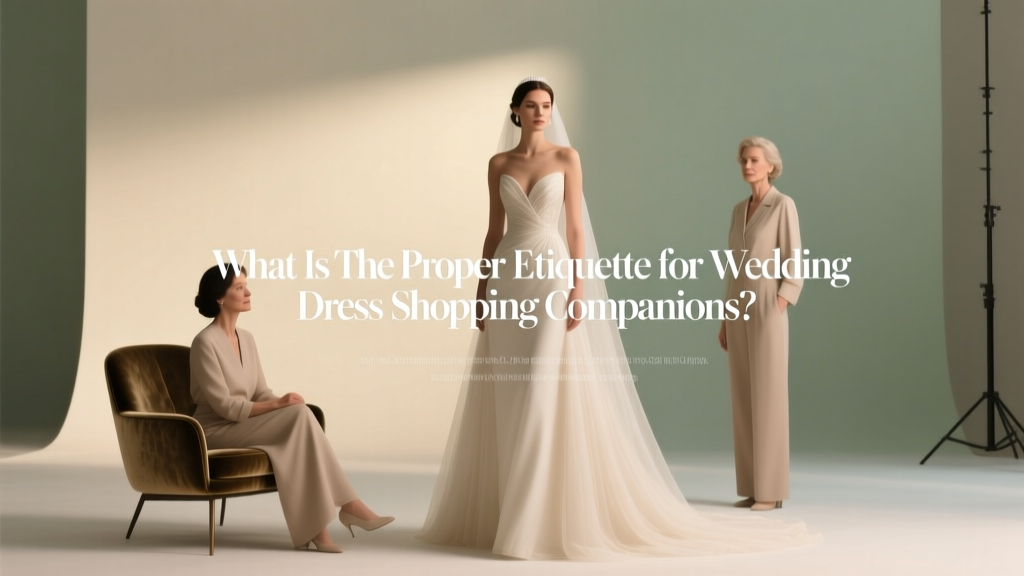
Wedding Dress Shopping Companions: Etiquette Tips
What Is the Proper Etiquette for Wedding Dress Shopping Companions?
Wedding dress shopping can feel like a milestone moment—part practical errand, part emotional memory-maker. It’s also one of the first wedding planning decisions that involves other people’s opinions in a very personal way. Bring the right companions, and you’ll feel supported and confident. Bring the wrong mix (or too many voices), and it can turn stressful fast.
If you’re wondering who to invite, how many people to bring, or how to handle hurt feelings, you’re not alone. Etiquette around wedding dress shopping companions has shifted with modern weddings, tighter timelines, social media, and the rise of virtual appointments.
Quick Answer: The Proper Etiquette
The proper etiquette is to invite a small group of supportive people whose opinions you trust—usually 1 to 3 companions—and to set expectations ahead of time (budget, vibe, photos, and decision-making). You are not obligated to include everyone who expects an invite, and it’s perfectly polite to keep the appointment intimate. If someone important can’t attend, offer an alternative way to involve them, like a follow-up photo (if your salon allows) or a separate celebratory moment.
Q: Who should I bring wedding dress shopping?
A: Bring the people who make you feel calm, celebrated, and heard. Traditionally, that might be a parent (often the mother of the bride), a sister, or a maid of honor. Modern etiquette is more flexible: your best friend, your father, your future spouse, a trusted coworker—anyone can be a great dress shopping companion if they’re supportive and respectful.
As bridal stylist “Elena Park” (fictional) puts it: The best companion isn’t the person with the strongest opinion—it’s the person who understands the bride’s style and helps her stay grounded.
Green flags in a companion:
- They listen more than they talk.
- They respect your budget and timeline.
- They can be honest without being harsh.
- They’re excited for you, not competing for control.
Q: How many people is polite to bring to a bridal boutique?
A: 1–3 is the sweet spot; 4–5 is usually the maximum. Many bridal salons have strict limits due to space and staffing, and even if they don’t, too many opinions can derail your decision. Current wedding trends also favor more curated, intentional dress shopping experiences—think private appointments, champagne add-ons, and stylist-led try-ons—which work best with smaller groups.
“Jordan and Priya,” a recently married couple (fictional), shared: I invited my mom, my sister, and my best friend—three people. I almost invited my whole bridal party, but I’m glad I didn’t. I could actually hear myself think.
Tip: Check the boutique’s guest policy when you book. If they allow only two guests, treat that as a firm boundary you didn’t create—because it is.
Q: Is it rude not to invite my bridesmaids (or future in-laws)?
A: No. Not inviting bridesmaids, future in-laws, or friends is not rude, even if they’re excited. Dress shopping is not a “required invite” event. Etiquette says your decision should be guided by what helps you choose the dress, not by what feels politically fair.
That said, it’s kind to acknowledge feelings—especially with close family. If you worry someone will be hurt, you can say something warm and clear:
I’m keeping the appointment really small so I don’t get overwhelmed, but I’d love to show you my top picks after.
The salon has a guest limit, and I’m bringing just my mom. Can we do a coffee date afterward and I’ll tell you all about it?
Traditional vs. modern approaches: What’s “correct” now?
Scenario 1: Traditional family-centered shopping
Common companions: mother, grandmother, siblings.
Why it works: It honors family traditions and can feel meaningful, especially if family members are contributing financially or have strong sentimental ties to the moment.
Modern etiquette twist: Even in a traditional setup, it’s still okay to set boundaries on comments and photos. If your family is opinionated, consider adding one supportive friend who can help translate your preferences without escalating tension.
Scenario 2: Best-friend/bridal-party energy
Common companions: maid of honor and one or two close friends.
Why it works: Friends often know your day-to-day style and can keep things fun. This is popular for destination weddings, nontraditional venues, and couples leaning into fashion-forward wedding trends.
Watch-out: Groupthink. If everyone loves “sparkly dramatic,” but you’re a minimalist at heart, you may feel pushed off course.
Scenario 3: Inclusive, nontraditional companions
Common companions: dad, step-parent, brother, chosen family, future spouse, or a mix.
Why it works: Many couples prioritize “chosen family” and personal comfort over old rules. It’s also common for LGBTQ+ couples and for anyone with complicated family dynamics.
Etiquette tip: If you’re bringing a partner, decide whether you want the “first look” to be at the boutique or on the wedding day. There’s no wrong answer—just align it with your vision.
Q: What should I tell my companions before the appointment?
A: Set expectations like you would for any important wedding planning task. This is the number-one way to avoid awkwardness and keep everyone on the same team.
Send a simple pre-appointment text covering:
- Budget: “I’m trying to stay around $X for the dress (not counting alterations).”
- Vibe: “I’m looking for clean and modern” or “romantic lace, nothing too heavy.”
- Honesty level: “I want honest feedback, but gently—if I love something, help me figure out why.”
- Photos & social media: “Please don’t post anything. I want to keep it private.”
- Decision plan: “I may not say yes today; I’m narrowing to top two.”
Bridal consultant “Marissa Chen” (fictional) advises: When a bride says upfront what kind of feedback she wants, the whole appointment changes. It becomes supportive instead of chaotic.
Q: How do I handle a companion who’s negative or controlling?
A: Address it quickly, kindly, and clearly. You don’t need a confrontation in a boutique, but you also don’t need to tolerate hurtful comments.
Try these phrases:
I hear you, but that comment isn’t helpful. I’m trying to focus on how I feel in the dress.
Can we keep the feedback to what works and what doesn’t, without comparisons?
I’m getting overwhelmed—let’s take a minute and reset.
If you know someone tends to dominate: don’t invite them to the first appointment. You can include them later for a “final decision” visit—only if you truly want their input.
Q: What about virtual dress shopping, video calls, and social media?
A: Use them strategically, not as an open invitation to everyone’s opinion. A major current trend is mixing in virtual guests—FaceTiming a friend across the country or sending a short video to a parent who couldn’t attend. This can be sweet, but too many remote opinions can flood your phone and your head.
Best practice: Choose one virtual person (max two) and tell them you’ll call at a specific time for your top contenders. Ask the salon about filming rules, since some boutiques limit video for designer or privacy reasons.
Related Questions Couples Often Ask
Q: Should I bring someone who’s paying for the dress?
A: It’s considerate, but not mandatory. If a parent or relative is contributing significantly, inviting them can be a gracious gesture—if your relationship is healthy. If their presence would make you anxious or pressured, you can involve them differently: share your final shortlist, ask them to join the accessories appointment, or invite them to the fitting.
Q: Is it okay to shop alone?
A: Absolutely. Shopping alone is becoming more common, especially for brides who get overwhelmed by opinions. Many people do a solo “research” appointment first, then bring one trusted person to confirm the finalists.
Q: What’s the etiquette if I want multiple appointments with different people?
A: Totally fine—just avoid repeating the entire process for everyone. Do one main appointment with your core decision-makers. If you add a second group, make it purpose-driven (“I’m choosing between Dress A and Dress B”) so you don’t restart from scratch.
Q: What if someone’s feelings are hurt they weren’t invited?
A: Validate, don’t over-explain. A simple, loving message works best: I love you, and I kept the appointment small. I’d really like to include you in ___ instead.
Then follow through with that alternative moment.
Conclusion: The Most Polite Choice Is the One That Supports You
The proper etiquette for wedding dress shopping companions isn’t about pleasing everyone—it’s about choosing a small circle of people who help you feel like yourself. Keep the group manageable, set expectations early, and remember: you’re allowed to protect your experience. The right companions won’t just help you find a dress; they’ll help you recognize the moment you feel like the bride.
More Articles
 Why Wedding Rings Go on the Left Hand (2026)
 Aaron Rodgers Wedding Ring: Truth & 2026 Status
 Is Christmas Wedding Planner a Hallmark Movie? (2026)
 Chinese Wedding Rings: Middle Finger Truth (2026)
 Watch Wedding Impossible (2026) | Legit Streaming Options
 Rain on Wedding Day: Good Luck or Not? (2026)
 Delete Wedding Website on The Knot: Step-by-Step (2026)
 My Big Fat Greek Wedding 3: Release Date, Cast & Plot (2026)
 Wedding Planner Salary: $35K–$125K+ (2026)
 Mexican Wedding Cookies Flatten? 7 Culprits + 1 Mistake