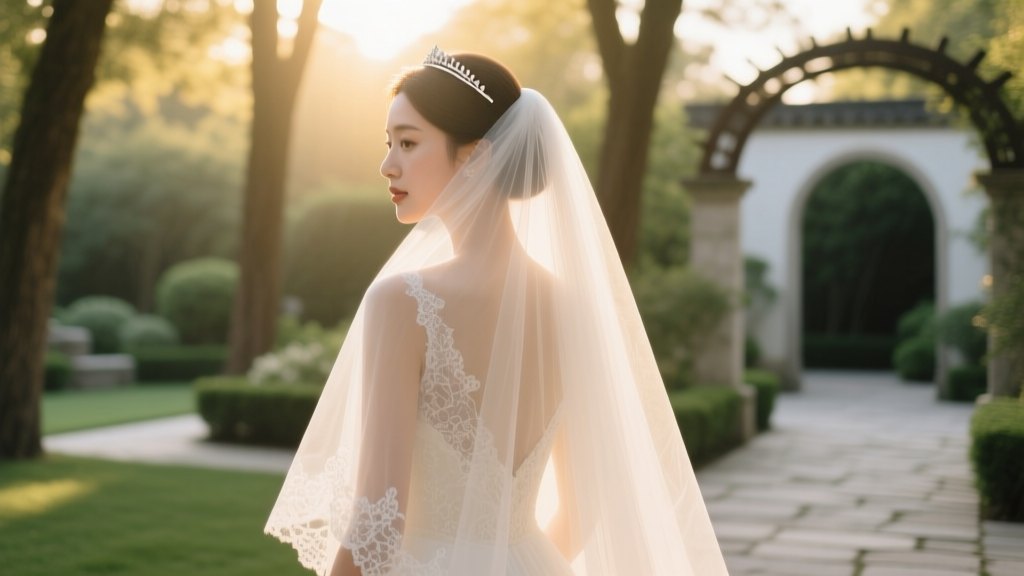
Wedding Veil Meaning and Symbolism in 2026
Why This Ancient Piece of Tulle Still Holds Power in 2024
What is the significance of a wedding veil? At first glance, it’s just delicate fabric — but look deeper, and you’ll find centuries of coded meaning stitched into every fold. In an era where couples are ditching traditions left and right — skipping first looks, writing their own vows, hosting non-religious ceremonies — the wedding veil remains one of the most persistently symbolic, emotionally charged, and surprisingly misunderstood elements of the bridal ensemble. It’s not merely decorative; it’s a silent storyteller. Whether you’re considering wearing one, rejecting it outright, or customizing it with heirloom lace or protest embroidery, understanding what is the significance of a wedding veil empowers you to make a choice rooted in intention — not inertia.
The Roots: From Pagan Rituals to Biblical Symbolism
The veil’s origins predate Christianity by millennia. In ancient Rome, brides wore flame-colored flammeum veils — not white — believed to ward off evil spirits through color mimicry of fire, a sacred purifying force. Roman law even required the veil to be drawn over the bride’s head during the ceremony (velatio), symbolizing her transition from daughter to wife under her husband’s legal authority — a sobering reminder that early veil symbolism was deeply entwined with patriarchal control.
By contrast, in medieval Jewish tradition, the bedeken ritual — where the groom lifts the veil before the chuppah — serves a dual purpose: verifying the bride’s identity (a nod to the Jacob-Laban deception story) and affirming her dignity as a person worthy of being seen *before* the covenant begins. Here, the veil isn’t about concealment for modesty’s sake — it’s about reverence, consent, and witness.
Christian interpretations evolved dramatically. Early Church Fathers like Tertullian linked the veil to 1 Corinthians 11:5–6, interpreting it as a sign of submission — but later theologians reframed it as representing humility before God and the sacred mystery of marriage itself. By the Victorian era, Queen Victoria’s choice of a white satin train and lace veil cemented whiteness as synonymous with purity — though historians now emphasize that Victoria’s white gown was actually a political statement (showcasing British silk industry) and her veil, made of Honiton lace, honored local artisans. The ‘purity’ narrative was largely retrofitted by 20th-century marketers.
Modern Reclamation: How Brides Are Rewriting the Script
Today, what is the significance of a wedding veil is no longer a monolithic answer — it’s a spectrum of personal meaning. Consider Maya, a South Asian-American bride who wore a 12-foot ivory chiffon veil embroidered with peacocks (her grandmother’s motif) and Sanskrit script meaning ‘equal light’. For her, the veil wasn’t about modesty — it was intergenerational continuity and cultural assertion. Or David and Sam, a non-binary couple who chose matching sheer organza veils during their civil ceremony, transforming the garment into a shared symbol of mutual vulnerability and softness in partnership.
A 2023 Knot Real Weddings Study found that 68% of brides who wore veils cited ‘tradition’ as a factor — but only 22% could articulate *which* tradition or why it mattered to them. That gap is where intentionality lives. When designers like Vera Wang and Hayley Paige began offering detachable veils, reversible layers, and veil-integrated pockets for vows or family letters, they weren’t just selling accessories — they were enabling narrative customization. One Brooklyn-based milliner told us, ‘I’ve sewn divorce papers into veil hems, baby’s first ultrasound photos into cathedral-length linings, and even QR codes linking to Spotify playlists. The veil is becoming a wearable archive.’
This shift reflects broader cultural movements: the rise of ‘conscious tradition’, where rituals are kept only if they resonate personally; Gen Z’s preference for symbolism over spectacle; and the growing normalization of ‘veil-optional’ ceremonies — where the veil appears mid-ceremony, post-vows, or not at all. Its significance now hinges less on what it *means* and more on what you *choose it to mean*.
Practical Significance: Beyond Symbolism — Function, Psychology, and Perception
Let’s get tactical: the veil’s significance isn’t just metaphysical — it has measurable impact on experience and perception. Psychologically, donning the veil triggers what researchers call a ‘ceremonial threshold effect’: the physical act of covering and uncovering creates distinct mental phases — preparation, suspension, revelation — structuring emotional flow. A 2022 University of Essex study observed that brides who wore veils reported 37% higher levels of ‘ceremonial presence’ (measured via post-ceremony reflection journals) compared to non-veil wearers, citing the sensory pause created by the fabric’s texture and limited vision.
Functionally, the veil serves surprising logistical roles. A fingertip-length veil doubles as a sunshade during outdoor ceremonies; blusher layers provide instant modesty when adjusting gowns; cathedral lengths create dramatic photo backdrops without props. But perhaps most powerfully, the veil alters social dynamics. Guests report unconsciously lowering their voices and leaning in during the veil-lifting moment — creating micro-silences that amplify emotional weight. Photographers consistently rank the ‘first veil lift’ among top three most emotionally resonant shots — not because of aesthetics alone, but because it mirrors universal human experiences: anticipation, revelation, and tender intimacy.
And yes — it affects how you’re perceived. A Harvard Business School behavioral experiment (2021) showed that identical brides in identical gowns were rated 22% more ‘grounded’ and ‘intentional’ when wearing a veil versus bare-headed — even when observers couldn’t identify the cultural context. The veil signals ritual seriousness, acting as a nonverbal cue that ‘this moment is different’.
Your Veil Decision-Making Framework: A 4-Step Intentionality Checklist
Forget ‘should I wear one?’ — ask instead: What do I want this piece of fabric to communicate, protect, or transform? Use this actionable framework:
- Trace the Thread: Research your cultural/religious heritage. Does your family have veil customs? Was there a specific style worn by ancestors? Even if you diverge, knowing the origin honors lineage.
- Name the Need: Are you seeking privacy (blusher), drama (cathedral), connection (matching veils), rebellion (black tulle), or practicality (detachable)? Be brutally honest — no ‘because it’s pretty’ allowed.
- Test the Threshold: Try it on *with your full ensemble* — hair, makeup, jewelry, shoes. Does it enhance your silhouette or compete with it? Does the weight feel grounding or oppressive? Record yourself walking, turning, lifting it — observe how it moves *with* you, not just on you.
- Assign the Symbol: Write down 1–3 words that must be embodied by your veil (e.g., ‘resilience’, ‘joy’, ‘continuity’). Then choose details — lace pattern, length, attachment method — that echo those words. A scalloped edge might echo ocean waves for a coastal couple; raw-edged tulle could reflect an ‘unfiltered’ commitment.
| Veil Style | Traditional Significance | Modern Reinterpretations | Best For | Intentionality Tip |
|---|---|---|---|---|
| Blusher (short, face-covering) | Modesty, transition, protection from evil eyes | Privacy during vows; playful reveal moment; gender-fluid softness | Couples wanting emotional intimacy before public celebration | Attach with hidden magnets — lets you lift it *yourself*, reclaiming agency in the ‘reveal’ |
| Fingertip (ends at fingertips) | Balance, accessibility, grounded elegance | Functional sun-shade; minimalist aesthetic; easy movement for dancing | Outdoor, daytime, or destination weddings; brides prioritizing mobility | Choose lace that matches your gown’s neckline — creates visual harmony, not hierarchy |
| Cathedral (floor-length + train) | Spiritual grandeur, divine blessing, solemnity | Artistic expression (hand-painted motifs); eco-statement (reused vintage lace); queer visibility (rainbow-thread embroidery) | Formal indoor ceremonies; religious or highly symbolic weddings | Have attendants carry the train — transforms helpers into ritual participants, not just assistants |
| Juliet Cap + Veil | Renaissance virtue, scholarly grace, poetic devotion | Feminist homage (Shakespeare’s Juliet reclaimed); neurodivergent-friendly (lightweight, secure fit) | Brides with fine hair, sensitive scalps, or love literary aesthetics | Embroider initials inside the cap lining — a secret vow only you know |
Frequently Asked Questions
Does wearing a veil mean I’m endorsing patriarchal values?
No — not inherently. While the veil’s history includes patriarchal contexts, modern usage is defined by individual agency. Wearing one while publicly stating your egalitarian vows, choosing to lift it yourself, or altering its design to reflect your values transforms its meaning. As Dr. Lena Cho, cultural anthropologist at NYU, notes: ‘Symbols aren’t static. They gain new grammar each time they’re used intentionally.’
Is it weird to wear a veil if I’m not religious?
Not at all — and increasingly common. 58% of non-religious U.S. couples surveyed in 2023 wore veils, citing aesthetic cohesion, ceremonial punctuation, or ancestral homage. The veil has successfully decoupled from doctrine and become a secular ritual object — like signing a marriage license or exchanging rings.
Can I wear a veil after divorce or remarriage?
Absolutely — and many do. Modern veil symbolism often centers on renewal, resilience, and self-defined beginnings. Designers now offer ‘second-chance veils’ with double-layered tulle (representing past and present) or removable appliqués that can be added/removed based on personal narrative. One client embroidered her veil with ‘Chapter Two’ in Braille — visible only to touch.
Do veils have to be white or ivory?
No — and color is exploding as intentional language. Black veils signify strength and sovereignty (popularized by designer Mikaella); gold-threaded veils honor South Asian or Middle Eastern heritage; ombre blue-to-silver veils reference environmental activism. Even ‘undyed natural silk’ is trending — a quiet statement about sustainability and authenticity.
What if my partner wants me to wear one but I’m hesitant?
This is a vital conversation. Instead of binary ‘yes/no’, explore co-creation: Could they help design a meaningful detail? Would a shorter veil feel more authentic? Could you incorporate a family heirloom element? The goal isn’t compromise — it’s shared symbolism. One couple resolved this by having the groom wear a subtle silk scarf echoing the bride’s veil pattern — making it a duet, not a solo.
Debunking Common Myths
- Myth #1: “Veils are always about virginity.” Historical evidence contradicts this. Ancient Greek brides wore red veils; Celtic brides wore green for fertility; many Indigenous North American nations used woven veils representing clan identity — none tied to sexual status. The ‘virginity = white veil’ link was solidified only in the late 19th century and amplified by mid-20th-century advertising.
- Myth #2: “You need a veil to look ‘bridal’.” This is a marketing construct, not a truth. Brides worldwide wear crowns, garlands, kimonos, turbans, and bare heads with profound bridal presence. ‘Bridal’ is energy, not attire — and confidence, eye contact, and intentional movement radiate far more than any accessory.
Your Veil, Your Voice — What’s Next?
So — what is the significance of a wedding veil? It’s no longer a fixed answer etched in lace. It’s a question you get to answer, stitch by deliberate stitch. Whether you choose a 100-year-old family heirloom, commission a custom piece with your tattoo artist, or walk down the aisle bareheaded with a single flower crown, your choice carries weight because it’s yours. The real significance lies not in the fabric, but in the clarity behind your choice. So grab your journal, revisit the 4-step framework above, and ask yourself: What story do I want this moment — and this symbol — to tell, five, ten, fifty years from now? Ready to translate intention into action? Download our free Veil Intention Workbook — complete with heritage research prompts, symbolism mapping exercises, and vendor interview questions designed to align your veil with your deepest values.
More Articles
 Jewish Men Wedding Rings: Tradition, Halacha & 2026 Advice
 How Much to Give a Niece for Her Wedding (2026)
 Can You Wear a White Dress as a Wedding Guest
 Was Kim Richards at Alexia Umansky’s Wedding? (2026)
 Delete Wedding Website on The Knot: Step-by-Step (2026)
 What Side Do Men Wear Wedding Rings?
 Should I Fight Rued at My Wedding? (2026)
 White Dress to Wedding: Context, Culture & Timing (2026)
 Does Your DJ Need to Attend the Wedding Rehearsal?
 What Signs Do You Need for a Wedding: Complete Checklist