## Your Guests' First Impression Happens Before the Wedding
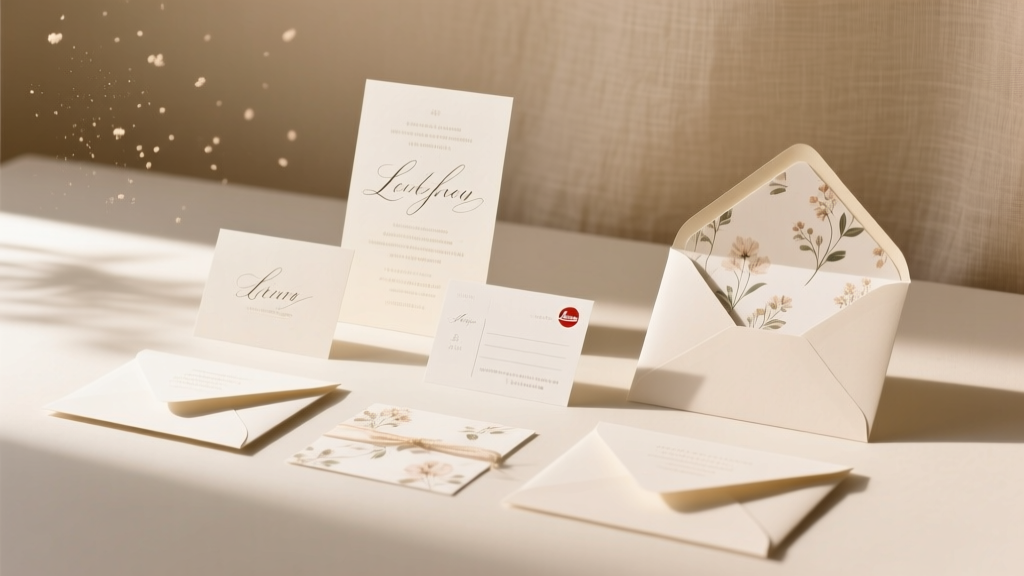
Before your guests see the flowers, taste the cake, or hear the music, they hold your wedding stationery in their hands. That envelope in the mailbox sets the tone for everything that follows. Yet many couples treat stationery as an afterthought — and end up scrambling six weeks before the wedding. Understanding what wedding stationery is, and what it includes, helps you plan smarter and create a cohesive experience from the very first RSVP.
---
## What Is Wedding Stationery, Exactly?
Wedding stationery is the collection of printed (or digital) paper goods used throughout your wedding journey — from the first save-the-date to the thank-you note after the honeymoon. It serves two purposes: practical communication and aesthetic storytelling.
Most wedding stationery falls into three phases:
**1. Pre-Wedding Stationery**
- **Save-the-dates** — Sent 6–12 months out, especially for destination weddings
- **Wedding invitations** — The centerpiece of your stationery suite; typically mailed 6–8 weeks before the date
- **RSVP cards** — Enclosed with invitations to collect meal choices and guest counts
- **Details cards** — Directions, hotel blocks, dress code, or wedding website info
- **Enclosure cards** — Rehearsal dinner invites, welcome party notices
**2. Day-Of Wedding Stationery**
- **Ceremony programs** — Guide guests through the order of service
- **Escort cards and place cards** — Direct guests to their seats at the reception
- **Menus** — Per-plate or table menus listing the meal courses
- **Table numbers** — Simple but essential for reception flow
- **Signage** — Welcome signs, seating charts, bar menus, card box signs
**3. Post-Wedding Stationery**
- **Thank-you cards** — Sent within 3 months of the wedding to acknowledge gifts
- **Announcement cards** — For couples who eloped or had an intimate ceremony
Together, these pieces form what designers call a **wedding stationery suite** — a coordinated set that shares fonts, colors, and design motifs.
---
## How to Choose Your Wedding Stationery Style
Your stationery should reflect your wedding's overall aesthetic. Here's a practical framework:
**Match your venue and vibe.** A rustic barn wedding calls for kraft paper and hand-lettered fonts. A black-tie ballroom event suits letterpress or foil-stamped cardstock. Coastal weddings pair well with watercolor illustrations and linen textures.
**Decide on printing method early.** The four main options vary significantly in cost and lead time:
| Method | Look | Avg. Cost (per suite) | Lead Time |
|---|---|---|---|
| Digital printing | Clean, flat | $2–$5 | 1–2 weeks |
| Letterpress | Debossed, tactile | $8–$15 | 4–6 weeks |
| Foil stamping | Metallic shine | $10–$20 | 4–8 weeks |
| Engraving | Raised ink, formal | $15–$30 | 6–10 weeks |
**Set a realistic budget.** Industry data from The Knot suggests couples spend an average of $590 on wedding stationery, though full custom suites with specialty printing can reach $2,000+. A good rule of thumb: allocate 2–3% of your total wedding budget to stationery.
**Order extras.** Always order 10–15% more than your guest count. Reprints cost significantly more per unit than adding to your original order.
---
## DIY vs. Professional Wedding Stationery: What Actually Saves Money
The DIY route looks appealing — Canva templates, home printing, and an afternoon of assembly. But the real costs are often hidden:
- **Time:** Designing, printing, cutting, and assembling 100 invitation suites takes 15–25 hours
- **Materials:** Quality cardstock, envelopes, ribbon, and wax seals add up quickly
- **Errors:** A misprint on 100 invitations means reprinting everything
**When DIY makes sense:** Digital invitations, simple signage, or escort cards where imperfection adds charm.
**When to hire a stationer:** Formal weddings, large guest lists (150+), specialty printing techniques, or when you simply don't have the bandwidth.
A middle path many couples use: purchase semi-custom templates from designers on Etsy ($15–$60), customize the text yourself, and send the files to a local print shop. This approach cuts costs by 40–60% compared to fully custom stationery while maintaining a polished look.
---
## Common Myths About Wedding Stationery
**Myth #1: "Digital invitations are tacky or informal."**
This is outdated thinking. Digital wedding invitations have become widely accepted, particularly for casual celebrations, eco-conscious couples, or as a supplement to paper invites. Platforms like Paperless Post and Zola offer beautifully designed digital suites that track RSVPs automatically. For formal or traditional weddings, paper remains the standard — but digital is a legitimate, elegant choice for many couples.
**Myth #2: "You only need invitations — everything else is optional."**
Technically true, but practically shortsighted. Skipping day-of stationery like programs, menus, and escort cards shifts the burden onto your venue staff and wedding coordinator. Guests without programs feel lost during the ceremony. Missing place cards create seating chaos at dinner. These pieces aren't decorative extras — they're functional tools that keep your event running smoothly.
---
## Start With the Invitation Suite, Then Build Out
Wedding stationery is more than paper — it's the visual language of your wedding day, communicating your style, setting expectations, and making guests feel genuinely invited into something special.
**Your one next step:** Determine your guest count and wedding date, then research 2–3 stationers or template shops whose aesthetic matches your vision. Request samples if you're considering letterpress or foil printing — the difference between seeing a design on screen and holding it in your hands is significant.
The right stationery suite doesn't have to be expensive. It just has to be intentional.
 How to Handle Wedding Registry Items That Are Too Expensive
 Why Hannah Mears Postponed Her Wedding (2026)
 Sell Your Wedding Dress: A Data-Backed Guide (2026)
 Can You Wear a Wedding Ring During an MRI?
 Did Nina Go to Ian’s Wedding? The Real Story
 What Strain Is Wedding Cake: Indica or Sativa? (2026)
 Red Wedding: Game of Thrones S3E9
 Most Expensive Wedding Dress: $12.5M Gown (2026)
 Wedding vs Engagement Rings: Key Differences (2026)
 Did Kathy Attend Farrah’s Wedding? The Truth (2026)