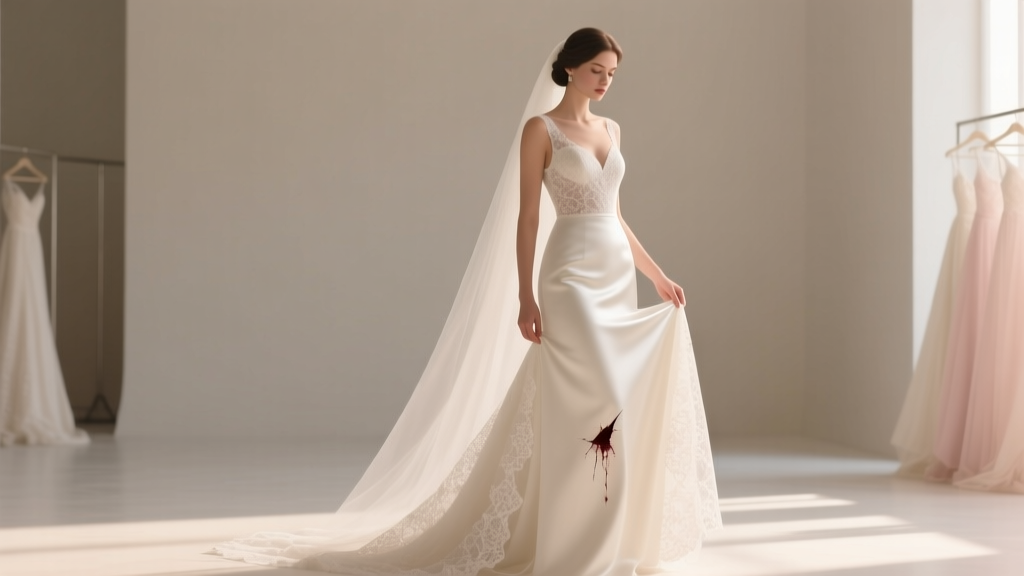
What to Do If Your Wedding Dress Arrives Damaged
What to Do If Your Wedding Dress Arrives Damaged
You wait weeks (sometimes months) for your wedding dress to arrive, and when the box finally shows up, your heart is racing—in the best way. Then you open it and see a snag, a stain, crushed boning, or a zipper that won’t budge. It’s the kind of moment that can make even the calmest bride or groom feel instantly panicked.
If your wedding dress arrives damaged, the clock can feel loud. Alterations, fittings, photos, and travel plans don’t pause. The good news: most dress issues are fixable, and most boutiques, designers, and shipping carriers have a process for resolving damage—especially when you act quickly and document everything.
The direct answer: What should you do first?
Stop and document the damage immediately, then contact the seller/designer right away before attempting any repairs or alterations. Take clear photos and video, keep all packaging, and ask for written next steps. Most of the time, you’ll be offered one of these solutions: a replacement dress, a repair paid for by the seller, a partial refund/credit, or a rush alteration plan.
Q: Step-by-step, what should I do the moment I notice damage?
1) Don’t remove tags or start alterations yet.
Even if the fix seems tiny, altering or cleaning the dress can complicate a return or reimbursement. Leave tags on and keep the dress exactly as it arrived until you’ve spoken to the retailer or designer.
2) Take photos and video right away.
Use bright natural light. Take:
- Wide shots of the entire gown (front/back)
- Close-ups of the damage (snags, holes, stains, broken zipper, missing buttons)
- A short video showing the issue (for example, a zipper that separates or a seam pulling open)
- Photos of the shipping box, label, and any crushed areas
3) Save everything: box, tissue, garment bag, receipts.
If shipping damage is involved, carriers and boutiques often require packaging evidence.
4) Check the timeline and your contract.
Look for language around “inspection window,” “claims period,” “final sale,” and “custom orders.” Many shops require notification within 24–72 hours.
5) Contact the seller—phone + email.
Call for speed, then email for a paper trail. Include your order number, event date, and photos. Keep your tone calm and factual.
6) Ask one key question: “What are my options, and what do you recommend given my wedding date?”
This frames the conversation around solutions.
“When a gown arrives with damage, time-stamped photos are your best friend,” says Renee Alvarez, bridal salon manager in Chicago. “If you contact us within a day or two and haven’t altered it, we can usually offer a replacement, arrange a repair with our seamstress, or file a shipping claim quickly.”
Q: What kinds of “damage” are common—and what’s typically fixable?
Very common issues include:
- Snags or pulls in tulle, chiffon, or lace
- Loose beads or sequins (especially on heavily embellished gowns)
- Stains from handling, makeup, or packaging dye transfer
- Wrinkles and creasing from shipping (not usually “damage,” but alarming)
- Broken zipper, stuck zipper, or missing hook-and-eye
- Crushed cups or boning in structured bodices
- Hem tears or small seam splits
Often fixable quickly: loose stitching, popped seam, missing button, minor zipper issues, light dirt on hem, and wrinkles (a professional steam usually solves the “it arrived looking flat” panic).
More serious: significant staining, ripped lace motifs, misaligned bodice structure, large tears, or incorrect dress shipped. These may justify a replacement dress, a partial refund, or a paid restoration by a specialist.
Real-couple example: “My dress arrived with two small gray smudges on the skirt,” says Taylor, married in 2024. “I wanted to scrub it immediately. The boutique asked me not to touch it and arranged a local bridal cleaner. They covered the cost, and the spots lifted completely.”
Q: Should I go through the boutique/designer or the shipping carrier?
Start with the seller or boutique first. They typically have established relationships with carriers and a preferred claims process. If you file a claim on your own too early, you might accidentally conflict with their process.
Exception: If you shipped the dress yourself (for example, a pre-owned gown from a resale site or a friend) and you are the shipper of record, you may need to file directly with the carrier. Still, document everything the same way.
“Most brides don’t realize that shipping insurance and claims can be very specific,” says Devon Patel, logistics coordinator for a bridal designer. “We always recommend the customer contacts us first so we can guide the claim and also offer a faster fix if the wedding date is close.”
Traditional vs. modern approaches: How couples handle it now
Traditional approach: Replace the gown if there’s any visible flaw. Historically, many brides felt the dress needed to be “perfect” in a very strict sense, especially for formal ceremonies and ballroom venues. This mindset still makes sense if the damage is visible in photos or impacts fit.
Modern approach: Repair strategically and move forward—especially for intimate weddings, courthouse ceremonies, and destination celebrations. With today’s trends (minimalist slip dresses, detachable sleeves, mix-and-match bridal looks, and second outfits), many couples choose the most practical option: a professional repair plus a solid backup plan.
Current wedding trend note: More couples are buying dresses online, ordering made-to-measure, or choosing pre-owned wedding dresses. That can mean less in-person quality control before the gown reaches you—so quick inspection at delivery has become part of modern wedding planning.
Q: What should I say when I email the boutique or designer?
Keep it simple and solution-focused. Here’s wording you can adapt:
Subject: Urgent: Damaged wedding dress delivery (Order #12345, Wedding Date: June 15)
Hi [Name/Team],
My wedding dress arrived today and I noticed damage: [brief description]. I’ve attached photos and a short video, plus images of the packaging. The dress is unaltered and tags are still attached.
My wedding date is [date]. Please advise the fastest options you recommend (repair, replacement, or other). I’m available at [phone] to coordinate today.
Thank you,
[Your Name]
Q: What if my wedding is soon and I can’t wait for a replacement?
If you’re inside a two- to four-week window (or closer), think in terms of a “Plan A + Plan B + Plan C.”
- Plan A: Boutique-authorized repair with a trusted seamstress (ideally one who specializes in bridal alterations and beading).
- Plan B: Professional cleaning/restoration if stains are involved (not a regular dry cleaner—look for “bridal gown cleaning” or “couture restoration”).
- Plan C: A backup wedding outfit (simple white dress, jumpsuit, or reception dress) that you can buy quickly and tailor easily.
Real-couple example: “My zipper split three weeks out,” says Jasmine, married in 2023. “The boutique couldn’t get a replacement in time, but their seamstress replaced the zipper in two days and reinforced the seam. I also ordered a simple backup dress online just in case. I didn’t need it, but having it made me sleep again.”
Q: Can I try to fix it myself?
Only after you’ve gotten written approval from the seller (if you plan to seek reimbursement) and you’re sure it won’t affect returns. DIY fixes that often backfire: trimming threads, spot-cleaning mystery stains, pulling on a stuck zipper, ironing delicate fabric, or tugging at lace appliqués.
If you do need a quick temporary solution (like a loose hook-and-eye), use it only for a brief try-on—and tell your seamstress exactly what you did.
Actionable tips to protect yourself (and your timeline)
- Inspect immediately: Open the box the day it arrives, even if your fitting is later.
- Schedule a “damage buffer”: If possible, plan delivery 8–12 weeks before the wedding to allow for fixes and alterations.
- Don’t store it in plastic long-term: Once resolved, store in a breathable garment bag in a cool, dry place.
- Use a bridal-specific tailor: Especially for lace repair, beading, boning, and zippers.
- Ask about rush options: Many designers can expedite remakes for a fee; boutiques may loan a sample for photos or as an emergency stand-in.
Related questions couples also ask (edge cases)
What if it’s a custom or made-to-measure dress?
Custom orders can still be eligible for repair coverage or partial refund if the damage occurred during shipping or construction. Focus on documentation and ask what the designer will authorize locally if time is short.
What if the dress is “final sale”?
“Final sale” often refers to returns for preference, not defects. Damage on arrival is different. Stay calm, share evidence, and ask for a remedy (repair, replacement, or credit).
What if it’s a pre-owned wedding dress?
If you bought from a resale marketplace, check the platform’s dispute window immediately. Provide photos and request a resolution (partial refund for repairs is common). If it was shipped uninsured, prioritize finding a skilled seamstress and request a repair quote you can use in your dispute.
What if the damage is just wrinkles?
Shipping wrinkles are normal. A professional steam (or steaming in a bathroom while running a hot shower, without soaking the fabric) can help, but be careful with delicate materials and beadwork. When in doubt, have a bridal boutique or tailor steam it.
Should I tell my photographer or planner?
Yes—if timing is tight. A planner can rearrange fitting days, and a photographer can adjust portrait timing if you’re waiting on a repair. This is a very normal behind-the-scenes hiccup.
Conclusion: You have options—even if it feels like a disaster
A damaged wedding dress is upsetting, but it’s usually solvable with quick documentation, the right contacts, and a realistic timeline plan. Keep the gown unaltered, photograph everything, reach out immediately, and lean on bridal professionals who fix problems like this every week. You’re not the first couple this has happened to—and you won’t be the last. With a clear plan (and a backup outfit if needed), you can still walk down the aisle feeling confident and fully yourself.
More Articles
 The Wedding Banquet Streaming (2026) | Legal HD Options
 Was Kim Richards at Alexia Umansky’s Wedding? (2026)
 Amanda Schull Royal Wedding Rumor: Truth or Fake?
 Wedding Announcements Etiquette (2026)
 Who Pays for the Honeymoon These Days
 Adam Sandler’s Age in The Wedding Singer (2026)
 Who Should Manage the Wedding Day Timeline
 Average U.S. Wedding Cost in 2026: Real Numbers
 Vinny Invited to Nicole’s Wedding? (2026)
 Where to Watch Wedding Agreement Season 2 (2026)