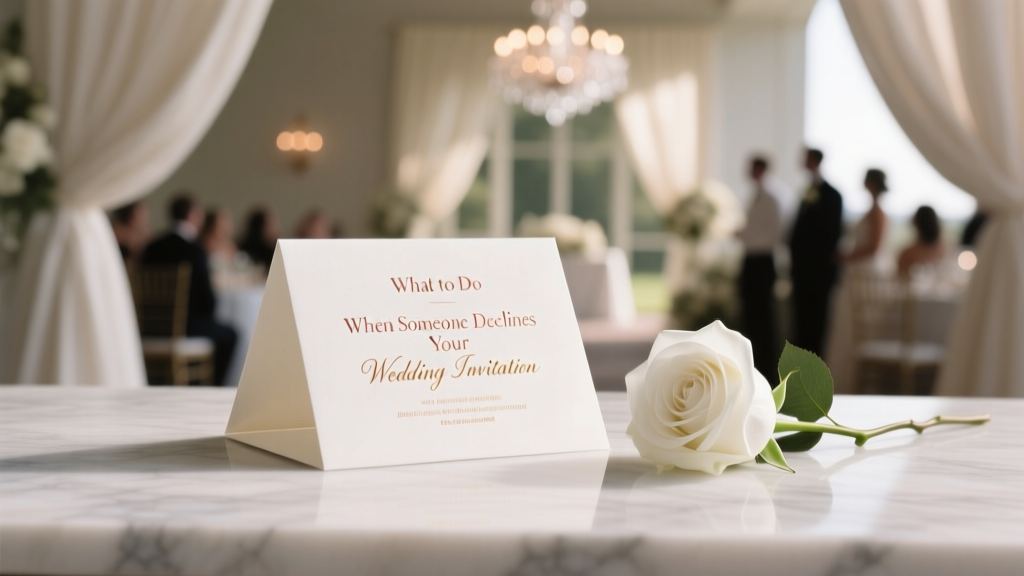
What to Do When Someone Declines Your Wedding Invitation
What to Do When Someone Declines Your Wedding Invitation
Few wedding planning moments feel as oddly personal as a declined RSVP. You send an invitation with excitement, you picture them there, and then you get a polite “No.” It can sting—especially if it’s someone you assumed would be part of your day.
The tricky part is that declines are normal, even for close friends and family. Between travel costs, packed calendars, health concerns, and smaller guest lists, modern weddings come with more RSVP “no’s” than many couples expect. Knowing how to respond with grace (and without spiraling) protects your relationships and keeps your planning on track.
Quick answer: How should you handle a wedding invitation decline?
Reply kindly, thank them for letting you know, avoid pressuring them to explain, and update your guest list and budget immediately. If you’re close, you can follow up later with a warm note or offer another way to celebrate—like grabbing coffee, inviting them to a low-key post-wedding hang, or sharing photos afterward.
Q: What should I say when someone declines our wedding invitation?
A: Aim for short, gracious, and calm. You don’t need to match their level of detail, and you don’t need to “fix” the situation.
Here are a few copy-and-paste responses that work for text, email, or a quick call:
- Simple and warm: “Thanks so much for letting us know. We’ll miss you, but we totally understand. Hope we can celebrate together another time!”
- For a close friend: “I’m sad you can’t make it, but I get it. Want to do dinner when things calm down? I’d love to catch up.”
- For family: “Thank you for telling us. We’ll miss you on the day, but we’re grateful for your love and support.”
- If they shared a tough reason: “I’m really sorry you’re dealing with that. Please take care of yourself—no worries at all about the wedding.”
Wedding planner Marisol Grant of Meadow & Marigold Events puts it simply: The best RSVP etiquette is mutual: guests respond promptly and couples respond graciously. A decline isn’t a rejection—it’s information.
Q: Why do people decline wedding invitations—especially now?
A: Most declines come down to logistics, finances, health, or life timing—not your relationship.
Current wedding trends have made declines more common:
- Destination weddings and “wedding weekends”: Multi-day commitments are harder for guests with kids, limited PTO, or tight budgets.
- Higher travel costs: Flights and hotels fluctuate, and guests often decide based on total cost, not how much they love you.
- Smaller guest lists: Couples are prioritizing intimate celebrations, which can shift expectations and create awkwardness around who can attend what.
- Health and caregiving: Some guests are managing chronic illness, elder care, or immunocompromised family members—things they may not want to explain.
A real-couple example (shared with permission): We were shocked when my cousin declined—until she told me privately she was going through IVF and didn’t want to be around drinking and late nights. I felt awful for taking it personally
, says Brianna, who married in 2024.
Q: Is it rude if someone declines without a reason?
A: Not necessarily. Traditional etiquette says a guest doesn’t owe a detailed explanation. A prompt RSVP is the polite part.
From a modern etiquette perspective, many people avoid specifics because they don’t want to burden you—or they’re dealing with something private (money, health, relationship issues, pregnancy loss, job uncertainty). If they’re important to you, you can respond with warmth and leave space for them to share more if they choose.
Q: What if the decline feels personal?
A: Pause before you interpret it. Then look for facts: Did they RSVP promptly? Were they kind? Have they shown support in other ways?
It can feel personal if:
- They attended other weddings recently
- They’re local and still said no
- Your relationship has been rocky
Even then, there may be a reasonable explanation. If you truly suspect a relationship issue, wait until after the wedding to address it. Your wedding week is not the time for a “so why didn’t you come?” conversation.
Etiquette coach (and former venue manager) Daniel Cho shares this rule: If you wouldn’t want to hear their full, honest reason, don’t ask for it.
Traditional vs. modern approaches: Do we need to call them?
Traditional approach: For older relatives or very formal weddings, a brief phone call can be a respectful touch—especially if they’re immediate family or someone who might be hurt by a text-only response.
Modern approach: A kind text or email is completely acceptable, particularly for friends, coworkers, and extended family. Many couples track RSVPs online through a wedding website, and guests are used to quick, digital communication.
Practical guideline: Match the relationship. If you’d normally text, text. If it’s your grandmother or a mentor, consider a call or handwritten note.
Q: What should we do on the planning side after someone declines?
A: Treat declines as actionable planning data.
- Update your guest list tracker immediately. If you’re using a wedding RSVP tool or spreadsheet, mark them as “declined” and note if they sent a gift or message.
- Tell your caterer only when you have enough declines to matter. Many catering deadlines are 1–2 weeks before the wedding. Don’t panic-adjust too early.
- Use your “B-list” carefully (if you have one). Inviting additional guests is fine if you do it thoughtfully and early enough that it doesn’t feel like a last-minute seat-filler.
- Revisit your seating chart strategy. Declines can actually make your seating chart easier. Consider consolidating tables or upgrading a few spots for comfort.
- Watch your budget expectations. A decline might lower your headcount, but not always your final costs (minimums and fixed fees still apply). It can, however, free up room for upgrades like late-night snacks or a nicer champagne toast.
Q: Should we invite someone else if a guest declines?
A: Yes—if it’s done with good timing and tact. This is one of the most searched etiquette questions for a reason.
Best practices for inviting someone from a “backup list”:
- Wait until you have a real decline, not a hunch.
- Send the invitation as soon as possible, ideally more than 4–6 weeks out (earlier if travel is involved).
- Don’t mention the “B-list.” Just invite them normally: “We’d love to have you join us.”
- Avoid backfilling very late unless the person is local and you’re confident it won’t feel awkward.
Edge cases couples worry about
Q: What if someone declines but sends a gift?
A: Send a thank-you note the same way you would for any wedding gift. You can add one line acknowledging you’ll miss them. Example: “Thank you so much for your generous gift—we’ll miss celebrating with you, and we’re grateful for your love.”
Q: What if they decline after saying they were coming?
A: If it’s before your final headcount deadline, respond with grace and adjust. If it’s after your deadline, it’s okay to feel annoyed—but still keep your reply polite. People cancel for emergencies, illness, childcare collapses, or sudden work travel. If you’re very close, you can check in: “Is everything okay?”
Q: What if they say “no” because of our no-kids rule or other wedding policies?
A: Respect the boundary on both sides. You’re allowed to set an adults-only wedding; they’re allowed to decline if childcare isn’t possible. A calm response preserves the relationship: “We understand completely—thank you for letting us know.”
Q: What if it’s someone we really want there—can we persuade them?
A: A single gentle check-in is fine for a VIP (like a sibling): “We’d love to have you if there’s any way—no pressure. Is it travel, timing, or something else?” If they still decline, drop it. Repeated persuasion can turn a normal RSVP into lasting resentment.
Q: What if they never RSVP at all?
A: That’s different from a decline. Send a clear, friendly follow-up by your RSVP deadline: “Hi! We’re finalizing numbers—can you let us know by Friday if you’re able to attend?” If they still don’t respond, you’re allowed to mark them as “declined.”
Conclusion: The most gracious response is also the easiest
When someone declines your wedding invitation, the best move is simple: be kind, don’t take it personally, and use the information to plan confidently. The people who can be there will show up with love—and the people who can’t may still support you in meaningful ways. Your wedding isn’t a test of loyalty; it’s a celebration, and you deserve to enjoy it without chasing every RSVP.
More Articles
 Wedding Band Rules: What Your Choice Reveals (2026)
 Wedding Vows Explained: Legal, Emotional & Cultural Truth
 Why Did Criston Cole Kill Joffrey? Dance of Dragons Spark
 Lydia Plath’s Wedding Facts: Verified 2026 Timeline
 How Was the Wedding Meaning? Decoded
 Italian Wedding Soup Carbs: Real Count & Low-Carb Swaps
 Italian Wedding Cake: History, Varieties & Symbolism
 What to Do If Your Wedding Flowers Arrive Wilting
 Did Simone Biles’ Biological Mother Attend Her Wedding?
 Wedding Anniversary Wishes That Actually Connect