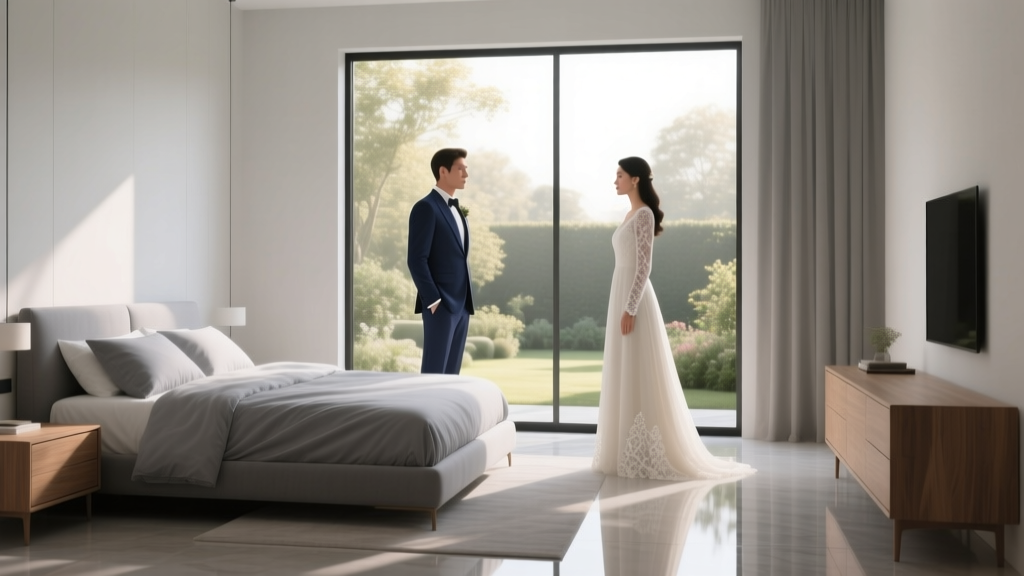
Who Gets the Master Bedroom on the Wedding Night
Who Gets the Master Bedroom on the Wedding Night?
When you’re planning a wedding, it’s amazing how quickly you go from big, dreamy decisions to surprisingly specific questions—like who should sleep in the master bedroom on the wedding night. If you’re getting married at home, renting a vacation house, or staying at a hotel suite with family nearby, the “master bedroom question” can suddenly feel loaded with etiquette, emotions, and logistics.
This matters because your wedding night sits at the intersection of comfort, tradition, and family dynamics. A simple sleeping arrangement can accidentally turn into a statement about priorities—or spark stress you don’t need after a long day of celebrating.
Quick answer: The couple getting married gets the master bedroom.
In modern wedding etiquette, the newlyweds get the best room—whether that’s the master bedroom in a home or rental, the honeymoon suite at a hotel, or the most private room available. It’s your wedding night, and the priority is giving you a quiet, comfortable space to decompress, change clothes, store gifts, and actually rest.
As planner Renee Alvarez (fictional), owner of Silver Thread Weddings, puts it: “If the wedding is centered around the couple, the sleeping arrangements should be, too. The master bedroom is the simplest way to give them privacy and a calm landing spot at the end of the day.”
Why this is the standard (and why it’s not rude)
Some couples worry it will seem ungrateful to take the master bedroom—especially if parents are hosting, paying, or older relatives are involved. But etiquette has shifted in a way that’s actually pretty straightforward: comfort and privacy for the couple takes precedence on the wedding night.
There are practical reasons, too:
- Privacy: You’ll likely be changing, winding down, and wanting quiet.
- Security: Cards, envelopes, rings, extra cash, or personal items often need a safe, private place.
- Convenience: The couple may need the closest access to a bathroom, mirror space, or outlets for last-minute touch-ups.
- Emotional decompression: Even the happiest wedding is intense. Having a peaceful room helps you end the night well.
One real-world experience (shared with permission; names changed) from “Maya & Jordan” (fictional) sums it up: “We tried to be ‘easygoing’ and offered my parents the master at the lake house. By midnight, we were tiptoeing around, couldn’t find our bag, and felt like guests at our own wedding weekend. The next night we swapped—and it instantly felt more like our celebration.”
Traditional vs. modern approaches: why the answer can feel complicated
Traditional approach: hosts get the master bedroom
In some families, especially where the wedding is hosted at a parent’s home, there’s a long-standing belief that the homeowners (often the parents) keep their room. In that scenario, the couple might sleep in a guest room or a nearby hotel.
This tradition is most common when:
- The couple is not staying overnight at the home.
- Parents are older and need their familiar bed or a specific mattress setup.
- The home is being used mainly as a venue, not a “wedding weekend” house.
Modern approach: the couple gets the best room available
Current wedding trends lean toward “wedding weekends” and shared rentals—think Airbnb buyouts, estate venues, and destination-style stays with the wedding party. In those situations, couples usually take the primary suite because it functions as both a retreat and a practical headquarters for the day.
Wedding stylist Caleb Nguyen (fictional) explains it this way: “The primary suite often becomes the getting-ready suite, the photo backdrop, and the place where the couple’s personal items live. It’s less about status and more about using the space efficiently.”
Common scenarios (and what to do in each)
1) You’re getting married at your parents’ home
Best etiquette option: Stay at a hotel on your wedding night. This is the cleanest solution if you sense your parents feel strongly about keeping their room.
If you want to stay at the house: Ask directly but gently. For example: “Would you be comfortable if we use the master for the wedding night? It would really help with privacy and keeping our things together.”
2) You rented a house for the wedding weekend (Airbnb, VRBO, estate rental)
Standard expectation: The couple gets the largest/most private suite—especially if you’re paying for the rental.
Pro tip: Put it in writing in the group message early: “Just confirming room assignments—Alex and I will take the primary suite, and we’ll share the rest of the room list later today.” When you say it plainly, it becomes normal.
3) You’re sharing a house with parents who paid for most of the wedding
Kind but clear approach: Acknowledge their generosity and still claim the space. Example: “We’re so grateful for everything you’ve done. For the wedding night, we’d love the most private room so we can decompress. Would that work for you?”
If you suspect this could be sensitive, you can offer a “comfort upgrade” in return—like letting parents pick their preferred guest room, providing nice linens, or booking them a nearby hotel room if they’d rather not stay in the house at all.
4) The master bedroom is also the getting-ready room
If the master suite will be used for hair/makeup and photos, it’s almost always best for the couple to have it overnight too. That reduces confusion about personal items and prevents awkward “Can we come in and grab the steamer?” moments.
5) The couple isn’t actually sleeping there (after-party, flight, or separate hotel)
If you’re leaving right after the reception or staying elsewhere, you can assign the master bedroom to someone else—often parents, a VIP relative, or whoever needs the quietest space. Etiquette is flexible when you’re not using the room.
How to handle it gracefully: tips that prevent drama
- Decide early. Room politics get worse when they’re decided late at night after a rehearsal dinner.
- Use practical language. “We need a private place for cards/gifts” lands better than “It’s our right.”
- Offer upgrades elsewhere. If someone is giving up the master, give them first pick of remaining rooms, add a welcome basket, or arrange breakfast delivery.
- Assign rooms in writing. A simple room chart or group text avoids repeated conversations.
- Build in privacy. If the master is near high-traffic areas, add a door sign, establish a “no entry” rule, and designate a separate space for late-night hangouts.
Couple experience from “Sam & Priya” (fictional): “We told everyone upfront: the primary suite is ours, and we’re locking gift cards and envelopes in the closet safe. No one argued because it sounded like logistics, not ego.”
Related questions couples also ask
What if a grandparent or parent has mobility needs and the master is on the main floor?
Comfort and safety can override the default. If the master is the only accessible room, give it to the person who needs it and book yourselves a hotel or take the next-best private room. A good compromise is: accessible room for the person who needs it most; the couple gets the most private remaining room plus a quiet “no visitors” rule.
What if the best room is culturally expected to go to the parents?
Some cultures place strong emphasis on honoring elders or hosts. If that’s your situation, aim for a solution that respects tradition without sacrificing your rest: reserve a honeymoon suite at a nearby hotel, or pick a second “couple suite” with privacy and a dedicated bathroom. You can still enjoy a special wedding night without winning a room assignment debate.
What if the bridal party assumes they can pick rooms first?
This comes up a lot in group rentals. The fix is simple: clarify that the couple chooses first, then wedding party by seniority or arrival time. Most people are happy to follow a system—as long as there is one.
Is it ever okay to “trade off” nights during a wedding weekend?
It can be, but it’s not common. Trading rooms creates confusion with luggage, chargers, clothing, and bathroom items. If you’ll be there multiple nights, it’s usually better for the couple to keep the primary suite throughout the stay.
Conclusion: You’re not being difficult—you’re being practical
For the wedding night, the master bedroom (or best available suite) typically goes to the newlyweds. It’s a modern etiquette norm for a reason: you need privacy, comfort, and a secure home base after a big day. If family traditions or accessibility needs change the plan, you still have plenty of ways to make the night feel special—without conflict.
Choose the option that protects your peace, communicate it early and kindly, and remember: your wedding night should feel like a soft landing, not another negotiation.
More Articles
 Wedding Dress Washing Machine: What to Do Instead
 Which Ring Goes First Wedding Band Or Engagement (2026)
 Can You Wear White At A Wedding (2026)
 Wearing White to a Wedding: What Couples Want in 2026
 What Is the Etiquette for Wedding Photography Sharing
 Wedding in Muharram: Permissible? (2026)
 Wedding Certificates Public Record? (2026)
 Is The Wedding People in Paperback? (2026)
 What Is the Average Cost of a Wedding in 2026
 Why Break Glass at a Jewish Wedding? Meaning & Tips