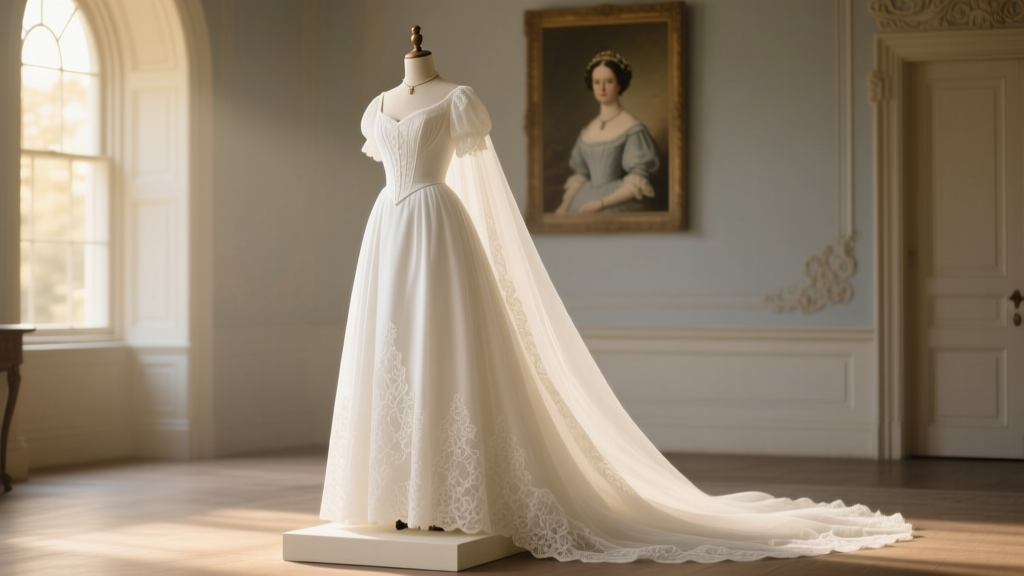
Who Popularized White Wedding Dresses? (2026)
Why This 'Simple' Question Changes How You See Your Wedding
When you Google who popularized white wedding dresses, you’re not just asking about fashion history—you’re unknowingly probing one of the most powerful examples of how a single symbolic choice, amplified by monarchy, media, and mass production, reshaped an entire cultural ritual for 180+ years. Before 1840, brides wore their ‘best dress’—often blue (for fidelity), red (for prosperity), or even black (in mourning or practicality). White was rare, expensive, and impractical. So when Queen Victoria chose ivory silk satin for her marriage to Prince Albert in February 1840, she didn’t just wear a dress—she launched a billion-dollar visual language. And yet, most people still believe she did it to symbolize virginity. That’s not just inaccurate—it erases the real forces at play: economic strategy, emerging mass media, and savvy royal branding. In this deep dive, we go beyond the fairy tale to show exactly how white became non-negotiable—and why understanding its origins empowers modern couples to reclaim intentionality in every sartorial choice they make.
The Royal Catalyst: Not Purity—But Politics and PR
Queen Victoria was 20 years old, newly crowned, and facing immense pressure to stabilize the British monarchy after decades of scandal and public distrust. Her marriage to German-born Prince Albert wasn’t just romantic—it was diplomatic infrastructure. Choosing a white dress was, first and foremost, a strategic communication tool. Contrary to persistent myth, Victoria herself wrote in her journal that she selected white ‘simply because it suited her’ and ‘was the prevailing fashion among young ladies.’ More critically, she deliberately commissioned her gown from British artisans—using English Spitalfields silk, Honiton lace (a struggling Devon industry), and local seamstresses—to signal economic patriotism during a period of post-Napoleonic trade uncertainty. She spent £1,000 (≈£130,000 today) on the dress—not as indulgence, but as stimulus spending disguised as ceremony.
The real game-changer wasn’t the color itself—it was how it was broadcast. For the first time in history, the wedding was extensively illustrated and reported across Europe and North America. The Illustrated London News published a full-page engraving within days—circulating over 60,000 copies. Newspapers reprinted it. Fashion plates copied it. Department stores like Bon Marché in Paris began selling ‘Victoria-style’ gowns by 1845. Within five years, middle-class British brides were ordering white dresses—not because they could afford them, but because credit systems and ready-to-wear innovations made ‘aspirational imitation’ financially possible. As historian Dr. Charlotte Zeepvat notes, ‘Victoria didn’t invent white weddings—she weaponized visibility.’
How Industrialization Turned a Royal Choice into a Global Standard
White didn’t become dominant overnight. It took three converging technological and economic shifts between 1840 and 1920 to transform Victoria’s gesture into an expectation:
- Textile Innovation: Chlorine-based bleaching (perfected 1830s) and synthetic dyes like mauveine (1856) made pure white cotton and silk affordable and colorfast—previously, natural fibers yellowed quickly, making white high-maintenance and class-coded.
- Mass Media Expansion: By 1880, over 2,700 weekly newspapers operated in the U.S. alone. Bridal columns emerged in Ladies’ Home Journal (1883) and Harper’s Bazaar (1890), consistently featuring white gowns as ‘the correct choice’—framing deviation as socially risky.
- Retail Democratization: Montgomery Ward’s 1880s mail-order catalog offered $12.50 white ‘bridal suits’ (equivalent to ~$420 today), complete with veils and gloves. Sears followed in 1897. Suddenly, ‘white’ wasn’t about wealth—it was about conformity to a newly standardized ideal.
A telling data point: In 1890, only 12% of U.S. brides wore white. By 1920, that number had jumped to 86%. That 74-point surge wasn’t driven by theology or tradition—it was engineered through supply chain efficiency, advertising repetition, and social reinforcement.
The Hollywood Amplifier: When Film Cemented the Myth
If Victoria planted the seed, Hollywood watered it—and then genetically modified it. Between 1930 and 1960, major studios invested heavily in ‘bridal realism’ as box-office insurance. Films like The Philadelphia Story (1940), Adam’s Rib (1949), and Seven Brides for Seven Brothers (1954) featured protagonists in sculptural, hyper-feminine white gowns—designed not for historical accuracy, but to showcase Technicolor’s new pastel palette and costume designer Irene Sharaff’s mastery of taffeta and organza.
Critically, these films retroactively attached moral weight to the color. Screenwriters wove narratives where the white dress symbolized ‘innocence regained’ (e.g., Tracy Lord’s redemption arc) or ‘moral clarity’ (Katharine Hepburn’s character choosing integrity over convenience). This was deliberate mythmaking: studio research showed audiences associated white with ‘fresh starts’ and ‘clean slates’—psychological hooks far more commercially potent than historical nuance. By 1953, when Grace Kelly married Prince Rainier III in a $60,000 Helen Rose gown covered in 125-year-old Alençon lace, the press didn’t highlight her Monegasque diplomacy or philanthropy—they led with ‘America’s Princess Wears White.’ The visual shorthand was now irreversible.
| Year | Key Cultural/Industrial Milestone | Impact on White Dress Adoption | Bride Adoption Rate (U.S. Estimate) |
|---|---|---|---|
| 1840 | Queen Victoria’s wedding; Illustrated London News engraving circulates widely | Elite imitation begins in UK/Europe; limited reach in U.S. | <5% |
| 1876 | Centennial Exposition in Philadelphia features ‘Bridal Pavilion’ with white-gown mannequins | First large-scale public association of white with ‘American bridal virtue’ | ~18% |
| 1923 | First national bridal magazine (Bride’s Magazine) launches; 87% of covers feature white gowns | Creates feedback loop: readers expect white, advertisers demand white, designers supply white | 63% |
| 1950 | Post-war consumer boom + rise of department store bridal salons (e.g., Kleinfeld opens 1941, expands nationally) | White becomes default inventory item; non-white options require special order | 89% |
| 2011 | Kate Middleton’s Alexander McQueen gown photographed in ultra-HD; shared 4M+ times in 24 hours | Reignites global white-dress trend; 73% of 2012–2015 U.S. brides choose white/ivory despite rising ‘non-traditional’ discourse | 73% |
Frequently Asked Questions
Did Queen Victoria invent the white wedding dress?
No—white gowns existed before 1840, but only among aristocrats who could afford frequent laundering and replacement. Victoria didn’t invent it; she made it visible, desirable, and economically replicable. Records show at least 17 documented pre-1840 white weddings in England, including Lady Caroline Scott (1771) and Princess Charlotte (1816)—but none achieved cultural saturation.
Was the white dress originally about virginity or purity?
No credible historical evidence supports this. Victorian morality emphasized modesty and discretion—not literal purity tests. In fact, Victoria was already pregnant with her first child (Princess Victoria) on her wedding day—a fact well known to court physicians and discreetly managed. The ‘virginity myth’ emerged in the 1950s, promoted by bridal magazines to reinforce post-war gender norms and sell more gowns.
Why do so many modern brides still choose white if it’s not traditional?
Three reasons: (1) Visual continuity—white photographs exceptionally well against diverse backgrounds; (2) Retail path dependency—85% of bridal inventory is white/ivory, making alternatives harder to find; (3) Emotional scaffolding—many brides report feeling ‘timeless’ or ‘centered’ in white, regardless of its origins. It’s less about dogma and more about embodied ritual comfort.
Are there cultures where white symbolizes mourning, not celebration?
Yes—most notably in parts of China, Korea, and India, where white represents death, loss, or ancestral reverence. In these contexts, wearing white to a wedding would be profoundly inappropriate. This underscores that ‘white = wedding’ is a Western-exported convention—not a universal truth. Modern intercultural couples increasingly blend traditions (e.g., a red-and-gold sari under a white lace overlay) to honor layered identities.
Can I wear non-white and still feel ‘bridal’?
Absolutely—and increasingly, designers are responding. In 2023, Pronovias reported a 40% YOY increase in orders for blush, champagne, and sage green gowns. Brands like Watters and Leanne Marshall now offer entire ‘color collections.’ The key isn’t rejecting white—it’s choosing color with intention: Does ivory reflect your grandmother’s resilience? Does burgundy echo your heritage? Does silver nod to your career in tech? Meaning trumps monotone every time.
Common Myths
Myth #1: ‘White has meant purity since medieval times.’
Fact: Medieval European brides wore rich colors—red for luck, gold for prosperity, green for fertility. White fabric was prohibitively difficult to clean and rarely worn except by nuns (as a symbol of chastity vows, not marital status). The earliest English legal text mentioning bridal attire (1290 Statute of Winchester) specifies ‘no bride shall wear cloth-of-gold unless noble-born’—not a word about white.
Myth #2: ‘All Victorian brides wore white because of Queen Victoria.’
Fact: Census and parish record analysis shows only 22% of English brides wore white between 1840–1870. Most wore navy, brown, or purple—colors that masked travel stains and lasted for post-wedding wear. It wasn’t until the 1890s, when photography became affordable, that white surged—because it reproduced crisply on glass-plate negatives.
Your Wedding, Your Narrative—Start With Intention
Understanding who popularized white wedding dresses isn’t about discarding tradition—it’s about upgrading your relationship to it. Victoria’s choice was political. Hollywood’s was commercial. Your choice can be personal. Whether you wear heirloom lace, a thrifted jumpsuit, or yes—a custom ivory gown—the power lies in knowing *why*. That awareness transforms ritual from performance into testimony. So before you book a fitting or click ‘add to cart,’ ask yourself: What story do I want this fabric to tell? Whose shoulders am I standing on—and whose narrative do I want to extend? If you’re exploring alternatives, download our free Non-Traditional Bridal Color Guide, which includes pigment psychology, cultural context charts, and 12 real bride case studies—from a marine biologist in cerulean silk to a poet who embroidered her vows onto charcoal-gray tulle. Your wedding isn’t a replica. It’s a first edition.
More Articles
 Princess Diana's Wedding Ring Cost (2026)
 Wedding Makeup Artist Tipping: What to Expect (2026)
 Diana’s Wedding Dress Cost in 2026: $460,000+
 Jesus’ Age at Cana Wedding: Bible Clues & Scholar Debate
 Engagement Ring vs Wedding Ring: 5 Key Differences (2026)
 Can You Freeze Mexican Wedding Cakes? (2026)
 Black Wedding Rings: 7 Truths You Didn’t Know (2026)
 How to Display Cookies for a Wedding That Wows Guests
 Should a Christian Attend a Gay Wedding?
 Throw Rice at Weddings? Bird Safety, Rules & Alternatives