Who Should Pack the Wedding Day Emergency Kit
Who Should Pack the Wedding Day Emergency Kit?
You can plan for months, build the perfect timeline, and triple-check your seating chart… and your wedding day will still throw a tiny curveball. A strap snaps. A button pops. Someone forgets blotting papers. The flower girl spills juice on her dress five minutes before photos. That’s exactly why a wedding day emergency kit matters—it turns “panic” into “handled.”
The question couples ask next is surprisingly loaded: who should pack the wedding day emergency kit? It sounds small, but assigning it clearly can save you from last-minute stress, duplicated supplies, or (worst case) no kit at all.
Quick Answer: Who Should Pack It?
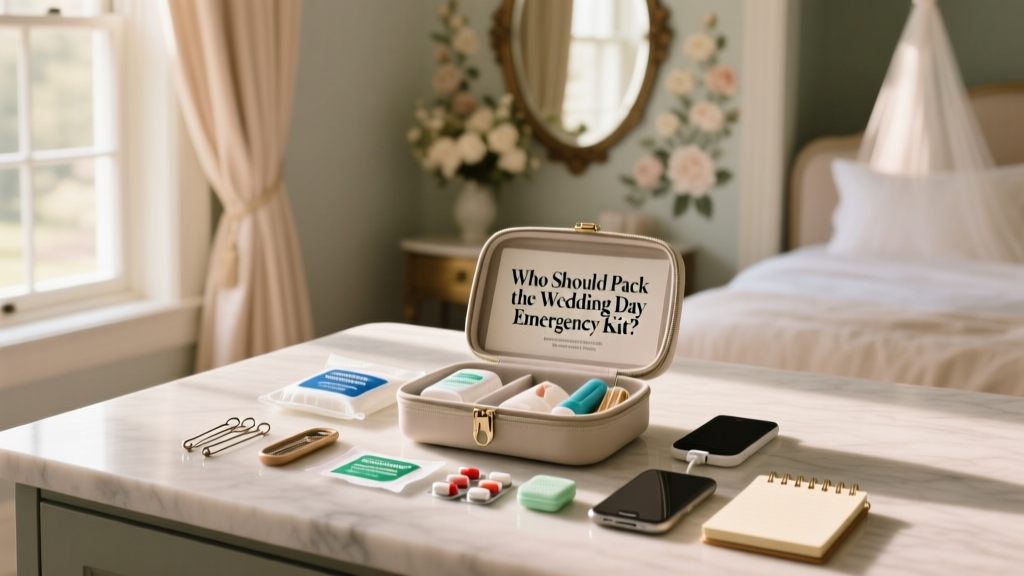
Ideally, the person who should pack the wedding day emergency kit is your designated “go-to” helper—often your maid/matron of honor, best person, or wedding coordinator—using a checklist you approve a week or two before the wedding. The couple can choose the items, but someone else should handle assembling, transporting, and keeping it accessible on the day.
If you have a professional wedding planner or day-of coordinator, they’re usually the best person to manage the kit (and they may already bring a pro-level version). If you don’t, assign a reliable member of your wedding party—or a detail-oriented friend who won’t be pulled into hair, photos, or hosting duties.
Why This Task Needs an Owner (Not “Whoever Has Time”)
A wedding day emergency kit only helps if it’s:
- Packed before you’re juggling nails, vows, and vendor calls
- On-site (not left in someone’s trunk across town)
- Known (people know who has it and where it is)
- Accessible during key moments like photos, ceremony, and reception
“I’ve seen couples create a beautiful kit… and then it’s sitting on a kitchen counter at home,” says Marina Kline, wedding planner at Harbor & Pine Events. “The win is assigning one person to be the kit keeper, the same way you’d assign someone to hold the rings or the marriage license.”
Traditional vs. Modern Etiquette: Who “Should” Do It?
Traditional approach: Maid of honor or best man
Traditionally, the maid/matron of honor handled personal items for the bride (fashion tape, tissues, lipstick), while the best man helped the groom (lint roller, stain remover pen, mints). That can still work beautifully—especially if your wedding party expects hands-on roles.
Real-world example: “My maid of honor packed a mini ‘bridal rescue’ pouch and my brother (our best man) packed a ‘groom kit,’” says Taylor S., married in Charleston. “They combined them into one tote before the ceremony, and our coordinator kept it with her all night.”
Modern approach: Coordinator packs and carries it
Many couples today hire a month-of or day-of coordinator, and with that trend comes a shift: the coordinator often becomes the emergency-kit quarterback. They’re already managing the timeline, vendor questions, and tiny disasters—so it’s logical they also control the supplies.
“My kit is basically a rolling convenience store,” jokes Daniel Cho, lead coordinator at Bluehour Weddings. “But I still ask couples about personal items: allergy meds, specific makeup for touch-ups, comfortable flats, or cultural items like safety pins for a sari drape.”
DIY weddings: A trusted friend who isn’t in the spotlight
If you’re planning a backyard wedding, a park ceremony, or a casual venue without staffing, choose a responsible friend or relative who won’t be in every photo lineup. Someone who can step away, run to the car, or quietly fix a hem is gold.
Good candidates: an aunt who loves logistics, a sibling not in the wedding party, a cousin who arrives early and stays late, or a close friend who thrives on being the helper.
What About Packing It Yourselves?
You absolutely can—but most couples regret doing the packing the night before. It’s a high-stress time, and it’s easy to forget essentials (or pack items you can’t actually access later).
A happy medium: the couple decides the contents, someone else assembles it. You can create a shared checklist, gather specialty items (your lipstick shade, blister bandages that work for you, prescription meds), then hand them off to the kit keeper to combine with general supplies.
Scenarios That Change the Best Answer
If you have a wedding planner
Let them manage it, but still provide personal items. Many planners bring supplies like scissors, safety pins, stain remover, and a mini sewing kit. They won’t know your exact foundation shade, preferred deodorant, or specific medical needs unless you tell them.
If you’re having a destination wedding
Destination weddings often mean limited access to familiar stores—and you may be flying with liquids and aerosols.
- Assign the kit to someone with checked luggage space and organizational skills.
- Pack TSA-friendly versions of items when possible.
- Confirm what you can buy locally (and what you can’t).
“We were in Mexico and couldn’t find the right kind of fashion tape anywhere,” says Leah R. “My sister packed it in her suitcase because mine was already stuffed with wedding outfits. Best decision.”
If you’re doing outfit changes or cultural ceremonies
Multiple outfits mean more chances for wardrobe hiccups. In this case, assign the kit to the person who’s already managing attire—often a planner, dresser, or a family member involved in cultural traditions.
If you’re skipping a wedding party
No wedding party? No problem. Choose a “day-of captain”—a trusted friend or relative who can make small decisions, hold onto essentials, and keep the emergency kit close.
Actionable Tips: How to Assign, Pack, and Use the Kit
1) Choose a kit keeper by reliability, not title
Your most responsible friend beats an overwhelmed maid of honor every time. Consider who will:
- Show up early
- Stay sober and present
- Answer texts quickly
- Keep track of a bag all day
2) Decide where the kit will live
Pick one location and stick to it. Common options:
- Coordinator’s tote (best for access and control)
- Bridal suite (good pre-ceremony, less helpful later)
- Designated person’s car (only if it’s parked close)
- Venue office (ask permission and confirm access)
3) Split the kit into “ceremony” and “reception” essentials
A small pouch for ceremony/photo time (blotting papers, lipstick, tissues, safety pins) plus a larger tote for reception (heel cushions, snacks, stain remover, pain reliever, backup deodorant) keeps things manageable.
4) Add personal items couples often forget
Beyond the classic wedding emergency kit checklist, consider:
- Your exact lip color and a compact mirror
- Allergy meds, antacids, and any prescriptions
- Blister prevention (moleskin, bandages)
- Backup phone charger and power bank
- Snack you can actually eat in formalwear
- Body tape if your outfit needs it
5) Tell vendors who has it
Your photographer, coordinator, and venue manager should know who can quickly produce fashion tape or scissors. It sounds silly until it’s time-sensitive.
Related Questions Couples Ask (and Real Answers)
Should there be two emergency kits—one for each partner?
If you’re getting ready in separate places, yes. Either make two mini kits or one kit plus a smaller “getting ready” pouch for the second location. Merge them before the ceremony so there’s one point of truth.
What if my coordinator already brings an emergency kit?
Ask what’s included. Many pro kits don’t include personal makeup, specific undergarments, or medications. Provide a labeled zip pouch of your must-haves to add to their supplies.
Who holds the kit during the ceremony?
Not you. Usually the coordinator, a venue manager, or the kit keeper stores it in the bridal suite or a nearby secure spot. The goal is quick access without it being visible.
What if the kit gets lost?
Choose a distinctive bag (bright color, labeled tag) and assign one owner. “Everyone can grab it” is how things disappear. If you’re worried, keep valuables (jewelry, vows) separate from the emergency supplies.
Conclusion: One Small Assignment, A Lot Less Stress
The best answer to who should pack the wedding day emergency kit is simple: the most reliable helper you have—often your coordinator or a trusted wedding party member—should pack and carry it, using a list you approve. Give the task a clear owner, keep the kit accessible, and your wedding day will feel calmer because you’ll know that if something small goes wrong, you already have a plan.
More Articles
 How to Congratulate a Friend for Her Wedding (2026)
 Billy Idol’s Age During “White Wedding” (1982)
 Defrost Wedding Cake After 1 Year: Safety & Taste (2026)
 Ryan Wedding Footage: Was It Captured? (2026)
 Weddings Worth It? Real Couples’ Spending & Happiness (2026)
 Wedding Venue Profitability: Real Owner Insights
 Is It Haram to Wear a Wedding Ring? (2026)
 What Is Traditional Wedding? Culture, Faith & 2026
 Are Destination Weddings Rude? (2026 Survey Data)
 Did Adam Sandler Sing In The Wedding Singer Movie (2026)