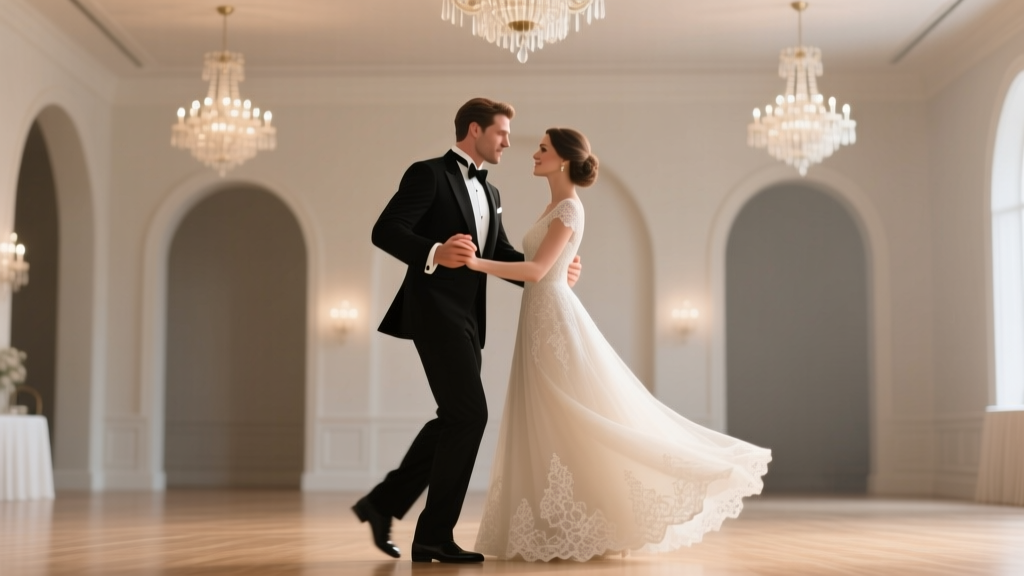
Why Do Couples Have a First Dance
Why Do Couples Have a First Dance?
If you’re planning a wedding, the “first dance” can feel like one of those moments everyone assumes you’re doing—until you picture all eyes on you and think, “Do we actually have to?” You’re not alone. Couples ask about first dance wedding tradition all the time, especially when they’re planning a modern wedding reception that feels true to them.
The good news: there’s no single “right” way to handle it. A first dance can be deeply meaningful, totally low-key, or skipped entirely—and your guests will still have a wonderful time.
Quick Answer: Why do couples have a first dance?
Couples have a first dance to create a symbolic “first” moment as newlyweds, to set the tone for the reception, and to share a small, intentional pause together before the party fully begins. Traditionally, it’s also a way to spotlight the couple and cue guests that dinner, toasts, or open dancing are about to start.
What the first dance represents (and why people love it)
The first dance is one of the few wedding reception moments that’s only about the two of you—no logistics, no mingling, no obligations. It’s a simple ritual that signals, “We’re married now, and we’re celebrating.”
Wedding planner Marissa Kline of Ever After Events puts it this way: “The first dance is a reset button. You’ve just navigated the ceremony and photos. For two minutes, you get to breathe, hold hands, and enjoy the room you created.”
Here are the most common reasons couples choose to do it:
- Tradition and continuity: Many families expect it because it’s been part of wedding etiquette for generations.
- A natural reception opener: It’s a clear transition into the celebration, especially if you’re skipping a grand entrance or keeping things casual.
- A memory anchor: Your first dance song becomes part of your story. You’ll hear it later and immediately time-travel back to your wedding day.
- A shared moment in a busy day: Even introverted couples often like the idea of a planned pause together.
How modern wedding trends are changing the first dance
Current wedding trends lean more personal and less performative. Couples are focusing on guest experience, meaningful details, and doing fewer “mandatory” traditions. That’s why you’ll see lots of variations: private last dances, shortened first dances, group dances, or skipping spotlight moments altogether.
DJ and MC Andre Torres of City Sound Collective shares a real-world perspective: “The biggest trend I’m seeing is couples choosing a first dance that fits their comfort level. Sometimes it’s 45 seconds, sometimes it’s in the middle of the dance floor with guests surrounding them, and sometimes they swap it for a fun ‘first dance’ with their wedding party.”
This flexibility is fully in line with modern etiquette. The “rule” isn’t that you must have a first dance; it’s that your reception should flow—and your choices should feel intentional.
Traditional vs. modern approaches: what works for different couples
Scenario 1: You love tradition (and your family does too)
If you’re having a more classic wedding reception, a first dance often makes sense. It’s predictable (in a good way), your photographer knows exactly when to be ready, and it pairs naturally with parent dances and toasts.
How it might look: Grand entrance → first dance → parent dances → toasts → dinner → open dancing.
Scenario 2: You want a first dance, but you don’t want a performance
Many couples love the sentiment but hate the spotlight. You can keep the tradition without the pressure.
Try:
- Shorten the song: Ask your DJ/band to fade out at 60–90 seconds.
- Start with guests on the dance floor: Begin alone, then invite everyone to join after the first chorus.
- Do it between courses: If you’re worried about attention, slipping it in after dinner starts can feel more casual.
Real couple experience: “We wanted a first dance but didn’t want the middle-school slow dance vibe,” says Jenna, who married her partner Malik last spring. “Our DJ had everyone circle around us like a concert, and after 45 seconds he invited couples to join. It felt supportive, not awkward.”
Scenario 3: You don’t want a first dance at all
You can absolutely skip it. The key is replacing it with something else that signals the start of the party, so guests don’t feel unsure about what’s happening next.
Good alternatives:
- A high-energy grand entrance straight into open dancing
- A welcome toast and immediately opening the dance floor
- A group dance (wedding party + couple) to kick things off
- Cutting the cake early as your “moment,” then dancing
Etiquette tip: If you’re skipping parent dances too, consider acknowledging parents in a toast or with a song dedication. It’s a thoughtful way to avoid hurt feelings while keeping your reception structure simple.
Scenario 4: You want a private moment instead
Private last dances are trending for a reason. Some couples skip a public first dance and do a private dance at the end of the night after guests exit, or even during cocktail hour in an empty reception room.
Photographer Elise Warren notes: “A private dance often becomes the most emotional photo sequence of the day. Couples are more relaxed, and it’s one of the only times they’re truly alone.”
Actionable tips: how to plan a first dance that feels good
- Choose a song that matches your comfort level. A long, slow ballad can feel like forever. Consider a shorter track, an acoustic version, or a song with an easy sway rhythm.
- Decide your “spotlight level.” Do you want a clear center-floor moment, a surrounded-by-guests vibe, or a quick fade into group dancing?
- Practice the basics, not perfection. You don’t need choreography. Practice standing close, swaying, and turning slowly so you don’t drift off the dance floor.
- Tell your DJ/MC your plan. The best first dances are well-cued: lighting, announcement, and a smooth transition into the next event.
- Consider a few dance lessons—only if it reduces stress. One or two sessions can make you feel comfortable. If it becomes another to-do that you dread, skip it.
- Talk through expectations with family early. If you’re skipping the first dance wedding tradition, mention it casually: “We’re keeping the reception more open-dance style, but we’ll do a toast and a special song dedication.”
Related questions couples often ask
Do we have to do the first dance right after our entrance?
No. You can place it anywhere that fits your reception timeline: after dinner, after toasts, or right before open dancing. The best timing is when you’re most present—not starving, not exhausted, not stuck in a bustle malfunction.
What if one (or both) of us hates dancing?
Keep it short, bring guests in quickly, or switch to a different “first moment,” like a private dance, a toast together, or even a shared dessert bite at your sweetheart table while the band plays your song in the background.
Can we do a first dance with our kids or blend families?
Absolutely. In a blended-family wedding, some couples do a first dance as a couple and then a “family dance” with kids joining halfway through. It’s sweet, inclusive, and fits modern wedding etiquette beautifully.
What about same-sex couples or non-traditional roles?
The first dance is wonderfully adaptable. There’s no need to assign “lead” and “follow” based on gender. Do what’s comfortable—trade off, keep it simple, or learn a few turns together.
Will guests be disappointed if we skip it?
Most guests care less about specific traditions and more about whether the reception feels warm and well-paced. If you skip the first dance, just replace it with a clear opening moment—welcome toast, DJ announcement, or an invitation to the dance floor—so everyone knows what’s next.
Conclusion: the best reason to have a first dance is that you want one
Couples have a first dance because it’s a meaningful, time-tested way to mark the start of married life and set the tone for the celebration. But modern weddings are built around personal choices, not checklists. If a first dance makes you feel excited or sentimental, plan it in a way that fits you. If it makes you feel anxious, skip it or reshape it.
Your reception doesn’t need a perfect first dance—it needs a moment that feels like you two, together, celebrating the day you worked so hard to create.
More Articles
 How Much to Preserve a Wedding Dress: Real Costs Revealed
 Soccer Players’ Wedding Rings: Safety, Rules & Solutions
 Where to Watch Madea’s Destination Wedding (2026)
 Wedding Ring Rules: Left Hand, Stacking & Trends
 Wedding Cake Feeding Meaning & Modern Twists
 Anant Ambani Wedding Cost: Real Numbers & Legacy (2026)
 What Does It Mean to Elope? (2026)
 Wedding Loan with Fair Credit: 7 Lenders & Approval Tips
 Where to Donate My Wedding Dress Near Me (2026)
 Dowry in Weddings: Truth, Gifts, Laws & Risks