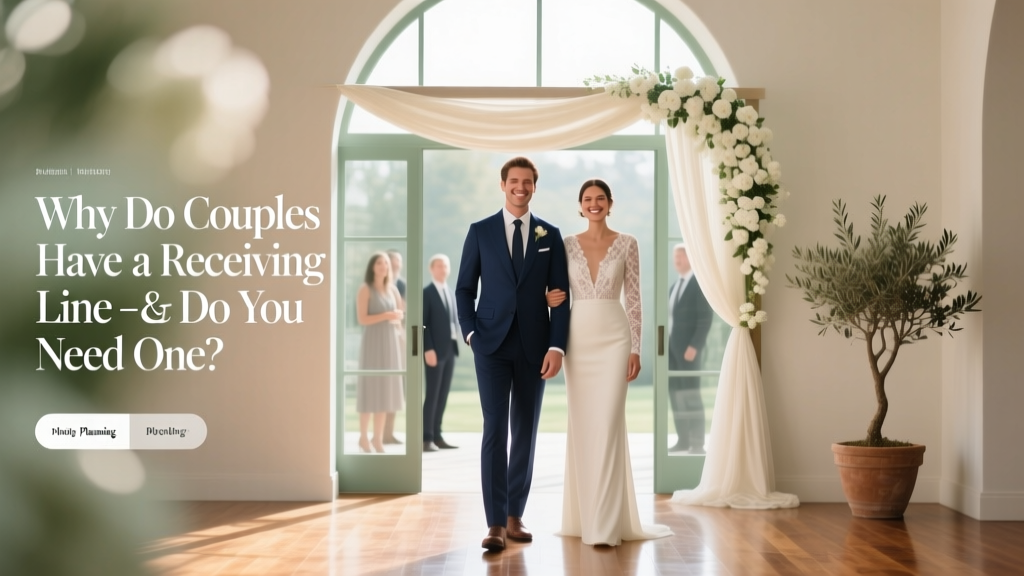
Why Do Couples Have a Receiving Line and Do You Need One
Why Do Couples Have a Receiving Line—and Do You Need One?
You’ve probably seen it in movies (or at a very traditional family wedding): the newlyweds stand near the exit of the ceremony or at the entrance to the reception, and every guest files past to say hello, offer congratulations, and maybe snap a quick photo. That’s a receiving line—and it can feel either charmingly classic or mildly terrifying, depending on your crowd size and comfort level.
Couples ask about receiving lines because they sit right at the intersection of two big wedding priorities: making guests feel welcomed and keeping the day moving. If you’re worried about missing people, running out of time, or feeling “on display,” you’re asking exactly the right question.
So, do you need a receiving line?
No—most couples don’t need a receiving line. A receiving line is optional, and many modern weddings skip it in favor of table visits, a cocktail hour mingle, or a “room reveal” entrance that feels more relaxed. That said, a receiving line can still be a smart choice if you have a large guest list, a formal family, limited reception time, or you simply want a structured way to greet everyone.
Why receiving lines exist (and why they used to be standard)
Traditionally, a receiving line served one clear purpose: ensuring every guest had a chance to greet the couple—especially at more formal weddings where the couple might not circulate much. In classic etiquette, it also helped guests feel recognized and thanked for attending.
As wedding planner Marisol Grant of “Silver Lining Events” puts it: A receiving line is basically the original guest experience tool. It guarantees no one goes home saying, ‘I didn’t even get to see the bride and groom.’
Receiving lines also fit older wedding timelines. When receptions were shorter, more structured, and often held in the afternoon, it made sense to do the greeting in one organized swoop and then move on to the meal, speeches, and dancing.
Modern wedding etiquette: what’s changed?
Today’s weddings tend to be more fluid. Couples often prioritize:
- Longer cocktail hours (sometimes with interactive food stations or signature drinks)
- Golden hour portraits that pull couples away for 15–30 minutes
- More guest mingling and less rigid structure
- Unplugged ceremonies and photo-friendly moments at the reception
Because of these trends, many couples choose alternatives that feel more natural than a formal receiving line. But etiquette hasn’t disappeared—it’s just more flexible. The modern expectation is not “you must do a receiving line,” but “guests should feel acknowledged.”
Photographer Devin Cho (“Cho & Co. Weddings”) often sees couples skip the line for timing reasons: If you have 120 guests and you do a receiving line right after the ceremony, you can lose 20–30 minutes easily. That’s time you might need for family photos or to get everyone to cocktail hour.
Receiving line vs. alternatives: which fits your wedding?
Here are a few common scenarios to help you decide.
Scenario 1: Traditional ceremony + formal reception (the receiving line shines)
If you’re hosting a classic church ceremony and a formal reception—especially if older relatives care about tradition—a receiving line can be a respectful nod. It’s also useful when you expect guests to arrive and leave on a tighter schedule.
Best placement: Immediately after the ceremony, near the exit, or at the entrance to the reception.
Why it works: You greet everyone once, early, and you’re not chasing conversations later.
Scenario 2: Big guest list + limited time (a structured greeting helps)
If you’re inviting 150+ guests and you know you won’t have time to visit every table, a receiving line can prevent that end-of-night panic: “Did we even talk to my coworkers?”
Real-couple perspective (from a past client story): We didn’t want a receiving line because we thought it would feel stiff, but we had 180 guests and a tight venue schedule. We did a short line at cocktail hour and it saved us. We still had plenty of time to dance.
—Natalie & Eric
Scenario 3: Cocktail-style reception or nontraditional timeline (skip the line)
If you’re doing a first look, private vows, a longer cocktail hour, or a relaxed “party-forward” reception, a receiving line can feel like an interruption. In this case, you might do better with:
- A grand entrance followed by mingling
- Table touches during dinner (quick hellos, not long chats)
- A welcome toast that acknowledges everyone at once
How long does a receiving line take (really)?
A good rule of thumb: 30–45 seconds per guest or couple, assuming it’s quick hugs and congratulations. That means:
- 50 guests: roughly 20–30 minutes
- 100 guests: roughly 40–60 minutes
- 150 guests: roughly 60–90 minutes
That time can be shortened significantly if you keep the line tight and avoid extended conversations. It can also stretch if you have lots of relatives who want long catch-ups.
If you do have a receiving line, how do you make it painless?
1) Keep it small.
A traditional receiving line might include the couple, both sets of parents, and the wedding party. In practice, that often slows things down. Many modern couples keep it to just the newlyweds (and sometimes parents).
2) Choose the right location.
Pick a spot that naturally funnels guests—like outside the ceremony doors or right at the reception entrance—without blocking traffic. Your coordinator or venue manager can help identify the best flow.
3) Give your wedding party a job.
Ask a bridesmaid or groomsman to gently keep things moving. A simple, friendly cue like “They’d love to say hi—thank you so much for coming!” helps prevent long pauses.
4) Skip the beverages in hand.
Holding a drink while hugging 100 people is a fast track to spills and sticky sleeves. Do the line first, then grab a toast.
5) Practice the script.
You don’t need anything fancy. A warm smile and a repeatable phrase works: “Thank you so much for coming—we’re so happy you’re here.” This keeps it gracious and quick.
6) Decide your photo plan.
If you want quick photos, designate one person (a photographer or a friend) and keep it consistent. If photos aren’t a priority, don’t let guests stop and fumble with phones—your coordinator can suggest a better moment for that.
What if you skip the receiving line—will guests feel ignored?
Not if you handle the greeting thoughtfully. Guests mainly want to feel welcomed, not necessarily have a long conversation.
Easy ways to make that happen without a receiving line:
- Make a true effort to visit tables during dinner (aim for 1–2 minutes per table)
- Attend cocktail hour for at least 20–30 minutes before stepping away for photos
- Do a welcome toast early: “We’re grateful you’re here—thank you for celebrating with us”
- Host a casual pre-wedding event (welcome party or after-party) for extra face time
Related questions couples ask (and what to do)
“Can we do a receiving line at cocktail hour?”
Yes, and it’s often smoother. Guests are already standing and moving around, and you’re not holding up the ceremony exit. Position yourselves near the bar or a high-traffic spot and keep it quick.
“What about a receiving line for a micro-wedding?”
For 20–40 guests, you don’t need a formal line. You’ll naturally talk to everyone. If you love the tradition, you can do a brief greeting moment as guests arrive or right before dinner.
“We’re doing a receiving line—who stands in it?”
Modern etiquette is flexible. Common options:
- Just the couple (fastest and most common)
- Couple + both sets of parents (traditional, still manageable)
- Couple + wedding party (can be fun but slower)
“I’m introverted—will a receiving line feel overwhelming?”
It can, but it doesn’t have to. Keep it short, limit who’s in the line, and plan a 10-minute private breather afterward. Many introverted couples prefer the structure because it removes the pressure of working the room later.
“What if divorced or blended families make the receiving line awkward?”
Skip the traditional “both parents together” setup. You can do just the couple, or place parents separately (for example, each at a different spot during cocktail hour). A planner can help stage it in a way that feels neutral and respectful.
Bottom line: the best choice is the one that fits your timeline and your people
A receiving line is a thoughtful, time-tested way to greet guests—but it’s not required, and plenty of modern couples choose other options that feel more natural. If you love tradition, have a big guest list, or want a guaranteed way to acknowledge everyone, a streamlined receiving line can be a great move. If you’d rather keep things relaxed, focus on cocktail hour mingling, table visits, and a warm welcome toast.
Reassuring takeaway: Guests remember how you made them feel, not whether you followed a specific greeting format. Choose the approach that helps you stay present, enjoy your wedding day, and connect with the people who showed up for you.
More Articles
 Money Dance Guide: Origins, Etiquette & Inclusive Tips
 Thank Your Wedding Photographer: 7 Meaningful Gestures
 Wedding Ring Spelling: Common Mistakes & Fixes (2026)
 A Ghetto Wedding" by Cahan: Summary & Significance
 Wedding Anger: Psychologist-Backed Healing (2026)
 Matron of Honor: Real Role, Timeline & 7 Duties (2026)
 How Tall Should a Wedding Arch Be for Perfect Photos
 Gretchen Geraghty Wedding Date: Truth Behind 2026 Rumor
 Sebastian Stan at Chris Evans’ Wedding? Truth (2026)
 Mexican Wedding Cookies Shelf Life (2026)