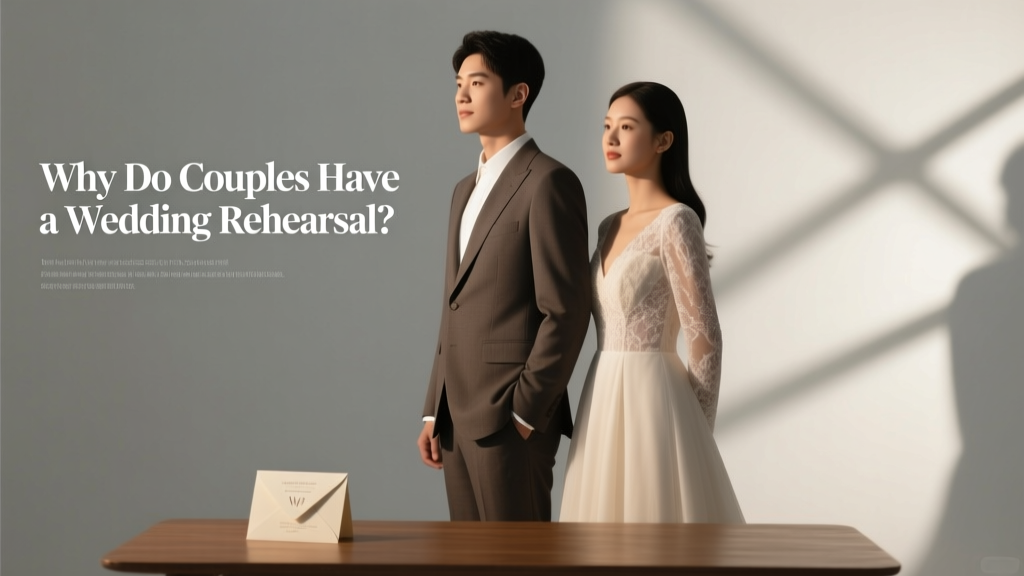
Why Do Couples Have a Wedding Rehearsal
Why Do Couples Have a Wedding Rehearsal?
If you’re in the thick of wedding planning, a rehearsal can feel like one more event to schedule, one more email thread, one more “Do we really need this?” decision. You might be picturing a formal run-through with a clipboard and a strict timeline—and wondering if it’s worth the effort for a ceremony that’s only 15–30 minutes long.
The truth is: a wedding rehearsal isn’t about being perfect. It’s about helping everyone feel comfortable, confident, and cared for so your ceremony flows smoothly and you can actually enjoy it.
Quick Answer: Couples have a wedding rehearsal to reduce confusion, prevent ceremony-day hiccups, and make the wedding party (and key family) feel prepared.
A rehearsal is essentially a low-pressure practice run. It clarifies where people stand, when they walk, who holds what, how the processional and recessional work, and how to handle the “small stuff” that can cause big stress—like the microphone, the ring handoff, or a tricky aisle setup. Most couples also use the rehearsal to align everyone with the ceremony timeline and any special traditions, readings, or cultural elements.
What Happens at a Wedding Rehearsal (and Why It Helps)
Q: Is the rehearsal only for the wedding party?
Usually it’s the wedding party plus anyone with an “active role” in the ceremony: parents (especially if they’re walking in), grandparents who will be escorted, readers, ushers, ring bearer and flower girl (and their adult helpers), and sometimes musicians. If you’re having a religious ceremony, your officiant may require certain people to attend.
“The rehearsal isn’t for the couple—it’s for the group,” says Maya Collins, wedding planner in Chicago. “When everyone knows their cues, the couple gets to be fully present on the wedding day instead of managing traffic.”
Q: What does a rehearsal actually cover?
- Processional order (who walks when, and with whom)
- Where everyone stands (and how to adjust for uneven altars, steps, or narrow spaces)
- Timing (music cues, when to begin, how long the walk takes)
- Microphone and audio (who speaks into it, where it should be placed)
- Rings and vows logistics (who holds the rings, where vows are kept, pocket vs. bouquet vs. officiant binder)
- Special moments (unity candle, wine box, handfasting, ketubah signing timing, readings, memorials)
- Recessional (how to exit without awkward pauses or traffic jams)
Even if it feels basic, it prevents the classic ceremony-day questions: “Wait, do I go now?” “Where am I standing?” “Do we hold hands the whole time?” “Who takes the bouquet?”
Modern Wedding Trends That Make Rehearsals Even More Useful
Q: Aren’t weddings more relaxed now—do we still need a rehearsal?
Weddings are definitely more personalized, but that’s one reason rehearsals are still relevant. Current wedding trends—like non-traditional wedding party arrangements, mixed-gender attendants, circular seating, private vows, and “unplugged” ceremonies—can create more moving parts.
Here are a few trends that often benefit from a quick run-through:
- Non-traditional processional (two brides walking in separately, partners entering together, or walking with both parents)
- Outdoor and destination weddings (wind, uneven ground, long walkways, or venue restrictions)
- Multiple ceremony locations (first look spot, ceremony lawn, cocktail area—people need direction)
- Friend officiants (a loved one officiating may be new to pacing, mics, and transitions)
- Shorter timelines (tight schedules mean less room for on-the-fly problem solving)
“I officiate a lot of friend-led ceremonies,” says Andre Liu, officiant and public speaking coach. “A 20-minute rehearsal saves you from the biggest mistakes: people blocking the photographer, the couple turning their backs to guests, and the officiant speaking away from the mic.”
Traditional vs. Modern Approaches: What’s “Normal” Now?
Q: Do we have to do a full rehearsal and a rehearsal dinner?
No. The rehearsal and rehearsal dinner are two separate things, and both can be flexible.
Traditional approach: A formal rehearsal at the ceremony venue, followed by a hosted rehearsal dinner for the wedding party and immediate family (and sometimes out-of-town guests). This is common for larger weddings, religious ceremonies, and more structured events.
Modern approach: A quick 20–30 minute “walk-through” earlier in the day, followed by casual pizza, tacos, or drinks. Some couples skip the dinner entirely and do a relaxed welcome party instead.
Micro-wedding approach: If you have 10–30 guests and minimal processional, you might do a brief on-site check (where to stand, where the officiant will be) and call it done.
“We did a five-minute rehearsal before guests arrived,” shares Danielle, a real bride from Seattle. “It was just us, our officiant, and our photographer. We practiced standing slightly angled so our faces were visible, and it made the ceremony photos so much better.”
When a Wedding Rehearsal Is Especially Worth It
Q: How do we know if we really need one?
You’ll likely benefit from a rehearsal if any of these are true:
- You have a wedding party (especially more than 4 attendants)
- Children are involved (flower girl, ring bearer)
- Your ceremony space is unfamiliar or complex (stairs, long aisle, outdoor terrain)
- You’re using live music with cues
- You have readings or multiple speakers
- A friend or family member is officiating
- You’re anxious about timing or “what to do with your hands” moments
If your ceremony is extremely simple—two people, an officiant, no wedding party, no readings—you can often skip a formal rehearsal and do a short logistics chat instead.
Actionable Tips for a Smooth Wedding Rehearsal
Q: What’s the best way to plan and run it?
- Keep it short: Aim for 20–45 minutes. Rehearsals that drag become less effective.
- Invite only key people: Anyone walking, speaking, escorting, or handling items (rings, bouquet, programs).
- Bring the items: Vow books, ring boxes (or placeholders), bouquet stand-in, and any unity ceremony items.
- Practice with music cues: Even a phone speaker works to time the walk.
- Confirm where everyone stands: Mark spots discreetly (tape or small floor markers if allowed).
- Talk photo angles: Ask your photographer where they’ll be so you don’t block key shots.
- Assign a “point person”: A coordinator, planner, or reliable friend who can line people up on the wedding day.
If you’re using a venue coordinator or day-of coordinator, ask them to run the rehearsal. Couples often feel relieved when they’re not the ones directing their own wedding party.
Common Concerns Couples Have (and Real Solutions)
Q: What if someone can’t attend the rehearsal?
This happens all the time—work travel, childcare, flight delays. Ask them to arrive early on the wedding day for a quick refresher, and share a simple processional chart by text. If the missing person has a key role (like a reader), have them practice their reading with a mic test earlier in the day.
Q: What if our venue won’t allow a rehearsal?
Some venues (especially churches or busy event spaces) have limited access. Options:
- Rehearse at a similar location (hotel conference room, backyard) focusing on order and spacing
- Do a “line-up rehearsal” off-site, then a quick on-site walkthrough the day-of
- Ask for a 10-minute access window to practice entrances and exits
Q: We’re skipping the rehearsal dinner—will that offend people?
Modern etiquette is more flexible. Traditionally, hosting a rehearsal dinner is a thank-you to those who rehearsed (and to close family). If you’re not doing one, you can still show appreciation with a casual meet-up, a welcome drink, or even heartfelt thank-you notes and small gifts. What matters most is communicating clearly and kindly.
Q: Do we rehearse the whole ceremony word-for-word?
Usually no. Most rehearsals cover movement and cues, not a full performance. If you have complicated readings or cultural rituals, it can help to do a partial run-through so everyone knows what happens when.
Related Questions Couples Ask
- How early should the rehearsal be? Typically 1–2 days before. If it’s the day before, schedule it early enough that everyone isn’t rushing from work.
- Who pays for the rehearsal dinner? Traditionally the groom’s family hosted, but today it’s whoever offers—sometimes the couple, sometimes parents, sometimes split.
- Can we do a rehearsal on the wedding morning? Yes, for small weddings or tight travel schedules. Keep it brief and avoid adding stress.
- What if we have two ceremonies (legal and cultural/religious)? Rehearse the one with the most moving parts, or do a combined cue walkthrough.
Takeaway
Couples have a wedding rehearsal because it replaces guesswork with confidence. It’s a small investment of time that can prevent awkward pauses, missed cues, and unnecessary stress—especially with modern, personalized ceremonies. Whether yours is a full traditional rehearsal or a quick walk-through, the goal is the same: everyone knows what to do, and you get to focus on the moment that actually matters—getting married.
More Articles
 What Are Jewish Weddings Like? A Real Guest’s Guide
 Are Weddings Biblical? What Scripture Actually Says
 Lost Wedding Ring in House: 7 Proven Steps (2026)
 Why Lebanese Weddings Are So Extravagant (2026)
 Debbie Mathers at Hailey’s Wedding? Truth & Guest List
 What Does It Mean to Elope? (2026)
 Planning a Wedding in Maine: Everything You Need to Know
 Bridesmaids Wedding Gift: Meaning, Budget & When to Skip
 Do Guys Have to Wear a Tie to a Wedding: The Real Answer
 USAID & Chelsea Clinton Wedding: Truth Revealed (2026)