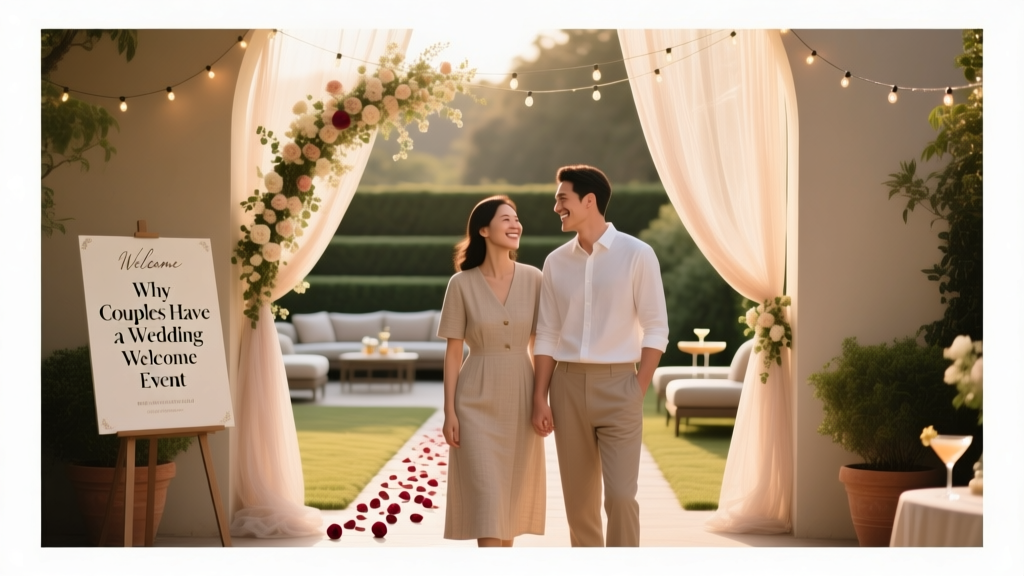
Why Do Couples Have a Wedding Welcome Event
Why Do Couples Have a Wedding Welcome Event?
If you’ve been invited to a “welcome party,” “welcome drinks,” or “wedding weekend kickoff” lately, you’re not imagining things—wedding welcome events have become a normal part of modern wedding planning. And if you’re the couple getting married, you might be wondering whether you need one, what it’s for, and how to do it without blowing your budget (or your energy).
This question matters because a welcome event sets the tone for your entire celebration. It can make guests feel cared for and connected before the big day, and it can also reduce stress—especially if you’re hosting a destination wedding or have lots of out-of-town guests.
So… why do couples have a wedding welcome event?
Couples host a wedding welcome event to greet guests—especially travelers—kick off the celebration, and create relaxed time to connect before the wedding day. It’s a simple way to say, “We’re so glad you’re here,” without the pressure and tight timeline of the ceremony and reception.
What a welcome event actually does (beyond being “extra”)
1) It gives you real time with your guests
On the wedding day, you’ll be pulled in a hundred directions. Even with a receiving line or table visits, time disappears fast. A welcome party creates unstructured time to chat, hug, and connect.
As wedding planner “Maya Reynolds” (fictional) puts it: The welcome event is where couples actually get to experience their guests, not just wave at them between photos and first dances.
2) It’s a thoughtful gesture for out-of-town and destination guests
When people travel for your wedding, they often arrive with questions: Where should we go? Who else is here? What’s the vibe? A wedding welcome event helps guests feel oriented and appreciated.
Real-couple style example: We had 60% of our guests flying in. The welcome drinks gave everyone a chance to meet before the wedding, so the reception felt like a reunion instead of a room full of strangers,
says “Jordan & Alina” (fictional newlyweds).
3) It sets the mood for the weekend
A relaxed welcome gathering signals what your wedding will feel like—formal, casual, beachy, city-chic, family-focused, party-forward. It can also help ease nerves, especially if one partner is meeting a lot of the other partner’s friends and family for the first time.
4) It can reduce wedding-day pressure
If you’re worried about greeting everyone, you can handle many of those hellos the night before. That often makes the wedding day feel less like you’re “hosting” and more like you’re celebrating.
Modern etiquette: Is a welcome event expected?
No—a wedding welcome event is never required. But it’s increasingly common, especially for:
- Destination weddings (where most guests travel)
- Weekend-long wedding celebrations (multiple planned events)
- Smaller weddings where couples want meaningful face time
- City weddings with many out-of-town guests arriving the day before
Etiquette-wise, the biggest rule is simple: Only invite the people you truly intend to host. If you invite guests to a welcome party, plan to provide at least something—drinks, appetizers, dessert, or a hosted first round. It doesn’t have to be extravagant, but it should feel intentional.
Planner “Maya Reynolds” adds: Guests don’t expect a second reception. They do appreciate clarity—where to go, what to wear, and whether food or drinks are provided.
Traditional vs. modern approaches (and why both are “right”)
Traditional: Rehearsal dinner + informal hellos
Historically, the rehearsal dinner was the main pre-wedding gathering, typically for the wedding party, immediate family, and out-of-town guests (varies by region and family culture). Some couples still keep it small and simply meet other guests at the hotel bar or breakfast spot casually.
Best for: very formal weddings, tight budgets, couples who want minimal events.
Modern: Welcome party for everyone
Many couples now treat weddings as a “weekend experience,” especially when guests travel. A welcome party becomes the inclusive kickoff: everyone invited to the wedding is invited to the welcome event, and the rehearsal dinner remains smaller or separate.
Best for: destination weddings, couples with big friend groups, any wedding where guests arrive the day before.
Hybrid: Rehearsal dinner (small) + welcome drinks (bigger)
This is one of the most popular current wedding trends because it balances intimacy and inclusivity. You can host a rehearsal dinner for your VIPs, then invite all wedding guests to stop by for a shorter, more casual welcome event afterward.
Best for: couples who want to greet everyone without paying for a full extra meal.
Real-world examples of welcome events (at different budgets)
- Hotel lobby bar meet-up: You reserve a corner, add a sign (“Welcome Drinks!”), and host the first round or offer a limited bar tab.
- Backyard dessert night: Cookies, cupcakes, or a s’mores station—simple, warm, and family-friendly.
- Casual brewery or winery: Great for mingling; you can provide drink tickets and a few shared appetizers.
- Beach bonfire: Perfect for destination weddings; keep it relaxed with blankets and bottled drinks.
- Welcome reception-lite: If you’re skipping a formal reception or doing a micro wedding, a welcome event can act as the main mingle moment.
Actionable tips for planning a welcome event that feels easy (not overwhelming)
Keep it short and clearly defined
Two hours is usually the sweet spot. Consider a come-and-go window (for example, 7–9 p.m.) so guests don’t feel trapped after traveling.
Be specific on the invitation details
Guests mainly want clarity. Include:
- Start/end time
- Location (and whether it’s walkable from the hotel)
- Dress code (even “casual” helps)
- What’s hosted (examples: “Drinks and light bites provided,” “Cash bar,” or “First round on us”)
Don’t over-cater
If it’s after dinner, you can offer light bites instead of a full meal. If it overlaps dinner time, either serve more substantial food or clearly frame it as “drinks only” so guests can eat beforehand.
Choose a low-lift venue
Restaurants, hotel terraces, breweries, and lounges are popular because they handle staffing, seating, and cleanup. This trend is especially big for 2025–2026 weddings: couples are prioritizing convenience and guest experience over complex DIY setups.
Protect your energy
Travel, rehearsals, and last-minute wedding details can add up. Give yourselves a hard stop time and plan a quiet wind-down afterward. A welcome event should help you feel more connected—not more exhausted.
Common concerns couples have (and what to do)
“Do we have to invite everyone to the welcome event?”
No. But be thoughtful. If it’s a destination wedding where nearly everyone traveled, inviting all guests is often the kindest approach. If it’s local and you’re doing a small rehearsal dinner, it’s fine to keep it limited—just avoid making it feel like a “second-tier” exclusion.
“Is a welcome event the same as a rehearsal dinner?”
Not exactly. A rehearsal dinner is tied to the ceremony rehearsal and traditionally includes the wedding party and close family. A welcome event is a broader greeting—often more casual—and may happen the same night, before or after the rehearsal dinner.
“What if guests can’t attend?”
Totally normal. Travel delays, childcare, and fatigue happen. Make it optional and low-pressure. Your wedding day is still the main event.
“We’re on a tight budget—should we skip it?”
If budget is tight, a welcome event is optional. If you want the benefits without the cost, consider:
- Hosting dessert/coffee instead of a bar
- Doing a hosted “first round” with a capped tab
- Planning a casual meet-up with no hosting, clearly labeled as “cash bar”
“Do we need welcome gifts if we have a welcome event?”
No. Welcome bags and hotel welcome gifts are a separate choice. If you’re hosting a welcome party, many couples skip the bags—or do a simple note and local snack. Guests care more about warmth and clarity than extras.
Quick related questions (edge cases)
- What if we’re having a Sunday wedding? A Saturday welcome event can help guests feel the weekend is worth the trip.
- What if our families don’t get along? Keep the welcome event brief and casual with plenty of space to mingle; avoid assigned seating and high-pressure toasts.
- What if we’re skipping a wedding party? A welcome event can replace some of the bonding a wedding party usually provides.
- What if the venue has noise restrictions? Do welcome drinks at a nearby bar or hotel lounge; you don’t need it at the wedding venue.
Takeaway
Couples have a wedding welcome event for one main reason: it makes the celebration feel more personal and connected, especially for guests who traveled. Whether you host welcome drinks, a casual hang, or nothing at all, the best choice is the one that matches your guest list, your budget, and your energy. Done simply and clearly, a welcome event can be one of the most meaningful parts of your wedding weekend.
More Articles
 Meghan Markle Wedding Viewership: Real 2026 Stats
 Black Tie Wedding Attire for Women: What to Wear (2026)
 Chinese Wedding Rings: Tradition vs. Modern Reality (2026)
 Who Was Bree on the Phone With at Her Wedding?
 Wedding Ring Under Engagement Ring? (2026)
 White Cardigans at Weddings: What’s Acceptable?
 Is Tiffany Pregnant in Madea’s Destination Wedding? (2026)
 Wedding Ring After Spouse Dies: What to Know
 Francia Raisa at Selena Gomez Wedding? (2026)
 Super Bowl Halftime Wedding: Real or Fake? (2026)