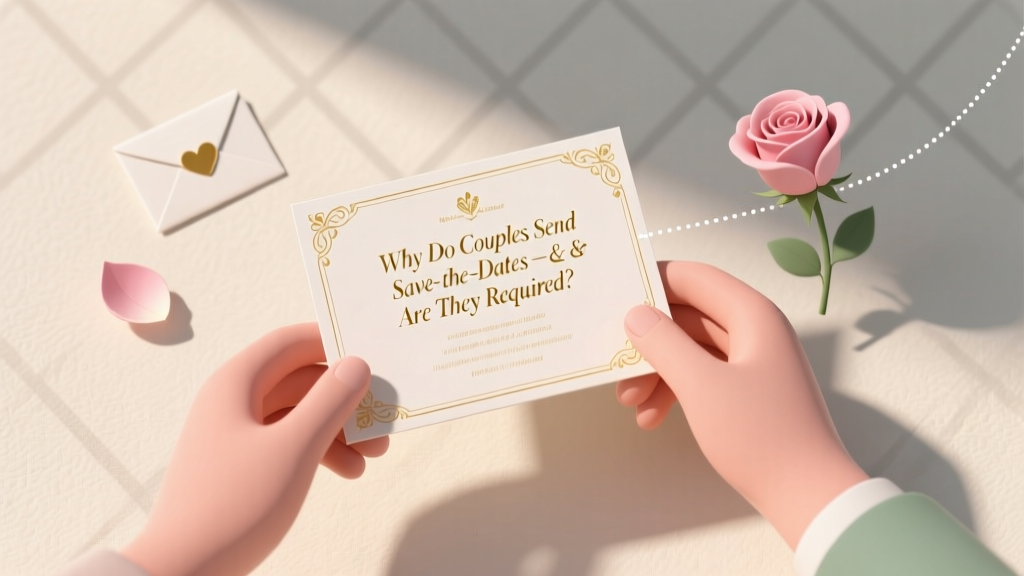
Why Do Couples Send Save the Dates and Are They Required
Why Do Couples Send Save the Dates and Are They Required?
If you’ve started wedding planning, you’ve probably heard conflicting advice about save the dates. One friend swears they’re a must. Another says they’re unnecessary and “just extra paper.” Meanwhile, you’re trying to build a guest list, nail down a budget, and figure out how to actually get your favorite people in the same place on the same day.
Save the dates matter because they set expectations early. They’re a simple heads-up to the people you care about most—especially when travel, busy calendars, or peak wedding season could affect attendance.
Quick answer: Are save the dates required?
No—save the dates are not required. They’re a helpful etiquette tool, not a rule. Many couples choose to send them because they increase the chances that guests can plan ahead, request time off, and book travel at better rates. If your wedding is local, small, or you’re sending invitations early, you may skip them without being “rude” or breaking etiquette.
So why do couples send save the dates?
Think of a save the date as a courtesy announcement: “We’re getting married on this date, and we hope you can be there.” It’s especially useful when:
- Your wedding requires travel (destination weddings or out-of-town celebrations).
- Your date is during a busy season (summer Saturdays, fall weekends, holiday weekends).
- You have many guests with demanding schedules (medical workers, teachers, military families, shift workers).
- You’re planning a longer celebration (welcome party, wedding weekend, multiple events).
- You want to lock in your “must-have” guests before their calendars fill up.
“From a planning standpoint, save the dates reduce surprise declines,” says Marisol Greene, a fictional wedding planner in Chicago. “They’re not mandatory, but they’re one of the easiest ways to protect your guest count—especially if you’re booking a venue with a minimum.”
There’s also a modern reality: guests book travel earlier than ever. With fluctuating airfare and hotel pricing, many couples send save the dates so loved ones can plan strategically—particularly for weddings in popular locations.
Traditional etiquette vs. modern wedding trends
Traditional approach
Traditionally, save the dates were most common for formal weddings, large guest lists, or events where people would need extra notice. They were often simple cards mailed months ahead, followed later by formal wedding invitations.
Modern approach
Today’s couples use save the dates in a wider variety of ways:
- Digital save the dates via email, text, or a wedding website link
- Photo save the dates featuring engagement pictures
- Video save the dates (short clips posted privately or shared directly)
- Hybrid communication (digital save the dates, printed wedding invitations)
Current wedding trends also influence timing. Micro-weddings and shorter engagements may skip save the dates and send invitations earlier. On the other hand, destination weddings and “wedding weekend” itineraries often benefit from sending save the dates 9–12 months out so guests can budget and plan.
“We skipped printed save the dates and used a wedding website with an email announcement,” says Jamie R., a fictional recent bride. “It felt more us, and our guests appreciated having the hotel block and travel notes right away.”
When you should send save the dates (and when you can skip them)
Send save the dates if…
- Your wedding is 6+ months away and many guests will travel
- You’re marrying on a holiday weekend or during a local event (festival, marathon, etc.)
- You have a large guest list and need accurate attendance
- Your venue is in a limited lodging area where hotels book fast
You can skip save the dates if…
- Your wedding is small and local (especially under ~30–50 guests)
- You’re planning a short engagement and will send invitations early
- You’re having a casual celebration where most guests are in regular contact
- Your guest list is still uncertain (more on that below)
Real-world examples: different scenarios, different best choices
Scenario 1: Destination wedding
If you’re getting married in another city or country, save the dates are strongly recommended. Guests need time to budget, renew passports, coordinate childcare, and book flights. A destination wedding save the date can include your wedding website and city details even if your full invitation suite isn’t ready.
Scenario 2: Local wedding, but peak season
A local wedding in October or June can still benefit from save the dates, especially if many guests attend multiple weddings a year. Even without travel, people plan weekends far ahead.
Scenario 3: Tiny ceremony + later reception
If you’re doing an intimate ceremony and a bigger party later, you may send save the dates only for the reception. Clarity is key: guests should know which event they’re being invited to, and when.
Scenario 4: Second wedding or blended family event
Save the dates can be helpful when guest groups don’t overlap (two families, multiple friend circles) so everyone has time to plan. If you’re keeping it quiet, you might skip save the dates and send invitations only to confirmed attendees.
Actionable tips: how to do save the dates the stress-free way
- Only send them to people you’re definitely inviting. A save the date is a pre-invitation; sending one and then not inviting someone later can cause real hurt feelings.
- Send them at the right time. Aim for 6–8 months before for most weddings; 9–12 months for destination weddings. If your timeline is shorter, skip save the dates and send invitations sooner.
- Include the essentials—nothing more. Names, wedding date, city/state (or country), and a wedding website link if you have one. You don’t need the exact timeline yet.
- Be consistent with names and wording. If you’re using formal invitation wording later, keep names consistent now to avoid confusion (especially with nicknames).
- Consider a digital save the date if you need speed. Digital save the dates are a common modern etiquette choice, especially for couples prioritizing budget, sustainability, or quick delivery.
- Start collecting addresses early. Even if you send digital save the dates, you’ll likely need mailing addresses for invitations or thank-you cards. Use a simple form or spreadsheet.
“The best save the dates feel effortless for guests,” says Devon Patel, a fictional stationery designer. “If guests can glance at it and immediately know the date, location, and where to find updates, you’ve done it right.”
Related questions couples ask (and the tricky edge cases)
Do you have to send save the dates to everyone?
No. Some couples send save the dates only to their A-list: immediate family, wedding party, and out-of-town guests. That’s acceptable as long as you’re thoughtful and consistent—especially if local guests won’t feel excluded.
What if you send save the dates and then your guest list changes?
This is why it’s smart to finalize your “definitely invited” list before sending anything. If a major change happens (venue downsizing, family circumstances), handle it personally. A phone call is kinder than hoping someone doesn’t notice.
Are save the dates the same as invitations?
No. Save the dates announce the plan; wedding invitations request an RSVP and include the full details. Guests should not RSVP from a save the date (unless you specifically ask them to for a very small event).
Should you include registry info on a save the date?
Traditionally, no—and that’s still the most comfortable approach. If guests ask, you can share your wedding website. Many couples place registry details on the website and link it on the save the date without calling out gifts directly.
What about elopements or micro-weddings?
If you’re eloping or having a very small ceremony, you might skip save the dates entirely. Some couples send an “We eloped!” announcement afterward. If you’re hosting a later celebration, you can send save the dates for that party instead.
Is it okay to do save the dates by text?
Yes, for many modern couples it’s normal—especially for casual weddings or younger guest groups. If you have older relatives or formal expectations in your families, a mailed card (or at least an email) may land better.
Conclusion: the reassuring takeaway
Save the dates aren’t required, but they’re often worth it—especially when travel, busy calendars, or high-demand dates could affect attendance. If sending them will reduce stress for you and your guests, go for it. If they feel unnecessary for your timeline or wedding style, skip them and focus on clear, timely invitations. The “right” choice is the one that fits your celebration and helps your people show up with ease.
More Articles
 Wedding: Social Event or More? (2026)
 Diana and Charles Wedding: Was It Arranged?
 14K Gold Wedding Band Value (2026)
 Do Married at First Sight Couples Pay for Their Wedding?
 Wedding Rings After Separation: What to Know
 20th Wedding Anniversary Meaning & Modern Ideas
 Who Should Coordinate With Vendors on Wedding Day
 Usha Vance Wedding Ring: What Her Jewelry Signals in 2026
 When Does Marriage Legally Begin? (2026)
 Are Destination Weddings Selfish? (2026)